The monster slayer speaks to the soldier with quiet confidence. He signals with his fingers, his yellow eyes shine, and the soldier reveals his secrets without the slayer ever needing to unsheathe his sword. The witcher is gifted for his patience, and now, Xbox 360 owners are similarly rewarded: one of 2011's finest adventures has come to Microsoft's console, and it was well worth the wait. The Witcher 2: Assassins of Kings - Enhanced Edition is a treat for the mind and a joy for the senses. This superb role-playing game hits hard, drawing you into its dark fantasy world and requiring you to make difficult choices with palpable consequences. As Geralt of Rivia--the titular witcher--you seek answers in lush landscapes and burning battlefields, where great despair casts long shadows on even the sunniest meadows and lakes.
You may have heard about the stupendous visuals of The Witcher 2 on the PC, and probably wonder: how does the Xbox 360 version compare? It should be no surprise that the console release can't match its higher-resolution PC counterpart, which was a standard-setter on that platform. Shadows are less extensive, the draw distance isn't quite as astonishing, and some texture pop-in, jittery transitions, and longer loading times will stand out to anyone who has seen the game running at the highest settings on the PC.
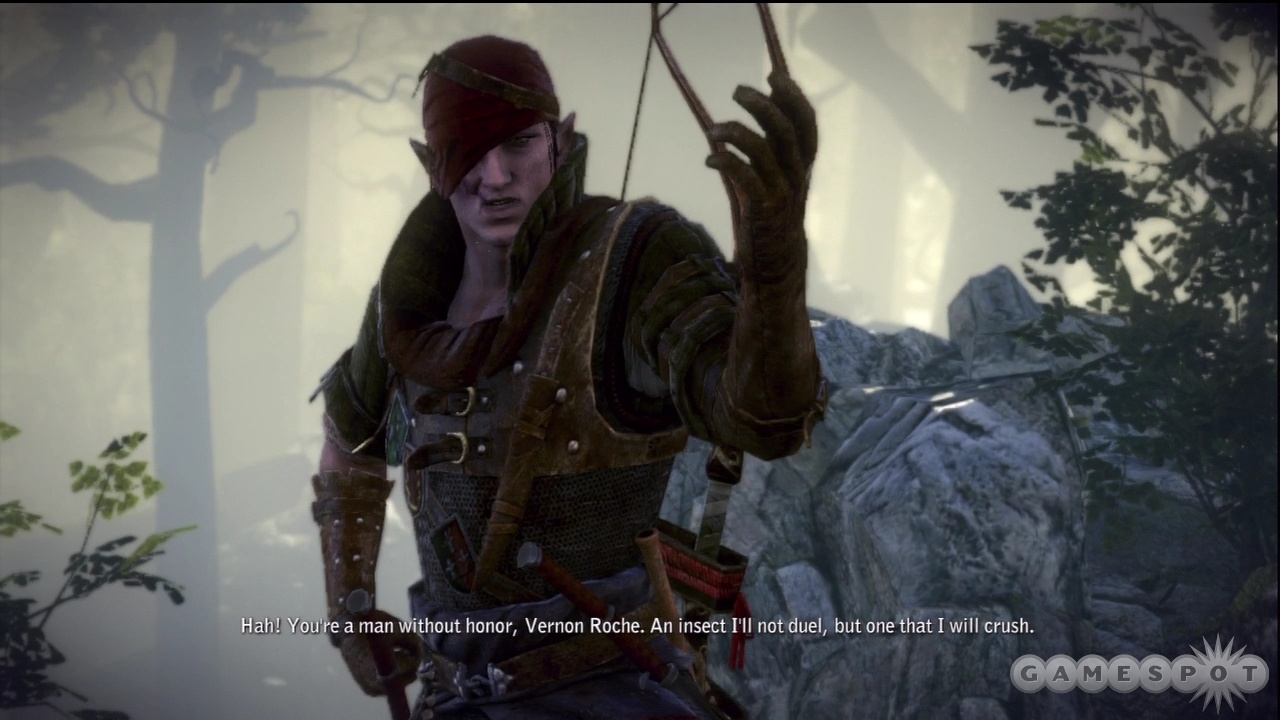
And yet there is no reason to suppose you are getting a halfhearted PC-to-console port here. The Witcher 2 is wonderful to look at, brimming with visual details that refuse to be lost in spite of the hardware's limitations. Inspect the crumbling walls of an ancient city, and you notice how every rock, rune, and fissure is unique. Nothing looks copied and pasted, but either painstakingly crafted by hand or hewn by natural forces. Soldiers genuflect as royalty passes, yet they're not unnaturally synchronized, but instead bow and rise as individuals. A gorgeous waterfall makes for a glistening tapestry, behind which lies darkness and death. A red scar above a defiant elf's upper lip is not just a testament to past conflict--it suggests a permanent scowl.
Welcome to the world of The Witcher 2, which is alive with activity yet tinged with violence and sorrow. The opening moments ready you for the game's brutal overtones, showing a captive Geralt of Rivia whipped and taunted by his jailers. Geralt's defaced flesh is a horrific sight, but thematically relevant: he is scarred by his past. Once thought dead, he is still piecing together memories of a savage battle and a beauty called Yennefer. The story takes its cue from these lost memories, juxtaposing sex and brutailty. It also presents both as inevitable and natural results of the mortal condition. You can bed various women in The Witcher 2; ploughing (that is, sex) is a frequent subject of conversation, and one of Geralt's favorite pastimes.

Prostitutes and lusty soldiers are commonplace in The Witcher 2, though women are hardly relegated to carnal duties. The game's female characters hold great sway in the political landscape, including Saskia the Dragonslayer. This freedom fighter speaks with such force and confidence that it's no surprise she should command a dedicated following. Her nemesis is King Henselt, whose arrogance and robust brogue make him an equally authoritative presence. They are both voiced with great gusto, and contrast with Geralt's cool, measured delivery. And that's as it should be: Henselt and Saskia must inspire their disciples. Geralt, known as the White Wolf, is also a lone wolf.
They are but a few players in The Witcher 2's tangled political plot, which involves so many characters and so much lore that you might be initially confused. But even when things get twisty, the fearless Geralt is there to ground the story. The witcher searches for clues to his past, as well as the royal assassin that ended the life of King Foltest. If you didn't play The Witcher on PC, don't worry that you'll feel lost: the prologue does an excellent job of catching you up on what you need to know. Nor do you need to wonder about the assassin's identity; it doesn't remain a secret for long, and it's quickly clear that The Witcher 2 is no murder mystery.
Instead, The Witcher 2 is a chronicle of discovery, redemption, and political upheaval. Geralt is blamed for Foltest's murder, but as he gets closer to the true killer, he becomes more and more involved in the region's power struggles. Those assisting Geralt on his quest include the flamboyant bard Dandelion and the earthy Zoltan, a foul-mouthed dwarf who, like most of The Witcher 2's dwarves, loves women and drink. Dwarves are a rich source of humor in most role-playing games, and The Witcher 2's are no exception. Yet, the tone is different here. These are the raunchiest dwarves you've ever encountered, yet the comedy is undercut by underlying anguish.
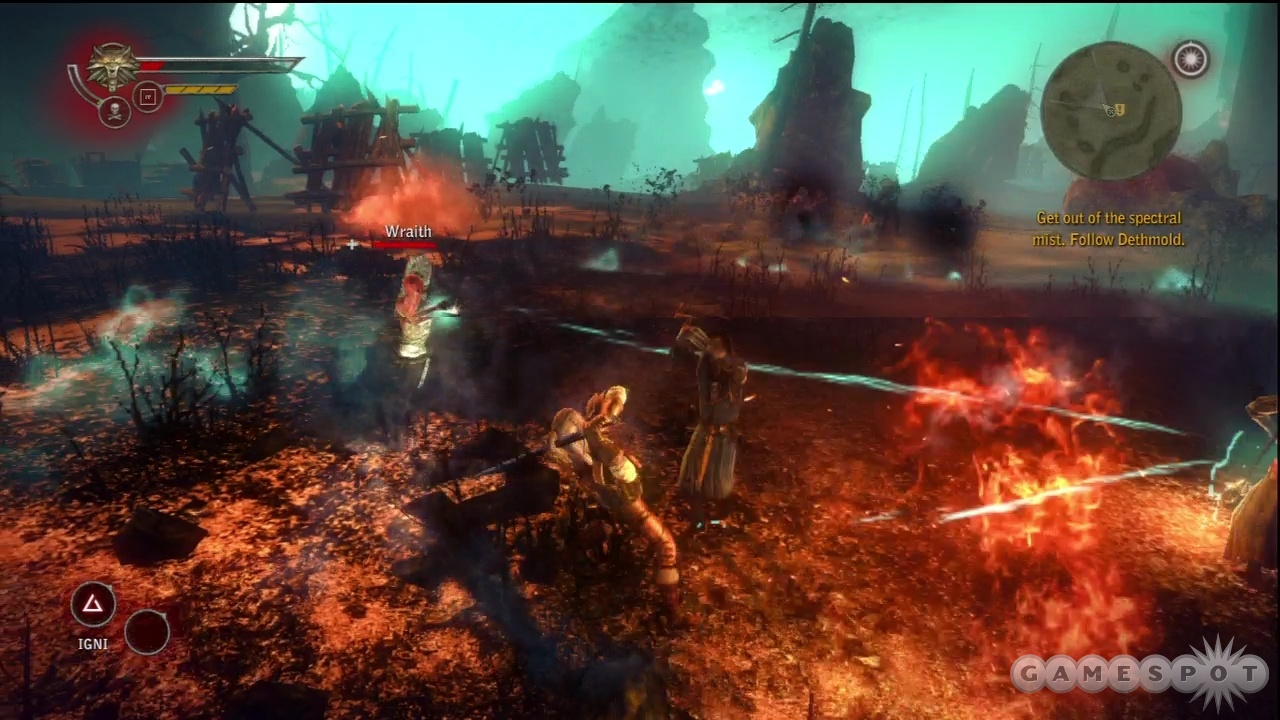
In fact, a deep undercurrent of pain and suffering flows beneath each character and event. A mother's unspoken agony taints the wonder of childbirth. A father's drive to protect his son may brand him a coward in his own progeny's eyes, but it's a price he's willing to pay, and Geralt isn't one to turn down a bit of coin--or in this case, some pertinent information. Many quests, including those new to this edition, involve the game's signature moral dilemmas. Whom do you believe: a soldier with hygiene problems haunted by a wraith, or the wraith that accuses the soldier of her own murder? Do you absolve a pair of nobles of treason, condemn them, or spare one and sacrifice the other? In this complicated world, there isn't necessarily a right choice. There is no meter to determine whether you are being "good" or "bad," and Geralt is neither hero nor villain.
Not including the prologue and epilogue, The Witcher 2 is split into three acts. The first is primarily concerned with following the killer's trail, while the second greatly expands the plot. The convoluted plot seems poised to explode in the final episode, only to fizzle at the end. The lack of closure intimates a sequel, and the final act is abrupt when compared to the robustness of the first two. Nevertheless, there is no reason to feel slighted, as the journey is entertaining and reasonably lengthy, given several hours of additional gameplay over the PC version's initial release. Yet what makes The Witcher 2 most impressive isn't its length or its vastness; it isn't an open-world, content-stuffed game in the way of the Elder Scrolls series. Instead, its triumph is in how your decisions fundamentally transform your journey.
The Witcher 2 is essentially multiple games gracefully molded into a single experience. The second act, for instance, tells a very different tale depending on choices you make beforehand. You might comb beaches and battlefields or go spelunking with a group of profane dwarves at your side, in each case making a different region your base of operations. By their very flexibility, many RPGs inspire replay, but few offer such differing paths, allowing you to experience a complex narrative from distinct points of view. The characters at your side, the enemies you face, the dialogue--they all differ based on a series of decisions that the game never forgets.
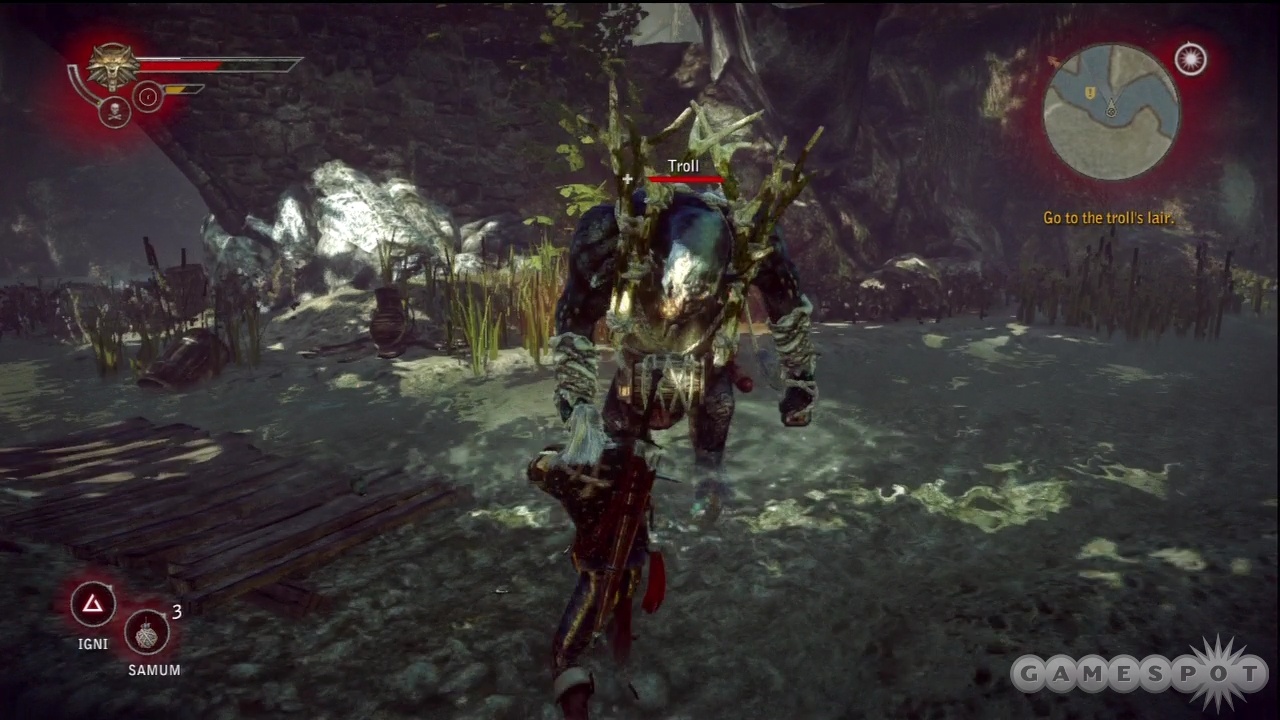
Cities and wilderness areas are relatively contained, though just extensive enough to encourage exploration. In doing so, you might uncover a chest that can be opened only by interpreting the clues on a nearby scroll, or stumble upon a giant arachnid guarding treasure. A number of stupendous action moments punctuate your travels. You won't remember just the big story developments, but the sequences in which you clutch your sword and stare down the danger ahead with savage resolve. In one such scenario, you slash away at grotesque representations of hate and violence, the whispers of magical incantations barely rising above the distant noise of steel on steel. Elsewhere, terrifying screams and flurries of feathers make your first encounter with a gaggle of harpies unforgettable, and the squawks and growls of unseen wildlife intensify your showdown with an endrega queen.
While there are a few different kinds of weapons you might wield, you usually choose between your silver and steel swords, depending on whether you are facing monsters or humans. You perform both light and heavy attacks from a third-person view, and can block and cast signs (Geralt's magic spells) as well. Before you leap into the prologue, you might want to check out the tutorial, though it isn't strictly necessary, as the first proper combat encounter isn't nearly as punishing as it was on the PC. It might take you a few tries, but you eventually grasp the rhythm of swordplay. Crowd control is important: you want to avoid getting surrounded at all costs, and bombs and traps can make all the difference when the odds look overwhelming.
The Xbox 360 release benefits from a reasonable difficulty curve, but there are some frustrations here and there. The manual targeting system is fiddly enough that you'll likely let the game's auto-targeting take over for you, unless you face a single enemy, or maybe two. You might inadvertently tumble toward an enemy behind the one you meant to attack and find yourself in the center of a deadly mob. There are also moments when basic actions don't feel as responsive as they should; unsheathing your sword might take a couple of button presses, for instance. Yet the action is largely satisfying and enjoyable. There's a palpable sense of weight in every swing. Geralt might somersault toward his victim and slash him with a steel sword or use a flaming staff pilfered from a succubus to land slower, heavier blows.
Potions are toxic to Geralt; thus, the number you can drink is limited. It might take you a while to come to terms with this "prepare in advance" approach to potions. Brews act as statistic buffs rather than immediate cure-alls, and unless you know what monsters you might be coming up against, you don't necessarily know which potions are most effective. When the story snatches you up into a series of battles and cutscenes, you may never be allowed to meditate and, thus, never reap the benefits potions may have granted. Thankfully, the long animations depicting Geralt entering and exiting his meditation pose have been removed, making this process less arduous.
It may also take some time to get used to the interface. It isn't complex but there are some minor idiosyncrasies, some of which are rather sensible. You can't hold a button to identify loot and items of interest as you can in other RPGs; instead, you activate Geralt's medallion. It's a neat way of taking a game-y function and making it seem more natural. Other interface quirks are less understandable. In most RPGs, once you exhaust a particular dialogue tree, you are usually allowed to select other options before exiting the interaction. In The Witcher 2, you might get thrown out of the conversation and have to reengage the character to explore other options. It would have been nice to compare equipment at a glance, rather than have to select a particular menu option. There are other quirks too, such as picky contextual prompts (you might disarm a trap instead of swinging at an attacking nekker), but they are small blemishes on this ambitious adventure.

Though combat is central to The Witcher 2, it's far from the only thing you do as Geralt. You can earn some coin by trading blows with certain locals, which means performing a relatively easy sequence of quick-time button presses. Timed events show up in boss fights and in other scripted sequences as well, though the game doesn't focus on them, and they make for a fun spectacle: the close camera angles and barbaric punches give brawls a lot of pizzazz. The PC version's arm-wrestling minigame returns as well and controls far better with a controller than it did with a mouse and keyboard. You can even go get a haircut or play some dice when you aren't busy chatting up the local ladies or hearing of Zoltan's latest exploits.
The Witcher 2: Assassins of Kings - Enhanced Edition is an excellent port of a superb game, embracing many of the elements we love about RPGs without skimping on any of them. But it's the way it handles player choice in particular that makes it most notable. There are no contrived right-versus-wrong decisions to exploit. The results of your decision don't just influence minor details: they lead you down wildly disparate paths, each as entertaining as the others. The Witcher 2 is a mature game indeed--not just because of its sexual themes and violent images, but because of its complex portrayal of morally ambiguous individuals struggling in a morally ambiguous world.
