Sub Command Preview
We play through the latest build of this submarine simulation.
At any given moment in time, there are nearly 150 nuclear-tipped intercontinental ballistic missiles pointed at targets within the Western Hemisphere. Each of these missiles carries three to ten nuclear warheads, which means that a grand total of anywhere from 450 to 1,000 city-leveling nuclear warheads are ready to fly over our heads at a moment's notice. It gets worse. The deadly missiles are located deep underwater, are mobile, and can be launched from positions so close to shore that the flight time from ignition to impact can be less than ten minutes.
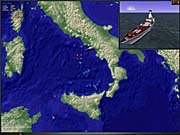
This doomsday scenario has been a real-world threat for more than 30 years now, as the development and production of ICBM-equipped submarines has made it a reality that continues to this day. Since the flight time for the submerged missiles is so short compared to the flight time for ICBMs that are based on land, an enemy submarine's nuclear payload requires a special defensive deterrent that counters it on its own turf: a "hunter/killer" submarine, which is designed specifically to hunt other submarines.
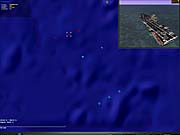
In Electronic Arts' upcoming submarine simulation, Sub Command, you will have the opportunity to take on the role of captain in one of three modern hunter/killer submarines in two independent campaigns across the world's oceans. Developed by Sonalysts, a military contractor that previously produced Jane's 688(I) Hunter/Killer in 1997, Sub Command promises to bring desk-driving civilians closer to the real world of directing a modern attack sub than previous genre attempts have done. Recently GameSpot had the opportunity to get some hands-on time with the latest alpha build of Sub Command, and now that we're back on dry land, we can report on the game's progress and specifics.
Being that the Sonalyst team includes more than a dozen former US Naval personnel (both enlisted and officer ranks), you'd expect that Sub Command's main menu after boot-up would feature an option to peruse a large amount of reference data and information regarding the world's seagoing forces. And you'd be right on, because the first thing you are greeted with after loading the game is the option to look around and see what real-world threats you'll be up against in the game's environment via a slick database propelled by info from the United States Naval Institute. More than 17 countries with 26 submarines and 92 weapons are profiled in the game's USNI database, along with corresponding pictures of what the platform or weapon looks like both in the game and in real life. It's a great tool to refer to for both new recruits and hardened seagoing veterans before heading out to sea for a specific mission.
After familiarizing ourselves with the opponents we'd likely see in the game, we proceeded to move to the training area, to partake in three staged scenarios designed to get us up to speed regarding the handling of each of the game's three sub classes. The three classes available to use in the game are the US Los Angeles, the US Seawolf, and the Russian Akula, which are all hunter/killer sub classes, meaning their primary role is to hunt down and kill other submarines. Hunter/killer subs don't carry the resources to launch a large-scale nuclear attack on a foreign country; that duty falls to a specific type of sub that is outfitted with full-sized long-range ICBMs. These ICBM-equipped sub classes (namely the US Ohio and the Russian Delta and Typhoon) are referred to as "boomers," and hunting them will be a recurring theme as you progress through Sub Command.
The game will provide a training scenario called Basic Sub Ops. Here, with the help of a narrator, over the course of a few minutes we learned the rudimentary controls used in the game to dive, raise, turn, and control our submarine. The control system provided in Sub Command is very straightforward and similar to the mouse controls found in 688(I) in that even novices will be able to clearly regulate their subs' motions within a minute of fooling with the dive planes and speed control. The tutorial was well scripted, and we executed the instructions easily.
After passing Basic Sub Ops, we proceeded to Basic Sonar Ops, in which we were directed to the sonar station on the Seawolf and given descriptions and narration regarding the operation of the advanced sonar suites on the three sub classes we were going to control. Aside from a few minor exceptions, the Los Angeles, Seawolf, and Akula class subs all use similar state-of-the-art equipment and controls, which means that once you go through the tutorial for the basic stations on one sub, you're ready to use all three. The look and feel of the stations within the three classes varies widely, however, because each sub has its own personality to the point where the advanced Seawolf stations look like they came straight out of a Star Trek bridge, while the Russian Akula controls made us wonder if they're still using vacuum tubes over there.
Once embroiled within the sonar tutorial, we got our first glimpse that Sub Command wasn't going to be a game like, say, the Sims or Quake III or even 1999's Fleet Command, where just about any gamer can jump in and start owning quickly. Instead, while we learned how modern subs actually gather information silently, develop and refine the info into a positive contact, and then identify and track the contact to a 100 percent certainty, we began to see that in real life the 18-year-old enlisted guys in service aboard these complex billion dollar giants are darn sharp and certainly smarter than most movies portray them to be.
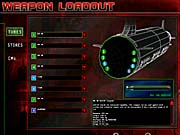
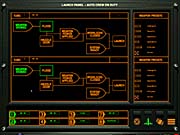
In short, our first experience within Sub Commands' actual sonar station was turning out to be a true hard-core simulation, on par with what the US Navy likely uses to train recruits in real life. It's so good and amazingly authentic, particularly in the way that the sonar and TMA (target motion analysis) stations look, feel, and report information, that we're still wondering how Sonalysts got clearance to put them into a public video game that anyone can purchase. Gone are the days of EA's previous Seawolf game from 1996 where the sonar suite was relatively hands-off and automated with dumbed-down buttons that did all of the tough work. In Sub Command you will have to learn how the cascading stripes of a towed sonar array display actually move and shimmer and then translate that data into contact information. It's quite daunting for the uninitiated, but the massively detailed training manual and the in-game tutorial help to tame the sonar suite beast in time. As a fail-safe, Sonalysts has included the old "automated crewmen" option in Sub Command, in which you are left commanding the sub and using data given to you by the AI-powered crewmen, but in our experience the sonar and TMA crewmen were woefully inept, failing to identify surface ships cruising at 25 knots from a distance of less than three miles. In fairness to Sonalysts, it's possible that this alpha build doesn't feature fully enabled AI crewmen, but even if they are improved, the manual for the game states that they'll never be as good as players who take the time to immerse themselves in the stations.
We finally felt confident enough in the sonar suite that we moved on to the final tutorial (in the alpha build anyway), Basic TMA FC Ops, which stands for "basic target motion analysis and fire control." Right away it was clear that this was easily the most in-depth and authentic submarine TMA FC suite that's ever been presented in a PC game. From isolating the target's track to plotting its speed and course to programming the specifics of the torpedo's path in relation to the target's bearing, the TMA FC screens were exceptionally detailed and downright difficult to learn, even with the help of the manual and tutorial.
In this station the tutorial showed a glaring weakness in that we had made a mistake early on without knowing it and the narration didn't detect it. That left us to incorrectly learn the rest of the tutorial and wonder why we weren't getting the results onscreen that the narration said we should be getting. This could be attributed to alpha-state gremlins, so take it with a grain of salt. Regardless of its weaknesses, the tutorial was still a welcome addition to our experience with Sub Command, and without it, it would have taken us twice as long to properly learn the stations with just the manual at our disposal.
Training is only as good as it sounds, however, and we decided that we knew enough to go out and attempt a single mission with all weapons set to hot. We selected the Seawolf and warped into the area just north of Libya, in the Mediterranean Sea. Our mission was to clear the way of any older Libyan Foxtrot-class attack submarines so our Aegis-class cruiser could motor in safely and perform a land attack with tomahawk cruise missiles.
Immediately we detected two contacts via our sonar suite and began a full TMA analysis. One of the contacts turned out to be a surface ship, a small Avenger-class frigate. Feeling bolstered by our tracking success, we continued tracking the less obvious contact for approximately 20 minutes and finally decided that it was an ally, a Los Angeles-class attack sub. Eventually we located a faint contact, and after watching the sonar suite's reports from our towed array cable, we felt confident that it was an enemy Foxtrot sub. Using the FC station controls, we plotted an MK 48 ADCAP torpedo to intercept our best guess as to where the contact was, and then we fired. We watched the torpedo's progress in the small 3D window that's provided on the navigation screen as it streaked towards the target. The graphics in Sub Command won't win any awards for detail, nor will they tax your freshly purchased GeForce2 or GeForce3 video card. Instead the overall presentation is eerily similar to Fleet Command--circa-1999 quality. We found them adequate, and we liked the 3D window's ability to help in disseminating what was going on, as far as our own activities were concerned.
In the window our torpedo appeared to be tracking true to our contact, and better yet, the noise from our firing it apparently hadn't spooked the target into action, because it continued to soldier on in a straight line at 12 knots. Using some time acceleration to speed things up a bit, our torpedo closed in on its prey, and we watched with glee as it impacted with a Foxtrot sub and promptly sent it to Davy Jones's locker. The graphics of the explosion and the sinking of the enemy weren't visually striking compared to the graphics in the newer games, but again they were adequate.
The MK 48 ADCAP torpedo we had used to put the Foxtrot down was one of several weapons available to players. The entire weapons library in Sub Command is huge--just about every possible weapon used by today's seagoing navies is included, as are some weapons that are rumored or theorized (like the 200-knot-capable super-cavitating Russian Shkval torpedo). When you're at the dock before a mission commences, Sub Command lets you outfit your sub with a certain weapons loadout or configuration, depending upon the mission at hand.
Once that's done, if you are participating in one of the two included campaigns, you'll proceed into a variety of scripted missions that find your sub doing everything from hunting boomers and dropping commando groups off nearby enemy beaches, to firing tomahawk land-attack missiles from the sub's vertical launch tubes at positions deep within enemy territory. The writing in the missions is very well done, and secondary targets that aren't eliminated may just show up to bother you later in the campaign, which is a nice realistic touch.
The multiplayer portions of Sub Command center on EA's Matchmaker service, which serves as a hub for players looking to hook up and have some undersea fun. Both co-op and deathmatch modes are supported, and the system will likely add a variety of specialized missions that are best played online. Since Sub Command will ship with a handy mission-editor function, you will be able to test your mettle against whatever threat and scenario you can think of creating. The total package has a good deal of flexibility and ease; we were able to design a fairly involved mission against a modern Russian surface fleet in less than 15 minutes. And since the game features a library of more than 250 3D objects (weapons, ships, planes, subs, and so on) the ability to build and create vast missions will likely become your sole focus once you've completed the campaign modes.
From our limited time with an alpha build of Sub Command, two things stand out in our minds most. First, it's clearly going to be the most advanced, authentic, and realistic submarine simulation ever released on the PC--and probably the most gratifying experience possible for hard-core submariners. Second, the game's learning curve will definitely disappoint and frustrate amateur sim fans with its steep difficulty level.
The bottom line here is that if you played Sonalysts' earlier 688(I) Hunter/Killer and liked it, then you'll fall head over heels for Sub Command. When the game is released later this year, GameSpot will have a full review of the finished product.
Got a news tip or want to contact us directly? Email news@gamespot.com
Join the conversation