The Rise of the Indie Developer
The rise of the indie developer: Will the golden age last?
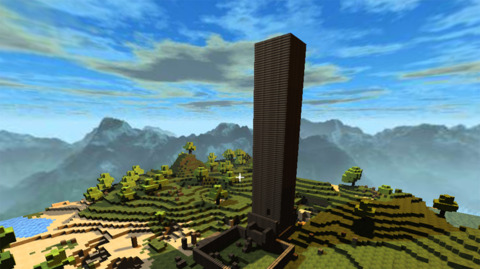
Two years ago, Swedish games programmer Markus Persson walked out of the development studio where he'd spent the last four years of his life making free-to-play flash games, went back to his apartment, and created Minecraft. His impulse was guided by the simple notion that game developers should only make games they care about. Less than two years after its release, Minecraft has been purchased by more than 1 million people around the world. There are more than half a million YouTube videos dedicated to the sandbox building game, numerous 24-hour live streams, and more than 3 million registered online community members. Not bad for a game made on a whim.
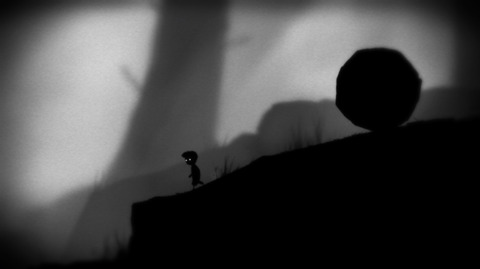
Given the growth of digital distribution, the rise of mobile platforms, industry-backed funding schemes, and a general feeling of competitive spirit, there has never been a better time for independent video game development. Innovation, creativity, and self-sufficiency are thriving in the global games industry; "indie" games are no longer approached with caution but are hailed as examples of brave, risky game making, led by a spirited wave of new creators who are embracing a DIY ethos. Minecraft, Super Meat Boy, Braid, and Limbo are examples of successful indie titles created by individuals or small teams that have managed to capture the attention of both the indie and mainstream space while retaining their creators' original vision. But for every Minecraft, Super Meat Boy, Braid, and Limbo, there are countless other titles--some just as innovative and spirited--that fall into obscurity and remain there, unnoticed and unappreciated. Given the means by which most indie games are published, unaided by the same marketing and promotion campaigns considered routine in the mainstream space, this is not all that surprising; nor is it surprising that luck plays such a big part in determining which indie titles "make it" and which don't. What does this unpredictability say about the future of independent game development? Can self-published games really continue to thrive in a space dominated by a handful of large studios whose overriding concern for financial gain leads them to repeat the same tired formula?
Minecraft and the key to indie success
The most astounding thing about Minecraft's success is that the game isn't even complete. Persson has kept it in beta stage until he's done implementing the various changes he has been working on since he came up with the idea for the game. It has been sold at various prices to date, according to Persson's progress; at the moment, you can buy Minecraft for €14.95 ($20.67) in beta stage. When it's finished, Persson plans to sell the game for €20 ($27.66). Take a second to reconsider the fact that the game has, to date, been purchased by more than 1 million people. Although Persson is better off financially now than the day he quit his programming job, he's no more enlightened about the reasons behind Minecraft's phenomenal popularity.
"I think it's a mixture of launching the game just as indie games were really taking off by pure luck, and the fact that people enjoy telling each other about what they make in the game," he says. "I think part of the label of 'indie' is that you make games for the sake of making good games rather than just to make money, so there's an inherent will there to be experimental and original. But as with any craft, I think it's important that you know why you're doing it. If you just want to express yourself or affect people, you shouldn't waste time trying to make business deals. Some of the time you can get lucky and find something new and exciting, but many times you just end up alienating the player unless you're very careful at exactly how you break the conventions. [In Minecraft], the combination of being able to create anything you want and the randomly generated worlds and encounters means there's a lot of room for personal stories."
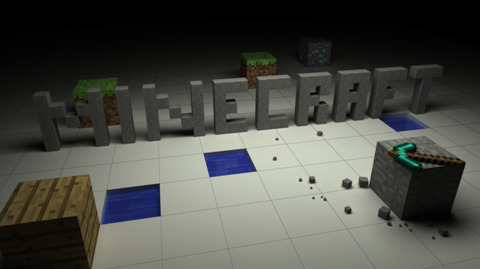
This, perhaps more than anything else, is why Minecraft has gained the following it has. The game gives players freedom to leave their personal mark: there are no quests, goals, or rules; no linear story; and no guiding hand of the creator pushing players towards an inevitable end. Minecraft presents players with a sandbox world and lets them populate it with their own stories through engineering and a random combination of elements. Simplicity has a lot to do with it: building stuff out of blocks is something anyone can do. But more than that, it's the promise of possibility and depth that seems to be drawing players in. The Internet is buzzing with examples of the size, scope, and depth of Minecraft's world: a roller coaster; a topographically correct, albeit not to scale, rendering of Earth; and a highly detailed, full-scale version of the Enterprise from Star Trek: The Next Generation. Minecraft is doing something right. It's giving players what they want, and what they cannot seem to get from other gaming experiences. But what is that, exactly?
"I'm not so sure there's nothing indies can do that big studios can't," Persson says. "Valve took a chance with Portal but wisely chose not to spend too many resources on it, and it ended up being a huge success. I think it really comes down to risk management, where the almost guaranteed return of investment on a sequel to a popular game is more tempting than taking a chance on something more experimental. You can either try to replicate what someone else has done, and risk ending up drowning in the noise, or you can focus on making a game you yourself would enjoy playing."
"I choose to develop games I like to play myself, mostly because that's also the games I like making the most. I also happen to represent a fairly common demographic, so it works well. I think the current hype surrounding indie games will probably die out over time, and the more commercially successful companies might start to get more organized, but I see no reason why games can't continue to be made by small teams who make games for the sake of making good games, and still make a decent living doing so."
Whether it was more to do with luck than with timing, or whether it's simply a case of bringing together elements that players can't get from other gaming experiences, Minecraft has unwillingly set an example of how best to make it as an indie. You can almost hear the collective thoughts on independent game developers everywhere: "How do I do that?" Which leads to the bigger question of whether there really is a formula for success in the indie scene, or if it's merely about doing what you want and hoping for the best. Increasingly, the answer is pointing towards the latter, something that does not guarantee the indie golden age will last.
Journey, Monaco, and the role of publishers
By definition, independent video game development is the business of making games without the support of publishers. On the surface, the indie scene is about self-sustainability and creative control; underneath, it is guided by the same set of core values that have guided other independent movements before it. The Impressionist painters of the 19th century spearheaded one of the earliest indie movements in modern art: while artists had already begun to move towards self-sufficiency after the Renaissance in the 17th century, looking for alternative ways to fund themselves outside the patronage of the Catholic Church, it was the Impressionists that finally broke free from the established rules of academic painting and began to hold their own independent exhibitions.
The Impressionists were radicals, living by the principle that progress could be achieved only through the breaking of conventions. Their ideas were also part of the larger artistic, literary, and intellectual movement of Romanticism, whose roots lay in the aftermath of the Industrial Revolution; the art of the time was guided by a newfound sense of individuality and emotion, emphasizing realism and the plight of the average man and unified by a communal independence and spirit of rebellion. The term "art for art's sake" was coined during this period, a principle that has continued to guide independent movements from politics through to video games.
But while the very nature of "indie" implies a DIY approach, the ideas driving growth, evolution, and transformation are arguably more important than the methods by which they are achieved. Artists do not particularly like the idea of patronage, but have always depended on it to survive. This is an important distinction to make, for while it's in the nature of indie developers to stay away from publishers, the truth is that the indie movement could not have reached a golden age without their support. While mobile platforms are slowly growing and providing independent developers with an outlet to make small, cheap titles, it's big publishers like Microsoft, Sony, Nintendo, Apple, and Valve that have been the most influential in helping indies reach an audience. Platforms like Steam, XBLA, PSN, the App Store, and WiiWare have given indie games exposure and have served as a critical tool in helping audiences understand what indie games are all about. By doing this, publishers have provided indies with a much-needed audience. Click on the Next Page link to see the rest of the feature!
One of the industry's most successful indie studios, Thatgamecompany, has been publishing on Sony's PSN since its debut title, Flow in 2007. The game was the first in the studio's three-game deal with Sony. The studio was founded in 2006 by Jenova Chen and Kellee Santiago, graduates of the University of Southern California's Interactive Media MFA program. Their aim, now as when they began, was to create games that push existing boundaries through meaningful experience, something they could not have done without Sony's help.
"It's amazing how quickly publishers adopted a new business model and how they've adapted to a different process," Santiago says. "I think they have been great at that. Although, one area that I think does need to be improved going forward is access--right now indie development is synonymous with downloadable games, so there could be more done to improve access to these titles and help users understand how to get to these games, and in some cases, help them realise that they even exist."
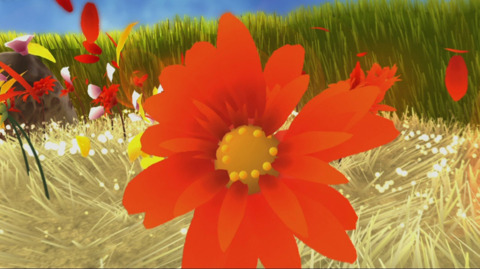
Thatgamecompany hasn't had much trouble with the latter--upon its release, the studio's second PSN title, Flower, debuted in the top five PlayStation Store games and continued to stay in the top 20 as the months passed. Santiago points out that the PS3 audience is a hardcore audience, and if they want to play games like Flower then this suggests that there is plenty of room to create games that challenge existing gaming conventions.
"As a gamer, I certainly want to play more games like this," Santiago says. "I'm also someone who values games, music, films, and books that have a sense of soul and real personality to them. I would love to see more developers try and create games like this. We know there is an audience out there wanting this kind of stuff, and the gaming conventions we're familiar with are so limited; the craft of video game design is still so young so I don't think there is as much a need to rely on past design principles. There is opportunity to stand out."
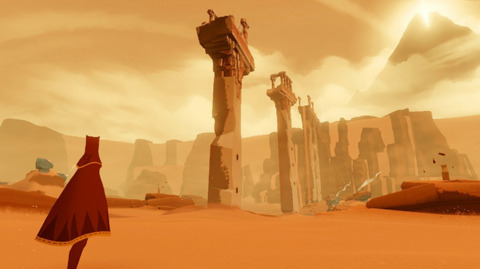
Santiago and the Thatgamecompany team are self-professed followers of a game design school that advocates the process of making game mechanics work around an idea or emotional experience rather than the other way around. This is harder than it sounds: games are made up of rules that must be followed in order for the game to actually work, so putting emotion at the forefront of this process means there aren't any patterns to draw from. This method also served as the basis for Thatgamecompany's upcoming title, Journey--the last in the Sony three-game deal. At its core, Journey is an online experience that seeks to explore the territory that lies between current online multiplayer experiences (game first, social experience on top) and social games found on sites like Facebook (social experience first, game on top).
"The team focused on making the online experience completely embedded within the game itself. So when you start the game you're in the world, and as you move you can encounter other people, who are players--there are no gamertags and no messaging system, just other players who essentially become characters. You can play together, or you can keep playing by yourself. We wanted to give the player a sense of being small and humble, so they could feel more connected to a stranger. We threw away what we know about the online experience. It's similar to the idea that there is a narrow range of emotional experiences in games currently. You could say the range of experiences in online gaming is even narrower, so we felt there was a lot of opportunity to offer something different."
On the other end of the spectrum lie developers whose previous experience with publishers pushed them towards working independently. Andy Schatz, founder of Pocketwatch Games, designed his 2010 Independent Games Festival (IGF) award-winning title Monaco, a four-player co-op game inspired by French heist films and set in the city of the same name, while working for a AAA studio in 2003. After unsuccessfully pitching the project to a number of publishers, Schatz decided to go solo. While he recognises the importance of platforms like Steam, XBLA, PSN, and the iPhone in giving indie developers wider exposure, he is convinced that publishers are not doing enough in this space.
"Big-budget games are boring," he says. "Even the best ones are boring. Indie games often suck too. But because there are no corporate dollars involved, indie developers can make games that they are passionate about. Good indie games are never built for a demographic: they are built with the passion of the developer. In the best cases, that passion is infused into the game in such a way that it rubs off on the gamer."
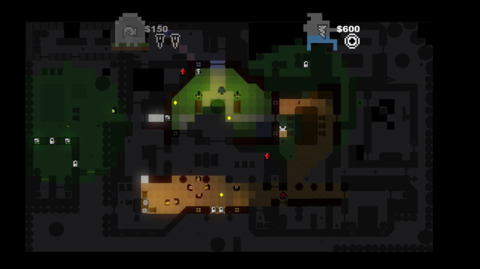
Schatz believes that as long as big-budget titles continue to "suck," the indie scene will continue to grow bigger and bigger, and the quality of indie titles will improve. Although he does believe that there is some value in repeating things that work well, he says that game developers often hit a creative wall when designs begin to cross each other's territories.
"When designs get inbred, they no longer are good designs--they only work for the people that have played all the previous iterations of those designs. I'm a huge fan of RPGs, but modern console RPGs like Fallout and Oblivion have really bastardized the design into something that looks similar to the old games we love, but don't actually work on their own merits. Yet I still played both of those games because I understand RPG conventions. I thought they were both boring, but I played them nonetheless, probably because RPGs are an obsessive compulsive affair. I have a hard time believing that someone who is new to RPGs will really enjoy them. On the other hand, I really like the new Assassin's Creed multiplayer. It's not perfect, but it's genuinely fun, and it feels like it was designed from the ground up as a game and not just an inbred variation on a formula."
Schatz believes indie developers can get a lot further with critical success than with publisher support. For him, winning the 2010 IGF award for Excellence in Design was a big step in the right direction.
"Commercial success would be nice of course," he says. "It would be great to not be poor. But nothing gives me the inner satisfaction or feeling of self-worth like critical success. It's why I've been able to stay indie for the past six years despite modest and intermittent commercial success. It's part of the nature of the indie scene to cater to audiences that aren't being satisfied by big-budget games, so I think there will always be an indie scene making the games that the AAA guys and gals are too risk-averse to attempt. Us indies have to keep exploring, and we have to keep welcoming in outsiders. The current crop of indies won't be tomorrow's innovators: it will be fresh faces, the ones that think we are the ones doing it wrong. I love that I'm getting old and boring; it means that there's more out there that can surprise me."
Jonathan Blow, The Witness, and giving indies a helping hand
The indie golden age isn't just about a greater number of audiences enjoying independent games; it's also about bringing financial stability and a certain hierarchy to the indie development space. Indie developers once all stood on the same platform--a platform with limited resources, limited manpower, and limited funds. Now, a certain hierarchy has begun to form. Certain indie developers have now hit the big time, changing both their status and their position in the indie scene. Some have used their success to form their own studios; others have joined bigger studios; a few have even stayed put, continuing to work in exactly the same way they always have. However, as the indie scene continues to grow stronger, the same kind of oligarchic structure that rules the wider games industry will inevitably develop. The number of indie developers that have had success to date is a small one compared to the number of developers out there currently making independent games, meaning as they rise to the top, they will soon be in a position to help others, thus creating growing dependence and consolidation within the indie space.
Whether or not this is a good or bad thing remains to be seen. One could argue that as long as someone out there is making independent games that seek to challenge existing gaming conventions and provide audiences with new experiences, then the way the industry is structured doesn't matter much. But who is to say the indie scene will continue to uphold its indie values once success and mainstream attention begin to influence its structural foundations?
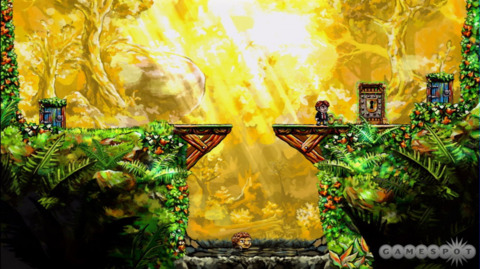
About a year ago, some of the most successful independent game creators joined together to form the Indie Fund, a project that aims to provide indie developers with a monetary alternative to the publisher model and thus help promote financial independence with the indie scene. Cofounder Jonathan Blow (Braid, The Witness) says the project is about more than just helping out fellow indies--it's about encouraging creation and helping the indie community get stronger.
"For me personally, I like the idea of using what money I have in an actual productive manner, to help make the world better in some way, and then hopefully get a return on it," Blow says. "In the game industry there are decades of a kind of road-to-nowhere funding model that many developers fall into. They need money to make a game, they get that money from a publisher, but the publisher gives them the minimum necessary and takes as much royalty as they can and pays as late as possible. So [developers] are in a poor bargaining position, and this happens over, and over, until the developer finally dies or somehow gets lucky. The publisher doesn't care if the developer dies, because there are 10 other developers just like them who are begging to sign a lousy deal. Indie Fund is about providing better terms than that and letting developers keep much more of the money from game sales, so as to provide an alternative to this model." Click on the Next Page link to see the rest of the feature!
The way the Indie Fund model works is by handpicking a small number of projects out of the hundreds of submissions received so far and delivering monthly payments in return for monthly builds of the game. Once the game is released, Indie Fund asks for the initial investment amount and a small percentage of the revenue (proportional to the amount of funding needed to complete the game). If a game does not generate enough revenue to repay the investment to Indie Fund within three years of release, the agreement expires and the developer no longer owes any money. The application process itself is even more bare-bones: Indie Fund doesn't ask for a design doc or a full schedule--just a playable prototype that shows the promise of the idea. While this model certainly sounds risky, Blow believes having veteran indie developers judging each project helps to ensure against total failure.
"It's made easier by the fact that our developers operate on budgets that are very low compared to the budgets of publisher-funded games. Because we give the developer most of the royalties, an Indie Fund-supported game is a credible shot at financial independence, so people are willing to work very cheaply--eating-ramen-and-living-at-your-mom's-house cheaply, maybe--because they are mostly working for themselves. The other reason we're better than publishers is that we don't tell the developer what to do. We give them advice, but ultimately we leave them to make their own decisions. That's important because that decision-making power is what it means to be independent. When we sign a developer, we decide at that time that we have faith the developer has the talent and tenaciousness to make a good game. Thereafter, we do not micromanage or demand they make the main character a badass monkey man."
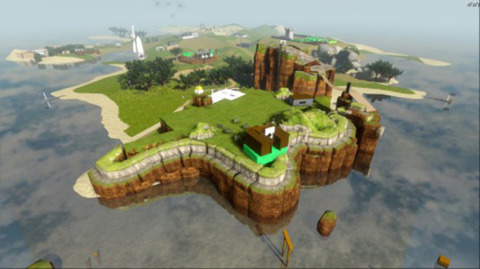
Besides nurturing up-and-coming indie developers, Blow is looking after his own project, The Witness, an exploration-based puzzle game set on an uninhabited island and due out at the end of the year. It is unlikely that luck will play much part in The Witness's success, since Blow's first title Braid was a critical hit. He touches on Santiago's earlier point about the indie method of shaping game mechanics around an idea or experience, rather than the other way around, and its relation to the idea that the act of playing a game has a negative impact on its ability to effectively communicate its ideas (since first and foremost players must actively engage in the act of play before they can begin to think about what they are playing).
"Games are fundamentally bad at telling stories because the stories basically have to be pasted in there and have nothing to do with the gameplay. However, when forward-thinking game designers talk about communicating ideas through a game, they aren't usually talking about just pasting something in there--they are talking about meaning embedded in the actual mechanics and play of a game. Thus what you experience during play is the meaning, and there's no contradiction."
"I am not going to try and craft a game to please critics, just like I am not trying to craft a game to please players. I am just trying to make the thing that is the best that I know how to make it, which seems to mean something different for every game I work on. What I care about is that some players out there, somewhere, really get and appreciate the work, and that something happens in the world, however subtle, that wouldn't have happened if I had not made the game."
Blow is of the mind that his work with the Indie Fund will ensure that the indie scene will not die out or transform into a carbon copy of the mainstream industry. The fact that indie developers continue to be free to fail will remain their great strength.
"They can be a bit crazy. They can do things that others would not, and some of those things can be very successful. But if you look at the games that indies are actively developing at any time, there is also a lot of conservatism--people just making games that are trying to be like mainstream games, but on a lower budget. So that's a bummer, but most of the big indie hits of the past several years have been non-conservative games. I would hope that more aspiring indie developers would pay attention to that fact."
Super Meat Boy and the future of the industry
Ask most indie developers some of their favourite indie titles of last year and Super Meat Boy is a guaranteed mention. Edmund McMillen and Tommy Refenes (aka Team Meat) started out like most indie developers--making Web and flash games and other "website server crap," as Refenes elegantly puts it. Also like with most indie developers, their hit idea originated from a prototype flash game--one that McMillen and friend Jonathan McEntee made in about three weeks. After the game became popular on the Newgrounds website, McMillen was approached to develop a console version.
"It's interesting, this thing about luck. I would say we have had horrible luck," McMillen says. "Our initial console launch was horrible. We launched [on Xbox Live Arcade] at the most competitive week in the most competitive month for games, alongside titles like Costume Quest. We thought we were screwed. But word of mouth picked us back up, and then Steam picked us up and carried us through the year. So yeah, while I think luck plays an important part in the whole indie business, it's the overall quality of the game that's more important. I'd like to believe that all the most successful indie games in past five years have also been the best."
McMillen, 30, and Refenes, 29, live in different states. This makes working together hard, but not impossible. Not that either of them has thought about doing anything differently: after working for big-budget developers and publishers, McMillen and Refenes are passionate about never working for anyone, or having anyone work for them (the words "I'd rather shoot myself in the face" were used). The two developers know what they want. They remain certain that other indie developers feel the same way, which is why they believe that while the indie golden age may one day pass, there are always going to be creators who want to work independently and who will succeed in creating engaging, and successful, independent games.
"I think it's important to understand that in the 1980s and 1990s studios were doing things the way indies are doing things right now--they just made cool games," McMillen says. "There are so many more levels to it now--publishers notice us, there are dedicated awards, etc. Every year the industry discusses whether they just experienced the heyday of indies and whether it's all going to go downhill from there. But it always seems to get better. Two years ago it was all about World of Goo and Braid; last year it was Super Meat Boy, Minecraft, and Limbo. From a design standpoint, every indie game that comes out and does well makes it more OK for big developers to go into that territory. I think because of Super Meat Boy there might be a super-hard platformer from a big studio soon; similarly, if Braid never happened, maybe Limbo may not have been picked up. Every indie success opens the door to new possibilities."
"It's always going to be sustainable because there are always going to be people who can only do things that way," Refenes says. "So even if [the current generation of indies] do grow into a mini-industry, there will be new indies after us. That's never going to go away."
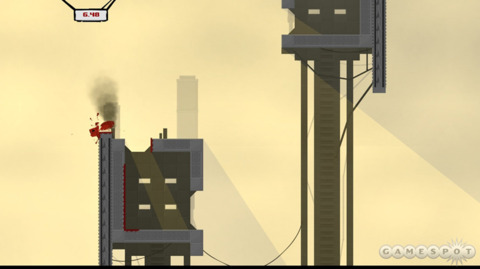
Team Meat believes people loved their game because it was honest. Not necessarily because it pushed the boundaries of game design or tried to do something that has never been done before, but because it didn't talk down to gamers: it wasn't easy, and it wasn't trying to make money.
"I think people get tired of being talked down to by games," McMillen says. "A lot of mainstream publishers and developers treat their fans like they're dumb. They want to make sure everyone can beat the game, and this removes all real reward. They juice an IP for all it's worth. I can understand why people say that games aren't art--it's because the majority of mainstream games out there are pure business. Game design is all about risk, reward, reflex-driven, intelligence-based playing; sure, it's not something everyone can do. But if you do nothing new no one will care. As an indie you have to do something new. You have to do something better." Will interest in indie games last? Let us know by leaving your comments below!
Got a news tip or want to contact us directly? Email news@gamespot.com
Join the conversation