GameSpot Presents: State of the Union
What's wrong with the game industry today? What's right with it? Major game companies like Microsoft, Sony, and EA weigh in on the state of the union--and so do developers of games on all platforms, along with our own editorial staff.
This year's Electronic Entertainment Expo wasn't just the video game industry's largest event. It also marked a reflective moment when all participants in the business of making games could take a step back and see how far the industry has come in such a relatively short amount of time. It also provided an opportunity to take a look at both where the industry is going, and also its greatest shortcomings. With that in mind, we asked several developers, publishers, console manufacturers, and editors to weigh in on the video game industry and give insight into what's wrong, what's right, and where they see the industry going.
Start by watching our series of on-camera developer interviews filmed with developers of games on all platforms, online and off--Troy Sims of LucasArts; Gordon Walton and Rich Vogel of BioWare Austin; Josh Fleming of Warner Bros. Interactive Entertainment; David Kaemmer of iRacing.com; Matt Cox of 5th Cell Media; Kazunori Yamauchi of Polyphony Digital; Jamie King of 4mm Games; and Akitoshi Kawazu of Square-Enix. Then, follow along below with interview responses from Phil Spencer of Microsoft Game Studios, Jack Tretton of Sony Computer Entertainment America, and Nick Earl of EA Games. And finally, check page two for our own editors' responses.
Firearms Expert Reacts to Fallout 76's Guns Fallout 4 Next Gen Update Comparison Why Are Video Game Adaptations Good Now? | Spot On Fallout 4 Steam Deck Verified Gameplay ALIEN: Rogue Incursion - Announcement Teaser Trailer Stellar Blade - 13 Things I Wish I Knew Hades 2 Is Already An Exciting Sequel With Confident Changes | Technical Test Impressions S.T.A.L.K.E.R. 2: Heart of Chornobyl — Official "Not a Paradise" Trailer Honkai: Star Rail - "Then Wake to Weep" | Version 2.2 Trailer Devil May Cry: Peak Of Combat | Dante: Blazing Tempest Gameplay Trailer SAND LAND — Official Launch Trailer Sea of Thieves Season 12: Official Content Update Video
Please enter your date of birth to view this video
By clicking 'enter', you agree to GameSpot's
Terms of Use and Privacy Policy
Phil Spencer | General Manager, Microsoft Game Studios

What's wrong with the industry?
There are too many games, I see, that don't really strive to stretch the envelope creatively. We seem to have hit this glut, to some extent, of people following tried-and-true, existing formulas and not trying to challenge themselves with every release--to really change consumer expectations and to wow people and really delight them.
What's right with the industry?
This E3 for me was really exciting because we saw three platforms that have been out for a while and [have matured]. I think what we've been able to do is show that we're not in any real midlife crisis here. We're kind of at the beginning. How many consoles, three or four years into their life cycle, are now beginning the upswing to something completely new? Our ability to innovate as an industry on top of the work that's already out there, I think that shows great promise for the future.
Where do you see the industry in five years?
Looking at online, and for us that means Live, as the platform itself and starting to think about things like the 360 and other devices connecting into Live. And Live as the backbone infrastructure--it's where I buy things; it's where I get my entertainment and media. That's the future for us. We get really fixated on hardware and what number is next to my piece of hardware, when in reality, I believe the network and the connection in something like the Live service will be the thing we really see as the backbone for our entertainment.
Jack Tretton | President and CEO, SCEA

What's wrong with the industry?
We're still in our infancy stage when compared to other industries, and as a result, we haven't truly gotten the credibility we deserve. We're often compared to industries that are not of the same size or scope or as diverse in its customer base, like the film or TV industry.
We also could do a better job of adopting the attitude that one company's rising tide is potentially very good for all in the category.
What's right with the industry?
The industry is definitely more diverse today, and it accommodates more consumer interests than ever before. You've got multiple companies being successful with completely divergent approaches to the market. This is apparent not only on the hardware side, but also on the software side, with casual game development being paralleled with state-of-the-art, heavily invested, and high-definition game development. It's a great time for everyone in the industry to really come at it from many different angles. The field has never been as broad as it is now.
Where do you see the industry in five years?
We'll continue to see further maturation and growth towards the credibility I spoke of earlier. The industry will continue to embrace new innovation and technology at a faster pace than ever before, and we will be less focused on traditional forms of entertainment. Rather, we will push out-of-the-box thinking that focuses on creating a whole new kind of interactive entertainment experience for consumers. The days of being seen as just a toy for kids will be permanently in the rearview mirror.
Cammie Dunaway | Executive VP Sales and Marketing, Nintendo

What's wrong with the industry?
"Right" and "wrong" are subjective terms and usually differ, depending on whom you're asking. Ultimately, consumers decide whether the choices a company makes are interesting and worthwhile to them.
What's right with the industry?
For our part, Nintendo has been a pioneer in setting the standard for precision-motion controls. We have made motion control and social gaming realities today. Additionally, the Wii has already expanded the audience through an overall experience that is equal parts game, interface, and social play.
It's good news that the industry seems to have accepted the idea that games can be for everyone. And because more people than ever are playing games, companies and developers are motivated to create new concepts and fresh approaches. Just look at some of the hits from recent years: Brain training and fitness games are right alongside more traditional fare. This is key for the overall growth and health of the industry.
It's also a positive that games are becoming more social. People are playing together now more than ever before, and that includes individuals playing in the same room and those who are getting together online in games like Mario Kart Wii.
Finally, consumers are becoming more discerning. They are interested in how they interact with their games and how those games make them feel. Other considerations are secondary.
Where do you see the industry in five years?
While the industry's direction is in the hands of consumers, it's likely that current trends will continue to grow. For example, video games will become increasingly interactive while being accessible to as wide an audience as possible. And as more people pick up the controller, it means that games will become increasingly social. Finally, we expect that customization and personalization of games will remain popular. This trend will manifest itself in a variety of ways, from simple user-generated content like making Mii characters to people creating entire levels or games on their own.
In a very broad sense, the same forces that have driven the market will continue to do so moving forward: innovation and hit software. Innovation is always tied to gameplay--no one bought a Wii Remote to sit and hold it; they wanted to join in playing Wii Sports. Consumers are looking for the best value for their entertainment dollar.
Nick Earl | Senior Vice President, EA Games Label

What's wrong with the industry?
With all that is going right about the expanded availability of games to new audiences, we still make the core experiences way, way too remote and challenging. We produce enormous amounts of content that never gets seen even by core gamers. It's expensive, it's futile, and it hurts the business of making games, which in turn could slow or even reverse the good that's coming with the proliferation of casual games.
The time is right to come up with mechanisms, designs, and methods to allow casual and non-core gamers to experience all that we produce.
What's right with the industry?
With the sudden and explosive growth of casual games, the Wii, the DS, music, and browser-based games, the industry finally seems to be emerging out of the hidden recesses of niche entertainment and into the mainstream. Dinner-party guests regularly gravitate to Rock Band sessions where previously they would have never ended up playing video games. Parents play Wii games with their kids for the first time in their lives. Millions of casual gamers log on to the many free-to-play Web sites and launch thin-client and browser games on a daily basis even though they have never owned a video game console.
To see this new, varied diet of electronic entertainment being consumed by more and more people every day is not only a validation of the raw power of gaming, but also a glimpse into the future growth of a medium that can touch millions more people in a positive way.
What's right with the industry is that it has embraced this opportunity and opened the door. By simplifying controllers, collaborating with other media such as music, reducing the complexity of a typical gaming experience, and establishing a whole new range of business models, gaming is now available to so many more people in the world. That is pretty exciting, and it's a hugely important development in our industry.
Where do you see the industry in five years?
I see the industry as the most important media, both in terms of number of new consumers and innovation. I see the majority of games being delivered directly to the players, the way that music has evolved. I see more and more communities built around game franchises. I see new devices that will allow new and different forms of interaction with games, bring in new players, and create deeper, more rewarding experiences. Most importantly, I see the overall consumer value of video and computer games being far greater than what we provide today, and any other entertainment options available at that point in time. It is an exciting time in gaming, and it is going to be an incredible few years ahead.
State of the Union: Editors Sound Off
We asked several of GameSpot's editors to give their thoughts on the current state of the videogame industry, the problems it faces, and what the future holds. Here, in no particular order, are their responses.
Brian Ekberg Senior Editor


What's wrong with the industry?
Cost. And I'm not just referring to the cost of games at retail--though $60 is certainly a lot to spend on anything if you ask me. The ever-escalating arms race between publishers and developers who already spend staggering amounts of money on game development (thus driving the prices up in the process) is a trend that seems to be antithetical to today's brittle economic climate. Yet, with Ubisoft CEO Yves Guillemot claiming that upper-echelon games will cost an average of $60 million to develop, the trend looks to continue. For publishers, that means they'll be less willing to take a risky gamble on unproven IP. For developers, it means more big-budget sequels. For consumers it means games that will cost $70 or more, especially when you factor paid downloadable content into the equation. As excited as I am to find out where technology is heading in the industry, that excitement is tinged by the dread of what it will mean for our wallets.
What's right with the industry?
The gaming industry looks poised to shed the problems of retail distribution sooner rather than later. The ever-increasing prevalence of digital distribution through services like Steam, Xbox Live, the Wii Shopping Channel, and PlayStation Network--not to mention up-and-coming streaming services like OnLive--will eventually end the ridiculous retail rigmarole that customers have lived with for far too long. Ugly stores, rude or clueless (or both) sales people, preposterous shortages of the biggest games at launch--it's enough to drive any game fan up a wall. Give me an Internet connection, a huge hard drive on my console or PC, and a credit card, and that's all I need. We're not quite there yet--I'm still waiting for a company like Rockstar to announce Grand Theft Auto V as available via download on release day--but we're heading in the right direction.
Where do you see the industry in five years?
I'll combine my previous two entries into a good-news/bad-news scenario: In five years, I'll be downloading my favorite games directly to my console hard drive via my upgraded Internet home connection, which won't be a far cry from the superfast network I enjoy at work. Of course, those games will cost me $70 (maybe $80, if I pay the premium "day 1 release" download fee), will not be transferrable between devices, and will not be refundable in the slightest should my hard drive mysteriously explode. Welcome to the digital age of gaming!
Sophia Tong Assistant Previews Editor


What's wrong with the industry?
While I'm supportive of developers and publishers looking to broaden their audience by coming up with games that will appeal to the masses, I don't like seeing budget titles that were obviously rushed to shelves with little thought put into the design and controls. There have been great low-budget games on the PC for years that have kept gamers occupied with intuitive and addictive gameplay. Part of the problem is splitting gamers and labeling them as "casual" and "hardcore," because somehow the casual gamer is assumed to have lower standards. Everyone wants a game that's fun, right? It shouldn't matter if you're making a game for someone who plays for eight hours a day or 20 minutes a month--games should be fun.
What's right with the industry?
Even though it may seem like the bulk of the games coming out are sequels from hit franchises, there are still developers out there willing to take risks with a new IP or modify an existing formula to make it even better. I hope that developers will continue to tap into their creative side and come up with exciting ways to approach a familiar genre or invent an entirely new one. In an age where we are bombarded with so much information and fresh ideas all the time, it might seem hard to be original. But after seeing a game like Scribblenauts at the Electronic Entertainment Expo, I'm confident that there are still plenty of individuals out there with brilliant ideas who will find a way to stand out among their peers with their creativity and innovation.
Where do you see the industry in five years?
It's hard to say, but when you look at what was presented at E3, it seems that motion controls are the way of the future. Whether this will take off will depend on whether or not gamers really want to get off the couch. Personally I still prefer buttons. However, this new technology might make us even lazier because we'd be barking orders at the television to navigate through convoluted menus.
I do hope that in five years there isn't any more of this hardcore-versus-casual mentality among professionals or consumers. Developers should be making games that they're passionate about for an audience that they're familiar with, and consumers should play the games that interest them and accept those who might like something different. Is that like asking for world peace?
Andrew Park Managing Editor


What's wrong with the industry?
As a PC game fan, I am, of course, less than happy about the same issues other PC game fans are less than happy about. You know, the ones that every Internet message board expert has already beaten to death (piracy, the migration of major game series to consoles, and multiple hardware configurations causing issues for both developers and consumers). I'm also less than enthusiastic about the massive glut of free-to-play online games being imported to the West from Asia and Europe, seemingly by the shovelful, and seemingly by the nanosecond. I realize this business model makes money (or it wouldn't be all over the place), but from the standpoint of someone who actually plays games, there are only so many hours in the day for people like me to start a new character, level up, and get involved in this one game, or that one game, or that other game. There's an absolutely dizzying number of these things being brought over, and it isn't clear that they're all being brought over in the interest of providing Western game players with the most high-quality entertainment experience in mind. All this free stuff in competition with other free stuff is reminiscent of the tech wreck of 2000, where a bunch of free online businesses (like GameSpot) competed with a bunch of other free online businesses until the bottom suddenly dropped out of the market. Then again, I'm a game writer, not an economist, so what do I know.
What's right with the industry?
As unpopular as my thoughts on what's wrong with the biz will make me, I think this answer will make me even fewer friends. We've seen some very tragic losses as a result of what I guess we could call "the economy" (try to imagine me wiggling my fingers and making huge air quotes here)-- ACES Studio at Microsoft, Iron Lore Studios, the very painful loss of Ensemble Studios, and for me, a Fred Sanford-like "I'm comin' to join you, Elizabeth" moment at the near closure of Big Huge Games. We've also seen an already risk-averse game industry get even more cautious and churn out even more sequels. I know it's very fashionable and cool to complain about the lack of originality in the games business and how there are all these sequels, but in several cases, sticking with a certain series has let development teams build a better mousetrap with technology and engines (and game designs) that they've had more of a chance to familiarize themselves with. The Sims 3 is the best game in the series yet, by far. Gears of War 2, Resident Evil 5, Grand Theft Auto IV, Call of Duty: World at War…all great games that clearly built on the solid foundation of their predecessors. It can be very exciting to hear about how new game engines and tech can push more pixels or particles or textures, but for me, it's a lot more gratifying to hunker down with a game that's a quality production through and through, even if that game does have a "III" or a "4" at the end of the title.
Where do you see the industry in five years?
I figure we'll see the logical progression of what we're already seeing now: smaller, independent studios struggling in an increasingly fractured marketplace where consumer attention spans are divided not only among so-called "AAA" games for consoles, handhelds, and the PC, but also among downloadable content for last year's "AAA" console and PC games; new downloadable games for Xbox Live Arcade, PlayStation Network, and Wii Shop or WiiWare, PSP downloadable games, and DSiWare; online PC games; digitally distributed PC games; and free (or subscription-based) Web browser games. Some of the more-successful independent shops will surely gain some traction, and every game company will still be trying to squeeze brick-and-mortar retailers out of the business, but I don't know that I see Best Buy or Wal-Mart dropping out of the picture like Circuit City did, especially since I don't see the landscape of digital game distribution improving significantly, at least in consumers' favor. Aside from the hard split among console services (you probably won't see a single online service that delivers games for the PlayStation 3, the Xbox 360, and the Wii at the same time…or whatever hardware Microsoft and Nintendo are supporting by then), PC online services are still too fractured and don't have a uniform policy toward important issues like brick-and-mortar retail-price matching and online activation vs. copyright protection vs. DRM (or at least, if there is a solution to these tangled messes, I'm too dumb to think of it myself). In addition, I see continuing consolidation among the larger development and publishing houses as "the economy" (again, air quotes) continues to make risk-averse studios more willing to listen to buyout offers. Five years ago, did you ever think BioWare would be acquired by EA? Eidos would be acquired by Square-Enix? How about id Software being acquired by ZeniMax (Bethesda's parent company)? The mergers aren't going to stop, but hopefully we won't see too many more painful studio closures. Enough blood has already been shed, in my opinion.
Chris Watters Associate Editor

What's wrong with the industry?
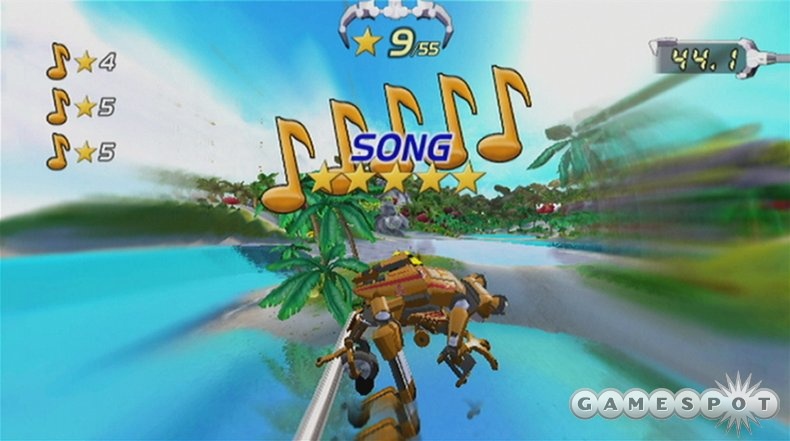
The industry's rapid growth and expansion have a downside: There are just too many games! There are certainly worse problems than having too many good games to play and not enough time. But the consequence of flooding players with options is that great games often slip under the radar. When a great game like Excitebots sells poorly in its first month (reportedly shifting a mere 13,000 copies), it sends a discouraging message to publishers. Why make another wacky robot bug racing game when the latest movie tie-in sold 10 times better?
What's right with the industry?
The industry's rapid growth and expansion have an upside: There are a ton of great games to play--games that are the best their genre has ever seen, games that are blending genres in new ways, and games that flat out create new genres. The variety and depth are astonishing--$10 games, $60 games, five-hour games, and 55-hour games--especially considering some of the games I used to get months and months out of when I was a kid. It's an embarrassment of riches, and I love it.
Where do you see the industry in five years?
After the announcements at the 2009 Electronic Entertainment Expo, I'm anticipating (half-excitedly, half-warily) some astonishing new tech to have further changed the face of video gaming in five years. Having an AI character that can read your facial expression and respond to your emotional tone seems like the kind of science fiction that doesn't end well, but playing through Mass Effect-style conversations and actually speaking to your non-player character teammates? That sounds like the future I want to be a part of.
Giancarlo Varanini Editor-At-Large

What's wrong with the industry?
The idea of soaring development budgets for PlayStation 3 and Xbox 360 games is disconcerting. We've already seen how this has impacted the industry as a whole with the consolidation, merging, or just the outright closure of various companies around the world. We've also seen the impact of this in terms of output: Companies are more likely to cash in on sequels to popular franchises and with greater frequency. But my ultimate concern is that this is all going to lead to fewer companies creating fewer games on the major gaming platforms, which could then translate into the market ultimately shrinking and, dare I say it, potentially heading toward another crash. Of course, this doesn't necessarily apply to the handhelds, the legacy systems (such as the video game industry's Energizer Bunny, the PlayStation 2), the Wii, or even, to a certain extent, XBLA and PSN. And that's a good thing for all of us because a large portion of creativity and experimentation--the kind of stuff that drives innovation--thrives on those platforms.
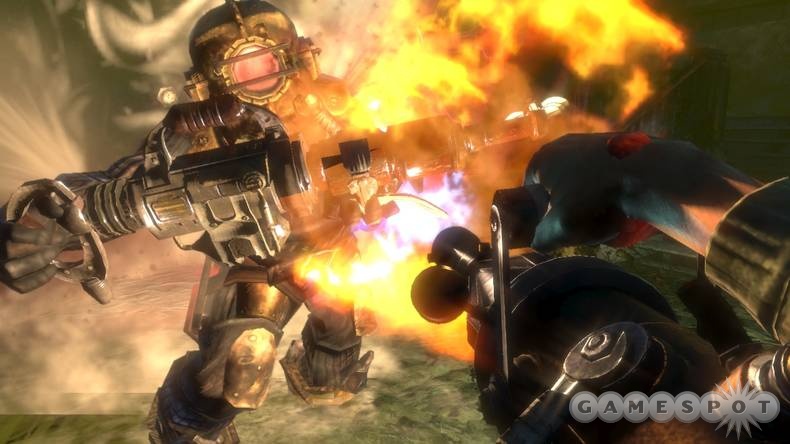
Another issue with the industry--and it has been a problem for a while--is the dumping of eggs into the basket that is known as Q4, or the Thanksgiving/Christmas window. So many good games are overlooked because they don't have the massive marketing budgets to compete in a crowded season filled with Halos, Marios, Links, or whatever the next big thing happens to be, but let's take a look at this from a different perspective. I realize the video game industry has certain corporate obligations associated with the holidays, but there's a reason, for instance, that the movie industry uses the summer season for a good portion of its "blockbusters." Most of the popular shows on TV are in reruns, and new TV shows are usually just reality filler. Many kids are out of school and bored out of their minds. Sure, summer also means that people leave their homes to go on vacation or just step outside more often to enjoy the nice weather, but releasing a game in that time frame--as opposed to a time frame when people cannot buy a game because they already bought one or perhaps two other good ones and can't afford another--seems far more logical to me. And hey, the game will still be on store shelves around Christmastime, and if it gets good buzz because people have been playing it in the months leading up to the holiday, it will sell, provided there aren't dozens of high-profile games clogging the shelves--BioShock or Dead Rising, anyone?
What's right with the industry?
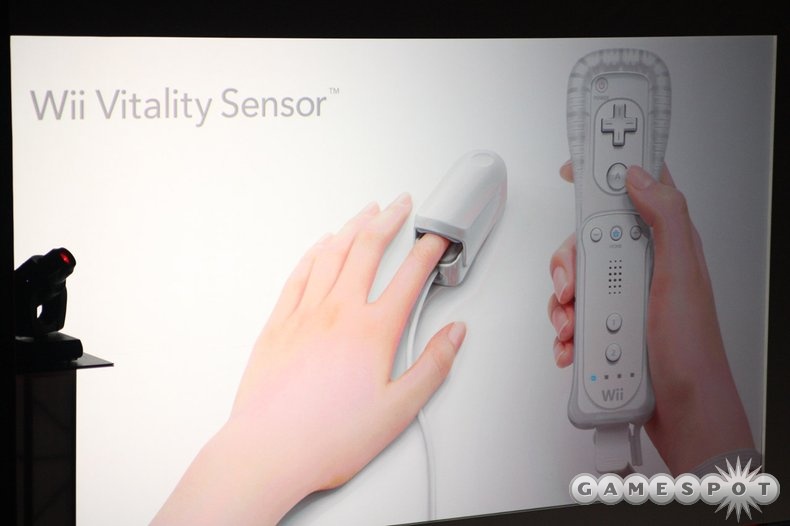
There seems to be some indication that the preexisting hardware life span model is no longer relevant and that companies are willing to stick it out with the current setup of systems for much longer than originally suspected. This is immediately apparent with the introduction of technology like Project Natal, Sony's own motion-sensing apparatus, and yes, even Nintendo's vitality sensor--all of these things are built upon current hardware and yet they can offer experiences vastly different from those that are currently available. Whether or not they will be good experiences remains to be seen, but if hardware manufacturers are already fully aware of the pitfalls of launching into another "next generation" of system wars, that's a good thing. Plus, it will help with the aforementioned soaring development costs and eventually place a good portion of developers on a level playing field.
What's also good about the industry, right now anyway, is that there's still an intense creative energy--even if it's not immediately visible under the mountain of sequels and "me too" games. The fact that we get to play and enjoy games like Flower (which, I contest, is possible only because of the relative low-risk investment of digital distribution) or witness zany new ideas like those in Scribblenauts makes me giddy. And with the emergence of the iPhone as a gaming platform, I only see more opportunities for well-known and obscure developers to try new things, see what sticks, and ultimately see these new mechanics integrated into blockbuster releases.
Where do you see the industry in five years?
Aside from the prominence of motion-controlled gaming, cloud gaming seems like something that will take off within the next few years. I'm genuinely intrigued by the technology--gaming via a central PC hub that sends an HD video signal back to your TV--but it's one of those things that certainly won't be ready for broad adoption due in large part to the fact that there are just too many variables, like connection speed. But perhaps more importantly, are people willing to pay for games that they can play only as long as their Internet connection is working? What if a massively multiplayer online game-style scenario occurs and the servers get hammered, not allowing people to play a certain game? There are a lot of questions that still need to be answered, so it will be interesting to see what happens.
Kevin VanOrd Associate Editor


What's wrong with the industry?
Marketing departments and publisher hubris are responsible for what we play, and how we play. I'm not talking just about in-game advertising (though didn't you crave an ice-cold Pepsi after playing Bionic Commando? I know I did!). I am talking about entire products, games, and franchises designed around milking their audience rather than offering up real creativity. It's OK to give players what they want. But did anyone really want PlayStation Home rather than a more intuitive online interface for the PlayStation 3? That service seems more of a marketing experiment than an outlet for developer creativity. Activision pumps out more Guitar Hero, and we keep buying because we want the songs. Yet charging full retail price for what is essentially a track pack is an obvious grab at our nostalgia--and our wallets. Yet the same company dropped Brutal Legend, a brand-new game from an industry icon, only to cry foul when the game garnered positive attention from an audience craving fresh blood. Only time will tell if the rise of superpublishers will lead to a dearth of original properties. But even now, imagination at some major publishers is overshadowed by "branding," a sad marketing buzz term that is responsible for the endless stream of sequels, add-ons, spin-offs, and trading-card games that have displaced creative thinking at those companies. There's no room for art when your game is designed by committees and focus groups.
What's right with the industry?
Services like Xbox Live, Steam, and PlayStation Network have brought smaller titles that would otherwise be overlooked to a mainstream audience. In the past, games like Everyday Shooter and Comet Crash would have been limited to small releases at small Web sites, where they would have garnered much smaller followings than they can now. While it's easy to bemoan the rise of the big-budget extravaganza, don't assume that blockbusters are overshadowing true imagination: Small games are reaching big audiences and changing expectations. Who would have expected a game like Braid to have been such a critical success? Creative minds are being heard and their games are being played, and the tools in games like Spore and LittleBigPlanet are bound to inspire a whole new generation of imaginative designers.
Where do you see the industry in five years?
I don't think things will be too far off from where they are now, but I do think we'll see some shifts. Games will be increasingly aimed at the so-called casual audience, but we'll see Nintendo's dominance decline somewhat in the console realm (though the company will continue to lead in the handheld space). The PlayStation 3 will grow its audience and lead a longer life than many expected. But we'll continue to see perpetual sequels, original IPs, and true innovations in more or less the same ratio that we have now, though more and more of these games will be available at virtual retailers for download than ever before. I don't expect that Nintendo's motion-controlled success will translate to similar long-term triumphs for Sony or Microsoft. And I expect that overpriced downloadable content will continue to be overpriced, sadly. In other words, I don't expect to see the industry change in drastic ways, but I do see subtle changes in the balance of power and market share.
Shaun McInnis Associate Editor

What's wrong with the industry?
Corporate consolidation is a bit of a worry for me. The notion of one giant company buying or merging with another giant company is nothing new; it has been happening for ages. But recently, it seems like we've been seeing it on a much larger scale. The reason for my concern is simple: Competition breeds creativity. In the absence of competition, we'll continue to see the same franchises trotted out again and again with minimal yearly updates. Why take a risk making something new and different when your ever-expanding resources allow you to simply market your way to increased sales numbers? I can't fault anyone for trying to make money; that's the whole reason publishers exist in the first place. But as a consumer, I prefer to see interesting new games rather than the same established brands again and again.
What's right with the industry?
Thankfully, creative ideas have found a new home in the form of downloadable games. As someone who has never been much of a PC guy, I'm really enjoying the proliferation of downloadable games on consoles. We're seeing a lot of indie (read: risky and innovative) games that we'd never have seen five years ago. Games like Braid and Flower immediately come to mind as games that are a little too out-there to support a full retail product but that work beautifully as smaller downloadable offerings. Beyond that, continued downloadable content support for games like Fallout 3 and Burnout Paradise means games can have much longer life spans than ever before. This may be old news to grizzled PC veterans, but for a console guy like me, it's a fun new trend.
Where do you see the industry in five years?
If there's one thing this year's Electronic Entertainment Expo taught us--well, aside from the fact that
Got a news tip or want to contact us directly? Email news@gamespot.com
Join the conversation