GameSpot's Summer Video Card Roundup 2007
In our final installment of the Video Card Roundup, find out which sub-$100 video cards are worth buying.
 Digg This!
  del.icio.us
 A follow-up to last year's video card guide, GameSpot's Video Card Roundup for 2007 will show you what cards are widely available in your price range and how they stack up against one another. We've divided the video cards by price into four categories: high-end, performance, mainstream, and budget. Our budget list includes all the current-generation video cards available for $100 or less. The mainstream group includes cards that retail for up to $200. Bump the price range up to $200-$400 to get to our performance cards. Finally, we have our extremely broad high-end category that includes everything over $400, which covers both single cards and dual-card setups. We've focused on current-generation GeForce 8 series and Radeon 2000 series video cards in this roundup. Check out
High-End Video Cards
High-end video card setups encompass the $400 and over category. These video cards will allow you to play games at very high resolutions and with maximum image quality settings. Feel free to keep antialiasing (which helps to smooth out jagged lines) and anisotropic filtering (keeps textures looking good at all distances and angles) settings enabled on just about every single game at resolutions as high as 2560x1600. You can easily get away with less expensive cards if you have a smaller monitor or don't need extremely high image quality settings.
You can find plenty of options in the high-end category, and with the advent of SLI and CrossFire, it's very easy to double the amount you pay. SLI and CrossFire refer to technologies, respectively created by Nvidia and ATI, that allow you to operate two matching video cards in the same computer. Dual-card setups will give you access to higher image quality settings, but you won't get double the performance due to the overhead involved in getting two cards to work together. A dual-card setup will also require a beefy power supply, a specialized SLI or CrossFire motherboard capable of running two video cards, and possibly even a new computer case.
There are only a few individual cards in the high-end category. Once we remove the SLI and CrossFire combinations, we're left with the GeForce 8800 Ultra, the GeForce 8800 GTX, the Radeon HD 2900 XT, and some versions of the GeForce 8800 GTS 640MB. The GeForce 8800 Ultra and GTX have the same number of shaders, but the Ultra has slightly faster clock speeds. The GeForce 8800 GTX originally debuted late last year before the launch of Windows Vista, and ruled the roost for many months before being displaced by the Ultra. Nvidia's GeForce 8800 GTS 640MB product comes with three-fourths as many shaders as the GTX, and has less memory and slower clock speeds. The GTS is currently available for as low as $380 online, but we included it in the high-end category because many variants of the card come very close to the $400 mark and we needed to give the Radeon HD 2900 XT some fair competition.
The Radeon HD 2900 XT's $400 price point places it between the GeForce 8800 GTS 640MB and the GeForce 8800 GTX. The ATI and Nvidia solutions have very different architectures, which makes direct shader-count comparisons difficult. Shader numbers can be used to compare cards within the same family (for instance, the 8800 GTX to the 8800 GTS, and the 2900 XT to the 2600XT), but not between cards with dramatically different GPU designs. Note that ATI doesn't have a true answer for the GeForce 8800 GTX or 8800 Ultra cards. If you're considering only the highest of the high-end, you're going to get a GeForce.
| Price | Processors / Speed | RAM / Speed | Additional Notes | |
|---|---|---|---|---|
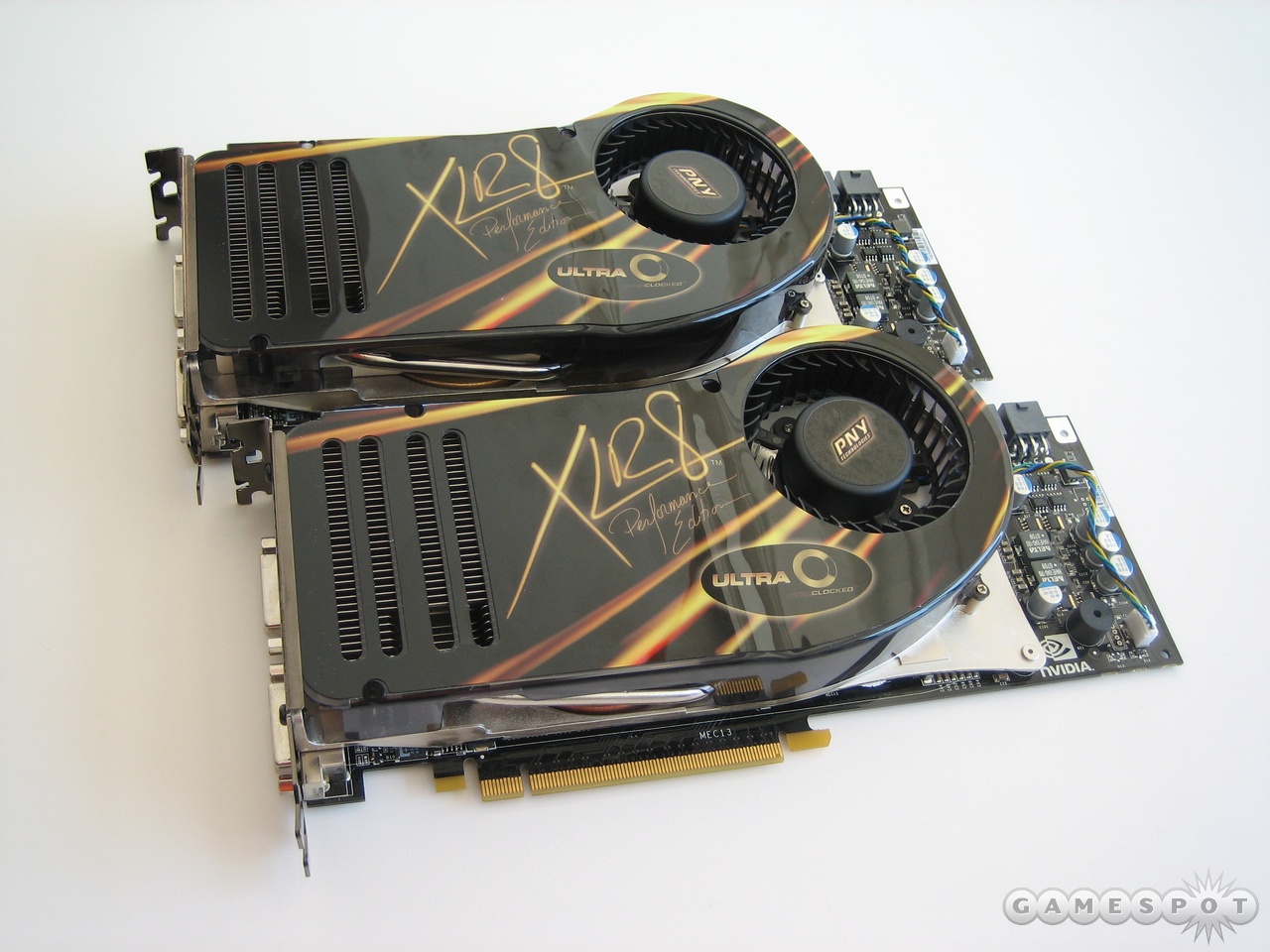 | $1350 | 128 648MHz | 2 x 768MB 384-bit 2.2GHz | The GeForce 8800 Ultra SLI configuration is the most powerful graphics setup currently available. These enormous cards will require a large case for cooling, an SLI motherboard, and at least a 900W power supply to feed them. |
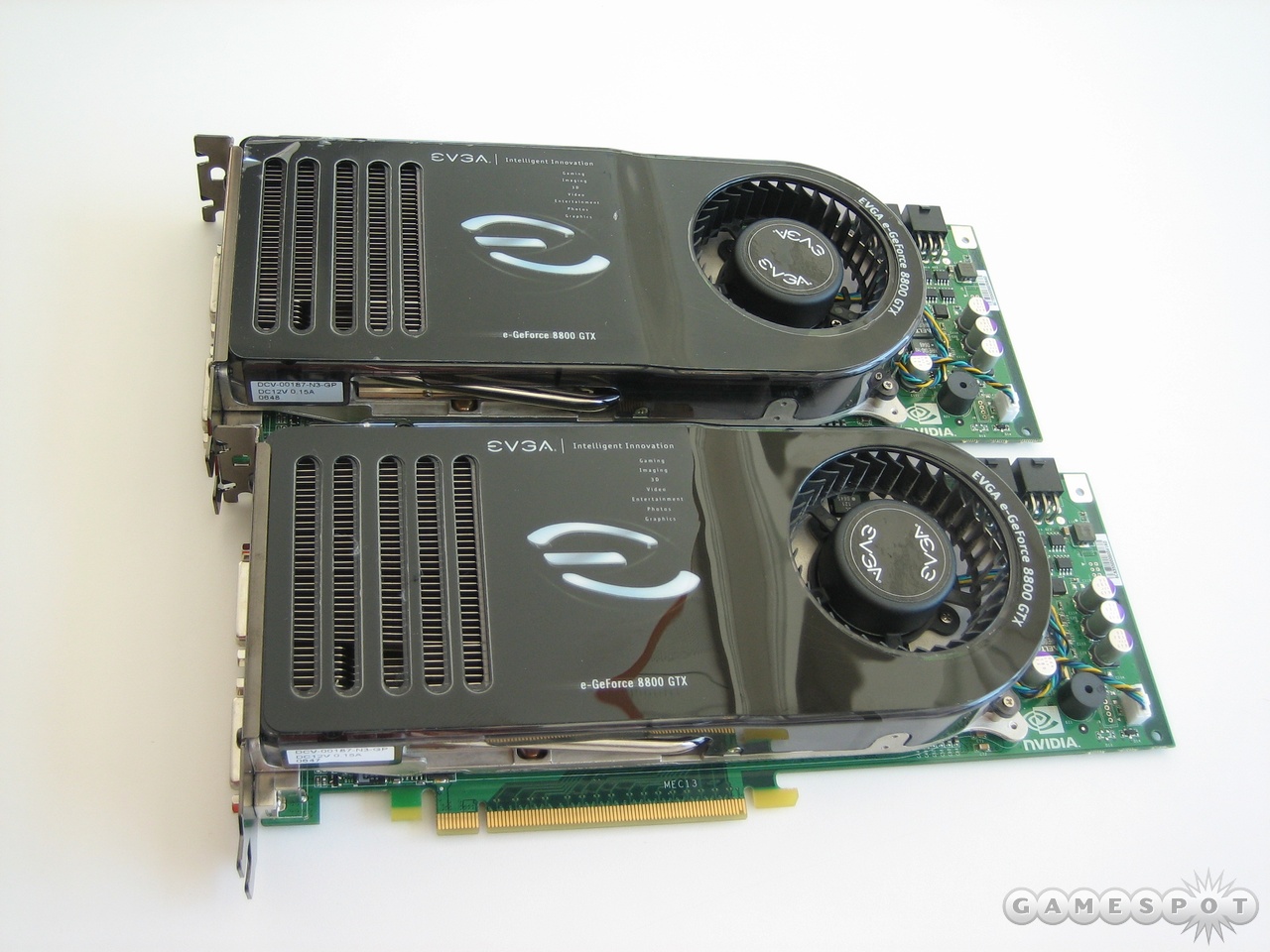 | $1140 | 128 575MHz | 2 x 768MB 384-bit 1.8GHz | Two GeForce 8800 GTXs have all the same requirements as the Ultra SLI combo, but you can get away with a mere 750W power supply. |
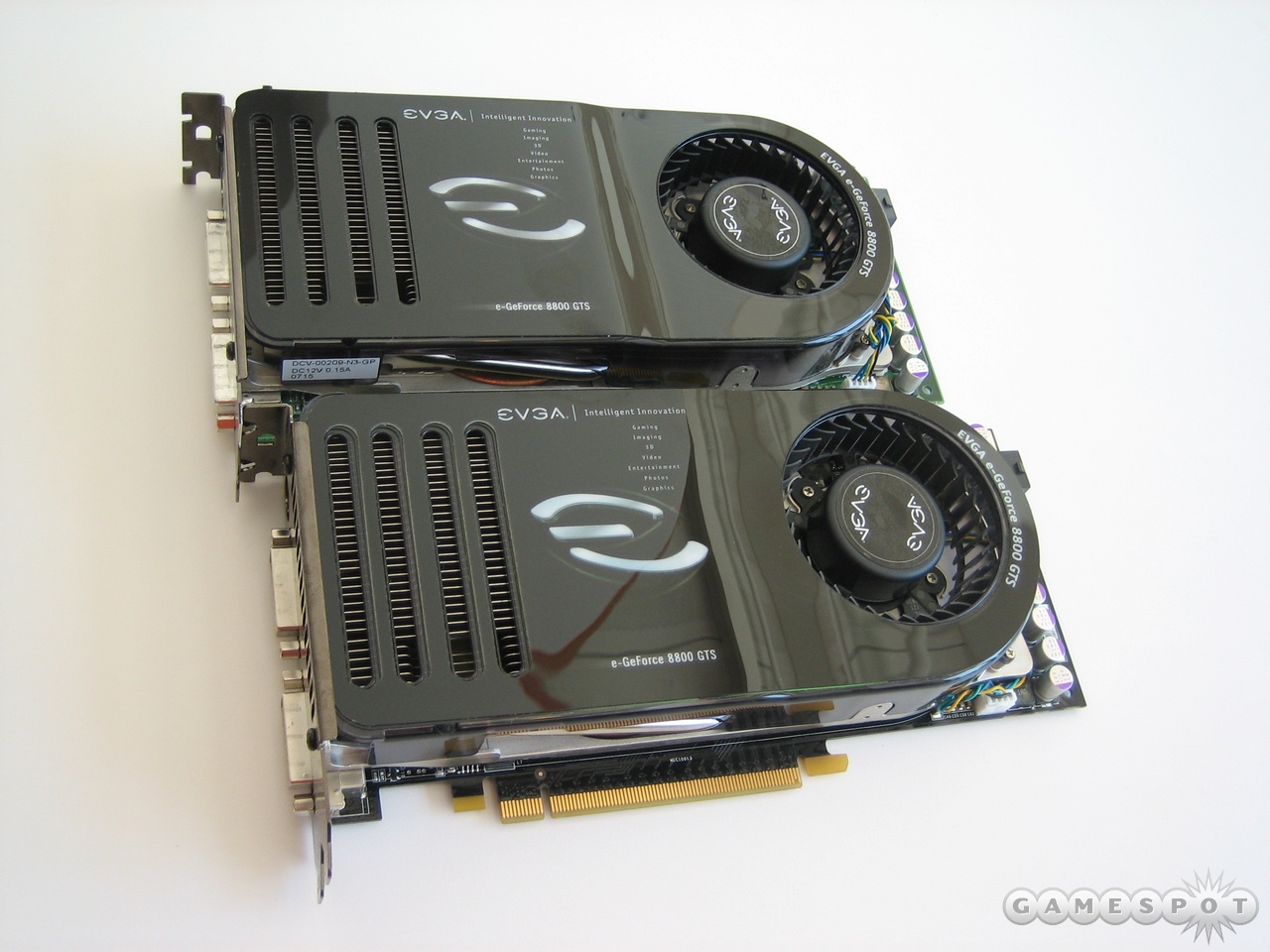 | $780 | 96 500MHz | 2 x 640MB 320-bit 1.6GHz | The GeForce 8800 GTS card requires only one external power connector, but a matching set can still put out a decent amount of performance. |
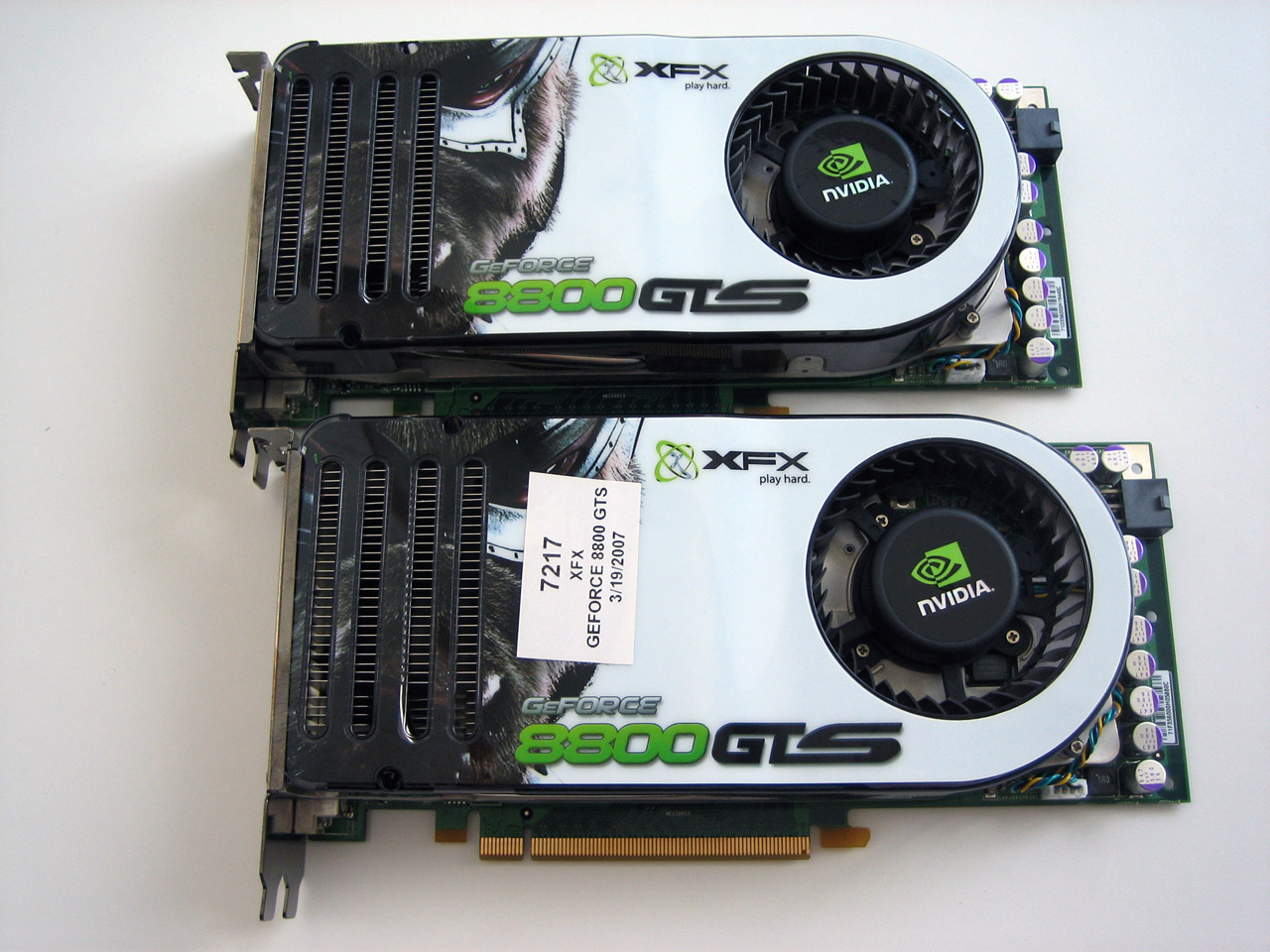 | $580 | 96 580MHz | 2 x 320MB 320-bit 1.8GHz | With half the RAM of its 640MB sibling, these 320MB GeForce 8800 GTS cards might begin to falter when you crank the resolution beyond 1600x1200. |
 | $675 | 128 648MHz | 768MB 384-bit 2.2GHz | The most powerful single-card solution on the market requires a 500W power supply and enough clearance to fit inside your case. |
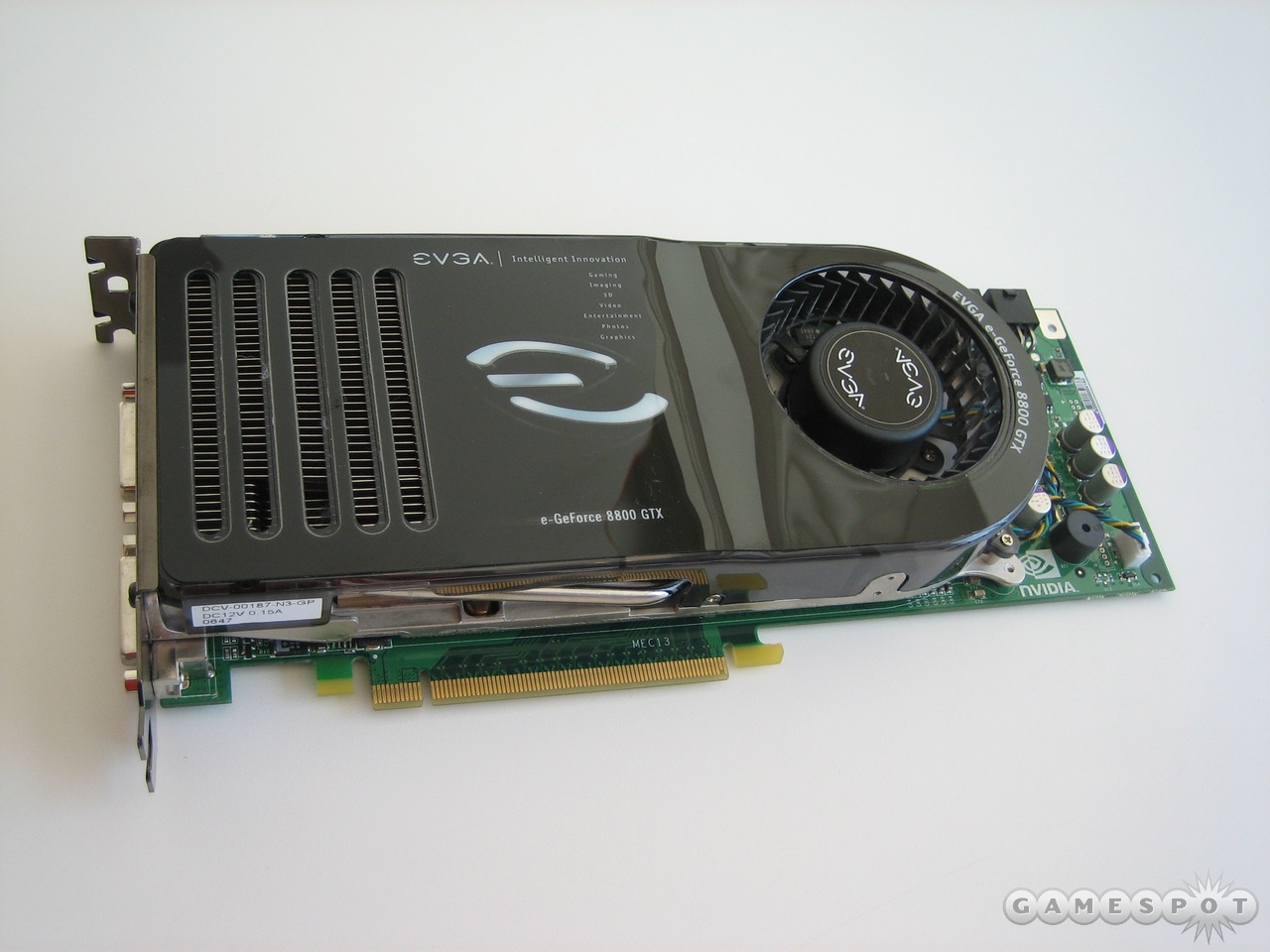 | $570 | 128 575MHz | 768MB 384-bit 1.8GHz | The GeForce 8800 GTX was the first DirectX10 card to arrive on the market and remains a powerful solution today. |
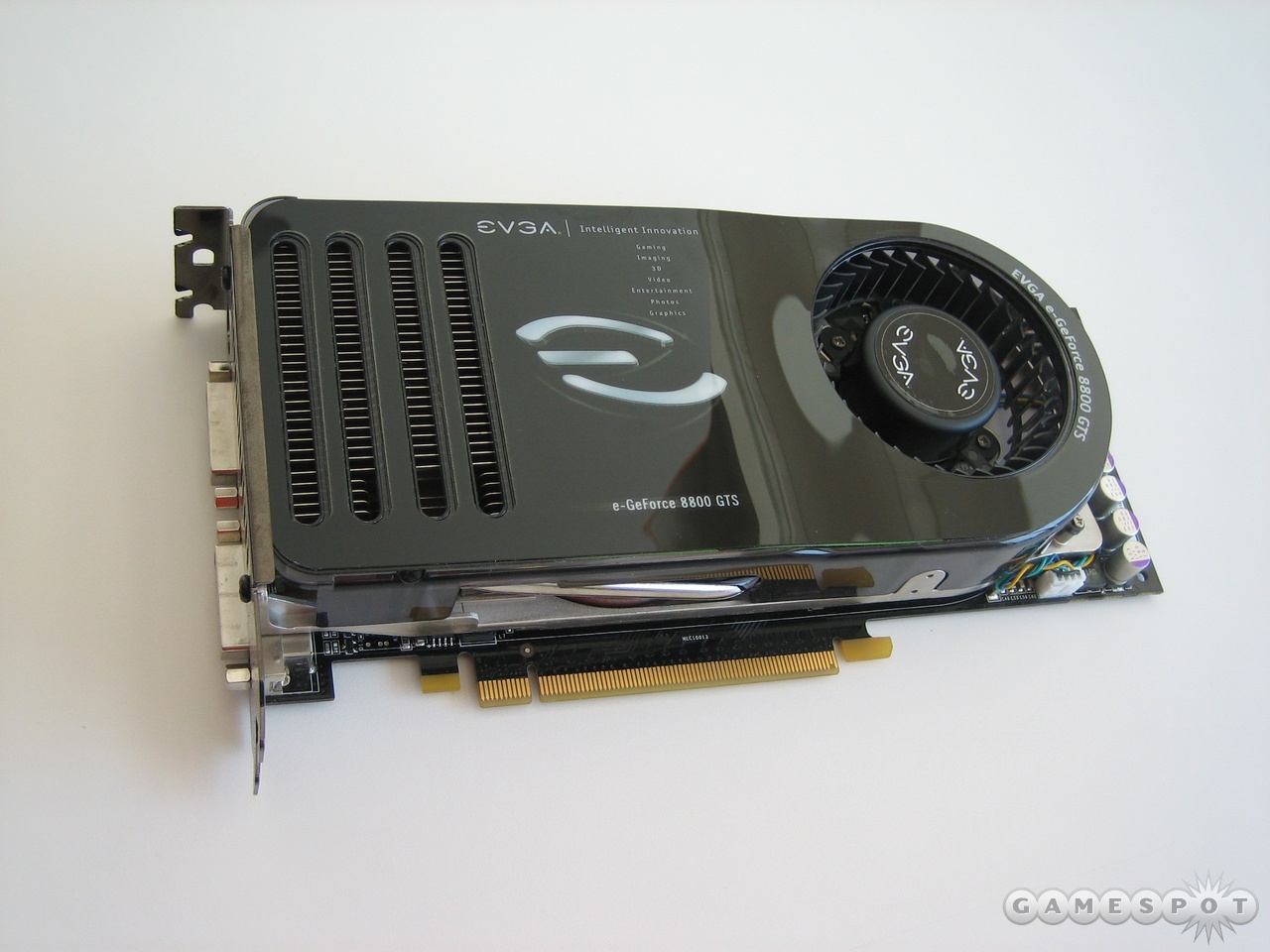 | $380 | 96 500MHz | 640MB 320-bit 1.6GHz | A single GeForce 8800 640MB GTS has fewer shaders and a lower clock speed than the GTX, but it's a lot more affordable. |
 | $800 | 320 742MHz | 2 x 512MB 512-bit 1.65GHz | Note that dual-video card SLI and CrossFire configurations have added costs beyond the price of the cards. |
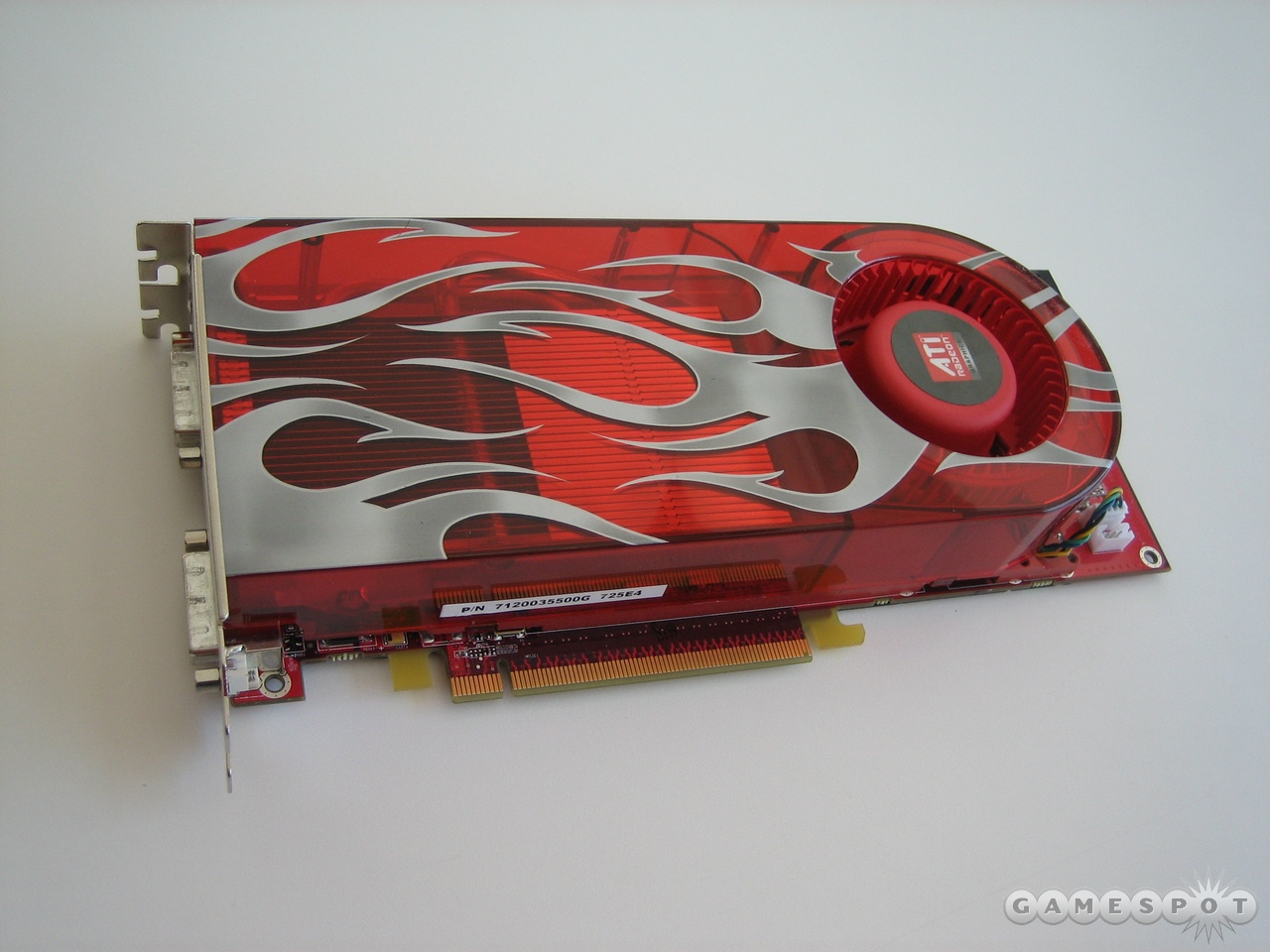 | $400 | 320 742MHz | 512MB 512-bit 1.65GHz | The Radeon HD 2900 XT works fine with two 6-pin power connectors, but you'll need a new power supply capable of providing a 6- and 8-pin power configuration to provide extra juice for overclocking. |
The Results
We graphed the average dollar per frame for each card and dual-card setup we tested. We calculated individual dollar-per-frame amount for each game for each graphics setup we tested, then averaged the results for presentation in this graph. It's not a definitive chart due to weighting issues--some games have higher frame rates than others--but it serves well enough to show which cards give the most frames for your money. A lower cost per frame results in better performance for every dollar spent. If you're looking for more details behind our testing, on the following pages you can find the individual results for each game, as well as price/performance comparisons.
The Verdict
In the high-end category we have to judge by two criteria: cost and performance. We have to acknowledge that some of us simply want the fastest hardware on the planet without regard to cost. For those people, the GeForce 8800 Ultra SLI provides the ultimate in performance. As expected, the GeForce 8800 GTX SLI setup comes in slightly behind the Ultras. Both the GeForce GTS 640MB SLI and 320MB SLI setups lagged significantly behind their higher-end brethren. ATI's HD 2900XT CrossFire configuration was competitive with the GTS setups but never came close to displacing the more costly Ultra and GTX SLI rigs.
If you're looking to squeeze the most frames out of your budget in the high-end category, look no further than the GeForce 8800 GTS 640MB. It sailed through our benchmarks with ease, and you can easily find overclocked variants of the card selling for marginally more than stock versions. The GeForce 8800 GTX and Ultra offer excellent performance, but the premium pricing kills the value angle. ATI's Radeon HD 2900 XT comes close to the GeForce 8800 GTS 640MB, but the GTS still maintains a slight edge in price and frame rates.
Quake 4
System Setup: Intel Core 2 X6800, Intel 975XBX2, eVGA 680i SLI, 2GB Corsair Dominator CM2X1024 Memory (1GB x 2), 160GB Seagate 7200.7 SATA Hard Disk Drive, Windows XP SP2. Graphics Cards: GeForce 8800 Ultra 768MB, GeForce 8800 GTX 768MB, GeForce 8800 GTS 640MB, GeForce 8800 GTS 320MB OC, Radeon HD 2900XT 512MB. Graphics Driver: Catalyst 7.6, Forceware 158.22.
S.T.A.L.K.E.R
System Setup: Intel Core 2 X6800, Intel 975XBX2, eVGA 680i SLI, 2GB Corsair Dominator CM2X1024 Memory (1GB x 2), 160GB Seagate 7200.7 SATA Hard Disk Drive, Windows XP SP2. Graphics Cards: GeForce 8800 Ultra 768MB, GeForce 8800 GTX 768MB, GeForce 8800 GTS 640MB, GeForce 8800 GTS 320MB OC, Radeon HD 2900XT 512MB. Graphics Driver: Catalyst 7.6, Forceware 158.22.
Oblivion
System Setup: Intel Core 2 X6800, Intel 975XBX2, eVGA 680i SLI, 2GB Corsair Dominator CM2X1024 Memory (1GB x 2), 160GB Seagate 7200.7 SATA Hard Disk Drive, Windows XP SP2. Graphics Cards: GeForce 8800 Ultra 768MB, GeForce 8800 GTX 768MB, GeForce 8800 GTS 640MB, GeForce 8800 GTS 320MB OC, Radeon HD 2900XT 512MB. Graphics Driver: Catalyst 7.6, Forceware 158.22.
Company of Heroes
System Setup: Intel Core 2 X6800, Intel 975XBX2, eVGA 680i SLI, 2GB Corsair Dominator CM2X1024 Memory (1GB x 2), 160GB Seagate 7200.7 SATA Hard Disk Drive, Windows XP SP2. Graphics Cards: GeForce 8800 Ultra 768MB, GeForce 8800 GTX 768MB, GeForce 8800 GTS 640MB, GeForce 8800 GTS 320MB OC, Radeon HD 2900XT 512MB. Graphics Driver: Catalyst 7.6, Forceware 158.22.
3DMark06
System Setup: Intel Core 2 X6800, Intel 975XBX2, eVGA 680i SLI, 2GB Corsair Dominator CM2X1024 Memory (1GB x 2), 160GB Seagate 7200.7 SATA Hard Disk Drive, Windows XP SP2. Graphics Cards: GeForce 8800 Ultra 768MB, GeForce 8800 GTX 768MB, GeForce 8800 GTS 640MB, GeForce 8800 GTS 320MB OC, Radeon HD 2900XT 512MB. Graphics Driver: Catalyst 7.6, Forceware 158.22.
Digg This! del.icio.us A follow-up to last year's video card guide, GameSpot's Video Card Roundup for 2007 will show you what cards are widely available in your price range and how they stack up against one another. We've divided the video cards by price into four categories: high-end, performance, mainstream, and budget. Our budget list includes all the current-generation video cards available for $100 or less. The mainstream group includes cards that retail for up to $200. Bump the price range up to $200 to $400 to get to our performance cards. Finally, we have our extremely broad high-end category that includes everything over $400, which covers both single cards and dual-card setups. We've focused on current-generation GeForce 8 series and Radeon 2000 series video cards in this roundup. Check out
Performance Video Cards
While a step down from the high-end category, our $200 to $400 performance cards still provide a lot of the power without the premium price. Cards closer to the $400 end of the spectrum will let you run your games with all the advanced graphics effects enabled. You'll be able to run games at resolutions of 1600x1200 and higher, but you might have to go easy on the antialiasing to keep the frame rates high.
At the moment, there are only a few single-card options in the performance category. The GPU manufacturers traditionally release new performance level cards when they take advantage of manufacturing improvements to "refresh" their lineups with faster chips. You can find the GeForce 8800 GTS 640MB and the Radeon HD 2900 XT 512MB at the $400 level. We had both cards in the high-end segment, but we're also including them here because they're right on the borderline and card prices usually fall over time. Once you drop all the way down to about $300, you'll find the GeForce 8800 GTS 320MB and nothing else as far as single-card solutions are concerned.
The rest of the performance-level video cards consist of dual-card SLI and CrossFire setups. We also included a few of the older dual-card combos from last year to give you an idea of how they compare to the newer cards.
| Price | Processors / Speed | RAM / Speed | Additional Notes | |
|---|---|---|---|---|
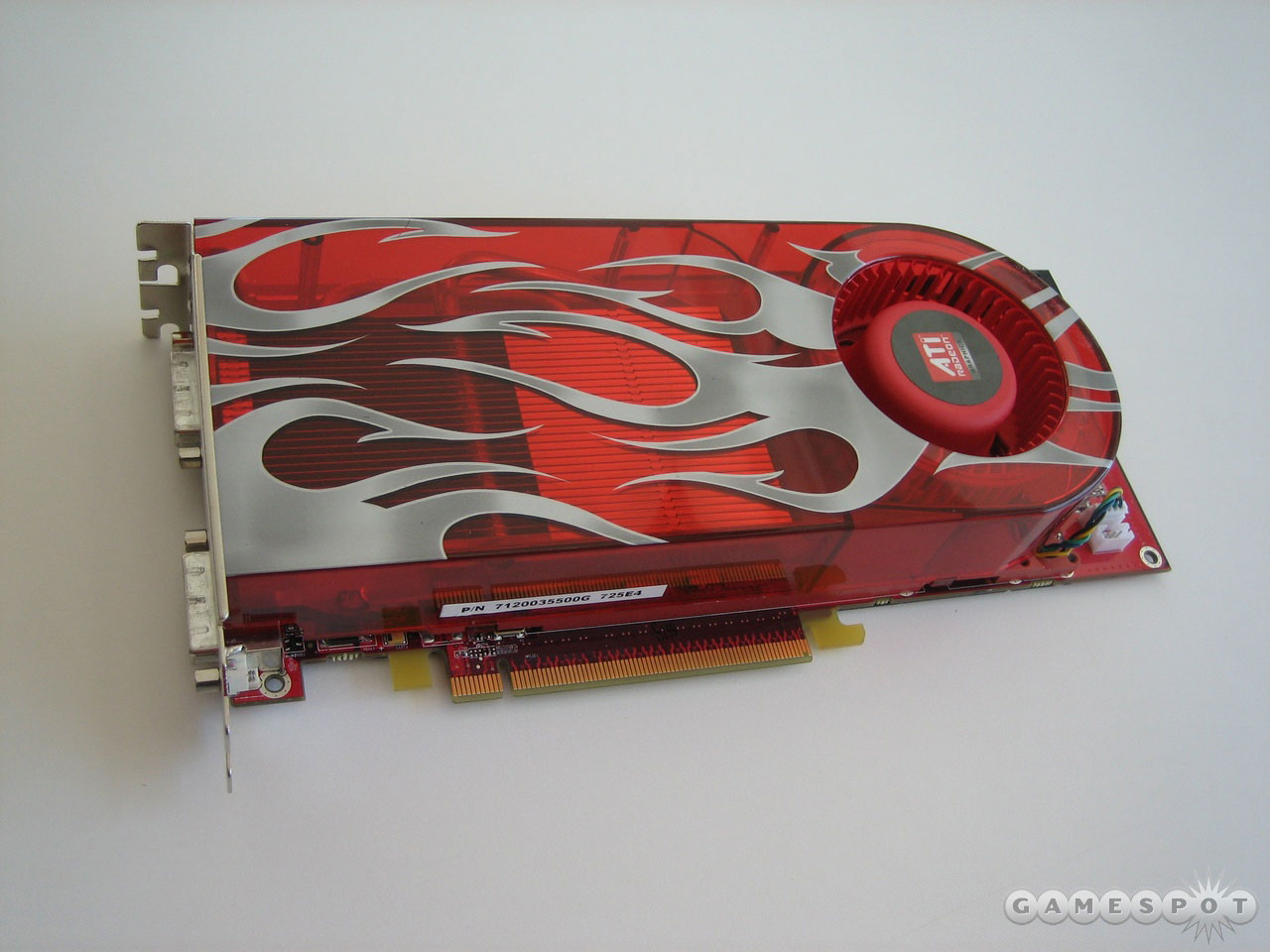 | $400 | 320 742MHz | 512MB 512-bit 1.65GHz | The Radeon HD 2900 XT works fine with two 6-pin power connectors, but you'll need a new power supply capable of providing a 6- and 8-pin power configuration to provide extra juice for overclocking. |
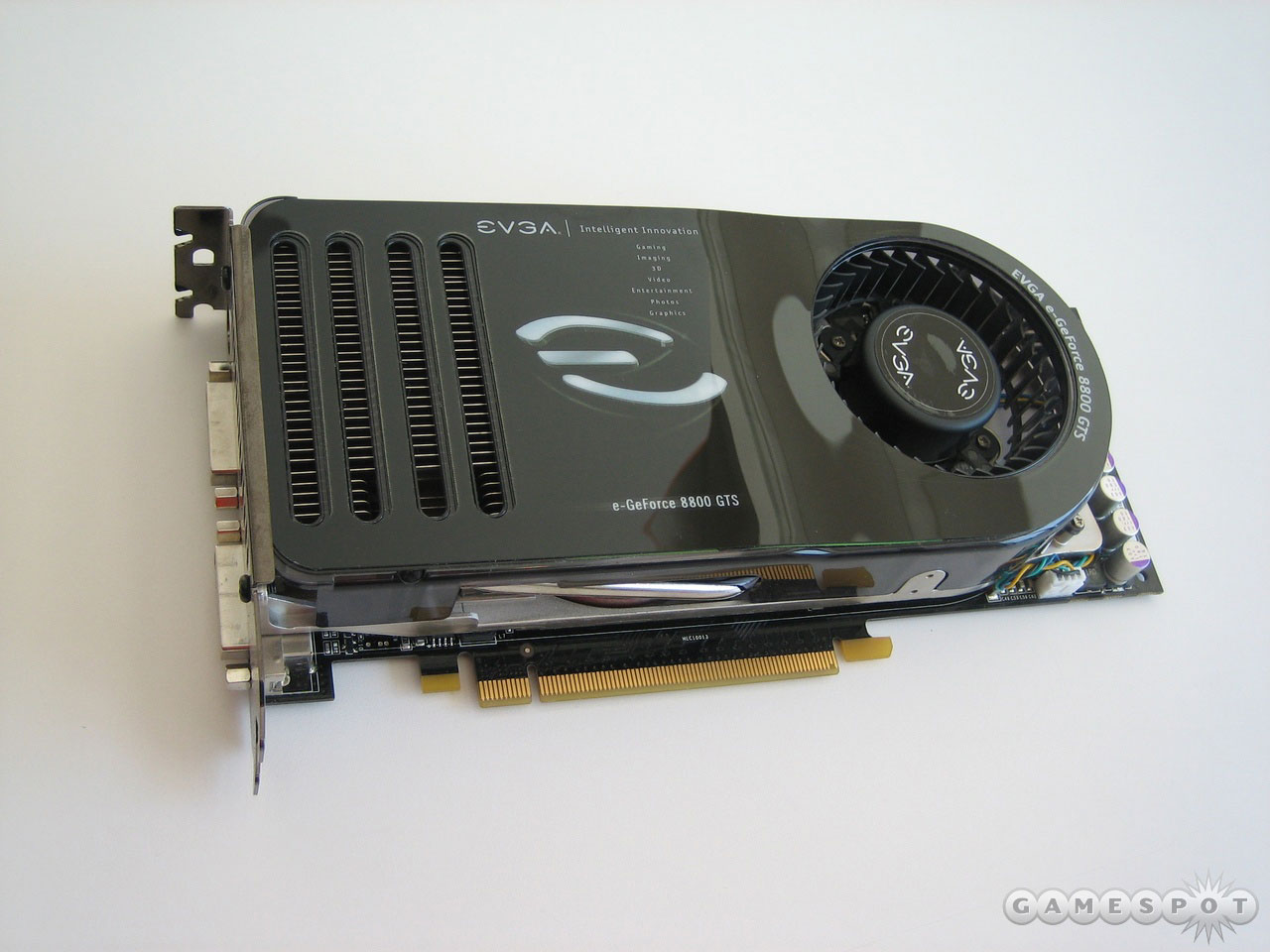 | $380 | 96 500MHz | 640MB 320-bit 1.6GHz | The GeForce 8800 640MB GTS has fewer shaders and a lower clock speed than the GTX, but it's a lot more affordable. |
 | $330 | 32 675MHz | 2 x 256MB 128-bit 1GHz | Nvidia gave the GeForce 8600 GTS a third as many shaders as the 8800 GTS and far less RAM. If you plan on getting an 8600 GTS SLI setup, make sure to have at least a 450W power supply. |
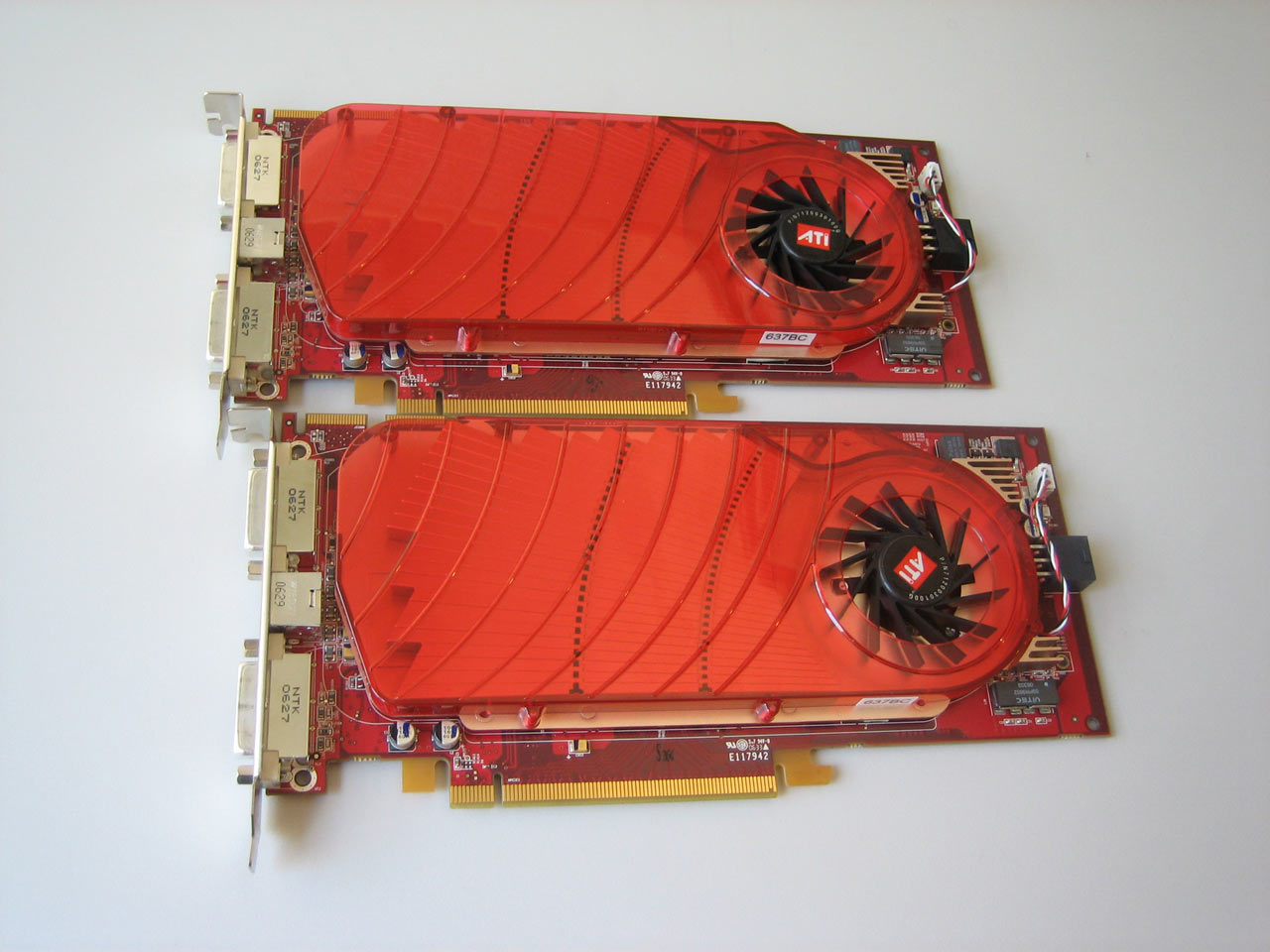 | $320 | 12 575MHz | 2 x 256MB 256-bit 1.38GHz | A hold over from last year, you can find these cards at plenty of retailers. The cards don’t support DirectX10, and you can find better values for the same price or less. |
 | $290 | 96 580MHz | 320MB 320-bit 1.8GHz | With half the RAM of its 640MB sibling, these 320MB GeForce 8800 GTS cards might begin to falter when you crank the resolution beyond 1600x1200. |
 | $260 | 120 800MHz | 256MB 128-bit 1.4GHz | The Radeon HD 2600 XT slides in alongside the other mid-range setups, however a pair of them lands in the performance category. The cards compete well enough, but they’ve got stiff competition. |
 | $260 | 32 540MHz | 2 x 256MB 128-bit 700MHz | Aside from some clock speed differences, the GeForce 8600 GT and the GeForce 8600 GTS are identical. |
 | $210 | 32 540MHz | 2 x 256MB 128-bit 1.35GHz | Like the X1950 Pro, the X1650 XTs don’t support DirectX10 and are older products. |
The Results
We graphed the average dollar per frame for each card and dual-card setup we tested. We calculated the individual dollar-per-frame amount for each game and then averaged the results for presentation in this graph. It's not a definitive chart due to weighting issues; some games have higher frame rates than others. But it serves well enough to show which cards give the most frames for your money. A lower cost per frame results in better performance for every dollar spent. If you're looking for more details behind our testing, you can find the individual results for each game, as well as price/performance comparisons, on the following pages.
The Verdict
The two GeForce 8800 GTS cards come away the winners in our game performance tests. Our 320MB GTS is an overclocked variant, but it's available on the market just like the other cards. You can find numerous Nvidia and ATI factory overclocked parts for the same price or for a little more than standard parts. The price/performance characteristics of a regular GeForce 8800 GTS 320MB would be the same or slightly inferior to the GeForce 8800 GTS 640MB.
The Radeon HD 2900 XT performs well in a number of games and even beats the GeForce 8800 GTS 640MB in Company of Heroes and Quake 4, but the XT lags behind the GTS by a wide margin in S.T.A.L.K.E.R. and by a smaller margin in Oblivion. ATI might be able to coax more performance out of the XT with a few driver updates because the Radeon HD 2000 series is still relatively new.
As you can see from the price/performance comparison, the SLI and CrossFire setups, with the notable exception of the Radeon HD 2600 XT CrossFire, don't offer a whole lot of value in this price category. We still wouldn't recommend purchasing the Radeon HD 2600 XT pair because the GeForce 8800 GTS 320MB is only a few dollars more and provides more performance with none of the headaches associated with dual-card configurations.
Quake 4
System Setup: Intel Core 2 X6800, Intel 975XBX2, eVGA 680i SLI, 2GB Corsair Dominator CM2X1024 Memory (1GB x 2), 160GB Seagate 7200.7 SATA Hard Disk Drive, Windows XP SP2. Graphics Cards: GeForce 8800 GTS 640MB, GeForce 8800 GTS 320MB OC, GeForce 8600 GTS 256MB, GeForce 8600 GT 256MB, Radeon HD 2900XT 512MB, Radeon HD 2600 XT 256MB, Radeon X1950 Pro 256MB, Radeon X1650 XT 256MB. Graphics Driver: Catalyst 7.6, Forceware 158.22.
S.T.A.L.K.E.R.
System Setup: Intel Core 2 X6800, Intel 975XBX2, eVGA 680i SLI, 2GB Corsair Dominator CM2X1024 Memory (1GB x 2), 160GB Seagate 7200.7 SATA Hard Disk Drive, Windows XP SP2. Graphics Cards: GeForce 8800 GTS 640MB, GeForce 8800 GTS 320MB OC, GeForce 8600 GTS 256MB, GeForce 8600 GT 256MB, Radeon HD 2900XT 512MB, Radeon HD 2600 XT 256MB, Radeon X1950 Pro 256MB, Radeon X1650 XT 256MB. Graphics Driver: Catalyst 7.6, Forceware 158.22.
Oblivion
System Setup: Intel Core 2 X6800, Intel 975XBX2, eVGA 680i SLI, 2GB Corsair Dominator CM2X1024 Memory (1GB x 2), 160GB Seagate 7200.7 SATA Hard Disk Drive, Windows XP SP2. Graphics Cards: GeForce 8800 GTS 640MB, GeForce 8800 GTS 320MB OC, GeForce 8600 GTS 256MB, GeForce 8600 GT 256MB, Radeon HD 2900XT 512MB, Radeon HD 2600 XT 256MB, Radeon X1950 Pro 256MB, Radeon X1650 XT 256MB. Graphics Driver: Catalyst 7.6, Forceware 158.22.
Company of Heroes
System Setup: Intel Core 2 X6800, Intel 975XBX2, eVGA 680i SLI, 2GB Corsair Dominator CM2X1024 Memory (1GB x 2), 160GB Seagate 7200.7 SATA Hard Disk Drive, Windows XP SP2. Graphics Cards: GeForce 8800 GTS 640MB, GeForce 8800 GTS 320MB OC, GeForce 8600 GTS 256MB, GeForce 8600 GT 256MB, Radeon HD 2900XT 512MB, Radeon HD 2600 XT 256MB, Radeon X1950 Pro 256MB, Radeon X1650 XT 256MB. Graphics Driver: Catalyst 7.6, Forceware 158.22.
3DMark06
System Setup: Intel Core 2 X6800, Intel 975XBX2, eVGA 680i SLI, 2GB Corsair Dominator CM2X1024 Memory (1GB x 2), 160GB Seagate 7200.7 SATA Hard Disk Drive, Windows XP SP2. Graphics Cards: GeForce 8800 GTS 640MB, GeForce 8800 GTS 320MB OC, GeForce 8600 GTS 256MB, GeForce 8600 GT 256MB, Radeon HD 2900XT 512MB, Radeon HD 2600 XT 256MB, Radeon X1950 Pro 256MB, Radeon X1650 XT 256MB. Graphics Driver: Catalyst 7.6, Forceware 158.22.
Digg This! del.icio.us A follow-up to last year's video card guide, GameSpot's Video Card Roundup for 2007 will show you what cards are widely available in your price range and how they stack up against one another. We've divided the video cards by price into four categories: high-end, performance, mainstream, and budget. Our budget list includes all the current-generation video cards available for $100 or less. The mainstream group includes cards that retail for up to $200. Bump the price range up to $200 to $400 to get to our performance cards. Finally, we have our extremely broad high-end category that includes everything over $400, which covers both single cards and dual-card setups. We've focused on current-generation GeForce 8 series and Radeon 2000 series video cards in this roundup. Check out
Mainsteam Video Cards
Competition is fierce in the $100 to $200 price range. You can find a video card at nearly every $10 increment in between $100 and $200. If you're looking at the upper end of the range, you'll find new cards, such as the GeForce 8600 GTS and Radeon HD 2600 XT, as well as older performance cards, such as the Radeon X1950 XT and GeForce 7950 GT. At the bottom-end of the spectrum, you'll find late-model mainstream cards, such as the GeForce 7600 GT and Radeon X1650 XT, as well as new mainstream parts based on the latest technology including the the GeForce 8600 GT and Radeon HD 2600 Pro. Note that older GeForce 7 series and Radeon 1K series cards do not support DirectX 10. If you absolutely have to have DirectX 10 support, pick up a GeForce 8 series or Radeon HD 2000 series card.
Mainstream cards above $150 are ideal for 1280x1024 and 1600x1200 display resolutions. Don't expect to enable antialiasing all the time and be prepared to compromise on a few image quality settings to make games run more smoothly. Shadows are overrated anyway, right? Cards get decidedly weaker once you drop to the sub-$150 cards. Many of the cards on the bottom end will struggle at 1280x1024, and you'll likely have to disable several graphics settings to get newer games to run well.
| Price | Processors / Speed | RAM / Speed | Additional Notes | |
|---|---|---|---|---|
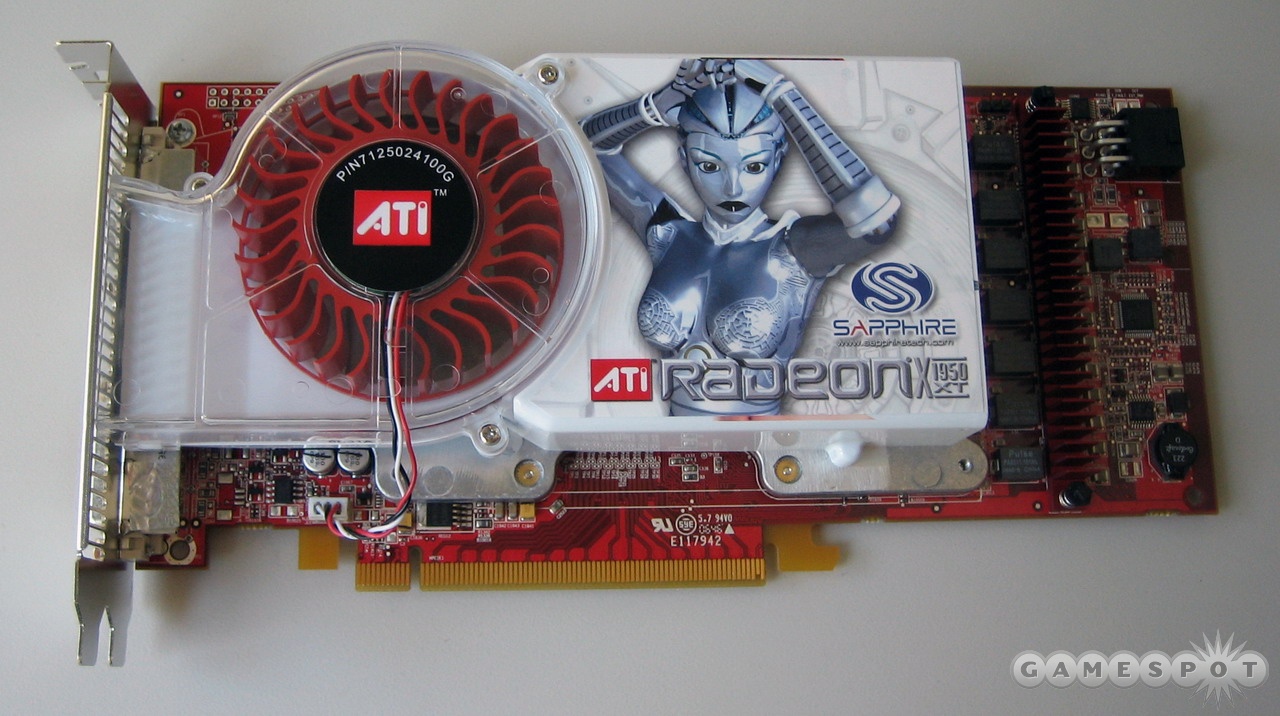 | $185 | 48 625MHz | 256MB 256-bit 1.80GHz | The Radeon X1950 XT has faster core and memory clocks than the X1950 Pro, but it's only slightly more expensive. |
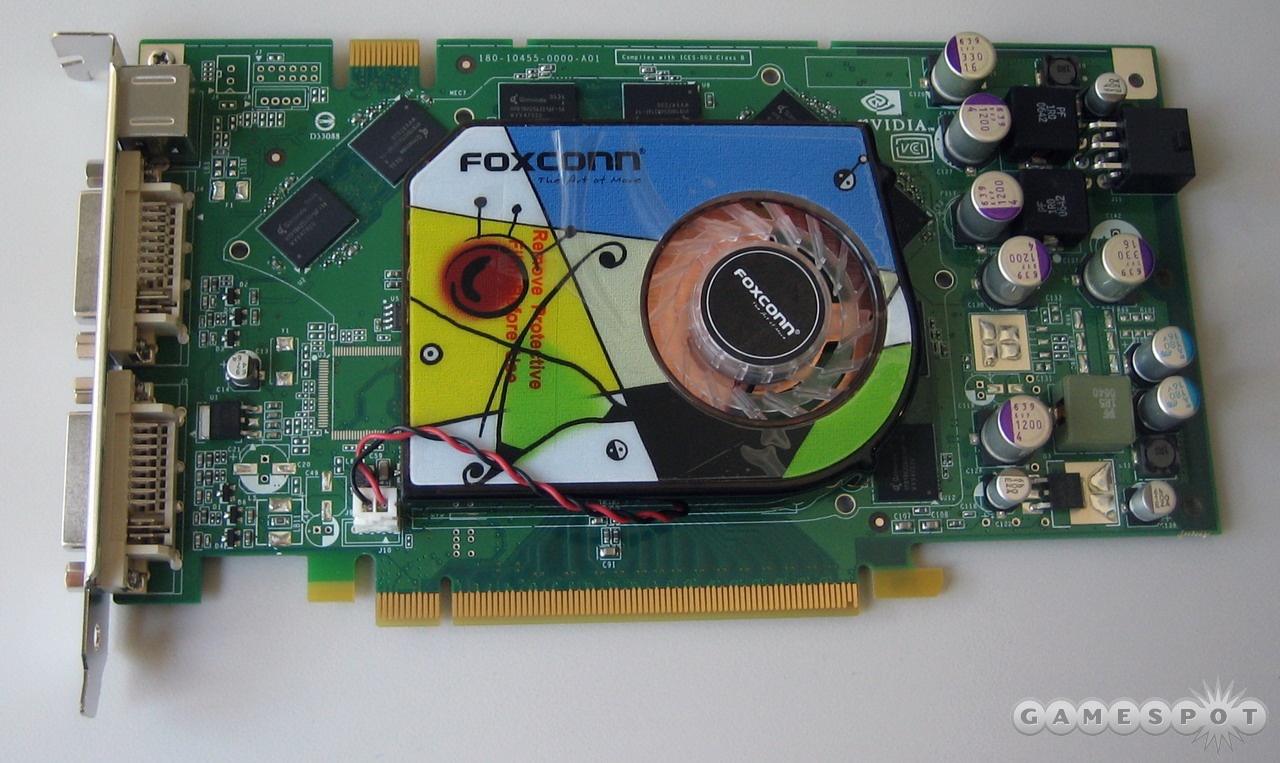 | $175 | 24 550MHz | 256MB 256-bit 1.40GHz | Nvidia released the GeForce 7950 GT to bridge the gap between the 7900 GTX and the 7900 GT, but now it's merely a very affordable card from the previous graphics generation. |
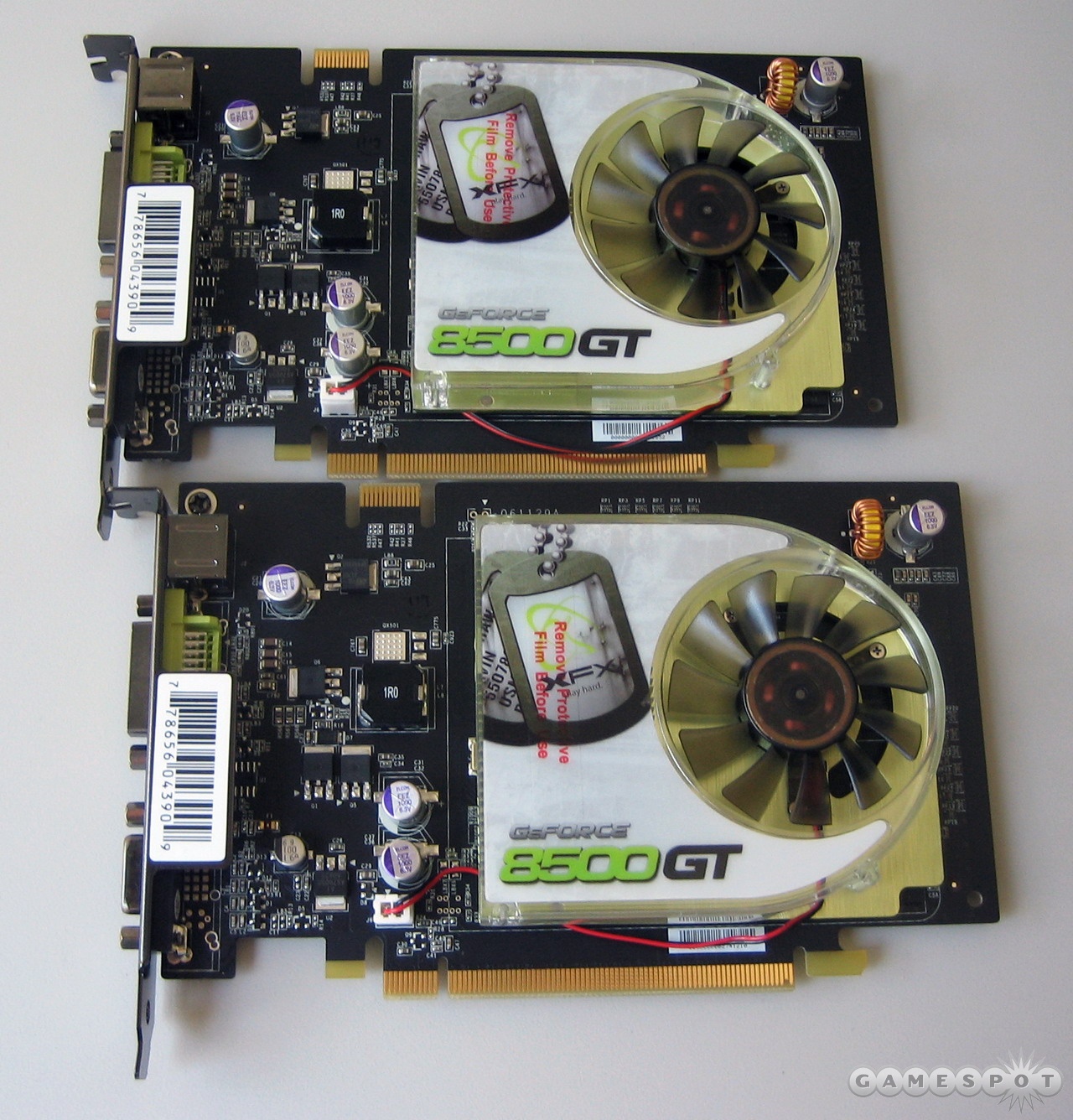 | $170 | 16 450MHz | 2 x 256MB 128-bit 800MHz | The GeForce 8500 GT represents the best of Nvidia's current-generation budget cards. Combine two of them for an SLI setup and they land in the mainstream category. |
 | $165 | 20 450MHz | 256MB 256-bit 1.32GHz | The 7900 GS was originally a mainstream card from the previous generation. It has slower clock speeds and fewer pipelines than the GeForce 7950 GT and it doesn't support DirectX 10. |
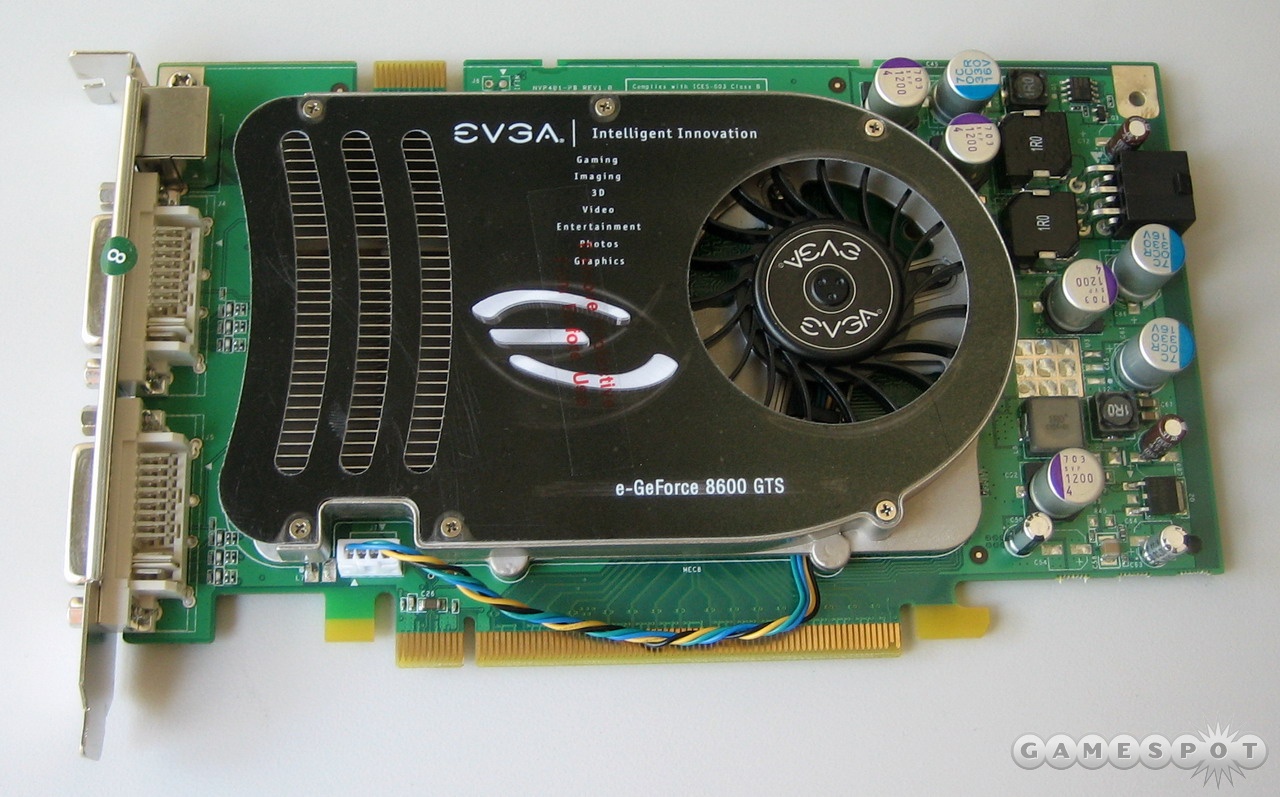 | $165 | 32 675MHz | 256MB 128-bit 2GHz | The GeForce 8600 GTS is Nvidia's best current-generation mainstream part. |
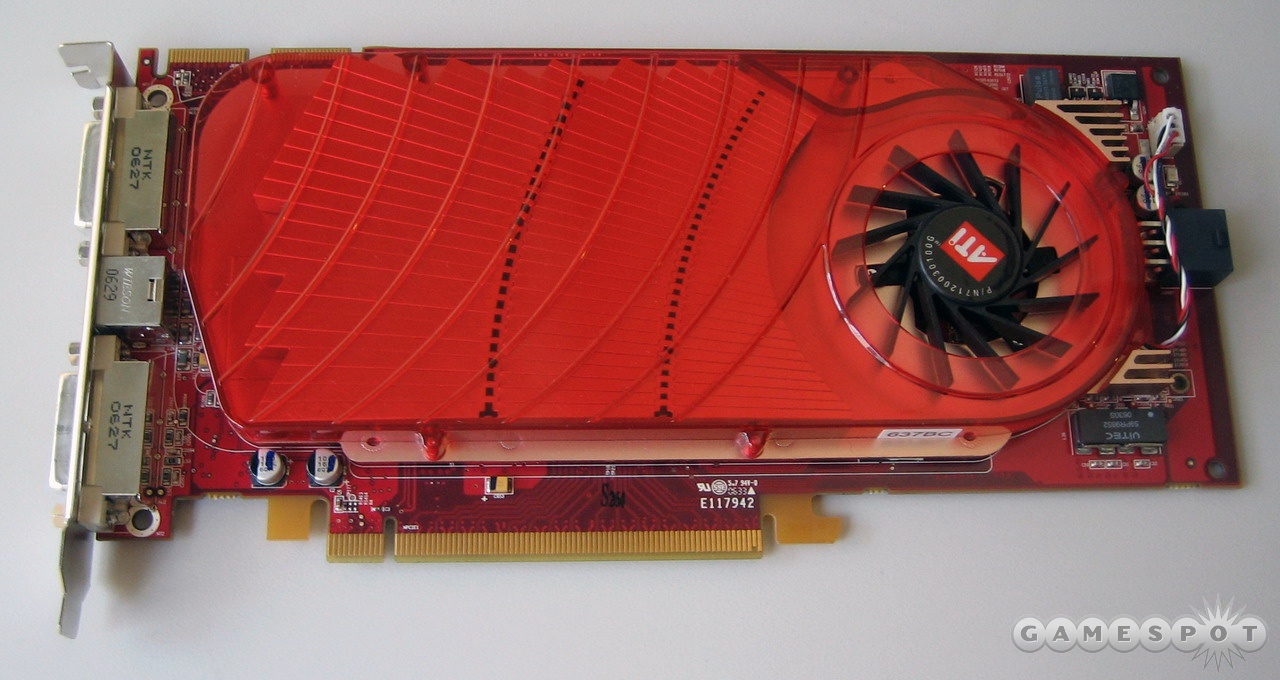 | $160 | 36 575MHz | 256MB 256-bit 1.38GHz | A holdover from last year, you can still find Radeon X1950 Pro cards at plenty of retailers. |
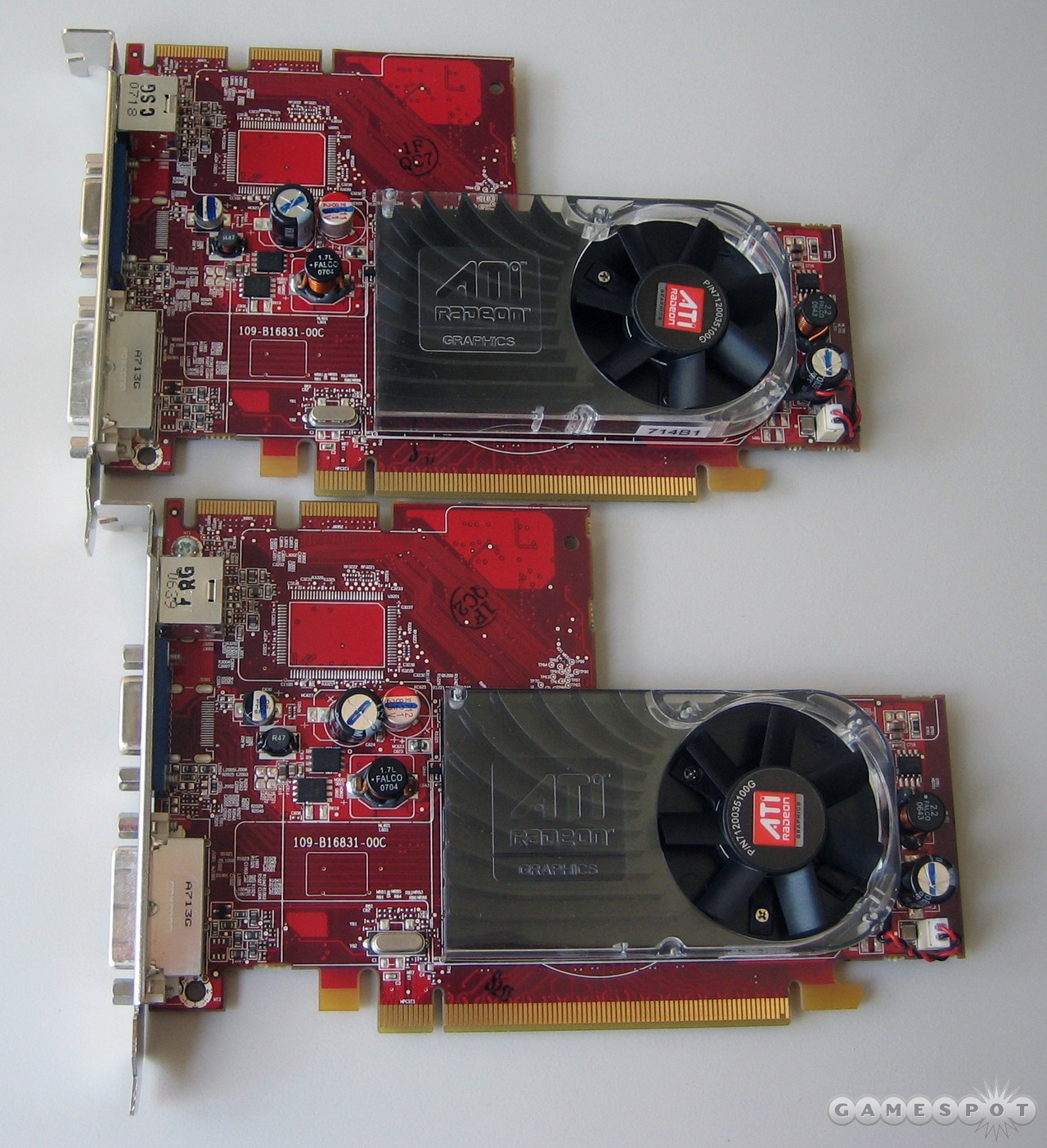 | $160 | 40 700MHz | 2 x 256MB 64-bit 1.4GHz | CrossFire a pair of budget cards to get them into the mainstream category. The 2400 XTs support DirectX 10 and are ATI's best current-generation budget cards. |
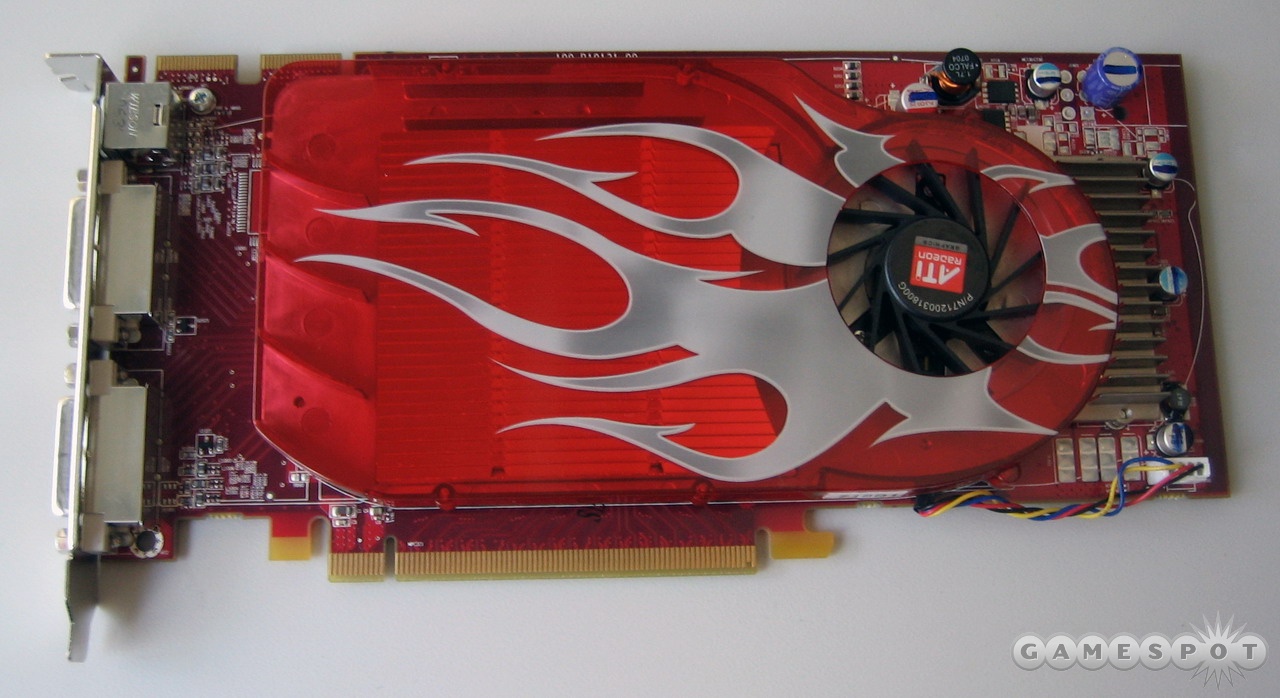 | $130 | 120 800MHz | 256MB 128-bit 1.4GHz | The Radeon HD 2600 XT is ATI's latest mainstream card. Some older cards might be faster, but they won't have the HD 2600 XT's DirectX 10 support. |
 | $115 | 32 540MHz | 256MB 128-bit 1.4GHz | Based on the same hardware as the GeForce 8600 GTS, the 8600 GT doesn't differ from its bigger brother aside from a slower clock speed. |
 | $105 | 24 574MHz | 256MB 128-bit 1.35GHz | The Radeon X1650 XT is ATI's mainstream card from the previous GPU generation. |
 | $100 | 12 560MHz | 256MB 128-bit 1.4GHz | The GeForce 7600 GT is a mid-range part from the previous generation; as such, it doesn't support DirectX 10, although its low price makes it a worthy contender. |
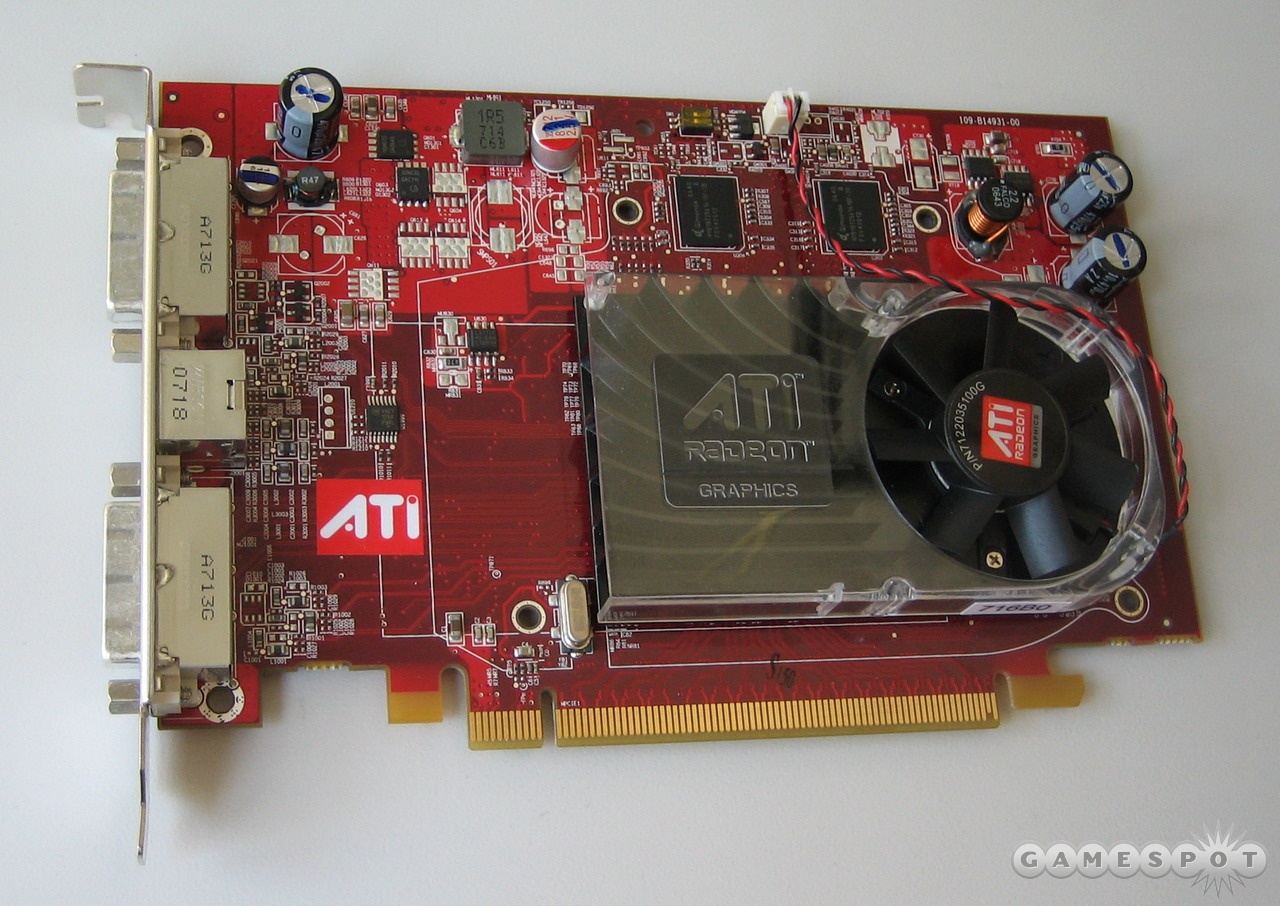 | $100 | 120 600MHz | 256MB 128-bit 1GHz | The Radeon HD 2600 Pro is one of the cheapest cards in this price segment, but performance might be lacking. |
The Results
We graphed the average dollar per frame for each card and dual-card setup we tested. We calculated the individual dollar-per-frame amount for each game and then averaged the results for presentation in this graph. It's not a definitive chart due to weighting issues; some games have higher frame rates than others. But it serves well enough to show which cards give the most frames for your money. A lower cost per frame results in better performance for every dollar spent. If you're looking for more details behind our testing, you can find the individual results for each game, as well as price/performance comparisons, on the following pages.
The Verdict
We've hit an interesting price/performance moment here in the mainstream segment. Just about all the cards we tested fall into the $4 per frame range. The linear relationship between price and performance basically means you get good value at all the price points; you just have to decide how much performance you want to buy. The most powerful card in the mainstream segment turned out to be the Radeon X1950 XT 256MB, but you'll have to make peace with the fact that it doesn't support DirectX10 before picking up the card. The best value in the bunch turns out to be the GeForce 8600 GT 256MB. The card gives excellent performance at a very low price, and to make the deal even sweeter, you can find overclocked variants of the GeForce 8600 GT for nearly the same price as the stock model.
Quake 4
System Setup: Intel Core 2 X6800, Intel 975XBX2, eVGA 680i SLI, 2GB Corsair Dominator CM2X1024 Memory (1GB x 2), 160GB Seagate 7200.7 SATA Hard Disk Drive, Windows XP SP2. Graphics Cards:GeForce 8600 GTS 256MB, GeForce 8600 GT 256MB, GeForce 8500 GT 256MB, GeForce 7900 GS 256MB, GeForce 7600 GT 256MB, Radeon HD 2600 XT 256MB, Radeon HD 2600 Pro 256MB, Radeon HD 2400 XT 256MB, Radeon X1950 XT 256MB, Radeon X1950 Pro 256MB, Radeon X1650 XT 256MB, . Graphics Driver: Catalyst 7.7, Forceware 158.22, Forceware 97.84.
S.T.A.L.K.E.R.
System Setup: Intel Core 2 X6800, Intel 975XBX2, eVGA 680i SLI, 2GB Corsair Dominator CM2X1024 Memory (1GB x 2), 160GB Seagate 7200.7 SATA Hard Disk Drive, Windows XP SP2. Graphics Cards:GeForce 8600 GTS 256MB, GeForce 8600 GT 256MB, GeForce 8500 GT 256MB, GeForce 7900 GS 256MB, GeForce 7600 GT 256MB, Radeon HD 2600 XT 256MB, Radeon HD 2600 Pro 256MB, Radeon HD 2400 XT 256MB, Radeon X1950 XT 256MB, Radeon X1950 Pro 256MB, Radeon X1650 XT 256MB, . Graphics Driver: Catalyst 7.7, Forceware 158.22, Forceware 97.84.
Oblivion
System Setup: Intel Core 2 X6800, Intel 975XBX2, eVGA 680i SLI, 2GB Corsair Dominator CM2X1024 Memory (1GB x 2), 160GB Seagate 7200.7 SATA Hard Disk Drive, Windows XP SP2. Graphics Cards:GeForce 8600 GTS 256MB, GeForce 8600 GT 256MB, GeForce 8500 GT 256MB, GeForce 7900 GS 256MB, GeForce 7600 GT 256MB, Radeon HD 2600 XT 256MB, Radeon HD 2600 Pro 256MB, Radeon HD 2400 XT 256MB, Radeon X1950 XT 256MB, Radeon X1950 Pro 256MB, Radeon X1650 XT 256MB, . Graphics Driver: Catalyst 7.7, Forceware 158.22, Forceware 97.84.
Company of Heroes
System Setup: Intel Core 2 X6800, Intel 975XBX2, eVGA 680i SLI, 2GB Corsair Dominator CM2X1024 Memory (1GB x 2), 160GB Seagate 7200.7 SATA Hard Disk Drive, Windows XP SP2. Graphics Cards:GeForce 8600 GTS 256MB, GeForce 8600 GT 256MB, GeForce 8500 GT 256MB, GeForce 7900 GS 256MB, GeForce 7600 GT 256MB, Radeon HD 2600 XT 256MB, Radeon HD 2600 Pro 256MB, Radeon HD 2400 XT 256MB, Radeon X1950 XT 256MB, Radeon X1950 Pro 256MB, Radeon X1650 XT 256MB, . Graphics Driver: Catalyst 7.7, Forceware 158.22, Forceware 97.84.
3DMark06
System Setup: Intel Core 2 X6800, Intel 975XBX2, eVGA 680i SLI, 2GB Corsair Dominator CM2X1024 Memory (1GB x 2), 160GB Seagate 7200.7 SATA Hard Disk Drive, Windows XP SP2. Graphics Cards:GeForce 8600 GTS 256MB, GeForce 8600 GT 256MB, GeForce 8500 GT 256MB, GeForce 7900 GS 256MB, GeForce 7600 GT 256MB, Radeon HD 2600 XT 256MB, Radeon HD 2600 Pro 256MB, Radeon HD 2400 XT 256MB, Radeon X1950 XT 256MB, Radeon X1950 Pro 256MB, Radeon X1650 XT 256MB, . Graphics Driver: Catalyst 7.7, Forceware 158.22, Forceware 97.84.
Digg This! del.icio.us A follow-up to last year's video card guide, GameSpot's Video Card Roundup for 2007 will show you what cards are widely available in your price range and how they stack up against one another. We've divided the video cards by price into four categories: high-end, performance, mainstream, and budget. Our budget list includes all the current-generation video cards available for $100 or less. The mainstream group includes cards that retail for up to $200. Bump the price range up to $200 to $400 to get to our performance cards. Finally, we have our extremely broad high-end category that includes everything over $400, which covers both single cards and dual-card setups. We've focused on current-generation GeForce 8 series and Radeon 2000 series video cards in this roundup. Check out
Budget Video Cards
The budget video card segment is filled with contenders, most of them obsolete or inadequate for serious gaming. You'll find video cards ranging from the newly released Radeon HD 2400 XT and GeForce 8500 GT to ancient cards such as the GeForce FX 5200 and Radeon 9250 in the sub-$100 price segment. You can find well over 20 video cards in budget category, but most aren't worth considering. To make decisions easier, we cut down our list of cards to include only the newest models and a few older cards that have recently dropped down from the mainstream category.
You should only consider getting a budget video card if you're upgrading from an onboard video solution. Expect to set game resolutions at 1024x768 or lower, and don't be surprised if you have to compromise heavily on video quality settings. You can enable some of the eye candy on older, less demanding games, but newer games will force you to switch down to low-quality settings most of the time.
| Price | Processors / Speed | RAM / Speed | Additional Notes | |
|---|---|---|---|---|
 | $90 | 12 400MHz | 256MB 128-bit 800MHz | Originally a mainstream card, the GeForce 7600 GS has dropped in price enough to squeeze into the budget arena. It doesn't support DirectX10, but that shouldn't be of much concern because most budget card owners will be happy just to get games running at acceptable speeds. |
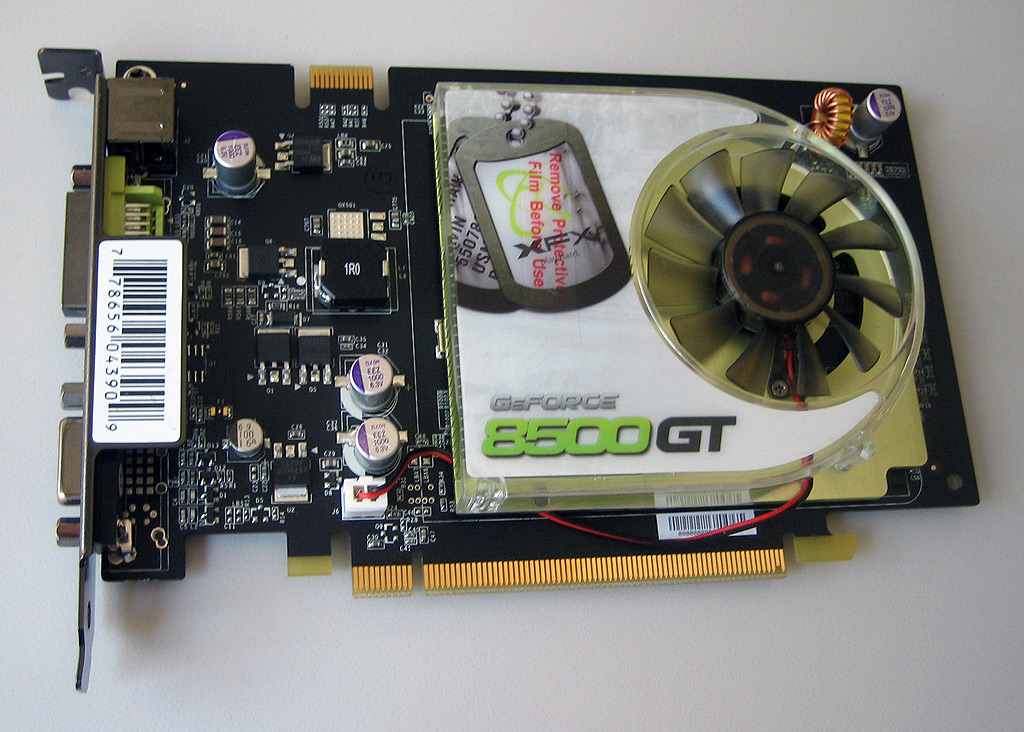 | $85 | 16 450MHz | 256MB 128-bit 800MHz | The GeForce 8500 GT represents the best of Nvidia's current-generation budget cards and supports DirectX10. |
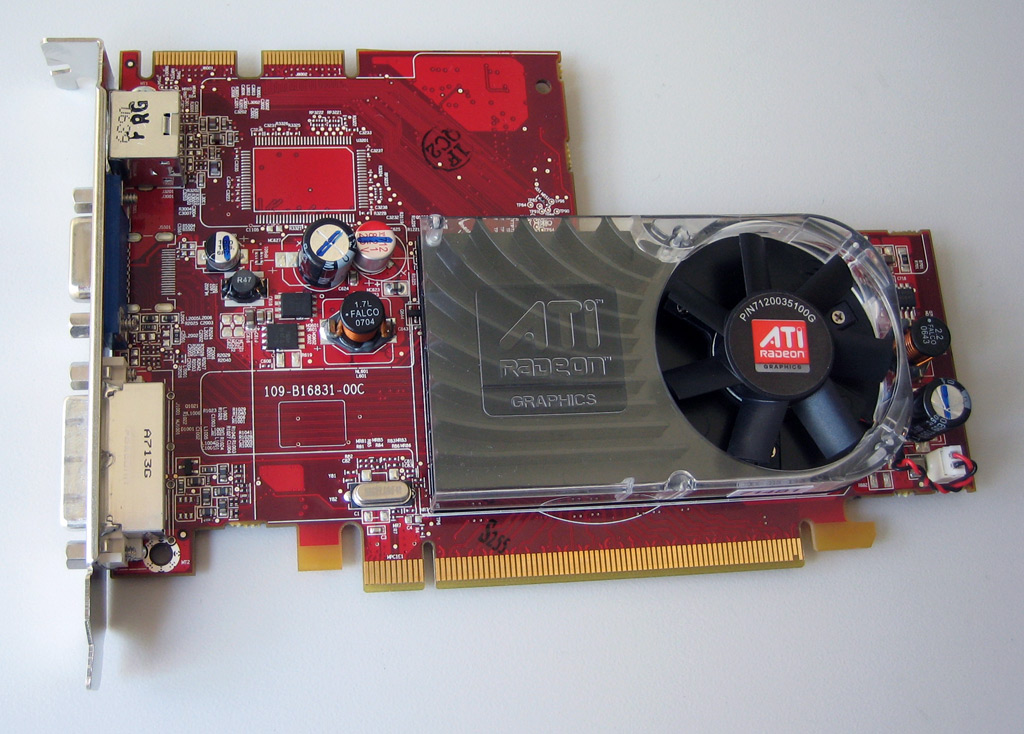 | $80 | 40 700MHz | 256MB 64-bit 1.4GHz | The Radeon HD 2400 XT is ATI's top budget DirectX10 card. |
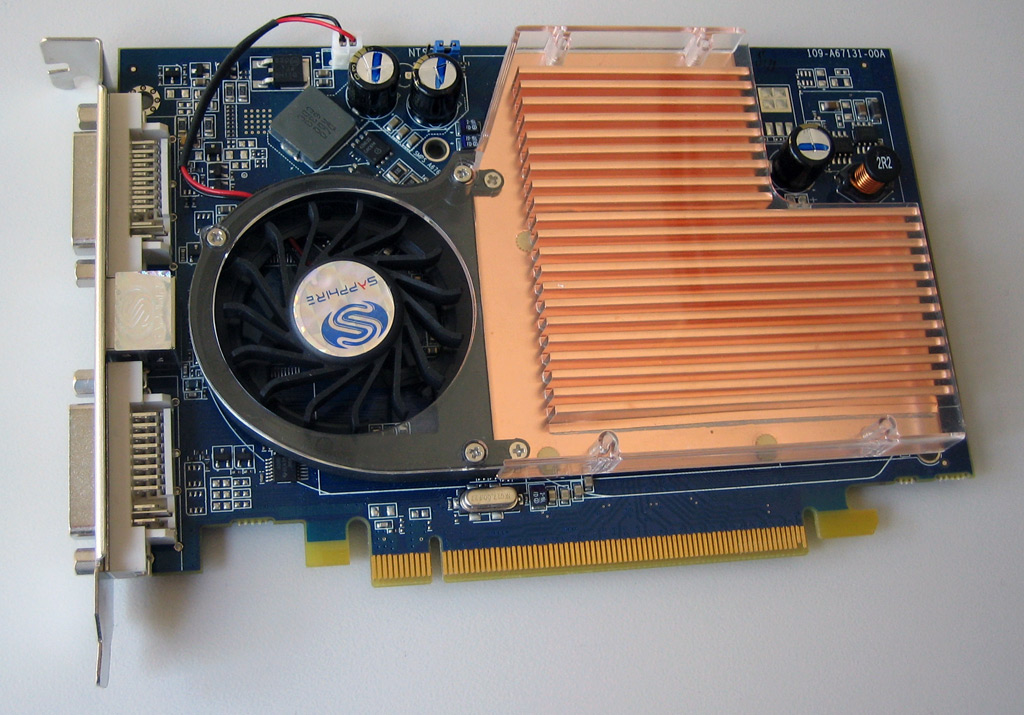 | $80 | 12 600MHz | 256MB 128-bit 800MHz | A holdover from last year, the Radeon X1650 Pro doesn't support DirectX10, but provides decent performance. |
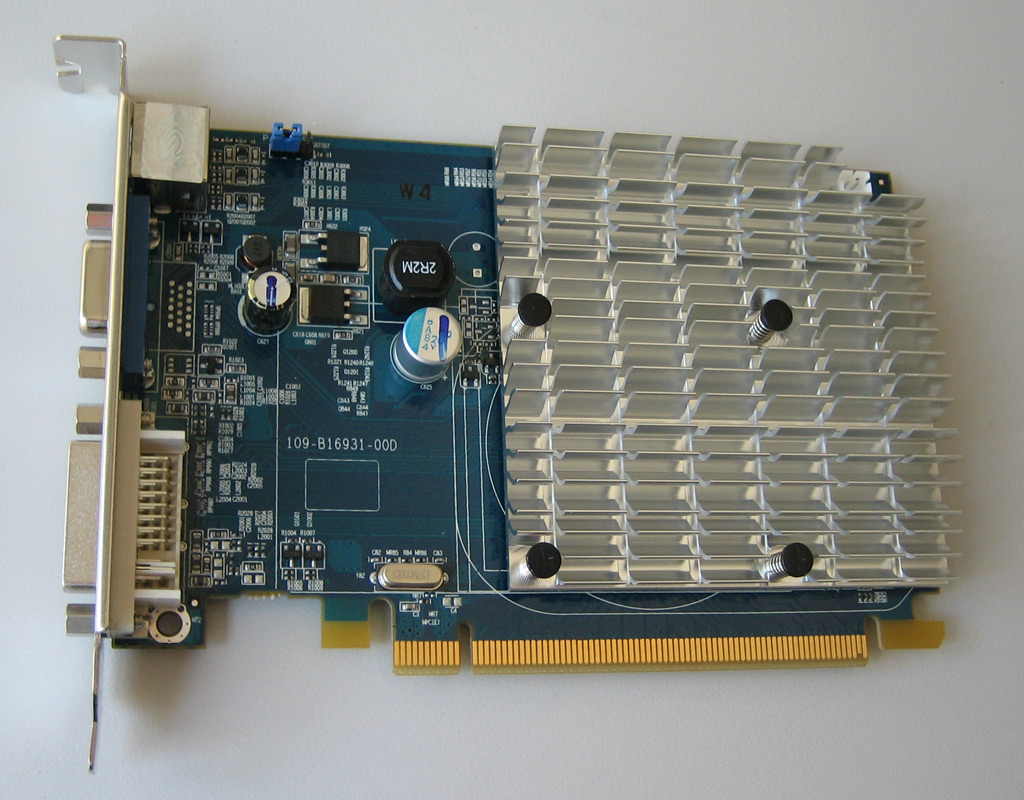 | $55 | 40 525MHz | 256MB 64-bit 800MHz | Filling out ATI's top-to-bottom GPU offering strategy, the Radeon HD 2400 Pro sits firmly at the bottom. It supports DirectX10, but that might be all the card has going for it. |
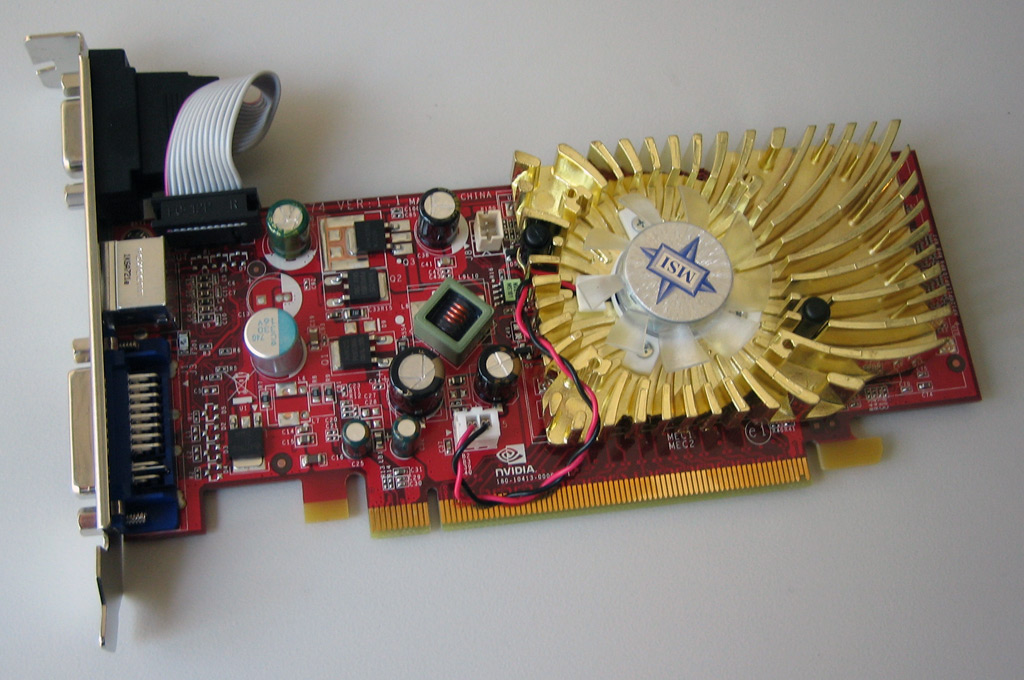 | $50 | 16 450MHz | 256MB 64-bit 800MHz | The GeForce 8400 GS fills in the bottom slot of Nvidia's current-generation lineup. It has the same shader count as the GeForce 8500 GT, but only has a 64-bit memory interface. |
The Results
We graphed the average dollar per frame for each card and dual-card setup we tested. We calculated the individual dollar-per-frame amount for each game and then averaged the results for presentation in this graph. It's not a definitive chart due to weighting issues; some games have higher frame rates than others. But it serves well enough to show which cards give the most frames for your money. A lower cost per frame results in better performance for every dollar spent. If you're looking for more details behind our testing, you can find the individual results for each game, as well as price/performance comparisons, on the following pages.
The Verdict
If you're looking for the cheapest, best-performing solution, look no further than the GeForce 8400 GS. It gives a better gaming experience than the Radeon HD 2400 Pro and costs a little less too. At the $80 price mark, the Radeon X1650 Pro provides great performance, even if it doesn't support DirectX10. However, if you're willing to pay $80, you might as well fork over an extra 20 or 30 dollars and wander into the mainstream category to pick up a video card that will give you superior performance for only a little more money.
Quake 4
System Setup: Intel Core 2 X6800, Intel 975XBX2, 2GB Corsair Dominator CM2X1024 Memory (1GB x 2), 160GB Seagate 7200.7 SATA Hard Disk Drive, Windows XP SP2. Graphics Cards: GeForce 8500 GT 256MB, GeForce 8400 GS 256MB, GeForce 7600 GS 256MB, Radeon HD 2400 XT 256MB, Radeon HD 2400 Pro 256MB, Radeon X1650 Pro 256MB, . Graphics Driver: Catalyst 7.7, Forceware 162.18.
S.T.A.L.K.E.R.
System Setup: Intel Core 2 X6800, Intel 975XBX2, 2GB Corsair Dominator CM2X1024 Memory (1GB x 2), 160GB Seagate 7200.7 SATA Hard Disk Drive, Windows XP SP2. Graphics Cards: GeForce 8500 GT 256MB, GeForce 8400 GS 256MB, GeForce 7600 GS 256MB, Radeon HD 2400 XT 256MB, Radeon HD 2400 Pro 256MB, Radeon X1650 Pro 256MB, . Graphics Driver: Catalyst 7.7, Forceware 162.18.
Oblivion
System Setup: Intel Core 2 X6800, Intel 975XBX2, 2GB Corsair Dominator CM2X1024 Memory (1GB x 2), 160GB Seagate 7200.7 SATA Hard Disk Drive, Windows XP SP2. Graphics Cards: GeForce 8500 GT 256MB, GeForce 8400 GS 256MB, GeForce 7600 GS 256MB, Radeon HD 2400 XT 256MB, Radeon HD 2400 Pro 256MB, Radeon X1650 Pro 256MB, . Graphics Driver: Catalyst 7.7, Forceware 162.18.
Company of Heroes
System Setup: Intel Core 2 X6800, Intel 975XBX2, 2GB Corsair Dominator CM2X1024 Memory (1GB x 2), 160GB Seagate 7200.7 SATA Hard Disk Drive, Windows XP SP2. Graphics Cards: GeForce 8500 GT 256MB, GeForce 8400 GS 256MB, GeForce 7600 GS 256MB, Radeon HD 2400 XT 256MB, Radeon HD 2400 Pro 256MB, Radeon X1650 Pro 256MB, . Graphics Driver: Catalyst 7.7, Forceware 162.18.
3DMark06
System Setup: Intel Core 2 X6800, Intel 975XBX2, 2GB Corsair Dominator CM2X1024 Memory (1GB x 2), 160GB Seagate 7200.7 SATA Hard Disk Drive, Windows XP SP2. Graphics Cards: GeForce 8500 GT 256MB, GeForce 8400 GS 256MB, GeForce 7600 GS 256MB, Radeon HD 2400 XT 256MB, Radeon HD 2400 Pro 256MB, Radeon X1650 Pro 256MB, . Graphics Driver: Catalyst 7.7, Forceware 162.18.
Got a news tip or want to contact us directly? Email news@gamespot.com
Join the conversation