GameSpot's Most Wanted '07
Find out which games GameSpot editors from around the globe chose as their most anticipated games of 2007.
 The year 2006 was fantastic for games--we had two new consoles launch, plenty of fantastic games for the PC and the Xbox 360 console, and some great handheld games as well. But 2007 could be an even bigger and better year. Just take a look at this year's Most Wanted list, which calls out the games that GameSpot editors the world over are most looking forward to.
Aaron Thomas
Associate Editor
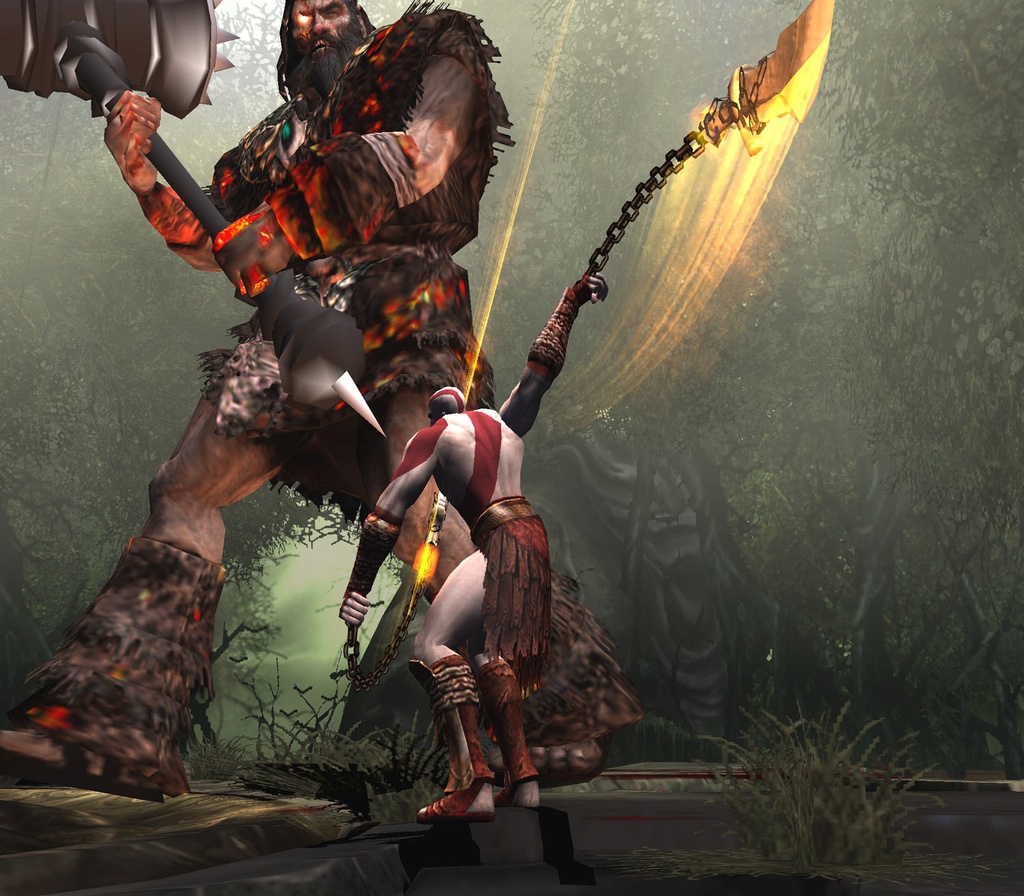
My anticipation for God of War II began shortly after I beat the first game, when I watched the bonus videos in which David Jaffe detailed some of the levels and abilities of the protagonist, Kratos, that didn't make it into the final version of the game. There was some really cool stuff in there that proved the sequel could be more than just "more of the same." Sure, Kratos supposedly finally found peace when he took his place among the gods at the end of God of War, but he didn't seem like the type who would be happy simply sitting on a golden throne--so it seemed like just a matter of time before a sequel would end up in the works.
I'll be the first to admit that I was more than a little disappointed when it was announced that God of War II wouldn't be a PlayStation 3 title. That disappointment was short-lived, however, as it took just 60 seconds of the game's trailer to convince me that this game would indeed rock. Seeing Kratos mount and climb a giant cyclops was cool enough, but when he managed to wrench the eye from the great beast...now that was intense.
Of course, Kratos has some new powers and abilities at his disposal. What powers, you ask? How 'bout the power of flight? Does that do anything for ya? Using "Icarus wings," Kratos is now able to fly for short amounts of time. Even time is no obstacle for this god, as he can wield the amulet of fates to freeze time and attack foes while they're immobilized. Kratos still has the fabled blades of chaos chained to his hands, so the combat should feel familiar, though the antihero has learned some new attacks, can switch weapons on the fly, and can use his blades to grapple and swing from hooks.
I could go on and on about why I'm psyched for God of War II. The game looks amazing; the intense, dramatic music in the trailers is fantastic; and the new creatures are awesome. Be it yanking a rider right off the back of a minotaur, fighting while flying on the back of a griffon, or taking on a giant rocklike creature many times his size, there doesn't appear to be any shortage of ways for Kratos to let out his aggression.
All signs point to God of War II being released in the first quarter of the year. It's been a long time coming, but it looks as if Kratos' next adventure will be worth the wait.
Andrew Park
Senior Editor
 Add to My Tracked Games >>
Platform: PC
Rlease Date: Q2 2007
Publisher:
Developer:

We haven't heard much about Enemy Territory: Quake Wars since Activision announced that the game would be delayed until 2007, but that extra time has hopefully given developer Splash Damage a chance to fine-tune the game and really make good on its potential. We last saw the game at E3 2006, where we were shocked by how well the game seemed to strike a balance between depth, variety, and all-out action.
At a glance, the game might seem like a takeoff on the Battlefield team-based shooter series, particularly last year's Battlefield 2142, since that was a sci-fi game with plasma guns and walking mechs. Also, Quake Wars takes place around the time of the events in Quake 4 and Quake II--the soldiers of Earth are fighting the Strogg, a not-that-scary race of aliens that resemble the Borg from Star Trek. However, we had a blast trying out the game's many different character classes for both factions, all of which seemed to be useful on the battlefield and strong enough to hold their own in the right situation. The Strogg also seemed to have some really unorthodox abilities (including the power to heal their teammates by draining life-giving chemicals from human corpses), as well as the ability to disguise themselves as human soldiers, like the spy class from Splash Damage's last game, Return to Castle Wolfenstein: Enemy Territory. These abilities aren't all guaranteed to make the final cut, but if the final game looks anything like what we saw, then both sides should be interesting and worth playing.
Quake Wars will offer plenty of different options for each character class, as well as drivable, armored vehicles (plus Strogg jetpacks). But what was probably most surprising to us was that despite all these different features, the game was incredibly fast and action-packed. The vehicle physics seemed pretty lenient, and even though there were engineer players building stationary turrets and sniper players hiding on rooftops, shooting down enemies seemed much more like a hectic deathmatch game of Quake III than the kind of slow, methodical deal you'd expect from a realistic team-based game with in-depth player classes. Obviously, shooters have come a long way since the days of simpler games like Doom, and many players expect more depth and complexity from new games; but not many games have tried to combine in-depth team tactics with classic, arcade-style shooting action. We hope Quake Wars pulls it off.
Brad Shoemaker
Editor
 Add to My Tracked Games >> Platform: DS
Rlease Date: Q2 2007
Publisher:
Developer:

The 2004 announcement of Twilight Princess and its realistic visual style was great wish fulfillment for a lot of diehard Zelda fans, but to me it just felt like backpedaling on the part of Nintendo. The company made a bold move in conceiving The Wind Waker's childish, cartoonlike graphics (which admittedly received an ambivalent response), but I thought the game's visuals represented a pleasing evolution of the similarly colorful graphics in past games like the resplendent Link to the Past. So I was disappointed to see Nintendo move away from The Wind Waker's style so quickly--and then just as delighted to find out last year that a new Zelda game, Phantom Hourglass, would reprise that whimsical approach on the DS.
Then again, when you look at what little we've seen of Phantom Hourglass so far...well, there's not much there. It doesn't look so impressive. Link is his same floppy-hat-wearing, foppish self, but the dungeons are made up of boring-looking corridors with a lot of 90-degree turns and not so many unique puzzles. The overworld and sailing sequences also look bland. Lastly, I've been a little concerned that Nintendo was trumpeting the touch-screen-only control scheme--at least give us the option to use the D pad.
If I'm so down on Phantom Hourglass, why is it on my most anticipated of 2007 list? Because it wasn't even supposed to be a 2007 game. We expected it to hit shelves this past holiday season, but Nintendo has pushed the game back a full year, and is supposedly revamping it extensively. Phantom Hourglass sounded great in concept when it was first announced, but as I saw more of it I became less impressed. However, with all this extra development time--and more importantly, with the knowledge that Nintendo never lets anything out the door until it's reached the utmost level of quality--I'm hopeful that Phantom Hourglass will be one of the best DS games yet, and a fitting return to the overhead Zelda action that made the series great in the first place.
Brian Ekberg
Sports Editor
 Add to My Tracked Games >>
Platform: Xbox 360
Rlease Date: Q1 2007
Publisher:
Developer:

With Forza Motorsport 2, Microsoft has an opportunity to cement the Xbox 360's status as the racing fan's console of choice. The original Forza for the Xbox was an instant classic that kept fans nailed to their couches with a hefty car lineup, a multitude of customization options, demanding physics, and forward-looking online racing options, some of which were precursors for the kind of interactive Xbox Live features we've become accustomed to on the 360.
Slowly but surely, the signs of Forza 2's imminent arrival on the Xbox 360 are appearing. After it was announced at the 2006 Electronic Entertainment Expo (along with a tentative, optimistic release date of late 2006), we got our hands on a playable version of the game at X06 late last year, which was the first time we had a chance to take a few laps in the sequel to Microsoft's outstanding racing debut on the original Xbox. Add to that a number of official videos showcasing the game's customization and realistic physics, as well as a racing-series reality show on the cable channel Speed inspired by the game--and hosted by former American Gladiator "Hawk"!--well, the Forza 2 gears are beginning to turn even quicker.
The plan with Forza 2? As near as we can tell, more of the same. More cars, more racing modes, more realistic damage, and more customization options than you can shake a copy of Import Tuner at. Toss in the recently released Xbox 360 wheel--the Posh Spice to Forza 2's David Beckham--and you've got all the ingredients for a delicious racing stew sometime in the first half of 2007.
Greg Mueller
Associate Editor
 Add to My Tracked Games >> Platform: Xbox 360
Rlease Date: 2007
Publisher:
Developer:

For a lot of people, it only takes the mention of the developer's name to make Mass Effect one of the most anticipated games of 2007. Mass Effect is the latest original project from esteemed developer BioWare, known for such great role-playing games as Baldur's Gate, Neverwinter Nights, and Star Wars: Knights of the Old Republic. Mass Effect is the first Xbox 360 title from BioWare, and we're extremely excited to see what the studio does with the power of the newer console.
The game takes place in the 23rd century, during a time when humans are exploring the furthest reaches of space while trying to maintain peace with countless alien races. You play as Commander Shepard, a member of the elite Specter agency whose job it is to preserve peace in the universe. Of course, there wouldn't be much of a game if all the aliens lived in harmony. To make things interesting, there's a dark force at work in the universe, and it's up to you to discover what it is and put an end to it. You do this by exploring space in your own private star cruiser, and by visiting distant planets and derelict space stations in search of clues about what's really going on in the universe.
As if exploring space weren't enough to whet your appetite for Mass Effect, there's a strong role-playing element that lets you experience all kinds of unique interactions with the inhabitants of the universe. You can have fully-voiced, real-time conversations with anyone you meet in the game, and you're given a list of options for how you want to respond. But beyond choosing a response, you have to time your actions as well. Interrupting someone while he or she is talking might be a good way to get your head blown off, or it might be an especially effective way of punctuating a forceful statement. The game will change depending on how you interact with people, and based on what we've seen, the choices you're given aren't always black and white.
Of course, no matter how smooth a talker you are, you'll have to resort to forceful tactics sometimes. The combat in the game can be played like a third-person action game, with you controlling one of three party members as you run around and shoot or use special powers. However, if the situation requires a more tactical approach, you can pause the game and issue commands to your party members using a simple interface. When you unpause the game, your teammates will complete their orders. It's an interesting combination of real-time and tactical combat that will hopefully allow for smooth transitions from exploration to combat and back again.
We have yet to play the game, but based on the demos we saw at E3 2006 and X06, this is one game to keep your eye on in the coming months. As of now, the game is scheduled for release later this year, so if BioWare delivers on this intriguing game's potential, you'll want to make plenty of time to get lost in space with Mass Effect.
Guy Cocker
Staff Writer, GameSpot UK
 Add to My Tracked Games >>
Platform: Xbox 360
Rlease Date: February 20, 2007
Publisher:
Developer:
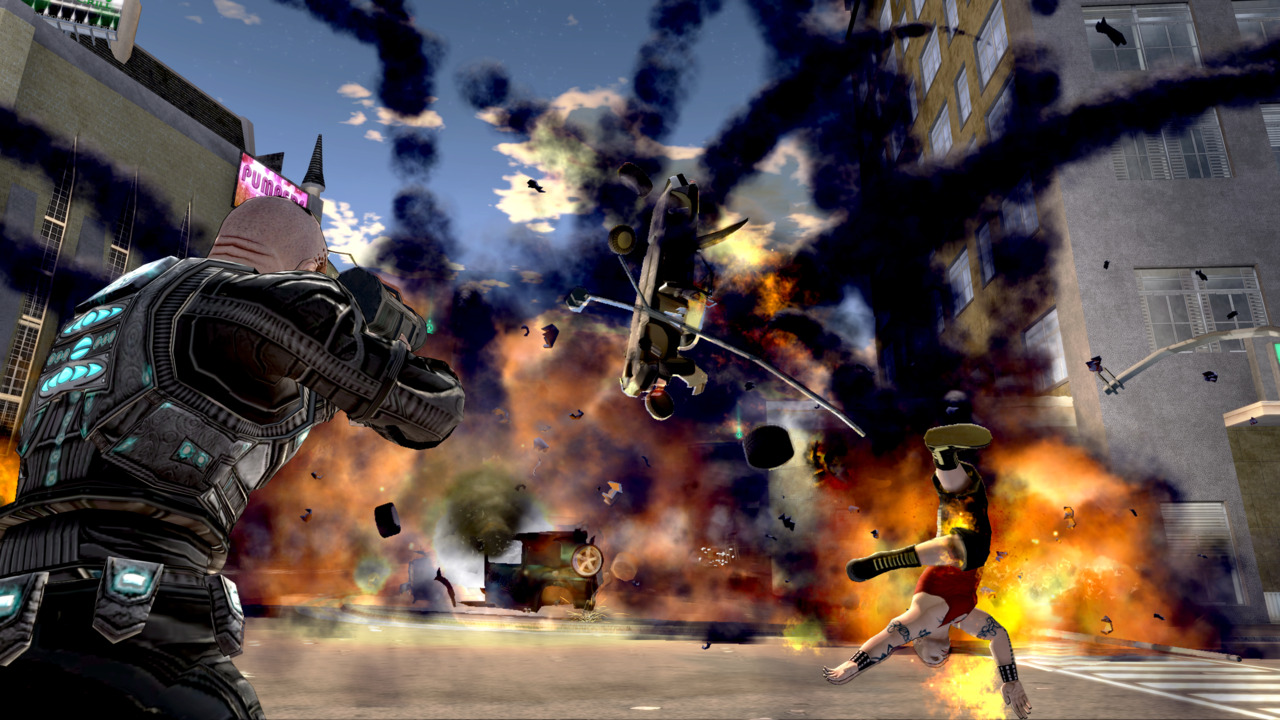
Games released in the first quarter of 2007 certainly have it tough. High-caliber 2006 games like Gears of War are fresh in the memory but have been played to death, and soon after, gamers are now faced with a drip-feed release schedule with few highlights. As a result, the major releases are subjected to a deadly mixture of hype and expectation as gamers clamor for something to tide them over through the final winter months.
One game to fall into this category is Microsoft's Crackdown, which is set for release exclusively on the Xbox 360 in February. At this time last year, people were too busy looking forward to games such as Oblivion and Gears of War to pay attention to this free-roaming action game. However, with the Christmas big-hitters already beginning to outstay their welcome in console drives around the world, Crackdown has become one of my most anticipated games of Q1. Of course, the recent news that many copies of the game will include entry keys to the Halo 3 beta hasn't done it much harm, either.
One look at the screenshots, and the Grand Theft Auto comparisons are inevitable. However, because Crackdown is being developed under the direction of Dave Jones, the original creator of the GTA series, they're perhaps unavoidable. If GTA's sense of humor was completely absent from the recent preview versions we've played, it looks to be part of a conscious decision to differentiate Crackdown as much as possible. Indeed, because the main character is a law enforcer with incredible physical ability and the game is set in a futuristic world, the dynamic of the game is dramatically different than Jones' previous efforts. That's not even mentioning the graphics, which use thick black lines and stark colors to make the game look like a living graphic novel.
While the requisite driving, shooting, and free-roaming elements are all intact in the game's setting of Pacific City, the game looks set to change dramatically as you develop. The more you fight the crooks of the Los Muertos, Volk, and Shai-Gen factions, the greater your skills in driving, fighting, and athleticism become, to the point where your character completely evolves. Your character will be able to scale buildings like a biometrically-enhanced free-running expert on steroids, while his strength will allow him to fling vehicles all over the place.
Perhaps the biggest potential for Crackdown is in cooperative multiplayer, which lets you and a friend play together on Xbox Live. Add in more than 100 licensed tracks from labels such as Ninja Tune, and hopefully Crackdown will live up to all the mounting expectation.
Jason Ocampo
Editor
 Add to My Tracked Games >>
Platform: Xbox 360
Rlease Date: 2007?
Publisher:
Developer:

This seems like an obvious choice. Halo 3 is already one of the most anticipated games of the year, if not arguably the most anticipated game of 2007. It's only the successor to the biggest Xbox franchise around, and it will also be the first Halo game for the Xbox 360. And I'm one of those people who consider Halo to easily be one of the most important and influential first-person shooters ever made, right up there with Half-Life and Doom. Say what you will about the level design, but Halo nailed everything else brilliantly, from the rich storytelling to the simply perfect gameplay.
So here's I'm looking forward to in Halo 3. First, a real ending this time around! Halo 2's "cliffhanger" elicited many groans. If I'm going to wait three years for a game, I don't want to wait another three years for the conclusion. Second, more Jen Taylor as Cortana. I could listen to her all day. Third, better graphics. There's been much ado about some of the early screens that have been released thus far, but I must admit that Halo's unique art direction looks wonderfully clean and crisp in some of them. Four, Halo 3 achievement points! Five, Marty O'Donnell's latest musical masterpiece of a score. Six, sticking someone with a plasma grenade never gets old. I'm also looking forward to some insane multiplayer over Xbox Live. I've been playing multiplayer PC games since the beginning, and it says a lot that Halo 2's multiplayer was easily some of the most fun I've ever had online. If Halo 3 can deliver that and more, we're talking about gaming nirvana.
When you get down to it, I'm also looking forward to seeing an epic chapter in gaming history come to a (hopefully) fitting close. I remember visiting with Jason Jones to see what Bungie was working on back in 1999. This was well before Bungie had been snapped up by Microsoft, so Halo was running on a PC and everyone was floored by what they saw. Everything about the game looked amazing, and it's no small feat that Bungie managed to deliver on that potential. If the studio can do the same with Halo 3, we're all going to be in for a treat.
Jeff Gerstmann
Senior Editor
Add to My Tracked Games >> Platform: Xbox 360, PS3Rlease Date: Q2 2007
Publisher:
Developer:

Sometimes the most exciting and anticipated sequels are the ones that you know absolutely nothing about. Burnout 5, the upcoming driving game from Criterion, is operating under some kind of information blackout, it seems. The game was quietly announced back in August of 2006, and there hasn't been much to go on since, other than a few key quotes from the developers here and there and the concept that this might be some kind of open-world driving game...with an extreme focus on destruction, of course. Criterion Games is best known for the Burnout series, and all along, that series has delivered the kind of speed that most driving games can't match. Sense of speed is, of course, huge in a driving game, and the way the series has stuck to smooth frame rates and fast-paced action really makes it one of those adrenaline-filled experiences that leaves you shaking a bit once the race is finished.
The rest of the released info looks like it's purposefully very vague. You, as a driver, arrive in Paradise City, you get a driver's license, and set out to win race after race in the most aggressive way possible. Previous entries in the series have put a very deep focus on taking out the opposition by ramming them into walls and getting revenge on the racers that manage to take you down. Now, it sounds like your progression through the game will be checkpointed by face-offs with "legendary" racers that want nothing more than to smash your car to bits.
And, really, that's what this is all about. The proper rendering of ridiculous car crashes. Watching cars move like speeding bullets, only to fly apart into little pieces up against a guardrail is one of the most thrilling moments to be had on the PlayStation 2 or Xbox. With the series moving to the more-powerful Xbox 360 and PlayStation 3, one can only imagine what those car crashes are going to look like now. At least, we'll have to imagine--EA and Criterion don't have much else to say about the game at this point. But somehow, the lack of information isn't hampering the excitement one bit.
Justin Calvert
Editor & UK Liason
Add to My Tracked Games >> Platform: PS2Rlease Date: 2007
Publisher:
Developer:

I'm a huge fan of Crystal Dynamics' Tomb Raider: Legend, but that's not the main reason why Tomb Raider: Anniversary is one of my most anticipated games for 2007. Of all the games that I've played in the last 25-plus years, the original Tomb Raider is perhaps the one that I remember most fondly. And no, I haven't forgotten about the likes of Paradroid, Speedball 2: Brutal Deluxe, or Sensible World of Soccer--it's just that Lara Croft's first adventure occupies a very special place in my heart because, back in 1996, it was one of the first "big" games that I was ever paid to write about.
Specifically, I was tasked with writing a walk-through for the game that included maps and screenshot sequences detailing the location of every single secret location. I'd already written a handful of guides and walk-throughs at that point in my career (including one for another Core Design game, Blam Machinehead) but Tomb Raider was a very different proposition. The huge, labyrinthine level designs made mapping the game an especially daunting prospect, but I got the job done and made something of a name for myself at the company I was working for as a result. The magazine that I wrote for didn't take long to sell out as tomb raiders all over the UK turned to it for guidance, and when the publisher released it as an overpriced stand-alone magazine, that sold out as well. So not only do I feel like I owe a lot to Tomb Raider, but I enjoyed every single minute that I spent playing it as well.
I remember the original Tomb Raider well enough that I'm sure Crystal Dynamics' upcoming remake will feel familiar. But even if the Anniversary edition were nothing more than a graphical update, I'm sure it'd still take me a while to figure out some of those fiendish puzzles all over again. Tomb Raider: Anniversary will do a lot more than just update the graphics, of course, and I can't wait to see how some of the original game's most memorable environments and action sequences will work alongside all-new content. I'd be even happier if an Xbox 360 version were confirmed, but I'll happily dust off my PlayStation 2 for this one.
BioShock (PC) | (Xbox 360)
Matthew Rorie
Game Guides Editor
 Add to My Tracked Games >>
Platform: PC, Xbox 360
Rlease Date: Q2 2007
Publisher:
Developer:

It's been almost eight years since System Shock II, the spooky trapped-in-a-space-station shooter role-playing hybrid from Irrational Games and Looking Glass Studios, hit store shelves and sent many gamers into all-night playing sessions. It was a gripping adventure, appearing on plenty of "best of" lists at the end of 1999, and had an ending that left plenty of room for a sequel. Unfortunately, the series has been in limbo since Looking Glass Studios went out of business in 2000.
Thankfully, Irrational Games is still around and kicking, and though the studio isn't developing a true sequel to System Shock II, it has gone one better and is revisiting the "suspense shooter" genre with BioShock, an exceedingly good-looking and atmospheric game that, while unrelated to the plot events of System Shock, is an attempt to re-create the mood and gameplay design of those titles.
BioShock takes place in Rapture, a completely underwater city that was developed as a colony for artists and scientists to take refuge from the cares of the world and work on their pursuits in peace. Unfortunately, something has gone horribly wrong, and most of the inhabitants of the city are dead. Remaining beings include small girls known as "little sisters" who harvest genetic material from the dead bodies, and "big daddies," huge, lumbering constructs that protect little sisters from anyone who wishes to harm them--along with other genetic mutants and robotic defenders.
While the plot of the game is still wrapped in mystery--you apparently play as the survivor of a wreck on the ocean's surface and somehow manage to survive by entering Rapture--one thing is abundantly clear from the demos and trailers for BioShock: This is going to be one of the creepiest games of 2007. While the retro "art deco" style of Rapture lends the game a delicate kind of beauty, the violence inherent in your struggle to survive (which may even involve hunting the little sisters for their stores of genetic material) and the gameplay that evolves around it seem like a heartening return to the haunted-house atmosphere of System Shock II. It's not a stretch to imagine that many of the same storytelling devices of that game will reappear in BioShock, such as piecing together story elements from audio logs of frightened citizens, journal entries, and the like.
BioShock already won our Best of Show award for E3 2006, in the face of some pretty tough competition, so I'm personally hoping it manages to deliver on the high expectations I'm building for it. We won't have long to wait, though, as the game is scheduled for release this spring.
Phil Elliott
Editor, GameSpot UK

Will Wright. SimCity. The Sims. The Sims 2. Expansion packs. World domination.
The missing word in that logical progression is Spore, a game that I, for one, am looking forward to finally playing. It seems as though we've been reading about this game forever, watching Wright's demonstrations and barely contained enthusiasm for a pliable, open-ended, original experience.
Later this year the hype will climax, and we'll all be designing weird-looking creatures from blobs of amorphous matter, setting them loose on an unsuspecting world, and watching to see if they survive. Maybe they will, maybe they won't. Perhaps they'll flourish and begin to develop--and if they do? Game on.
But this game isn't about having fun with weird little creatures and trying to get them to mate and populate a world. Most games would be happy with a potentially vast set of objectives that such a game design could hold, especially when you consider the sheer number of different combinations of creatures you could design. But not Spore.
Once your creatures establish themselves, they evolve. They get smart, eventually, and allow you, their god, to design tribes, then cities, and even advance to space travel, which lets you take your little civilizations and put them in real perspective against other creations happening elsewhere in the universe. It's not a game that simulates life; it's a game that simulates everything--past, present, and future.
It's a grand ambition, and one that I'd be a little skeptical about if this game were being designed by anybody else. After all, the complexity must be horrible, right? Wrong. From what we've seen, it's actually as simple and accessible as The Sims. Using the game's creature creator to make your new species can take less than 10 minutes, even though you might be tempted to lose yourself there for hours. And the rest of the game seems to follow this simple design ethic.
There are still some areas that are a little hazy, of course. For a game like this, the logical conclusion to events might see you take your civilization online and trade or battle with other civilizations, form alliances, cross-breed your species, and so on. Well, that's not the plan for Spore just yet, but who knows what the future might hold?
In the meantime I'm expecting to see Spore sell, if not as well as The Sims franchises, then something close to it, and when the game is released, I'll be first in line to start uploading my creations for others to marvel at. Or maybe just laugh at.
Randolph Ramsay
Editor, GameSpot AU

Mario zooms off to the final frontier in 2007 with Super Mario Galaxy for the Wii, and if the demo level Nintendo's been showing off since last year's E3 is anything to go by, it'll be a welcome return to form for the world's most famous princess-saving plumber. While the last Mario platformer for a Nintendo home console--2002's Super Mario Sunshine--offered only marginal improvements to the genre-defining Super Mario 64, Galaxy looks set to push the franchise into new territory thanks to the game's use of the Wii controllers and its gravity-bending outer-space setting.
Few details have been confirmed about the game's story so far, but we do know that--surprise, surprise--Princess Peach gets herself kidnapped once again, and it's up to Mario to travel into space to save her. The demo level we played contained plenty of recognizable Mario features, such as coins to collect, goombas to be stomped on, and Bullet Bills to be smacked, but it was the game's new additions that had us most excited. Galaxy's controls, while feeling initially strange, quickly become second nature. You'll use the Nunchuk attachment to move Mario, and the Wii Remote is used to jump and interact with objects. Pointing the remote at any floating jewels (which Mario will apparently hoard in this game, like the classic gold coins from his previous adventures) will instantly collect them, for example, while pointing at enemies will freeze them in place. And that's not the end of it. Nintendo promises plenty more new moves for Mario--moves that can be performed by either tilting, pointing, or shaking the Wii Remote.
Galaxy's unique take on gravity also promises to give gamers some tasty new challenges. The demo we played had Mario blasting from small planet to small planet, where he was able to run along the top, sides, and even upside-down on the planets' lower halves. It can be a tad disorienting, but we're expecting Nintendo to come up with some unique puzzles to take full advantage of the wacky physics.
Innovations aside, perhaps one of the most compelling reasons why we're looking forward to Galaxy is that there haven't been any new console Mario platform games for almost five years. Let's face it--a Nintendo console, even one as unique as the Wii, just doesn't feel right without a Mario platformer available on it. Any chance of pushing the release date forward at all, Miyamoto-san?
Ricardo Torres
Senior Editor
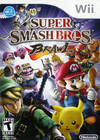

Super Smash Bros. Brawl is arguably one of the most anticipated games in development for the Wii in 2007. While powerhouse games such as Super Mario Galaxy and Metroid Prime 3: Corruption are all being released this year, SSBB stands tall thanks to a robust roster of fighters, an intriguing feature set, and the return of the series' founder, Masahiro Sakurai. Even though we've only seen trailers of the promising game until now, everything we've heard and seen on the game sounds very, very promising.
The relatively new series has quickly established itself as a fan favorite since its debut on the Nintendo 64 in 1999. Developed by HAL Labs, the series took a sampling of familiar faces from across Nintendo's stable of characters and dropped them into a simple fighting game that had them duking it out on multilevel stages. While this may not sound like much, the accessible fighting system and the multiplayer experience wound up offering an addictive experience that transcended its simplicity. The 2001 follow-up for the GameCube, Super Smash Bros. Melee, vastly improved on every aspect of its predecessor, and included more characters, more modes, and a refined fighting system. The immensely popular GameCube game left fans begging for another installment, which was officially named at E3 2006 with a trailer and news that the development team on the Wii game is being made up of powerhouses from across the industry.
The game's trailers have revealed that the roster of fighters will include regulars such as Mario, Kirby, Pikachu, and Link. Newcomers include Wario, Kirby's nemesis Meta Knight, Kid Icarus' Pit, a remodeled Samus Aran of Metroid, Fox McCloud from Star Fox, and even Solid Snake from Konami's Metal Gear Solid. The settings for the various fights will once again be drawn from old and new locations from across the Nintendo and potentially Metal Gear universes. The same sensibilities will also be used for the various items that players will use during battle, include assorted cameos from Pokemon, Nintendogs, and other Nintendo franchises. The gameplay footage that's been shown so far shows that the fighting system to be staying faithful to previous games, though it will also take advantage of the Wii's Wifi functionality, which has been one of the most requested additions to the series. In addition, Final Fantasy composer Nobuo Uematsu has scored the game's theme in the E3 trailer, which features vocals from opera singer Ken Nishikiori. Whether or not both artists will assist with the entire soundtrack, which will be fully orchestrated, remains to be seen. With such a promising assortment of talent and possibilities, Super Smash Bros. Brawl promises to be an epic installment in the unique fighting series, and it should be one of the biggest games of 2007.
Half-Life 2: Episode Two (PC) | (Xbox 360) | (PS3)
Ryan Davis
Associate Editor
Add to My Tracked Games >> Platform: PC, Xbox 360, PS3Rlease Date: Q2 2007
Publisher:
Developer:

One of our most anticipated games of 2006 became one of our most anticipated games of 2007 when Valve delayed Half-Life 2: Episode Two back in August. Half-Life 2: Episode One represented some of Valve Software's best work. Though it was admittedly short, it was also a tightly orchestrated feat of incredible first-person action. Its ability to maintain a breakneck pace as Gordon Freeman and Alyx Vance raced to escape the self-destructing City 17, while delivering some tantalizing bits of narrative and expanding the Half-Life mythos along the way, definitely left us wanting more. If Valve can maintain that same level of quality--and perhaps throw fans a bone or two with some answers about The Combine and the G-Man--Episode Two promises to be an incredible, cinematic thrill ride.
As anxious as we are to continue the fight against the Combine, what really made the delay of Half-Life 2: Episode Two so agonizing was that it felt like three of our most-anticipated games of 2006 got delayed. If all the Gordon Freeman business doesn't grab you, there's also Portal and Team Fortress 2 to consider, since both games will be included with Episode Two. Team Fortress 2, an ambitious class-based multiplayer shooter, had been something of an urban legend since it was originally supposed to have been released following the original Half-Life. Many had decided it was vaporware, an abandoned endeavor on Valve's behalf. So it was a pleasant surprise when, after years of silence, it was revealed that not only was Team Fortress 2 alive and well, but that it was the recipient of a playfully exaggerated new art style. With the standard-setting Counter-Strike already under Valve's belt, expectations are certainly--and understandably--high for Team Fortress 2.
But it's Portal that is perhaps the most intriguing part of the whole Episode Two suite. Like Half-Life 2 and Team Fortress 2, Portal is played from the first-person perspective, but it doesn't appear to be a "shooter" at all, seeming more akin to a puzzle game. Rather than having you traffic in guns and ammo, Portal will challenge you to progress through environments fraught with impossible obstacles, armed only with a Half-Life 2-style gravity gun, as well as an "Aperture Science Handheld Portal Device," which will allow you to cheat logical space by creating a pair of portals--one for where you are, one for where you want to go. This might be as simple as making a pair of portals to bypass a bottomless chasm, though we also expect to see some exceptionally mind-bending use of space and physics. From what we've seen of it, Portal features an incredibly unique look, like a sterile, high-tech training simulation, though what little we've seen of it has also come packed with an underplayed but surprisingly potent comic edge. With these three distinct, incredibly compelling games in a single package, it's hard not to be excited about Half-Life 2: Episode Two.
Do you agree with GameSpot's picks for the Most Wanted Games of 07? Disagree? Post a comment and let us know!
Got a news tip or want to contact us directly? Email news@gamespot.com
Join the conversation