GameSpotting Jump Around
This week, our editors would like to send word to your moms, as they have come to drop bombs, and they've got opinions like the Bible's got psalms.
Welcome to GameSpotting, where gamers come to get down, get out their seats, and jump around. This week, our editors would like to send word to your moms, as they have come to drop bombs, and they've got opinions like the Bible's got psalms. So, if you've got the feeling, then jump across the ceiling, and along the way, feel free to visit our Community to discuss your thoughts on this week's many topics. Just, please, don't try to play us out as if our name was Sega.
Greg Kasavin/Executive Editor
"One of the major reasons a small percentage of games are responsible for a majority of sales is that those are the games that were released precisely when they were supposed to."
Avery Score/Games Editor, Mobile
"Video games have oft been criticized for their violent or sexual content, but rarely for their inclusion of homosexual innuendo."
Jeff Gerstmann/Senior Editor
"The 'Vol. One' on the end of the original implied a sequel...but it never came. It's about time we, as a society, fixed that."
Kurt Collins/Wireless Research Analyst
"Who am I to argue with our audience? Mobile games must be terrible since everyone but me is in agreement. After all, I'm always wrong."
Bethany Massimilla/Community Manager
"I think we're ready to move beyond getting a small poster with a preorder."
Greg Mueller/Intern
"I'm always up for a sale, since I don't have a lot of disposable income to put toward gaming, but cheap garbage is still garbage, and I don't need any more of that."
Jason Ocampo/Associate Editor
"Ubisoft deserves kudos for making the correct decision, as tough as it probably was."
Xi/Future Gamer
Whether you're a half-alien cyborg from the year 2084, or just a regular present-day gamer, everyone's perspective on the world of games is relevant--though the future-man's will probably be way more awesome. But, hey, why not submit a GuestSpotting column anyway?
| Greg Kasavin Executive Editor |
The Dating Game
"When it's done" is no longer acceptable as a release date as far as I'm concerned. One of the things the gaming industry desperately needs to do before it's going to grow past its awkward teenager phase is gain the discipline of project management. Or, in other words, one of the major reasons a small percentage of games are responsible for a vast majority of sales is that those are the games that were released precisely when they were supposed to. In games, timing is everything.

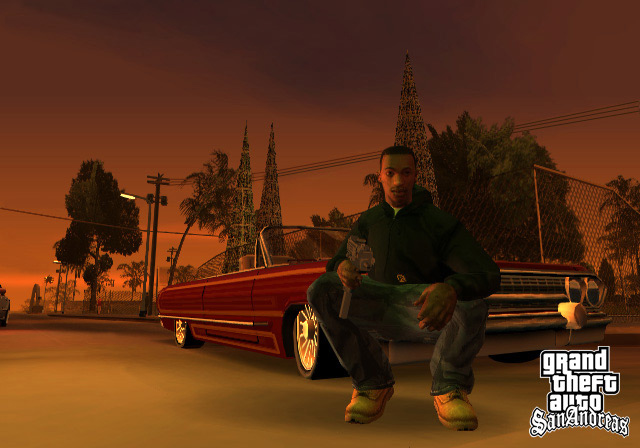
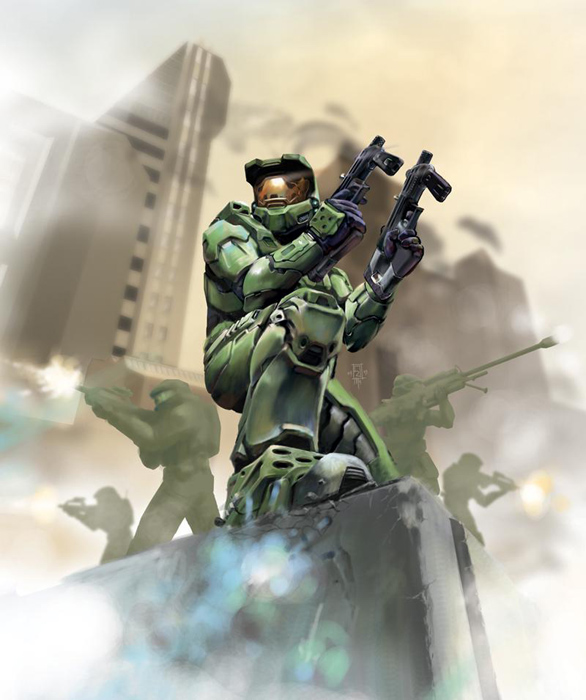
The Sims 2 will be in stores on Friday, September 17, 2004. Grand Theft Auto: San Andreas will be in stores on Tuesday, October 19, 2004. Halo 2 will be in stores on Tuesday, November 9, 2004. These are unquestionably three of the year's biggest games, if not the three biggest games of the year. I'm arguing here that it's no accident that their down-to-the-day release dates have been precisely pinned down months in advance. I'm also arguing here that any game hoping to achieve significant success in the market needs to have a similar marketing strategy--the release date needs to be out there as early as possible, and also, the release date needs to be true. (And, for the sake of the focus of this article, let's ignore the "game also needs to be good" part.)
Last year, Half-Life 2 famously missed its September 30 release date, apparently for a variety of reasons. And it must be noted that both The Sims 2 and Halo 2 have experienced delays of their own. So, far be it from me to suggest that certain publishers or developers have already honed their production schedules down to a science; at best, it must be a continuous struggle for a relatively disciplined company like Electronic Arts to, for instance, keep hitting its dates with its sports franchises year after year.
There are two good reasons that most games don't have specific release dates until they're about 95 percent complete. The first is that the game industry has collectively decided that uncertain release dates are acceptable. Look around on GameSpot, and you'll see tons of games shipping in "Q4 2004" or "Q1 2005," or in other words, "this winter." That gives developers and publishers a full three months of leeway to get the job done. That's awfully convenient. The second reason is that I'm sure it must be very difficult to pinpoint the date on which a game can be completely finished.
But as a game player, that's not my problem. As a game player, I demand to know, as early as possible, precisely when I can expect the games I'm excited about to ship. I want to be able to plan my schedule around those dates. Games like The Sims 2, San Andreas, and Halo 2 set the standard--I want to be able to plan for all release dates accordingly.
Game players are getting older. They have jobs or they have intensive classes (or they need to find jobs). It's not like how it used to be, when I'd mosey on into The Good Guys any old day after school, find some new game that looked cool, and trade in an old game for it. Now the stakes are higher for everybody. Less time for everything. More demand to make every minute and every dollar count. There's an urgency to be on top of things; getting it while it's hot. Planning is popular because uncertainty is uncool.
Release dates are very important. Look at the movie business. Spider-Man 2 just broke all kinds of box-office records. People flocked to go see it--in no small part because they actually knew and they have known for a while the exact date on which it would open in theaters. It's the same way with most movies these days.
Let me ask you to consider something: Do you think it's more difficult for a film studio to precisely predict the date on which its movie will be ready for public consumption than it is for a game publisher to do so with its game?
I don't think it is. I think movies experience very similar trials and tribulations as they go through production as do games. When you hear about a movie "going over budget," that's just another way of saying it got delayed. It happens to movies all the time, too. But movies still end up hitting their dates.
Why? Because the studios are disciplined enough--and wealthy enough, admittedly--to build in a time buffer. The game industry is still hell-bent on shipping its products the instant that they're ready--an understandably reckless behavior, considering the technology in driving games can quickly be surpassed. But that's mostly true of movies as well. Spider-Man 2 is an effects-driven movie that, marginally, won't look as good tomorrow as it does today. It might have been technically more impressive had it appeared in theaters several months ago. Instead, though, it deliberately opened in theaters at a very strategic point in time.
Along those lines, I would argue that it's more important for a game to ship on schedule than it is for a game to ship immediately. I think it's becoming increasingly clear that most games have a very narrow window of opportunity to become successful--their success or failure is largely determined from the get-go, from the initial days of release and from the initial word of mouth. Today, if a game isn't an immediate success, then retailers want nothing to do with it. They'll shuffle it off the shelves in no time flat, to make room for the next crop.
So, then, the game industry has a very important task at hand. Game marketers must work collaboratively with developers to precisely nail down a realistic release date, and then they must stick to it as though their lives and livelihoods depended on it--because, I think, they do. The developer's job is to manage the project so that it can get done well and on time. Good project managers know to plan for every contingency and to afford themselves enough time to account for the high probability of certain things not going according to plan. It's called the critical path--the amount of time it will take for the entire project to get done if all the key steps take the maximum amount of time to get done.
Meanwhile, the marketer's job is to convince us game players that the release date on which the game is surely going to be in stores is going to be the most important day of the year. Even if we don't have the game preordered by that time, we'll be eagerly awaiting news of the game's merits so that we can rush to the store and be among the first in line.
| Avery Score Games Editor, Mobile |
Rainbow Road
Having just moved from Boston, Massachusetts, I have long been at ground zero of the American gay marriage debate. In the Boston Common, one of our nation's oldest city parks, a fundamentalist Christian group routinely holds "old-fashioned revivals," during which the group attempts to will the homosexuality out of its participants.
In a country where television shows like Queer Eye for the Straight Guy, Boy Meets Boy, and Will and Grace are pulling in top ratings, week after week, it is reasonable to suggest that--regardless of whether the Constitution is one day amended to prohibit homosexual unions--gay culture is growing a greater acceptance. You might say that it, like video gaming, is becoming part of the mainstream American experience. So, is there any overlap? Video games have oft been criticized for their violent or sexual content, but rarely for their inclusion of homosexual innuendo. To my knowledge, Senator Joseph Lieberman, notorious critic of video games and gay marriage alike, has not connected these two subjects of heated debate.
Yet, Lieberman and his supporters might be interested to learn that Troika's recent Dungeons and Dragons game, The Temple of Elemental Evil, allows your in-game male avatar to wed a gay pirate, named Bertram, after saving him from his captain/owner. You accomplish this by literally purchasing Bertram from his master. At the game's end, the fashion-savvy pirate will reenter the plot, and your hero will wed him. A picture of the happy couple in a rapt embrace will appear, and the game's narrator informs you that the two lived happily ever after.
Unless you count Ryo Hazuki's search for bar-hopping sailors in Shenmue, this is probably the only instance of gay pirating in a game. Persistent-world, homosexual pairing, in general, isn't without precedent, nor is it without a future, however. Will Wright's The Sims has long allowed same-sex partnerships--even going so far as to let gay couples move in together and raise little Sim rugrats. Peter Molyneux's upcoming RPG Fable may allow homosexual relationships, as well. A recent issue of Lionhead's newsletter suggested that such a feature was present in the current build of the game, and that Molyneux had no plans to order its removal.
Yet, while homosexual content is a relatively new frontier for games created on American soil, it's quite old hat for the Japanese market. Big-name publishers, such as Squaresoft, often place their leading men in homoerotic settings, or in relationships that could be construed, by bevies of giddy, female gamers, as homosexual. There is even a convention--employed in anime and manga, as well as in games--as to how these homosexual pairings should play out. Male characters are relegated to the status of either "seme" or "uke," words that imply a series of distinct differences in personality and physiognomy. Seme tend to be tall, steely-eyed, and full of manly vigor. Uke are shorter, more boyish, and submissive. The seme is typically demonstrative or abusive toward the uke, and this provides the major source of tension between the two.
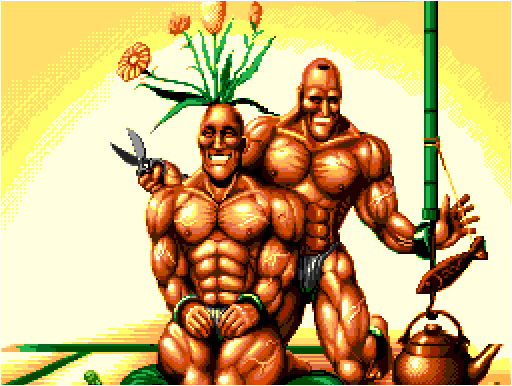
Now, you may be thinking, "These must be some obscure games that never hit US shores," right? Well, there are a few infamous imports that really take homoeroticism to new bounds, such as the PC-Engine's Chou Aniki series, known here as "Super Big Brother," which puts you in control of two Speedo-clad, homosexual bodybuilders who shoot beams of energy from their waxed chests while intertwined in sexual positions not covered in the Kama Sutra. This series was recently reborn for the Japanese PS2, as Chou Aniki: The Legend of the Holy Protein, in which players must seek out this *ahem* mysterious substance so that it may transform them into the ultimate physical specimen.
Even more overtly gay are so-called "yaoi" titles, which are dating simulators featuring graphic relations between male characters. "Yaoi" is actually an acronym, standing for yama-nashi (without climax), ochi-nashi (without a conclusion), and imi-nashi (without content). Gainax, famed creators of the ever-popular Evangelion series, is notorious for pimping out its stars for use in such games. While these are usually less explicit than competing, lower-budget yaoi games, they are extremely popular in Japan, particularly among young, female audiences.
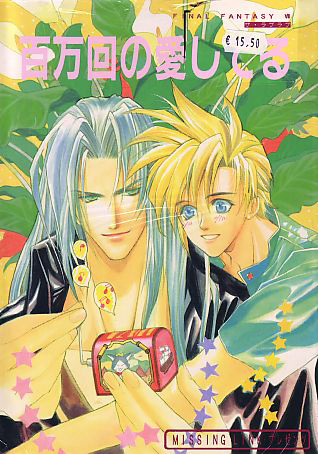
Yet, these niche games aren't the only place you'll find the suggestion of homoeroticism. Square Enix's Final Fantasy series is a perfect example of the roles of seme and uke being used to fuel character development and interactions. The seminal example of this would be Cloud and Sephiroth, from Final Fantasy VII. The spiky-haired soldier Cloud is strangely drawn to the domineering Sephiroth. One cannot help but feel that Sephiroth is a seductive presence for Cloud, even as he regularly belittles and emasculates our hero, who is the uke to Sephiroth's seme. This emasculation takes a more literal manifestation when Cloud is forced to wear a dress in order to sneak into the Honeybee Lounge, a sort of high-class brothel, where Tifa is being forced into servitude as one of the attendants. During his stay at the Honeybee, Cloud is hit on by a large man wearing a pink Speedo. Cloud may have the convenient alibi of doing all this for the sake of his buxom girlfriend, but the fact remains that he hot-tubbed with eager, homosexual men in a game designed for young teens. Take that, Vice City.

Final Fantasy VIII featured what was probably the first RPG character to be modeled after a real-world celebrity. Squall, the game's protagonist, was based on the likeness and personality of Camui Gackt, a chart-topping Japanese rock singer, formerly of the band Malice Mizer. Gackt, who is openly bisexual, is known for putting on rather homoerotic performances during his shows. Squall's provenance perhaps sheds some light on the apparent sexual tension between him and schoolyard rival Seifer. These sorts of relationships, however subtle, spawn countless tons of yaoi dojinshi and fanfiction--unlicensed comic books or stories featuring video game and anime characters, often in graphic, homosexual contexts. Japan's Tokyo Big Site, a huge convention center, is home to an annual market, called Comiket, dedicated to the sale and exchange of this material. Most companies take these kinds of harmless bastardizations of their intellectual property in stride; however, Nintendo has made it abundantly clear that it will not tolerate copyright infringement of any kind, particularly the sort that perverts their family-friendly image.
In Japan, homosexual pairings--particularly those between men--are a way to entice the female youth demographic. This practice might be considered entirely unwholesome by American standards, but with the growing acceptance of "gay-themed" TV shows and movies joining mainstream media, how long is it until a Queer Eye video game is released, in which you must help a hapless straight male adopt a fashion-forward lifestyle. For those of you who are fans of Dead or Alive: Xtreme Beach Volleyball, this sort of accessorizing should come naturally. As GameSpot reader Mike Lisman so eloquently put it, "I had a little too much fun picking out high heels. DOAX is a homosexual-themed game, masquerading as a manly boobfest."
| Jeff Gerstmann Senior Editor |
Rap Jam: Vol. 2
Back in 199X, a group of escaped master criminals, lunatics, and political activists got together and hatched the ultimate scheme. They developed a plan so insidious, that it would work our society to its very core. That plan entered the operational phase, but fortunately it was stopped before it could run its course. That plan, code-named "let's make a filthy NBA Jam clone, but oh wait, let's make the players popular rap stars," spawned one of the most evil SNES games ever...Rap Jam: Vol. One.
I think it's time we started thinking about a sequel.
The original game's roster looked innocuous enough. It contained artists like Naughty By Nature, Coolio, LL Cool J, Onyx, Public Enemy, Yoyo, Queen Latifah, and House of Pain. Not bad for 1994. The part where the game falls apart is the part where you actually have to attempt to play it as if it were a competently made video game. But hey, with all those heavyweight names, who cares if it plays like trash and the characters don't even look like their real-life counterparts?
Our sequel, tentatively titled Rap Jam: Vol. 2, will do things a little differently. You see, we're 10 years past the original game's release, and hip-hop and games go together like vodka and orange juice. All the "big name" rappers are taken! So we'll go a different route and recruit talent that people might sort of remember from sort of around the time that the original came out, and some more recent "favorites!" Here's who I've got on tap for the game.
- Snow
- Kwame
- Tairre B.
- A smattering of awful Canadian rappers (including Bret "The Hitman" Hart)
- "Macho Man" Randy "Macho Man" Savage
- Spindarella
- N2Deep
- Young Black Teenagers
- Blood of Abraham
- Rappin' Granny
- Shinehead
- Monie Love
- The other guys from Leaders of a New School
- John Forte (complete with alternate "prisoner" outfit)
I'm thinking that we'll step outside the genre a bit for the final boss, the Hotstepper himself, Ini Kamoze. Or maybe Ernie Hudson. He'd be good, too.
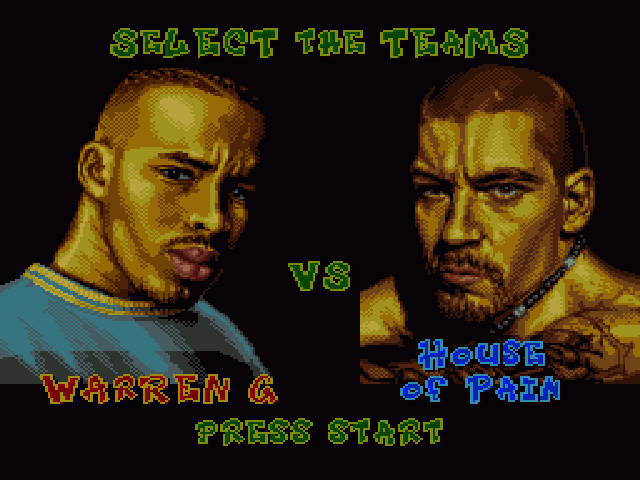
As for the gameplay? Well...licensing these hot, hot talents won't be cheap. So we'll have to just reuse the same utterly horrific basketball engine that drove the first game. You know, the one that lets you jump up and down without calling double dribbles on you. The one that looks like someone beat an NBA Jam cartridge with a stick, breaking part of it...but making sure that it still sorta works.
OK, I think I have it all out of my system now. Rap Jam. God, games don't get much worse. How was that game made? Who approved it for release? We may never know the answers, but do yourself a favor and, you know, don't play that game.
| Kurt Collins Wireless Research Analyst |
Games My Skinny 13-Year-Old Sister Can't Even Play
All right, all right. I concede. Mobile games suck. After surfing the forums for the past two and a half months, fielding question after question and receiving only pejorative responses in return, I'm ready to agree with all of you out there who insist that mobile games are an abomination to the gaming industry as a whole. There's got to be a reason I continue to defend mobile games--at least, something besides the fact that my GameSpot paycheck pays for my console gaming habit (not to mention my sushi addiction).
I could quote figures and statistics that prove there are many people out there who have downloaded a cell phone game in the last year. Many of these mobile customers not only have loved their games, but keep coming back for more. But that's irrelevant to my larger point, which should instead be illustrated by the colorful opinions from some members of our forum:
"No cell phones are good for gaming."
"Don't get me wrong; some cell phone games are pretty cool to BS with when you have a few minutes, but a Final Fantasy Game on a cell phone? It will kill the battery."
"Gaming on cell phones sucks! You can't even use decent buttons to play, and even the N-Gage sucks cuz of the 50 buttons you gotta press to play the game!"
"mobile gamging suxs nads cuz da games suc. nuff said."
"What is so good about mobile games? Nothing."
"Get an Xbox. The N-Gage (both versions) has absolutely no good games."

Well, I think that just about sums up my point. Our readers certainly seem to have proven beyond any reasonable doubt that there is no redemption for mobile games. Who among GameSpot's clientele wants to play a game on a tiny device with no gamepad and with keys too small for even my skinny 13-year-old sister to use? And let's not mention side-talking. There's no need to take it to that low of a level. I could go on and on about how horrible the games are, but chances are if you've read this far, you know exactly what I'm talking about. Given the choice, I'd much rather be playing Pong or Arkanoid on my old Commodore 64. The loading time may be just as long, but at least the screen and the keyboard are big enough to use.
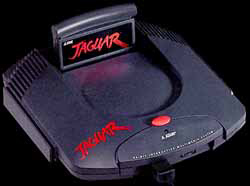
So why do I continue to defend mobile games? Why do I continue to soliloquize on it when I know you guys need to get back to playing Driver 3 (note: the mobile version is much better than any of the console versions)? I probably shouldn't interrupt as you try to resurrect the Jaguar and the Lynx from the depths of eBay hell because they were the coolest things short of a free trip to Jupiter. And God forbid I should even distract you from playing Star Wars Episode II: Attack of the Clones or XXX on the GBA SP. Clearly you guys have better games to be playing than any of the mobile games out there.
Even among all the negative aspects of mobile, though, there are a few nuggets of gold. I have yet to find an Asteroids-style game as enjoyable or as easy to play as Dwango's Star Xceed (aka Star Diversion, now available on AT&T Wireless on the NEC 515 and 525). The graphics were stunning (for a mobile game), but not so distracting that I was focusing only on them and missing the game itself. Jamdat Bowling and Prince of Persia by Gameloft came very close to engendering that kind of fanatic feeling in me, as well. En masse, I find that console games of today are missing the quality that caused me to obsess over Mega Man or Super Mario Bros. I remember sitting in class with nothing else on my mind but getting to my friend's house so we could play Altered Beast on his Genesis. I don't get that feeling from any of the console games of today. But there was a good three-month period last year in which I couldn't sit through a single meeting with my boss without thinking about Star Xceed (don't tell him that, though).
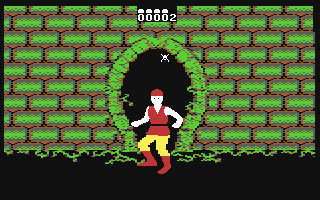
I remember my Commodore 64. I remember the days when I was playing Dragon's Lair on a CGA screen. Dragon's Lair was awful. That's right, I said it. I know it's a classic, and thus, according to the hardcore gamer's code of ethics, it cannot be criticized--but it was terrible. I died every three minutes in that game, and the controls were nothing short of abysmal. I loved it nonetheless, not only for what it was, but for the promise of what it would become. Mobile gaming is a young industry, and as with all young industries, there are a lot of kinks to be worked out. There are quite a few things I'd like to see changed, including many improvements in the handsets and, most of all, major overhauls in the gameplay.
But for an industry that's barely 3 years old, I'm happy. Just being able to pull out my phone while I'm stopped at a traffic light and play a game for 30 seconds while I wait for the light to change is enough to keep me entertained. Start Xceed and its ilk are the true harbingers of where this industry is headed. That is what gets me up in the morning and keeps me working through the day--knowing that in five years things in the mobile space will be drastically different from how they are today. It's incredibly exciting to be here at the beginning, even if it's just the chance to wait and see what happens. For now, it's more than enough to keep me defending and playing mobile games.
| Bethany Massimilla Community Manager |
More Special
I made some allusions to my collector's nature in a previous GameSpotting, but I didn't quite confess the full extent of my disease. (Case in point, I recently acquired a boxed copy of the original Front Mission for the Super Famicom. Do I own a Super Famicom? No!) So today I'm going to talk about a certain sort of item, friend to collectors and rabid fans everywhere: limited-edition merchandise.
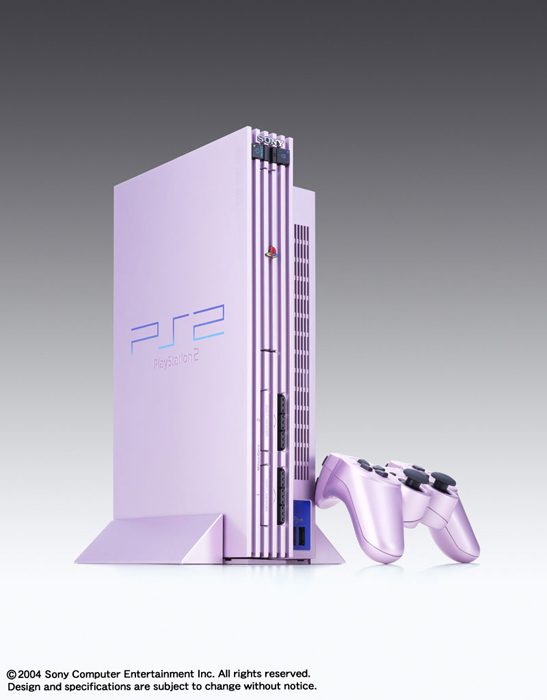
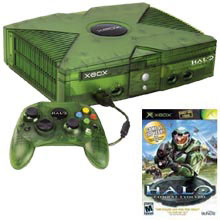
The special edition is not a strange beast to most people--virtually any DVD you see on store shelves has had extra goodies magically introduced, and a number of them have had crazy multiple versions (Lord of the Rings, I'm looking at you). And gaming system-wise, we've certainly seen a lot more of the conventional "special" versions, especially of the GBA SP. That system expanded its original color palette to include red systems, black systems, and even a retrofitted NES throwback. But for some reason, we continue to lag far, far behind the island nation of Japan in both the number and visibility of limited-edition games and systems. Domestic examples of these desirables include the gold GBA SP that Toys "R" Us was selling with Super Mario Bros. 3, the translucent green Halo Xbox, and that special version of Unreal Tournament 2004 with the metal box and Logitech headset, to name a few.
Now, maybe I'm alone in coveting these sorts of "here today, gone tomorrow, look it's pretty, and there's extra stuff!" things, but judging from how quickly supplies of the above examples were depleted, and factoring in my limited income and the fact that I didn't buy any of them, this would not seem to be the case. Whether it be fans hungering for exclusive items, or collectors desirous of the next great shelf display, or even regular consumers who are snagged by a pretty package and extras who are willing to shell out a little extra cash, limited- and special-edition items are just the bee's knees. And variety is the spice of life--while perhaps not many would be interested in the pink Sakura PS2, what about a translucent dark blue system? Or a pearl white GBA SP? (Available with Final Fantasy Tactics Advance's launch in Japan. People in the office make fun of me for having imported that one!) How about a hideous-looking pastel green GameCube with Lloyd of Tales of Symphonia on the top cover? OK, OK, fine, how about an orange Cube instead? I got many compliments on my previous GBA, which was another Japanese import (thank you, region-free systems) of a limited-edition system that's a lovely metallic silver-blue color. I'm ready to see more unique and even oddly colored systems out in stores; I don't know about anyone else, but I'm sick of black consoles. Yes, very nice, they look just like every other piece of electronic equipment you own, and they won't clash with your couch. Boring!
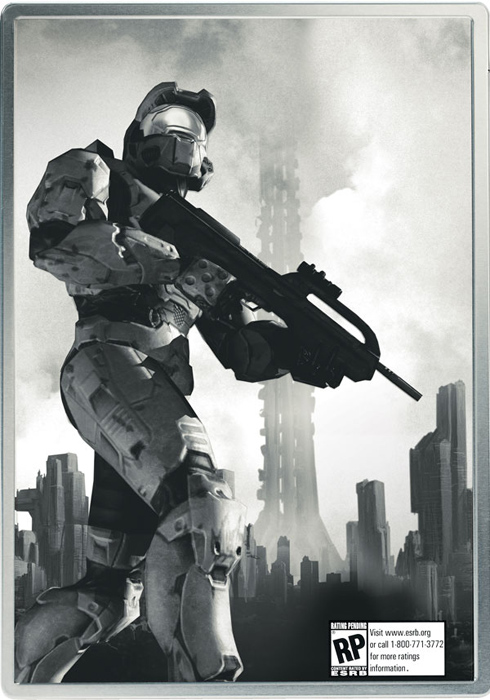
And the time for nifty limited-edition versions of console games has definitely come. The upcoming Halo 2 LE, with its extra DVD and another one of those metal boxes, should do very well. I'm not sure if we'll ever reach the Japanese stage of huge boxes filled with all manner of figurines, cell phone mascots, art books, and other such excess, but there has to be someone out there besides Working Designs willing to issue tchotchkes to fans. (An aside to Working Designs: I have nothing against timepieces in general, but I'm begging you, no more watches in these things! I need no more watches! Stop!) PC gamers have long been receiving cloth maps, posters, soundtracks, and other extras in collector's editions; for a series I really enjoy, or for a particular set of extras, and sometimes just for collection purposes, I'm willing to shell out extra money for some of these. I think we're ready to move beyond getting a small poster with a preorder. Put in quality fan fodder or some nice uniques! If it's neat, and if it's reasonable, they will come--and it's cheaper than paying for shipping from Japan.
| Greg Mueller Intern |
A Good Price for a Bad Game?
Sometimes you get stuck with a bad game. It is inevitable that anyone who even occasionally purchases games will bring home a horrible game once in a while. I have been collecting games for 15 years or more, and although I like to think I am getting better at picking good games, I still sometimes find myself playing a rather mediocre title. Perhaps these games are not really that bad; maybe the constant exposure to games has made my tastes more selective, or maybe I just let myself get caught up in the hype and buy a game even when I know I probably won't like it. I think the latter explanation is more accurate, and the problem is only compounded by the fact that games seem to be so cheap these days. For $5, who cares if a game is garbage? That's cheaper than a rental. Of course, that does not bode well for the good games that are sitting on shelves while the discount bins get raided. Regardless of the implications that has on the industry as a whole, if a game isn't fun, it isn't worth any price, be it $5 or $50.
It seems that just about every week one of the large consumer electronics retailers has a huge sale on video games. It's a good way to get people into the store and to get rid of outdated products. Some of the games are great but have just been eclipsed by a sequel or a release of a slightly better game in the same genre. Then there are the stinkers; if the price is low enough, even these will sell, because most gamer-minded folk assume that any game is better than no game at all. It's also easier to con mom or dad into buying a game when it only costs about as much as a happy meal. These sales get pretty well picked over within the first hour or two, leaving the stragglers with a bunch of outdated sports titles to go home with.
I love cheap games as much as anyone else, but the problem is that the games in the discount bins divert money away from the new releases on the shelves. If the new releases don't sell, developers and publishers don't have any money to fund new projects. This seems to be one of the biggest problems facing the gaming industry right now. People complain about a lack of innovation and originality, but publishers can't afford to take the necessary risks because they are being undersold by cheaper, often lesser-quality games. A similar situation contributed to a video game market crash in the '80s, and indeed some people are claiming it will soon happen again. I don't think our beloved industry is in that much trouble yet, but I do have a few tips for gamers who want to avoid wasting money on bad games, if not to save the industry then to at least save a few bucks:
1. Research your purchase: This is easy. Just read a review before you buy a game so you know what to expect beyond a title and a bunch of hype. This way, you can determine if a game is right for you based on the merits of the game rather than the price. After all, this is what GameSpot is here for.
2. Have a game in mind: When you go to a store, it's best to have a title in mind to prevent settling for a mediocre game. If you run into a game store with your cash in hand and no direction, you will invariably end up picking through a discount bin and will likely walk out with something you never wanted in the first place. Know the game you want, and if you can't find it, don't be afraid to leave the game store empty-handed. It's more satisfying to save your cash for another day and not get anything than it is to bring home another bad game to dilute your collection.
3. Don't buy a game if you wouldn't pay full price for it: OK, that may be a tad idealistic, but if you aren't willing to spend at least $20 on a game, spending less won't make the game any more enjoyable; you will just feel slightly less ripped-off. It will still collect dust while you spend time with your tried-and-true favorites.
With used games and budget titles everywhere, it has become easy to fool yourself into making impulse purchases of bad games because the risk is minimal when you are paying only $5 or $10 for a game. As the cliché goes, you get what you pay for. For $5 you might be slightly amused by a game for half an hour or maybe even a couple of hours. You could get 10 of those and have maybe 10 or 20 hours of actual entertainment. Or, you could spend the same $50 on a good game that you will actually enjoy for 10 or 20 hours or more and will want to play through, maybe even more than once. Since many video game purchases are made without first playing the game, we are bound to get burned when buying new games, and the more we pay, the more it stings. Conversely, sometimes we might find an excellent game for cheap, and those are the ones worth getting to the store early and fighting the crowds for. I'm always up for a sale, since I don't have a lot of disposable income to put toward gaming, but cheap garbage is still garbage, and I don't need any more of that.
| Jason Ocampo Associate Editor |
A Welcome Delay
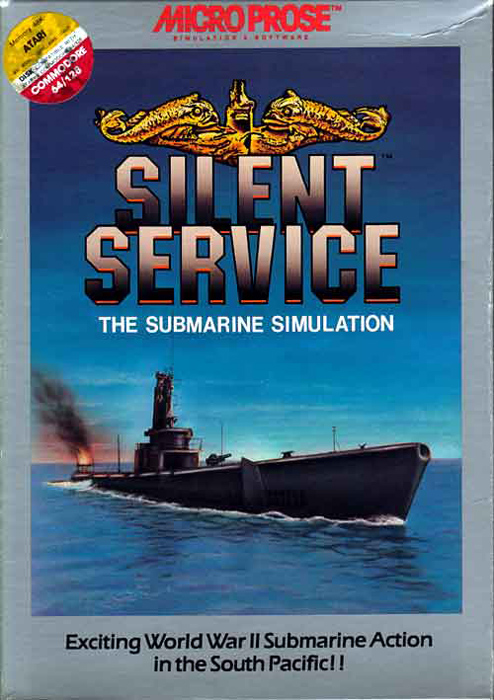
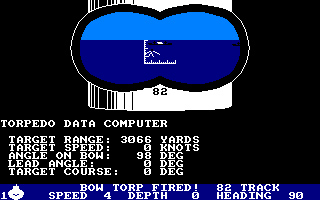
Though the longest I've ever spent on a boat has been about half a day, I'm a huge fan of naval warfare games and simulations. I think it goes back to the original Silent Service, an early Sid Meier game that put you in command of a US Navy submarine during World War II. Sent out on long patrol for months at a time, you had to chart a course around the Pacific, lurking in enemy shipping lanes. When you came upon a contact, the game would drop you into the control room of the sub, and from there, you would have to stalk your victim carefully. You could jump from station to station in order to examine the target's course track, analyze it for a weakness, and then fire a spread of torpedoes at it. Then you could raise the periscope and see the results of your hard work. Silent Service was a superb sim in that it was easy to learn, hard to master, and addictively compelling. There's no surprise that it served as the template for all the sub games to follow.
When I was walking around the huge Ubisoft booth at E3 this year, I saw the kiosk for Silent Hunter III, and it simply looked fantastic. Silent Hunter III will put you in command of a German U-Boat, which is about as perfect of a setting as you could want for a submarine game. During the first half of the war, the U-Boats were the ultimate predators, sinking millions of tons of Allied ships. However, by 1942, the tide had changed and the hunters became the hunted, and the U-Boat force was decimated by the end of the war.
But the thing that struck me about Silent Hunter III was its gorgeous graphical presentation; it elevates the genre to a whole new level of immersion. Now you can stand on top of the sail and watch as the gray chop of the North Atlantic pitches your U-Boat around like a toy. We were so struck by Silent Hunter III that we gave it the "Best Simulation of E3" award. I can't wait for it, myself.
However, earlier this month, Ubisoft announced that it was delaying the game until early 2005. Normally, a delay would cause quite a bit of consternation, but this was actually welcome news to the Silent Hunter community. Ubisoft has decided to implement a dynamic campaign system in the game, rather than go for the scripted, mission-based campaign it had originally planned. This means that instead of a narrowly focused campaign, we can expect the kind of open-ended gameplay featured in other sims that have dynamic campaigns. The ability to chart your own course is exciting, and the unpredictable nature of a dynamic campaign means that you won't be able to predict what happens next.

Ubisoft deserves kudos for making the correct decision, as tough as it probably was. After all, sims don't dominate the market like they used to, and most of the major publishers have bailed out of the genre. But delaying the game to add in a fan-requested feature like a dynamic campaign was a good call, because it means that Silent Hunter III could very well become the long-awaited successor to Silent Service that sub fans have been waiting for.
Got a news tip or want to contact us directly? Email news@gamespot.com
Join the conversation