When Two Tribes Go to War: A History of Video Game Controversy
When Two Tribes Go to War: A History of Video Game Controversy
When Two Tribes Go to War: A History of Video Game Controversy
Design by Collin Oguro
Since the earliest days of pinball, someone somewhere has been determined to ban games--our visceral companions and instigators of id-driven fun. Ronnie Lamm, the noted Long Island PTA president, mother of two, and opponent of arcades and gaming culture in general, spoke about her cause on the MacNeil/Lehrer show in December 1982. She discussed how she and other advocates for banning video games had recently "passed final legislation to limit and control what we considered as being a massive proliferation of games within our community," according to a transcript. Lamm and her group placed limitations on arcades' proximity to schools as well as on the hours during which kids would actually be allowed to play.
Lamm claimed that lack of supervision in arcades drove her fight. She also criticized game culture: "Within our community, there was a tremendous push on for the downtrodden, unemployed person to open up--make a quick buck, open up an arcade--quarters upon quarters dropping into their pockets tax free, no limitations, no investment necessary, no skills needed to work with young people." The same year, 1982, Surgeon General C. Everett Koop suggested that games had no merit and offered little in the way of anything constructive to young people. Games were under fire, and Mortal Kombat was still a good 10 years from its inception. To understand the psychology behind what makes violent games attractive is an undertaking too epic and possibly academic for these pages--and one in which, perhaps, there is no definitive answer.
In the mid-'60s, media theorist Marshall McLuhan offered some insight in Understanding Media: "The games people play reveal a great deal about them." And while his vision at that time may not have been keen for a world of first-person shooters and digitized carjacking, he clearly understood the potential for electronic media to permeate and change our culture--as it has. Assuming there is truth to the idea that what we play defines us, the rising popularity of games deemed violent by some reflects that the United States has a violent culture, but we know this. More than 11,000 people die each year in the US from gunshot wounds, and most of the ones we hear about on the news have nothing to do with games. And then there's Columbine. Were games a culprit? Some say yes, and some say no. But no one truly knows. Unless one can isolate every factor that may have inspired a violent incident--too much sugar, too much MTV, not enough sex--we may never know.
In December 2001, Surgeon General of the United States David Satcher, M.D., Ph.D., led a study on violence in youth and determined that while the impact of video games on violent behavior has yet to be determined, "findings suggest that media violence has a relatively small impact on violence." The report stated:
"The impact of video games containing violence has recently become a focus of research because children are theoretically more susceptible to behavioral influences when they are active participants than when they are observers. To date, violent video games have not been studied as extensively as violent television or movies. The number of studies investigating the impact of such games on youth aggression is small, there have been none on serious violence, and none has been longitudinal." With that said, the report noted that recent "meta-analysis" of these studies found that "the overall effect size for both randomized and correlational studies was small for physical aggression and moderate for aggressive thinking."
The Surgeon General's report notes that the media is not necessarily the cause, although much testing must still be done. It is important to look back through history at violent crime. In his film The Young Poisoner's Handbook, director Benjamin Ross revealed a fictionalized view of a notorious real-life, adolescent killer, Graham Young, who poisoned multiple friends and family members in England in the 1960s. Young, unlike Columbine's Eric Harris and Dylan Klebold, did not play Doom. Perhaps a chemistry set was not a good idea for Young.
Video game controversies tend to fall into three main areas: games deemed so violent or controversial that governments and legal bodies intervene (Major Offenders), games controversial enough to make retailers respond by pulling products off of store shelves (Retail Rogues), and games that solicit grassroots uprisings, such as insider Web melee among groups that feel somehow maligned by a game's message or mission but do not truly hinder a game's success (Peaceful Protests). There are plenty of games that are worth noting that do not fall into these categories; you'll find those in Dishonorable Mentions. Since controversy is not just a black and white issue, The Docket includes a sampling of game-industry lawsuits and squabbles, and Juvenile Hall features the lighter side of controversy, because sometimes it's OK just to laugh. We have included many of the notable controversial games, although naturally, there are others not mentioned here. That's where you come in.
The American 1970s are associated with crime, violence, poverty, unemployment, political and social upheaval, bad clothes, and worse music. In the early 1980s, Lamm and her battle against arcades bridged the gap between the first truly controversial game in the '70s and the Brave New World of the early 1990s with Mortal Kombat. The games in this section not only unleashed pandemonium among the public and media, but they were also pulled from store shelves, they faced litigation, they were banned from entire countries, and they inspired the creation of ratings agencies and new laws. It's downhill from here, so why not start at the summit.
Death Race
Platform: Arcade
Publisher: Exidy, 1976
Developer: Exidy
Midway through the 1970s, the first universally accepted controversial video game reared its head. Should we be surprised? Like many of the byproducts of this bygone era, the game was banned but not forgotten.
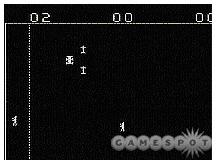
Death Race was an arcade game based on the movie Death Race 2000, which starred David Carradine as Frankenstein and Sylvester Stallone as Machine-Gun Joe Viterbo. The movie's tagline, "In the year 2000, hit and run driving is no longer a felony. It's the national sport!" rang true of the video game version as well. The objective of the lo-fi black and white game that looked like a slightly more advanced version of Pong was to earn points by running over as many "gremlins" as possible within a given time frame. If you successfully pulverized your prey, a cross would appear where the being was trumped. If you failed to kill passersby on the first run, you could reverse your vehicle and finish them off.
Death Race was so aggressively rejected by the public that shortly after its release, Exidy pulled the game off store shelves. Web lore claims only 500 copies of the game were made with only several known to exist by the late 1980s. At the time of this writing, an eBay search on Death Race turned up more than 100 versions of the DVD or VHS movie and surprisingly one offering for the game--an arcade machine in "decent" shape, needing "work," and listed at $157 with four days remaining in the auction.

While it's also widely acknowledged that Death Race was originally called Pedestrian, Steve L. Kent, author of The Ultimate History of Video Games, freelance writer, and speaker for Senators Joseph Lieberman (D-Conn.) and Herb Kohl's (D-Wis.) annual Video Game Report Card event held in the Senate Judiciary Chambers, said the game was first titled Demolition Derby, a game Exidy created for Chicago Coin Machine Co. The company defaulted on payment to Exidy, so Exidy CEO Pete Kaufmann pulled the game and rereleased it later as Death Race. "What got everyone upset about Death Race was that you heard this little 'ahhhk' when the person got hit, and a little gravestone came up," Kent said. "That was big enough to make 60 Minutes."
Kent also spoke of a sign Kaufmann apparently kept on the back of his office door, bearing the number "8999." As the story goes, Exidy planned to sell about 1,000 Death Race machines, but when controversy struck, the number rose to 10,000--there's no such thing as bad press.
Death Race was to originally have featured humans, not gremlins, although they undoubtedly would have looked the same onscreen--like stick figures. Authors John Borland and Brad King wrote in their book Dungeons and Dreamers: The Rise of Computer Game Culture from Geek to Chic that Kaufmann explained the gremlin/human difference between the versions; however, his reasoning did not save Death Race's day. "The game quickly triggered national attention, garnering write-ups in the National Enquirer and other, more serious newspapers. It even prompted a segment on TV's 60 Minutes probing the psychology of video game players," the pair wrote.
Death Race screenshot image courtesy of The Dot Eaters: Videogame History 101
Custer's Revenge
Platform: Atari 2600
Publisher: Mystique, 1983
Developer: Mystique/American Multiple Images
There's little to defend in Custer's Revenge, other than the fact that it serves as a remarkable example of just how early video game controversies existed and how controversy alone can sometimes make a game--but not always. The Atari 2600 game shipped in the early '80s and pushed all the wrong (or possibly right) buttons. The gameplay, graphics, and technical merit of the game were so bad, that were it not for the explicit nature of the game, it's doubtful anyone would even remember it.
In the game, you played as a comic facsimile of General George Armstrong Custer, the infamous 19th-century military officer who contributed to a seedier side of American history until he met his (and his entire unit's) death at Little Big Horn in 1876 at the hands of Native Americans. As the game version of Custer, you embarked on little more than a rape romp, as you ran literally across the screen from "enemy" arrows toward a Native American woman strapped to a pole. Once there, Custer would get it on with (or, according to many critics, "rape") the woman for points. Game over.
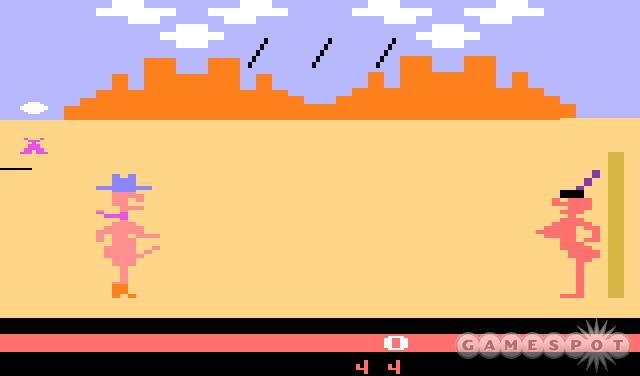
Author Tom Moriarty reported in the October 1983 issue of Videogaming and Computergaming Illustrated ("Uncensored Videogames: Are Adults Ruining It For The Rest Of Us?") that in October 1982, outside the New York Hilton, where retailers and the press were gathered to see Custer's Revenge, "250 women and men gathered to protest that activity." Kristen Reilly, a leading member of Women Against Pornography, organized the protesters, with help form the National Organization for Women (NOW) and the American Indian Community House. Reilly told Moriarty, "The game features an enactment of a white male, General Custer, ravishing an Indian Woman who is tied to a post. Once there was a lot of furor over the game, the company (American Multiple Industries) denied that it was rape. They claimed that it was mutually consenting visual images, which is really asinine."
Being that console games were so new to the public, angry protesters and disenchanted parents weren't entirely sure where to point their fingers in the case of Custer's Revenge. Many pointed at Atari, holding the console maker responsible. According to Moriarty's article, Atari filed a lawsuit against AMI/Mystique for "wrongful association" of Custer's Revenge to the Atari 2600.
While Custer's Revenge sat in court and (if it sold at all in retail venues) sat behind the counter, Mystique released two additional "X"-rated games. One was Beat 'Em and Eat 'Em, somewhat styled after Kaboom, only giving way to another sexual-antics-for-scoring play motif. Bachelor Party was the other, involving hitting on women in mass quantities. Mystique closed its operations shortly after the release of Bachelor Party.
Castle Wolfenstein and Wolfenstein 3D
Platforms: Apple ii, Commodore 64, Atari 800, PC, Mac, Xbox, PlayStation 2
Publisher: Muse, 1981; Apogee 1992; Activision 2001
Developer: Muse, id Software, Grey Matter Studios
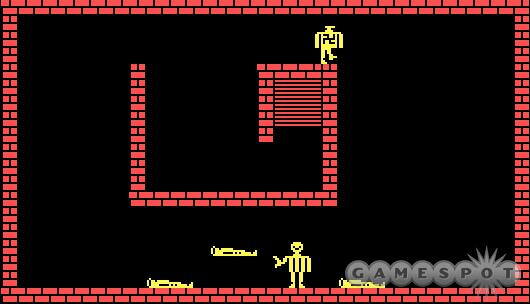
The first appearance of Castle Wolfenstein was as an 8-bit game in which you worked your way through "rooms" of the castle killing Nazis or fleeing from them, when possible. In the DOS version, the Nazis wore yellowish uniforms with swastikas on their chests. It was rudimentary, but it established the storyline and tone that would remain with the game through its lifetime.
Wolfenstein 3D was created by id software in the early 90s, influenced by the old Muse game. It is credited by many as a game that launched first-person shooters into what they are today. In the game, as William "BJ" Blascowicz, your goal was to shoot Nazis--as many as you could--and this was fun and well executed. But it was also extremely violent. The Nazis would emote violently (in German) when hit by your bullets. Also note that the PC version of Wolfenstein 3D came out around the same time that Mortal Kombat was being scrutinized by congress (1993)--perhaps violence critics were too busy with MK to note the level of violence in Wolfenstein. Germany did ban the game entirely, but because of the Nazi symbols, not the level of violence.
In November 2001, to the excitement of fans who had anticipated a sequel for years, Activision released Return to Castle Wolfenstein, built on the Quake III engine on the PC. The game was later released on PS2 and Xbox. Germany banned the subsequent releases of Wolfenstein as well.
Duke Nukem
Platforms: PC, Mac, Game.com, Saturn, N64, Game Boy Color, PlayStation, coming to PlayStation 2 and Xbox
Publisher: GT Interactive/Atari/Apogee, 1991
Developer: 3D Realms/n-Space/Eurocom Int./Apogee
When Duke Nukem launched in 1991 as a PC side-scroller whose only controversy might have been in its horrifying graphics, its future as a dominant shooting game was not yet visible. Fans of shooters rarely credit the trigger character's personality as the reason they play the game. In fact, most FPS trigger personalities seem deliberately homogenized so that the player might better envision him or herself as the one behind the gun. Not so with Duke Nukem in its later incarnations. In 1996, Duke's vision of the future came into dimension with a pseudo-3D release on the PC and Mac. Hence, the antihero was (re)born.
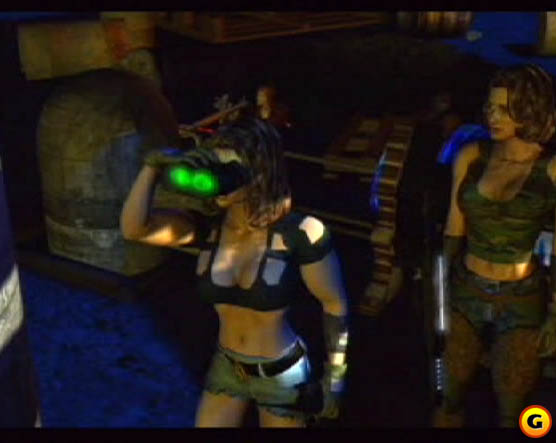
Duke Nukem is to games what Jim Carrey is to film. You want to take him seriously and possibly even find him repulsive, but you really can't. He's too corny for any degree of scrutiny. A company like Nintendo, known for its historic prudence and antiviolence stance (until that became a topic of controversy, too), would be expected to have an opinion of the game, if not to flat out reject it. Not so. In 1997, Duke made his way to the N64, leaving the strippers and suggestive visuals behind, bringing only the violence and gore to the new world--and there was plenty of it. Duke moved deeper into the console world, one occupied by a younger gaming audience than arcades or PC games, and brought pig cops, pipe bombs, necrobrains, and dynamite with him. Yet Duke Nukem received very little hassle of the serious kind in the States.
Duke Nukem, as a character, is brash and full of machismo. He's abrasive and sexist. He is corny and primal. He's cliché and full of innuendo. Germany and Australia banned Duke Nukem for its violence and degrading attitude toward women. In December 1999, Brazil banned Duke Nukem (as well as Doom, Postal, Quake, Mortal Kombat, Requiem, and Blood) for allegedly inspiring a violent shooting rampage carried out by one man in a cinema in November. Various publications report that the incident was to have been re-created from a scenario in Duke Nukem. According to an article in The Register (UK) on December 23, 1999, the games had been evaluated by a team of psychiatrists in the UK and determined to be "too violent."
GameSpot's Sam Parker said, "There's nothing at the core of Duke Nukem 3D that's any more controversial than Doom. Running around in networked deathmatches produced battles as fast and gory as any game at the time." Parker admits that he was "somewhat surprised to see the dancers. ... They certainly stood out from all the shooting, even though the types of interactions fit with the game's unusually interactive environments. And after all, there was an 'adult mode' switch to turn down the gore and remove the women--but who'd ever tell their parents it was there?"
Night Trap
Platforms: Sega CD, Sega 32X, 3DO
Publisher: Sega, 1992
Developer: Digital Pictures
More than 15 years after Death Race was released, Night Trap appeared, making all the moderately sadistic games that bridge the gap nearly forgettable (though discussed later in this feature). Night Trap was not only controversial, but also a good example of how many games perhaps destined for anonymity gained otherwise unattainable success once heralded as violent or questionable in terms of content. This is especially true of games that were innovative, decent technically, or quirky enough to catch the eye of retailers, the media, and marketers, who in return brought them to a greater number of people--individuals who might not usually hear of a fringe game or those otherwise poorly situated in the market. While it's arguable whether or not Night Trap was actually a good game, it was innovative enough to make people pay attention. Those paying attention found the game threatening and quickly set their sights on what the games industry was capable of distributing.
Night Trap was targeted for featuring young girls in nightgowns with death as the thematic next-door neighbor. This is hardly different from just about any B-movie plot, but the game was attacked nonetheless. Perhaps because of the popsicles made of blood.

The game wasn't particularly violent. In fact, the premise is innocent enough--players were required to save five college-aged girls who were staying together in a house haunted by vampirelike creatures. The game featured full-motion video, with vignettes starring the deceased former star of Diff'rent Strokes, Dana Plato. Night Trap was a semipremature version of a reality-show game. As a commando for a secret organization called S.C.A.T., you monitored the house through its closed-circuit TV-camera-based surveillance setups in eight of the house's rooms. The rooms were also rigged for traps originally designed for the innocent girls, but you used them in a chivalrous way, to capture the vampires when they appeared. You could also watch the inner workings of the house in its day-to-day facade, minus the vampires. These surveillance sweeps were sure to turn up (A) pillow fights, (B) entertaining little sing-alongs, or (C) absolutely nothing. They did not reveal nudity or excessive violence, rape, or anything of the sort.
Author Steve Kent said, "To this day, the people who are attacking Night Trap really don't, to me, seem like they've played the game. They still talk about this game where you were killing co-eds, but you're not; you're saving co-eds."
Yet, Night Trap joined the ranks of other banned games and was pulled from stores to assuage public concern over its message. To this day, the game is recognized on most lists of controversial or banned games. Fair comparison to more recent controversial games makes one wonder why. Night Trap was used as an example, alongside Mortal Kombat, in the 1993 congressional hearings, addressed next.
Mortal Kombat
Platforms: Arcade, Genesis, SNES, Sega CD, PC, MAC, Game Boy, Game Boy Advace, Game Gear, PlayStation 2, Xbox, GameCube
Publisher: Midway Games, 1992
Developer: Midway Games
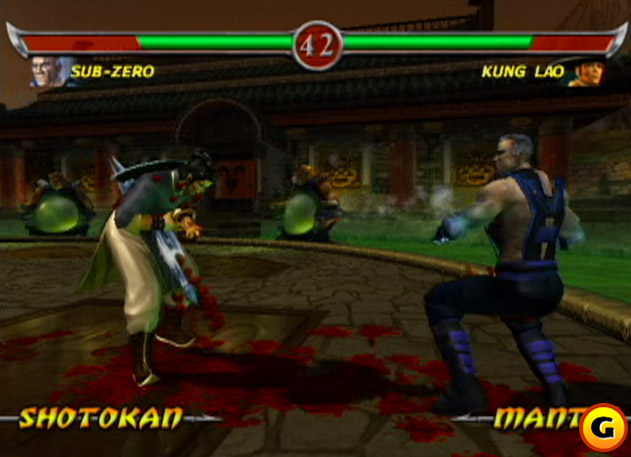
Mortal Kombat made its debut in 1992 in arcades and arguably influences games to this day. The classic fighting game placed players against one another or the CPU in arena settings ripe for medieval death fantasy. Brutality was the order of the day, and some found this disturbing. In fact, many did. GameSpot's executive editor Greg Kasavin said Mortal Kombat was the first time many people got to see "lifelike, realistic violence in a video game...whether they liked it or not." He continued, "While MK fans will tell you that it's the gameplay that kept them coming back to this classic fighting game, many (overly) concerned adults jumped to the conclusion that the game's extensive amount of blood and gore was 'obviously' what enticed all those impressionable children and teenagers to keep playing it. These concerned people were half right; MK's sheer audacity was hard to ignore, even in the midst of a crowded, exciting arcade setting."
Jeff Greeson, the editor in chief and site manager for The Realm of Mortal Kombat , a Web site dedicated to the game franchise, said it is important to note that Mortal Kombat launched in the competitive world of arcade games, all vying for the same quarters, and that standing out amid the competition meant survival. "Mortal Kombat not only stood out, it grabbed you by the shirt collar and demanded your attention. Mortal Kombat had the biggest and most realistic characters ever featured in a video game at that time. You were literately watching digitally animated photographs of people flying through the air and beating the living hell out of each other."
What made it stand out? "Everything was over the top," said Greeson. "From the pools of blood spewing from your character, to the outrageous gruesomeness of the game's fatalities. Mortal Kombat not only shocked anyone who had ever played the game, but those who simply walked by the game were mesmerized by its gore."
Mortal Kombat was generally quiet in the arcades, at least as far as lawmakers were concerned. "Once Acclaim received the rights to bring the game to the home console markets, they brought [it] into the spotlight of the general public," noted Greeson. "The media picked up on the fears that the public had of bringing such violent imagery into their homes through a device that children played with. ... When you pinpoint and highlight the game's violence and nothing else, it was hard to be a defender of the game during that time."
Video and PC games got a taste for the hot seat long before Mortal Kombat, but the Interactive Digital Software Association or IDSA (now the Entertainment Software Association or ESA) formed the Entertainment Software Ratings Board (ESRB) at the tail end of 1993 to offset the impending congressional hearings mounted against the games industry and spearheaded by Senators Lieberman and Kohl.
Borland and King wrote in Dungeons and Dreamers of a highly publicized notion that Nintendo was "angry" with rival Sega for trumping Nintendo's sales by selling violent video games. "In the hearing, a Nintendo representative attacked Sega for its release of violent games and said his own company had tried to mitigate the industry's worst excesses. In response, the Sega representative pulled out a prop--a bazooka-style gun accessory used by some Nintendo games--and asked if that was the appropriate means to teach nonviolence to children," Borland and King wrote.
The formation of the ESRB as a self-regulated entity deflected potential government regulation, and Mortal Kombat stayed in stores. The ESRB serves as an alert system for parents interested in buying appropriate game software for their kids by ranking games "E," suitable for everyone; "T," appropriate for teens aged 13 and older; "EC," for early childhood; and "M," for mature or 17 and older. The "Adults Only" or "AO" rating is for people 18 and older, although the major difference between "M" and "AO" is not age but rather the fact that retailers won't generally carry AO-rated games. The group's ratings are presented as boxed-in, black and white scorecards on the packaging of most retail games. Game companies present their products voluntarily for ratings, similar to how movie studios submit to the Motion Picture Association of America (MPAA).
Before the ESA formed the ESRB, Sega and Nintendo had agreed to their own ratings system, similar to the ESRB's, but neither successfully came into fruition. Another ratings board was the Recreational Software Advisory Council (RSAC), which became the Internet Content Rating Association (ICRA) in 1999, whose goal is to "protect children from potentially harmful content while preserving free speech on the Internet," according to the organization's Web site.
The ESRB reports that only 8 percent of the video and PC games rated in 2002 received the "Mature" title. Sixty-three percent received an "E" or "Everyone" rating, while 27 percent received a "T" for "Teen." While there are few AO-rated games, most of them are published by MacDaddy Entertainment or Peach Princess and involve strong sexual content or nudity. In August 2003, Peak Entertainment published Peak Entertainment Casinos, which received an AO for gambling, the first of its kind listed on the ESRB Web site. Companies creating and distributing AO games have a tendency to reliably submit their titles for rating, if anything, as a fail-safe in case their games fall into the wrong hands. Steve Kent said, "As long as you have that 'M' or that 'AO' or that 'T' on there, and you've done everything you can, when some parent screws up, which they sure seem to have a great proclivity for doing, you can say, 'You know what? We did everything we could possibly have done.'"
Mortal Kombat - cont.

Kent believes the ESRB is "skittish" to assign the AO rating and said what's the point of having it if it isn't used, citing Manhunt as an example of a game that he felt should have been rated Adults Only. Kent also defended the games industry for doing all that it can to prevent games from crossing the wrong set of eyes. "The real problem for me is the parents. And this is speaking as a parent, not a gamer. I can't tell you how many parents I know, especially here in Microsoft country, whose elementary-aged child is playing Halo every night. You have to say, 'What the hell is that?' What could the ESRB possibly do when intelligent, educated, thinking parents are letting their kids play Halo every night? These are 5- and 10-year-old kids playing Halo. That's a real problem."
Greeson said that while the ESRB may have formed out of necessity, "it was one of the smartest moves the industry has made. Not only did it avoid government regulation of its content, it finally brought forth the image that games aren't just for kids and that all games are not appropriate for everyone. It also gives parents a valuable tool for understanding the content of games and enables them to make a decision on whether [or not] the material is appropriate."
The ESRB, in Kent's opinion, is about 90 to 95 percent effective, while Greeson said the lack of enforcement at the retail level damages the ESRB's effectiveness. "This is no fault of the ESA or the ESRB, but of the major retailers who do not have policies [in place to] enforce the sales of M-rated and T-rated games to children under the age of the rating. This problem has been brought up what almost seems to be annually since the creating of the ESRB. While the retailers are in the business of making money, they do have a responsibility to the communities that they serve." Greeson suggested that large monetary fines, such as those that convenient-mart owners succumb to for selling cigarettes to minors, are a possible way to monitor the situation more closely, hence removing pressure and liability from game developers. The Federal Trade Commission reported in December 2001 that nearly 80 percent of retail stores let minors buy M-rated games, according to its "undercover" study.

In May 2002, US Representative Joe Baca (D-Calif.) worked to change that by proposing a bill to Congress that would make selling or renting video games to minors a federal crime. The bill was aptly named the Protect Children from Video Game Sex and Violence Act of 2003. The fines would run about $1,000 the first time and up to $5,000 and jail time for repeated offences. Baca's office produced a press release, in which he pleaded for parental support--the hard way: "Do you really want your kids assuming the role of a mass murderer or a carjacker while you are away at work?"
Washington introduced a similar law, which would fine retailers about $500 for selling violent games to minors. Economist, Web blogger, and Washington state spokesman on issues of violence and youth, Amitai Etzioni wrote on August 5, 2003, in his blog:
"Three cheers for the Washington State Legislature. They just passed a law that bans retailers from selling video games depicting violence against police and children. ... Video game industry executives claim that the industry's rating system already serves to keep violent games from being sold to children. The rating system designates some video games 'M' for mature; retailers are not supposed to sell 'M' rated games to unaccompanied minors. However, an undercover shopping survey sponsored by the Federal Trade Commission in 2000 found that 85% of the time, retailers did sell M-rated games to the underage customers."
On December 8, 2003, the Interactive Entertainment Merchants Association (IEMA) published a press release that announced a new initiative to help prevent the sales of M-rated games to minors and to also increase awareness of the ESRB. In the release, IEMA President Hal Halpin said, "A national carding system will help ensure that games that are not appropriate for children will stay out of their hands."
The carding system will purportedly be in place for the 2004 holiday season and will include the following retailers: Best Buy, Blockbuster, Circuit City, CompUSA, Game Source, Electronics Boutique, Hastings Entertainment, Hollywood Video, KB Toys, Kmart, Meijer, Movie Gallery, Music Land, Shopco Stores, Target, Toys "R" Us, Transworld Entertainment, and Wal-Mart, the release stated.
Halpin said that he believes these changes will make a difference and added, "but retailer enforcement is only part of the equation. Parents need to be actively involved in their children's entertainment choices, and retail enforcement cannot replace sound parenting."
ESRB President Patricia Vance credited the ESRB with taking "the parents' guesswork out of game purchase decisions. Consumers today can learn about a game's content before setting foot in a store, and parents can decide what's right for their children based on their own personal views and values. It's a huge advance for parents, and I believe it has benefited both families and the computer and video game industry," she said.
Did the controversy help Mortal Kombat's sales? Not necessarily. Mortal Kombat was a good game to start with, not a Night Trap or Custer's Revenge, destined for obscurity without the controversy to hold it up. "Mortal Kombat, at the foundation, was a great game with great value," said Greeson. "Without all of the media attention and the scrutiny, I believe Mortal Kombat would still be the hit game it is today, but it would have never have reached the heights of popularity it did without all of the attention it received."
Doom
Platforms: PC, Mac, NES, SNES, Saturn, 32X, 3DO, PlayStation, N64, Game Boy Advance, coming to Xbox,
Publisher: id Software/Activision, 1994
Developer: id Software
"The hearings had just started for Night Trap and obviously Mortal Kombat when Doom came out. If somebody wants to believe that they can spit fireballs at me and jump 30 feet through the air while kicking me, staying aloft for 10 minutes while they're kicking me, more power to them. But the dangers of a game like Doom are a lot more pronounced. They sailed all the way through that 1993 hearing without ever mentioning the word Doom. Curiously, though, they never mentioned Castle Wolfenstein, either." --Steve Kent.
The Texas-based id Software ironically hails from the same Dallas suburb, Mesquite, that once tried to run all arcades out of town, claiming that video games were violent and damaging to kids. A city ordinance passed in 1976, preventing anyone under 18 from entering an arcade. A state court overturned the ordinance, and gamers have called Mesquite home ever since. Besides housing id Software, Mesquite is home to the annual QuakeCon competition. Doom, however, unlike its brethren Quake and Castle Wolfenstein, has not skirted scrutiny from video game critics and censors.

Doom spawned on December 10, 1994--the brainchild of John and Adrian Carmack (no relation), John Romero, and others to varying degrees of involvement. The first-person shooter gained instant respect among gamers as a fast, serious, thrilling game. It had depth and was well designed. You played as a Marine, trapped on Mars, whose only hope for survival was to slash through hordes of aliens as hungry to waste him as he was to waste them. From this initial installment, Doom grew into an online mecca, and at the time of this writing a new edition is being produced for the Xbox and PC, due "soon."
Besides the controversy surrounding the grisly departure of id's John Romero, the game has been drop-kicked for its level of violence and its potential, detractors say, to lure youth into real-world violence.

On April 20, 1999, Eric Harris and Dylan Klebold went to their high school, in Littleton, Colorado, and killed 12 classmates and one teacher before turning their guns on themselves. The Columbine High incident raised a panic level already high in the United States, and, most would say, rightfully so. People realized then, if they hadn't already, that kids have access to guns and that the results can be grim. The Rocky Mountain News covered the incident in depth, reporting on August 22, 1999, "His [Eric Harris] nickname, Reb, was inspired by a character in one of his favorite computer games, Doom, where the goal is to score high body counts." The paper pointed out "one of the game's slogans: 'Doom -- where the sanest place is behind a trigger.'" It was widely publicized that police had found a videotape that showed either Harris or Klebold with a sawed-off shotgun on his lap that he called "Arlene"--a Doom reference.
People wanted answers, and as with any such incident of violence before or after Columbine, video games, TV, music, and movies would take the heat until (if ever) people understood what actually went wrong. Harris was also on Luvox, an antidepressant. Harris was rejected from the military--getting in apparently meant a lot to him, according to the Rocky Mountain News. But Doom gave the media a direct hit: Harris played Doom. Harris shot and killed people. Therefore...
Doom does not need defending here. Thousands if not millions of Doom fans nationwide supported the idea that Harris and Klebold's problems were bigger than their interest in playing Doom. And the issue is larger than defending the game, because most people who play it don't kill their classmates.
Gus Van Sant's film Elephant is a fictionalization of Columbine filmed in Portland, Oregon. The movie doesn't directly deal with the issue of video games inspiring the murders or Doom having any role in the killings. Nor does the movie directly deal with any sort of real-world issues surrounding Columbine. In Elephant, there's a brief sequence in which one of the shooters (possibly a representation of Eric Harris) is lying on the bed of the other shooter (possibly Dylan Klebold) playing a computer game. The game is definitely not Doom but rather a game created solely for the movie, wherein uniform male characters that look like thin men in white dress shirts run away from the shooter as he shoots them in the back. As one falls, several more, who look exactly like him, appear--faceless men running away scared. This image suggests that we have little understanding of how the games we like for social or competitive reasons affect others who may not process entertainment the same way or who may not so easily separate fantasy from reality.
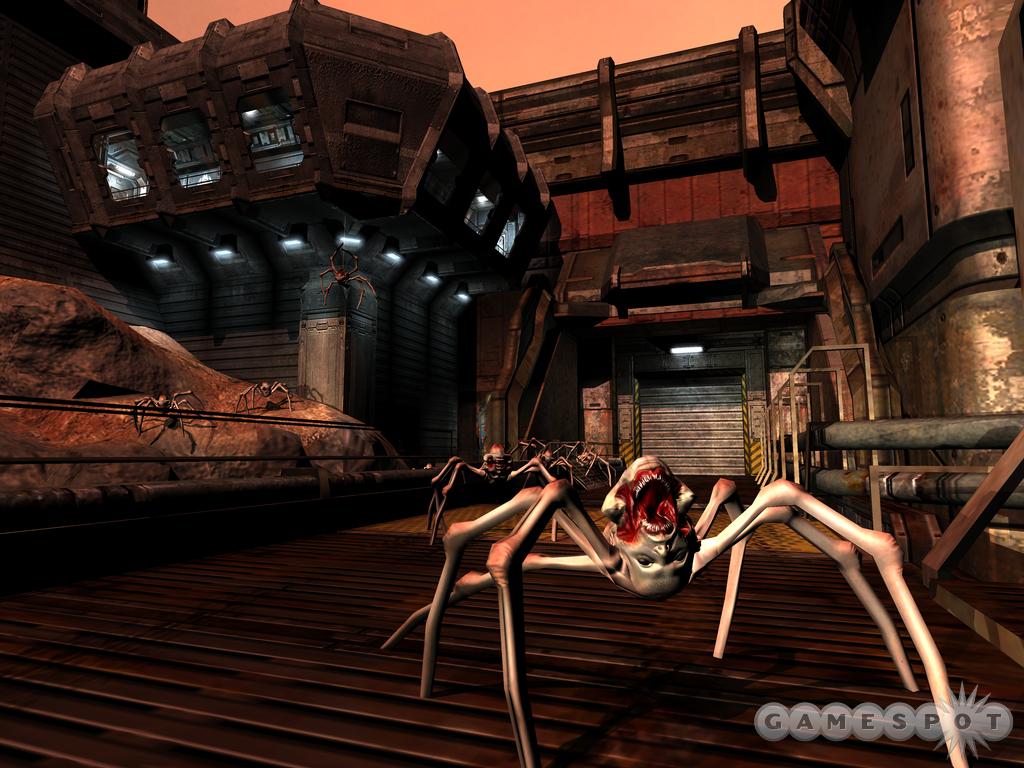
The Associated Press reported on April 24, 2001, that several families of victims of Columbine, including students and teacher Dave Sanders, filed suit against 25 entertainment companies seeking punitive damages of $5 billion. Game companies named included Nintendo, Sega, Sony, id Software, Acclaim, Activision, Capcom, Interplay, Eidos, and GT Interactive.
On July 19, 2001, the AP reported that the named video game companies sought to have the case thrown out of court based on the fact that "lawyers for the companies said the class-action suit should be dropped because it doesn't allege that any particular game led Eric Harris and Dylan Klebold to go on their rampage." Id Software, in September 2001, asked a federal court to dismiss a lawsuit that claims the product influenced the Columbine High School gunmen. Updating further, on March 5, 2002, the AP reported that a federal judge had dismissed the lawsuit against the video game distributors and moviemakers named in the suit.
The suit against video game companies linked to Columbine by accusers remains dismissed. In August 2002, the AP reported another federal court decision to dismiss a $33 million lawsuit that claimed that video game makers, among others, were to blame for a 1997 shooting spree at Heath High School in which three students died.
"We find that it is simply too far a leap from shooting characters on a video screen (an activity undertaken by millions) to shooting people in a classroom (an activity undertaken by a handful, at most)," Judge Danny Boggs said in the ruling from a three-judge panel of the 6th U.S. Circuit Court of Appeals in Cincinnati, the AP reported.
Postal series
Platforms: PC, Mac
Publisher: Ripcord Games, Panasonic, 1995; Whiptail Interactive, 2003
Developer: Running With Scissors
Postal arrived in 1995 on the Mac but really didn't seriously make waves until its PC release in 1997 as a third-person action game. This was the year that even game reviewers referred to the game as "a little disturbing." GameSpot's review began, "It's finally happened. The game that will make the entire Christian Coalition explode in an immense mushroom cloud of religious fervor is finally here. Mortal Kombat can't touch its hemoglobin content. The teenage hijinks of the much-denounced Night Trap are nothing compared to the all-out psychopathic killing spree of Postal. Even Carmageddon isn't quite in its league of violence."
The premise is simple: The player character comes home to find his house repossessed and, to make an innocuous descriptor an egregious adjective, goes "postal," killing everything that moves.
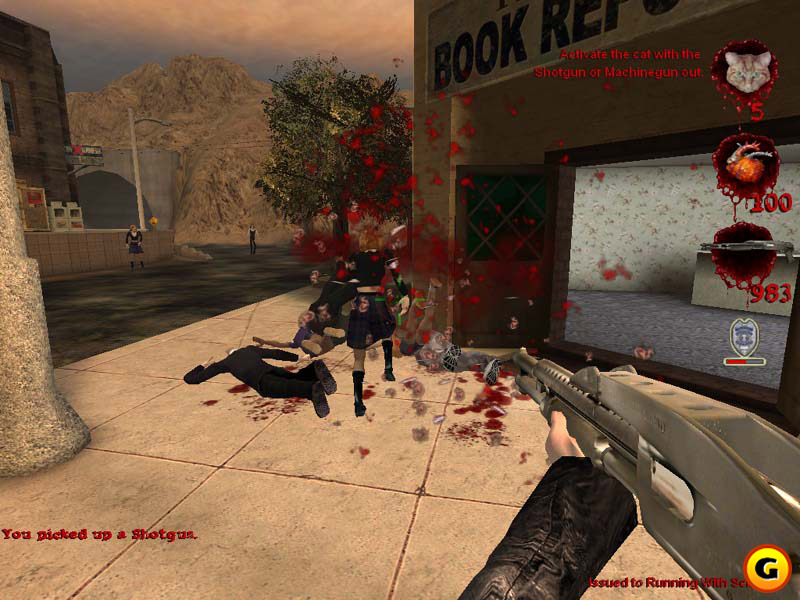
Upon the game's 1997 release, retailers and the public protested madly. According to GameSpot news, the game was banned in 10 countries and "blacklisted" in the US. Vince Desi, the lead designer at Running With Scissors, appeared on televised debates and confronted the media at every opportunity and even debated the governor of Arkansas following a school shooting in that state. But the public wasn't the only detractor. The US Postal Service filed suit against the developer for allegedly damaging the organization's image. In June 2003, the case was dismissed with prejudice, meaning it was settled or discontinued without the opportunity to bring the case before a court again. There was no word on what type of settlement was reached between the organizations.
By May 1998, the headlines started again. GameSpot reported that an eighth-grade student from Half Moon Bay, California, had been suspended for writing a school essay he titled "Goin' Postal," perhaps after the video game, or more likely after the common phrase used to describe a situation in which a gunman or gunwoman takes his or her angst out on an unsuspecting public audience, usually of coworkers. The situation is deemed "postal" due to the alarming number of postal workers who did this in the late 1980s. In the eighth-grader's essay, the fictional character killed a policeman and two school faculty members, including the principal. Here's the essay:
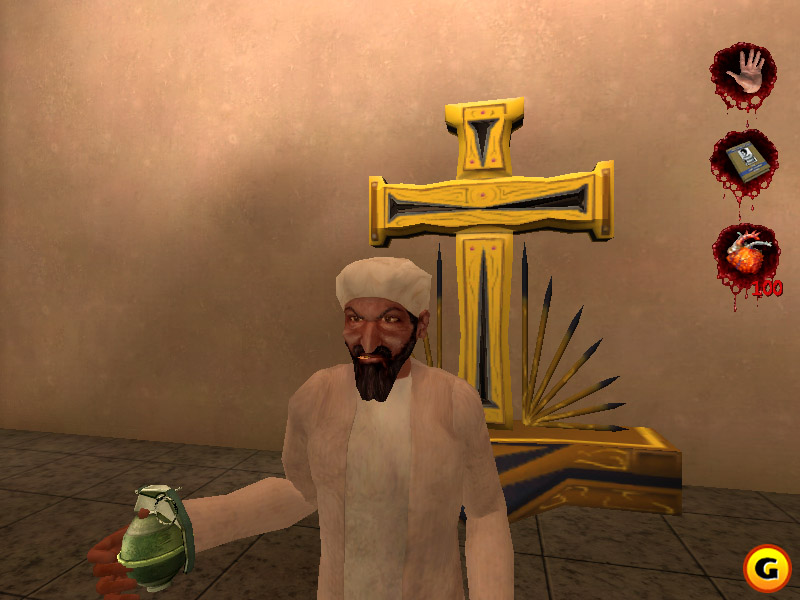
"Goin' Postal 7:50 AM Martin has showered and has clean clothes on, and is now getting ready for school. He finds his shoes under his desk and puts them on, as well as his belt and hat taken off the coat rack. And then, the moment he's been goin over in his head as to whether or not to follow through with. He opens up his bottom drawer, sifts through his clothes and finds it. A spring shoulder holster, leather holster and leather straps, easily concealable by a jacket. And next to the holster, a loaded Smith & Wess 9-mm. automatic pistol, bought from a friend for $20, $10 for the ammo. He hesitated for a second, but then grabbed the holster and strapped on over his T-shirt, adjusting it a bit for comfort. He then grabbed the pistol, checked to make sure it was loaded, and slid it in the holster. He grabbed his coat and put it on, checked to make sure it was noticeable, and left for school.
"8:20 AM Martin arrives at his school and looks around to see what going on. After he's done checking for cops, he heads straight for the office, waving to a few friends as he passes them by. After what seems like an eternity, he finally reaches the door to the office. He takes one deep breath, draws his gun, and kicks open the door. The first thing he notices is a cop visiting the school. He takes aim as the pig turns around, eyes wide with fright. BAM! The pigs brains are splattered against the back wall. He looks to the right and sees the vice-principal hiding behind his desk. Martin takes one second to guess where the principal's head is, and BAM! Martin guessed right. And now, the moment he's been waiting for a long time. He heads straight for the principals office and busts in with his gun blasting. He hits the principal seven times before the principal drops, dead before he hits the ground. Martin hears a sound behind and begins to turn around. Yet it is too late. The cops partner, who was outside a minute ago has knocked Martin to the ground. The pig cuffs him and drives him to the police station. And yet Martin is smiling blissfully, because, you see having done away with the two people he hated most, Martin finally feels at peace."
Phantasmagoria
Platform: PC
Publisher: Sierra Entertainment, 1995
Developer: Sierra Entertainment
Phantasmagoria, perhaps helped by sharing a name with an album by The Damned, sounds like a spooky game, but it doesn't sound particularly threatening. At least not if compared to Thrill Kill or Manhunt. And its "scary" nature isn't what put it on the censors' hot sheet.
Game designer Roberta Williams (King's Quest) created Phantasmagoria--a game not too unlike Night Trap. Phantasmagoria, an adventure game, was also a live-action game, which used interactive sequences to advance the plot. Likewise, a female, Adrienne, is the central character in Phantasmagoria, creating another nervous environment of death and threat and the female gender. The game starts as Adrienne and her husband move into an old mansion. The gameplay rides along Adrienne's efforts to uncover the house's secrets as her husband, for one, slips into complete lunacy. The main difference between the games is that Night Trap was pretty much an innocent game, only suggestive, not explicative. Night Trap did not feature nudity or vulgarity, and it wasn't really gory at all. Phantasmagoria was extremely bloody, and sex and violence were closely linked--in fact, directly, as one video sequence was of a rape scene.
GameSpot's review begged the question, "So why is Phantasmagoria so darned popular?" While the controversy it generated is one thing, GameSpot elaborated, "It's accessible to newbies, it's a new genre, and Sierra has promoted the hell out of it."
As with many previously mentioned controversial games, players could elect to tone the violence down in the options menu, but alas, Australia wouldn't have it. The Office of Film and Literature Classification (OFLC) banned the game regardless of the option in Australia, and some retail outlets in the United States did the same.
Resident Evil
Platforms: PC, Saturn, Dreamcast, N64, PlayStation, PlayStation 2, GameCube, Game Boy Color
Publisher: Capcom, 1996
Developer: Capcom
Resident Evil, in title, may sound worse than it actually is, at least to nongamers. Resident Evil is the localized name of Capcom's Japanese action adventure series called Biohazard. The original premise was straightforward: A police special tactics and rescue squad (S.T.A.R.S.) disappears from a truly creepy, enormous, dank, and downright nasty mansion in the middle of nowhere. You play as one of the replacement S.T.A.R.S. agents trying to figure out what went wrong in the mansion while finding your lost squadmates. There are mutant beings, zombies, strange herbs, and lots of things that go bump in the night. The game is bloody, and things, such as you, die slowly or quickly but always brutally with a large amount of moaning and screaming.
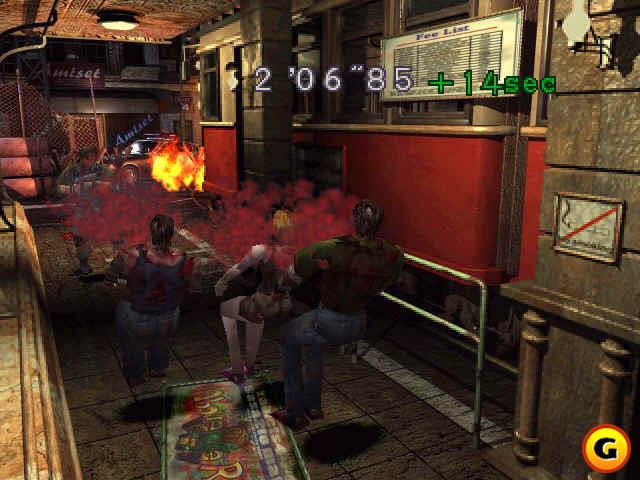
Many of the game's installments received high scores and favorable reviews, earning a place in video game history as one of the more notable games. It's moody and creepy, and Germany didn't like it. The US versions of Resident Evil 3: Nemesis and Resident Evil: Code Veronica were banned in Germany for "extreme violence," but the German versions were allowed--with changes in tow. The German versions contained green instead of red blood--an option that the US versions of the game also included.
In October 2002, AP reported that Honduras, in an effort to curb rising street crime, intended to ban violent video games, including Resident Evil, as well as Doom, Quake, Street Fighter, Turok, and others. The Honduran congress passed the bill unanimously.
Carmageddon
Platforms: PC, Mac, Game Boy Color, N64
Publisher: Interplay, Titus, Interactive Magic, Xicat Interactive, 1997
Developer: Sci, Beam Entertainment, Stainless Studios
The controversy surrounding the Carmageddon series lies right in the name: car and Armageddon, an amalgamation of the brutal end of the world and the automobile. This racing game asked players to complete racing checkpoints, terminate all racing opponents, and kill every last human being in their path on the way.
GameSpot's review read, "Carmageddon is visceral, violent, vehicular fun, no strings attached, no artificial morals or ethics added, and no artificial colors--just black, blue, and red all over." Not everyone was seeing red. In fact, critics in the UK wanted to see green--blood that is. Wired reported in December 1997, "Before the UK release of the hyperviolent racing game Carmageddon, for example, game producer Interplay was requested by the board to change the color of spilled blood from red to green, and make the human victims look less human and more zombie-like." England and Germany both required that the pedestrians become "zombies." Changing blood from red to green and making living, breathing humans zombie- or alienlike are common international peacekeeping tactics in the video game world. Brazil simply banned the game entirely.
When Carmageddon 2: Carpocalypse Now arrived, it was clear developers had no intention of letting the controversy scare them away. GameSpot's Carmageddon 2 PC review read, "The original Carmageddon was banned in Brazil for inspiring road rage. Well, if you're the sort to play a game and apply those skills you've just cultivated to your real-life routine, then not only should you not come anywhere near Carmageddon 2, but you should probably just be locked up somewhere safe. However, if you're not adverse to a little lowbrow humor and a lot of violence and mayhem, you'll find plenty of action and still more fun in the visually refined sequel." You would earn money for kills in Carmageddon 2, which now included animals as well as humans and gut-busting violence as your vehicle ripped through them (to the tunes of Iron Maiden, among others).
Grand Theft Auto
Platforms: PC, Dreamcast, Game Boy Color, PlayStation, PlayStation 2, Xbox
Publisher: Rockstar Games (ASC Games/Take-Two), 1998
Developer: Rockstar North
For those unfamiliar with the controversy surrounding Mortal Kombat, Night Trap, or even Doom, you would have had to be on another planet to miss the hype over Rockstar's Grand Theft Auto series. The game launched on the PC in the US in early 1998 and was received encouragingly but cautiously by many PC reviewers. GameSpot's original reviewer noted, "GTA is a good game that is highly recommended at a bargain price, but won't win any awards. Wanna-be sociopaths who can deal with the shortcomings will have a lot of fun, and if you could save games within levels, it would come even more highly recommended."
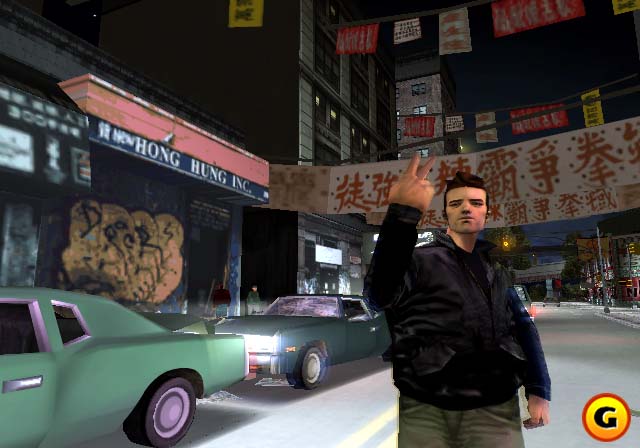
Then came the PlayStation version, just four months later, amid "great" reviews. GameSpot's Ryan Mac Donald wrote, "If you are a fan of R-rated action movies, then nothing in this game will shock or damage you. However, if you are a parent looking for a game for your 10-year-old, you may want to skip this one. I, however, loved the game and would recommend it to anyone who doesn't have any problems with violence or adult language."
The game earned notoriety for its theme and approach almost immediately after it was released. Innovative, excellent gameplay mechanics aside, the game is mission-based, and your missions include driving prostitutes around town, evading the feds, and running drugs and porn, and in the process, you end up killing lots of people. You don't start off with a car, so you have to jack one immediately so you can get around, hence the name, Grand Theft Auto.
In September 2001, shortly after the terrorist attacks in New York City and the Pentagon, Take-Two Interactive announced that it would postpone its release of GTAIII in order to "alter" some content involving New York City. By the time GTAIII was released in 2001 and 2002, on the PlayStation 2 and PC, respectively, the game had fully reached its stride. The M-rated game was topping sales charts and served as an excellent example of a game with gameplay solid enough that the violence was just, to most, a perk. Nothing about the GTA series said that it was using controversy to make its name. Sure, the controversy helped. But those who bought the game were unquestionably satisfied with the product long after the shock wore off.
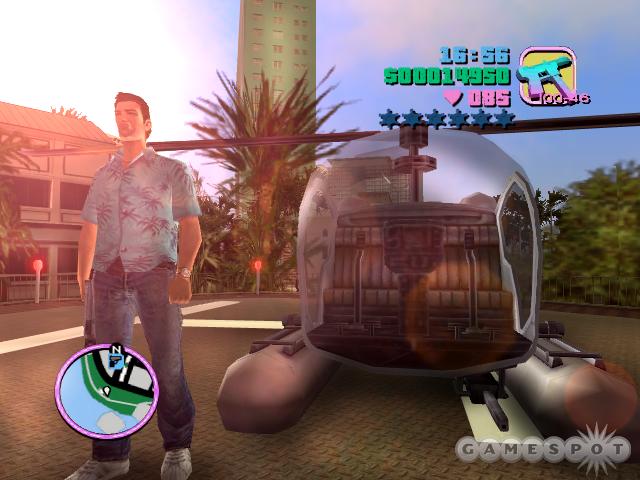
And sales were and still are huge for Rockstar. In October 2002, GameSpot reported that Electronics Boutique sold more than 500,000 copies of Vice City, including preorders, on the first day. Electronics Boutique CEO Jeff Griffiths did not give exact numbers but told GameSpot "it was closer to a million than half a million." In November 2002, GameSpot reported that Grand Theft Auto: Vice City sold more than 250,000 copies in its first two days in retail in the UK. "To put that figure in perspective, the previous record was held by Konami's Metal Gear Solid 2: Sons of Liberty, which sold more than 120,000 copies in the same amount of time," GameSpot reported.
While sales were tabulating, Australia's Office of Film and Literature Classification, an entity that rates video and PC games, urged retailers in that country not to carry GTAIII due to its sexual nature and violence. GameSpot Australia reported, "Grand Theft Auto III has been pulled from retail shelves in the country, while its publisher, Take-Two Interactive, is seeking a second opinion from the Classification Review Board, which is a separate body from the OFLC. The second review may take up to two weeks."
GameSpot reported that GTAIII originally received an "RC" rating from the OFLC, which means "Refused Classification." This is similar to the ESRB's AO (Adults Only) rating, which means that retailers would not carry the game. The article stated that "games receiving the RC rating may not be sold, exhibited, displayed, demonstrated, or advertised, according to OFLC guidelines." GTAIII had actually received a more generous MA 15+, meaning "mature audiences" of 15 years or older, but then the Australian government upheld the original RC rating, on the condition that Rockstar would have to make necessary changes to the content to receive the more retail-friendly score. New Zealand gave GTAIII an R-18, similar to an "R" or "Restricted" movie rating according to MPAA guidelines.
But Grand Theft Auto wasn't only creating a stir overseas. On December 19, 2002, NBC reported that the National Institute on Media and the Family "handed down a failing grade [today] to the game industry." The network reported that Dr. David Walsh, the organization's president, "said it's based on the high level of violence against women, the sexual content of games marketed for youngsters, the high-tech improvements making them more attractive to youngsters, and other factors." The example cited by Walsh is one from Grand Theft Auto: Vice City, wherein "players are rewarded for kicking a prostitute to death."
Walsh called for parents--who he said were largely unaware of game content based on his study of more than 600 parents and teachers, manufacturers, and retailers--to "wake up" to the problem. Walsh suggested that violent games' primary audience, preteen and teenaged boys, "reported no trouble buying the games."
Grand Theft Auto - cont.
Nearly one year later, in October 2003, two families from Tennessee filed a $246 million lawsuit against Rockstar Games, Take-Two Interactive, Sony Computer Entertainment America, and Wal-Mart. The families sought compensatory and punitive damages for one family's loss of a member who was killed and for the other's whose was injured when two teenaged boys fired upon their cars with rifles in the Smokey Mountains--an act the boys claimed they learned from GTAIII. The rifles were allegedly acquired from the boys' homes. They were 14 and 16 years old, too young for M-rated games. The boys are currently serving an indefinite sentence in state custody after pleading guilty to reckless homicide, endangerment, and assault in juvenile court in August 2003.

Rockstar fought the charges, and in November 2003, GameSpot reported that Rockstar had asked the judge presiding over the Greenville, Tennessee, case to throw it out for good. Rockstar alleged that the victims held the company accountable "based on the expressive content of the video game," and the company claimed that such "'ideas and concepts,' as well as the 'purported psychological effects' of the shooters, are protected by the First Amendment's free-speech clause." The victims' counsel, Miami lawyer Jack Thompson, dismissed Rockstar's claims and is seeking to move the case back into state court for consideration under Tennessee's consumer protection act.
Months after the game made its debut, GTA: Vice City made the press again in November 2003 when two Haitian-American interest groups, the Haitian Centers Council and Haitian Americans for Human Rights, protested in front of New York's City Hall and Rockstar's Manhattan offices. The group was up in arms over the line "Kill the Haitians," a directive found within the mission-based game but, to the game's credit, extracted from the greater context of the mission's storyline. In the original editions of GTA: Vice City, players were awarded, as rival gang members, points for killing the Haitian characters involved in the plot. The line fit into the greater whole as a rival gang's (the Cubans) wish to eliminate the competition (the Haitians). Out of context, a person suggesting she or he would "kill" someone for sharing a secret before divulging it would be incriminating, too. But kids say this sort of thing all the time. However, given the game's reputation, the media did not cut the game any slack.
According to a GameSpot news story, Henry Frank, executive director of the Haitian Centers Council, called the game a "cultural attack on the millions of Haitians living in the United States." Frank further noted in a press release that his group objected to the portrayal of Haitians as "thugs, thieves, and drug dealers."
On December 8, 2003, New York's Mayor Michael Bloomberg made a public statement in defense of the city's Haitian-American population, which had in the past faced numerous, notorious run-ins with the city government due to police violence against Haitian members: "If I don't get a decent response, we are going to do everything we possibly can," said Bloomberg. Take-Two announced that Rockstar would remove the questionable line.
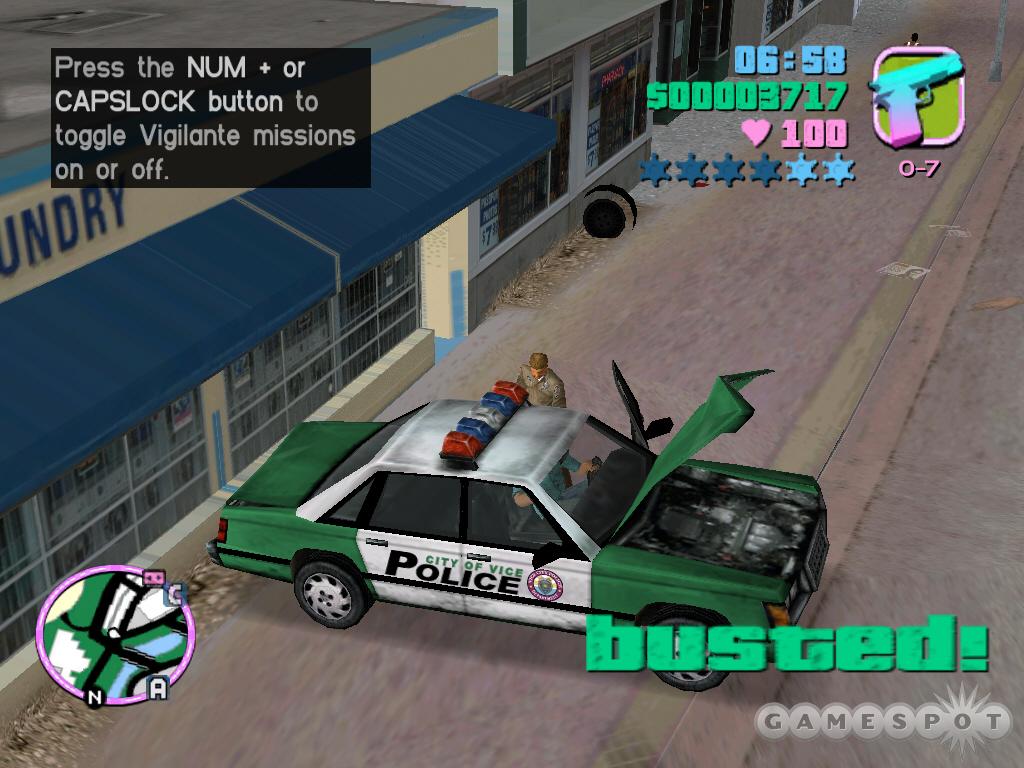
In late December 2003, Vice City met the press again on this issue. Haitian interest groups, spearheaded by the Haitian-American Coalition of Palm Beach County, filed suit against Rockstar Games, Take-Two Interactive, Sony, Wal-Mart, Microsoft, Best Buy, and Target for the "Kill the Haitians" line. CNN reported on January 1, 2004, "Earlier this month, about 100 Haitian-Americans demonstrated outside a Wal-Mart Supercenter in nearby Boynton Beach chanting, 'Stop Vice City.'" In late January 2004, the group dropped the federal case to pursue the case in a local Florida court, where the group said it suspected it would "avoid the more lenient federal freedom-of-speech standards."
As the battle ensued, in January 2004 the Miami Herald reported that the city of Miami would enact an ordinance that would make it illegal for retailers to sell or rent "violent" video games to anyone under 18 without a note from his or her parent. Three of the city councilmen who voted for the ordinance were Haitian-Americans. The two who voted against the ordinance were not of Haitian decent. Retailers and rental outlets would incur warnings or fines of $250 per day or up to $500 for repeated offenses. GameSpot reported that Mayor Joe Celestin, a Haitian-American who introduced the ordinance and who is also one of Vice City's most vocal critics, said, ''We don't believe the First Amendment was written to protect those who want to incite violence."
Although the game series had once again taken a tumble through the court system, it continued to sell extremely well; morality aside, people like to play the game because it is good. And it, too, isn't all bad. A little-publicized fact is that in GTA: Vice City, players may also be rewarded "good citizen" for helping the police catch muggers and petty criminals.
Senator Lieberman has been known to say that not all games are bad. He is not antigaming in general, he says. But Grand Theft Auto was on his list. In January 2004, the senator, as a democratic presidential hopeful, denounced GTA as "horrendous" while speaking at Dartmouth College in New Hampshire.
"The player is rewarded for attacking a woman, pushing her to the ground, kicking her repeatedly, and then ultimately killing her, shooting her over and over again," said Lieberman. "I call on the entertainment companies--they've got a right to do that, but they have a responsibility not to do it if we want to raise the next generation of our sons to treat women with respect."
Kingpin: Life of Crime
Platform: PC
Publisher: Interplay, 1999
Developer: Xatrix
Even parents who don't read the ESRB ratings should know that Kingpin: Life of Crime is probably not a game they want to buy, if they are concerned about violence in video games. Kingpin, built on the Quake II engine, is developer Xatrix's follow-up to the also-controversial shooter Redneck Rampage. Interplay published both games, as well as Carmageddon.

What's notable about Kingpin, is that it's a game in which you play as a thug on a mission to work your way to the street boss and do him in. The characters are unsavory, by suburbia's standards, as urban street sorts that wear lots of leather, carry weapons, and utter expletives every few words or so. But Interplay and Xatrix warn players of this. From the minute you start the game, you must agree to understand or at least have glanced at several disclaimers. You must also agree to an age statement asking if the player is at least 18 years old. Once you're through it, GameSpot's Erik Wolpaw wrote, "after all the dramatic claims of impending immorality, you may be disappointed to discover that the hand-wringing is simply over Kingpin's inclusion of an absurd Smurf-esque hooligan dialect in which every second word is profane. That's it. There's plenty of violent content tossed in, but no more than in any other game in the genre. Whether the prerelease infamy and the embarrassment of disclaimers are a result of the current political climate or conscious hyperbole by the Interplay marketing machine, they tend to overshadow what is actually a decent shooter."
Like with most games billed controversial, players (or parents) have the option of toning down the violence. The "low violence" setting bleeps out the language some might find questionable, but who is going to tell his parents that? Certainly not the 18-year-old buying the game...
Again, option settings didn't hold off the censors. Germany banned the game entirely, and for those who believe controversy sells, Kingpin was Xatrix's last game--as Xatrix. The developer became Grey Matter, which went on to make Return to Castle Wolfenstein.
Soldier of Fortune
Platforms: PC, Dreamcast, PlayStation 2, Xbox
Publisher: Activision, 2000
Developer: Raven Software
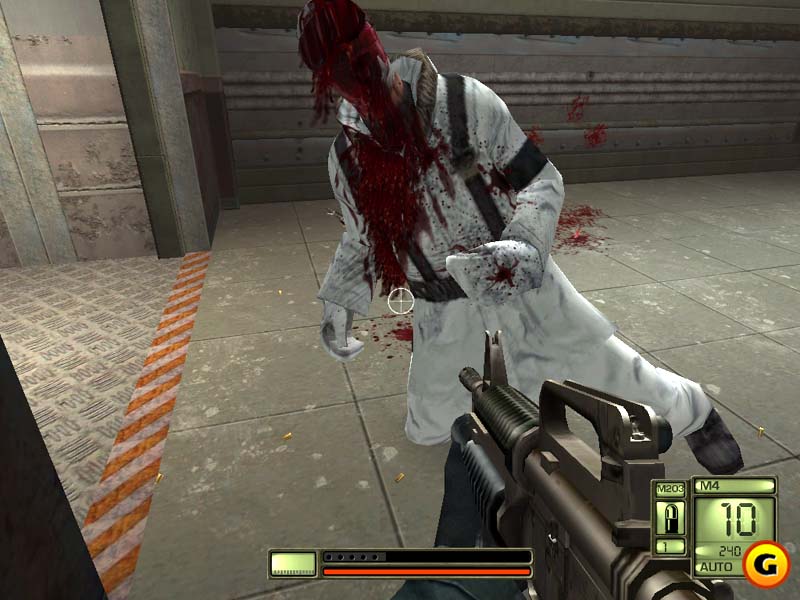
If you know what Soldier of Fortune magazine is about, then you know what to expect from the game: You're a hired gun. The game ranked well among first-person shooters on the PC and moderately well on the consoles. Of Soldier of Fortune II: Double Helix, GameSpot's Erik Wolpaw wrote, "Toward the middle of Soldier of Fortune II, there's a scene in which a character commits suicide by shooting himself in the temple with a handgun. Just as he pulls the trigger, the camera tastefully cuts away to spare you the sight. It's a shocking moment of restraint in a game whose primary focus is the explicit depiction of people getting shot in the face. Rest assured, though, that this brief foray into good taste is the exception rather than the rule."
In July 2000, the Vancouver Sun reported that British Columbia had banned Soldier of Fortune II: Double Helix due to its level of violence. Mary Louise McCausland, the director of BC's film classification division, remarked on the game: "Depending on which weapon is used, the participant can enact gory violence that results in the horror of evisceration, decapitation, dismemberment and victims burning to death."
Manhunt
Platforms: PS2, coming to PC and Xbox
Publisher: Rockstar Games, 2003
Developer: Rockstar North
While Vice City was still on the defensive, Manhunt shipped in late 2003 and immediately gained attention for its controversial theme and alleged violent presentation. But it also earned points as another well-executed game.
GameSpot's Greg Kasavin called Manhunt Rockstar's darkest game yet, but he noted, "Manhunt is an audacious game that backs up its extremely violent subject matter with solid stealth action gameplay. Subsequent games in this vein could stand to learn a thing or two from how Manhunt successfully provides all the tension and grim satisfaction that this style of gaming can offer but does so without so much of the sluggish pacing and trial-and-error tedium that hurts other games of this type. On the other hand, the shooting sequences do feel a little stripped-down and are rather overbearing, but the incredibly visceral action, coupled with the game's thoroughly impressive graphics and sound, makes even these sequences relatively good. Obviously, Manhunt isn't for the faint of heart. Like it or not, the game pushes the envelope of video game violence and shows you countless scenes of wholly uncensored, heavily stylized carnage."

In the game, players take on the role of James Earl Cash, a death-row inmate who presumably is too badass for the corrections department's lethal-injection serum and manages to live through his execution. Through twisted events, he meets a guy named Lionel Starkweather, who offers him the simple trade: freedom for a few chores. Think The Running Man, but perhaps written and directed by the Hitman comic duo, John McCrea and Garth Ennis. Starkweather, however, seems like more of an indie guy than Richard Dawson, who played the villain in The Running Man.
Nearly one month after Manhunt's November 2003 release and in the heat of the anti-Haitian claims against Vice City, New Zealand, notably the host country for Peter Jackson's The Lord of the Rings trilogy (as well as Jackson's briefly brutal but excellent Heavenly Creatures film) banned the game. The OFLC blocked the Rockstar game from entry into the country for any age group, calling Manhunt "gruesome." GameSpot reported that the OFLC's chief censor, Bill Hastings, said, "It's a game where the only thing you do is kill everybody you see. You have to at least acquiesce in these murders and possibly tolerate, or even move toward, enjoying them, which is injurious to the public good." A 12-page report describing Manhunt's violent offences was filed by the OFLC.
Retailers are an important part of the controversy quotient. While the games industry is usually pinned first if someone who plays games commits a violent act, the next strike falls on the parents, when the games industry lashes back. Retailers are typically named in the most publicized cases, such as Columbine or the case of the shootings in the Smokey Mountains. With an arguably reliable ratings system in place, the ESRB, some argue that retailers choose the dollar over the responsibility of checking identification. So when a 15-year-old grabs his dad's gun and heads to school one day, who is to blame? Herein lies the riddle.
Retail buyers make conscious decisions to purchase certain games. Controversy and hype aside, some games might not have made it into stores just because they looked too violent or gory; they might also have looked just plain unsellable. This section presents a short sampling of retail situations in which games or peripherals were banned or forced to change for the store shelves but weren't quite controversial enough for legislatures to care. Likewise, note that most of the games mentioned in the previous section met with retail roadblocks in addition to getting banned entirely.
Light Guns
In about 1987, light guns made their appearance with the Atari XE Game System (XEGS), although developers had tinkered with toy guns in this capacity since the late 1960s.
Then in late 1997, Namco's superb Time Crisis action game made its way from the arcades to PlayStations and brought along a worthy device known as the GunCon, a light gun that allowed players to emulate arcade-style shooting. By this point, Namco was already savvy to the concept of gun violence in the US and shipped a gray GunCon with a bright reddish nozzle with games in the US. Japanese counterparts received the black, more-realistic-looking GunCon. GunCons boasted accuracy within three pixels and were notably good devices. The GunCon 2 and many others, such as the XK21 Lightgun by 4Gamers, are available for PC and video games today.
Shortly after the Columbine High shootings in Littleton, Colorado, Sega announced that it would not make a light gun available for the Dreamcast and would prevent import guns from working with the system. Third-party guns eventually became available, making fans of House of the Dead happy once again.
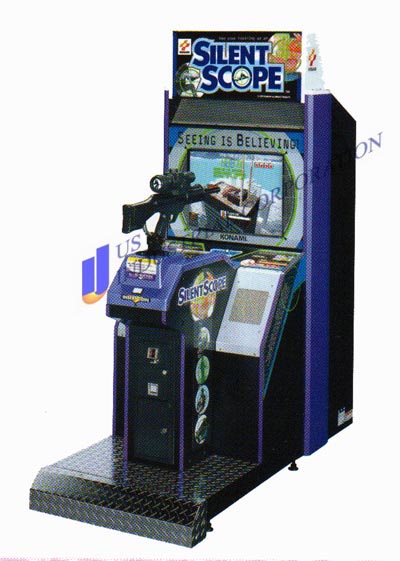
Other games and franchises, such as Area 51, Point Blank, Lethal Enforcers, Virtua Cop, Vampire Night, Dino Stalker, Die Hard Trilogy, Resident Evil, and Silent Scope, just to name a few, also made use of light guns, many shipping with the gun-style controller. Today, Wal-Mart, Toys "R" Us, Kmart, Electronics Boutique, and Game Stop all carry light guns in their more toy-ish "safe" appearance. But it was only after retailers threatened to pull the guns from shelves that gun makers such as Namco shifted to the toy-ish cotton-candy-colored wonders gamers use today. More-realistic guns, however, are still available in Japan, which notably does not have the problems with gun violence that the US does. Guns, for one, are illegal for civilians.
GameSpot associate producer Ryan Davis remembers light guns before they were changed to look more like play guns: "Growing up in the 1980s, I can vividly remember when my squirt guns turned from realistic-looking jet black to garish hues of safety orange and safety yellow. Even at age eight I could wrap my head around why you wouldn't want kids walking around with replica-grade Uzi squirt guns, but I thought it utterly ridiculous that the NES Zapper had its barrel changed from light grey to bright orange in the late '80s--in fact, I still do. A banana is more threatening than that thing."
Kmart Limits Sales of Violent Games
In August 2000, discount store franchise Kmart announced that it planned to limit the sales of what it determined to be "violent" games. An August 9, 2000, article in The Register (UK) reported that Kmart's main strategy was to "require would-be buyers to prove that they're old enough to meet a game's age rating." Given that the ESRB has been giving retailers this information since 1994, this is a relatively weak effort on Kmart's part.
The Register continued, "The flaw in the scheme is, of course, that without legal backup, there's nothing to force stores to take any notice of the ratings whatsoever. The fact that it's taken Kmart so long to make the move it made yesterday - and then under some pressure from various US senators, including Democratic Vice Presidential nominee Joe Lieberman, of Connecticut - arguably shows just how worthless the ratings system has been."
The UK uses a game rating system, the Entertainment and Leisure Software Publishers Association (ELPSA), which is based on the UK's film rating entity. What makes this work is that retailers are charged if they sell games illegally to minors.
Dale Atley, a Kmart vice president, offered in a press release, "While manufacturers have put ratings on the games, we think education has to occur with the retailer too." The Register noted that only 3 percent of Kmart's video and PC game sales were of M-rated games, so curbing these sales would not drastically affect the company.
Other US retailers that have limited or banned M-rated games include Wards and Sears, with Target and Toys "R" Us under pressure from legislators to do the same. In November 2002, the toy store Zany Brainy announced that it would pull all video games from its shelves.
BMX XXX
Platforms: PS2, Xbox, GameCube
Publisher: Acclaim, 2002
Developer: Z-Axis, Ltd.
While the Dave Mirra Freestyle BMX games created by Z-Axis and published by Acclaim scored decently over the years, they were largely niche games for fans of BMX racing or at least action sports games in general. But then Acclaim got an idea. In an effort to possibly expand the license to a broader audience, or maybe take a slice of the Grand Theft Auto pie, the developer/publisher team conceptualized an adult-humored BMX game in which BMX star Mirra was originally intended to participate. BMX XXX was raunchy and foul-mouthed, it offered brief videos of strippers, and it included missions that involved hauling hookers around the virtual environment. The game, which had been notably sanitized of its topless content for the PlayStation 2, shipped in November 2002, and controversy soon followed.
Steve Kent addressed BMX XXX by looking at GTAIII as an example of a good game with controversy: "In gaming, there's a survival of the fittest built right in. GTAIII came out, it was wonderful, it was a well-made game," he said. "It did push a lot of limits. But society looked at it and said it is a fun game, this is an incredibly cool game and now everyone is trying to make a GTA knockoff. Then Acclaim comes out with BMX XXX where you save up points to go see video tape of strippers. Guess what? Society said BMX XXX sucked. Do you see anybody else running out to make games with video tape of strippers? You don't."
Retailers were miffed about BMX XXX. One month prior to the game's scheduled launch, retailers such as Wal-Mart, KB Toys, and Toys "R" Us refused to carry the title. Australia banned the game's release, suggesting that major clean-up would have to take place before the OFLC would give it the proper rating necessary to be carried in retail stores.
The controversies that directly influence how games are made and sold are those involving lawmakers and retailers. These bodies have the power to affect a game developer or publisher's bottom line, and that's what they listen to most--it's a business. Beyond these hard-hitting, name-making cases are the games that received minimal, usually local, press because particular groups took offense at a game's message and wanted to call it out to the public. These games usually remained on store shelves, with minor blacklisting among the groups that found them disturbing.
Many of these complaints are valid. Some come from groups who are undeniably pro-censorship and want to control and expurgate all media. Borland and King addressed this type of controversy in their book, Dungeons and Dreamers: "Creative readings of Ms. Pac Man and Donkey Kong found rape metaphors hidden in the games' subtext." Anyone who's ever taken an art class will say, sometimes if you're looking, you'll find it. But it's also true that some absolutely ridiculous situations have appeared in video games over the last 30 years. Here are a few of the more notable ones. You decide.
Chiller
Platforms: Arcade, NES
Publisher: Exidy, 1986
Developer: Exidy
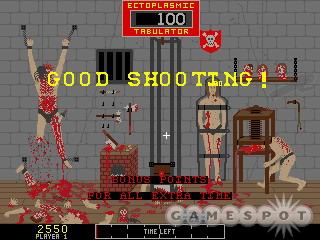
Ten years after Exidy released and consequently revoked Death Race, the company offered another game that select detractors found to be off-taste--Chiller. Web postings for Chiller reveal great fanfare and praise for the "best gore ever." The game was equally celebrated for its unrealistic silliness. The goal in Chiller was to help victims chained to torture devices out of their skin--literally. Shooting at them activated various features on the torture machines that would tear people in half or, at best, dismember them. You could also shoot at the people directly, which would take large chunks of flesh off their bodies.
Chiller did not reach the censorial pandemonium that Night Trap saw, but it raised a few eyebrows for its brazen style. In its wake, games such as State of Emergency, Splatterhouse, Metal Slug, and Soldier of Fortune all dished out serious amounts of gore yet remain available for purchase. These games, by most standards, are far bloodier and more gruesome than Night Trap, for example.
Steve Kent suggested that what makes Chiller interesting is that it did not receive as much negative attention as Death Race, for example, because "nobody would buy the damn thing." Kent noted that Chiller sold well in third-world countries but that arcade owners in the US said the game was too much. "So there's a case of self-policing," Kent said.
Chiller was one of a series of "C" games Exidy published, including Crossbow, Crackpot, and Cheyenne. Cheyenne came out, Kent said, "and you'd shoot these girls, and they would go 'Ahhhhhh.' Then you'd shoot Mexicans and they'd go 'Ay yi yi,' then you'd shoot these American Indians and they'd say, 'Pale face.' There wasn't a peep of trouble for any of that. But then the next game that came out was Crossbow, and parrots would try to fly over you and drop coconuts on your head, and you'd shoot the parrots with your crossbow, and the SPCA complained." There is little formula to understanding why some games trigger negative attention and others go unnoticed.
Road Rash
Platforms: 3DO, Game Gear, Genesis, PC, Saturn, GameCube, PlayStation, N64, Game Boy Advance
Publisher: Electronic Arts (various), 1994
Developer: Electronic Arts (various)

Getting banned from retail stores and being driven out of entire countries is one thing, but being barred from Australia's prisons doesn't exactly earn Road Rash a spot in the Major Offenders category. The Road Rash series is not one with an epic history or storyline. It was a relatively clear-cut motorcycle racing game that had risen and fallen and risen again in fashion. And, well, there was a bit more than just racing going on. In the game, players could kick other riders off their bikes and use weapons such as chains and crowbars, as well as good old-fashioned fists and boots, to create melee on the course. All in good fun, naturally.
It's doubtful the public would give game developers flak for making a game in which bikers beat other bikers off of their rides. The criticism came because bikers could beat cops off of their bikes--a decidedly more controversial feature.
In July 2002, Road Rash was among several games banned from Australian prisons after officials determined that some of the games emulated activities for which the prisoners were incarcerated. Grand Theft Auto, Street Fighter, and Evil Dead were included on the OFLC's list.
Tomb Raider
Platforms: PC, Mac, Game Boy Color, Dreamcast, PlayStation, PlayStation 2, Saturn
Publisher: Eidos Interactive, 1996
Developer: Core Design Ltd.
Tomb Raider may seem like a walk in the park next to Mortal Kombat or Doom, but pop culture watchdogs found plenty to chirp about. Actually, relatively few of the complaints wagered by the public were about the game; they were directed more at its adjunct properties, such as the movies and individuals associated with the franchise. But the game itself had its warts, too.
When the first Tomb Raider appeared on the PC in 1996, the biggest shock was that scores of endangered animals were available for the killing. Throughout the levels, Lara Croft encountered tigers and gorillas, for example, both endangered species, and they were targets, should Lara hope to progress through the game. There was also the issue of the enormity of the lead character's breasts, which notably grew larger in subsequent games.
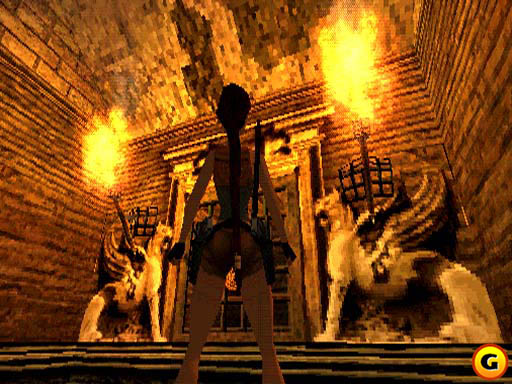
Amid the endangered-species complaints and ridicule of the character's independent and self-governing bosom, one of the bigger issues surfaced in December 1999 when the New York Post, Salon, and numerous other publications reported that 28-year-old Kenneth Lockley, a Core Design executive, was arrested in London for alleged solicitation of a 9-year-old girl for an "unnamed" third party to have sex with.
Eidos and Tomb Raider dodged the bullet as this story managed to sweep itself under the carpet relatively quickly. But the controversy started again amid release of the Tomb Raider movies. The first Tomb Raider film, starring Angelina Jolie, received criticism for its naïve and, some critics felt, vilifying view of certain ethnic persuasions. But the second film, Tomb Raider: The Cradle of Life, met a greater challenge when in August 2003 ABC Radio News Australia and other sources reported that mainland China had banned the movie entirely, calling it "anti-Chinese."

China's government complained that the film falsely portrayed China as "a country with no government and overrun by secret societies," according to ABC News. The BBC reported that same month that a Chinese official said, "After watching the movie, I feel that the westerners have made their presentation of China with malicious intention. ... The movie does not understand Chinese culture. It does not understand China's security situation. In China there cannot be secret societies."
On February 15, 2004, Eidos attempted its first move into the spotlight from the other side of the stage by announcing that it would release a game called Whiplash, developed by Crystal Dynamics and aimed at kids 7 years of age and older. The game's objective would be to free laboratory animals from torture in the name of science, the U.K. Telegraph reported. As noble as the game's premise may be to some, British police and MPs are not happy about it and have called the game "irresponsible," according to the Telegraph. Penny Hawkins, the deputy head of the research animals department at the RSPCA (similar to the US Society for the Prevention of Cruelty to Animals), was also critical, the Telegraph said. "Animals suffer when they are used in research, and it's extremely disappointing that someone would see fit to produce a so-called humorous computer game out of that suffering," Hawkins said. "We believe that being violent is not the best way to help animals. What is not needed is a computer game trivialising their suffering," she added.
Dead or Alive
Platforms: PC, Saturn, PlayStation, PlayStation 2, Dreamcast, Xbox, Arcade
Publisher: Tecmo, 1998
Developer: Tecmo/Team Ninja

Dead or Alive emerged pre-1998 as an arcade game, built on Sega's Model 2 board, the same as Virtua Fighter 2.This immediately gave the game credibility as a fighter. When gamers brought DOA home, first on the Saturn, they were instantly impressed. The Virtua Fighter-style play, the memorable characters, the mechanics, the graphics, and the 3D animations were spot-on. Besides a few nitpicky technical splotches, in his review, GameSpot's Ryan Mac Donald had one minor complaint: "Apparently the designers went a little too far when it came to the motion design of the female characters though, because they made it so their breasts bounce while fighting. Honestly, if it weren't for the fact that they keep on bouncing well after they should, it may have been seen as a commendable effort for the designers' keen attention to detail. At any rate, the breast-bouncing can be turned off or on in the option menu."
For five years the breasts kept bouncing, amid minor flak with each new release, and then in January 2003, Tecmo and Team Ninja created their magnum opus (in terms of the breasts only) with Dead or Alive Xtreme Beach Volleyball for the Xbox, mostly featuring the female fighters from the series.
Shortly before the release, the ESRB announced that the game would receive an M rating. John Inada, a director of marketing and sales at Tecmo, said, "While there isn't rampant nudity in the game, there are certain elements that caused the ESRB to give it the nudity descriptor. ... As with all other games in the Dead or Alive franchise, we believe the stunning visuals, explosive action, and classic arcade gameplay will bring Dead or Alive Xtreme Beach Volleyball to an even wider audience of admirers."
Accepting the M rating may have saved the game from further controversy, attesting to the theory so many game fans and game makers hold--that ratings, in most cases, are an insurance, of sorts, for the developers and publishers against blame and responsibility. Because the Dead or Alive franchise was firmly established and known to be an exceptional fighting series, and the Beach Volleyball property was not a known quantity, the controversy did not hurt the game's sales.

GameSpot gave DOA Xtreme Beach Volleyball the dubious distinction of "Most Embarrassing Game" in its 2003 Game of the Year awards. Senior editor Jeff Gerstmann wrote that the game set the industry back about five years: "While we here at GameSpot aren't against the concept of poolside wiggling, the way it's portrayed in DOA Xtreme Beach Volleyball is embarrassing to the point of disgust. Its dress-up, peep-show mentality comes across as just plain creepy, and just as people's perceptions about games as serious subject matter were beginning to change, something like this sticks out like a sore thumb. Games still have a long way to go, and softcore digital exploitation like this surely isn't helping to expand the market, regardless of its M rating."
But that doesn't mean the company won't capitalize where possible. After the game's release, Tecmo announced that it would release a Team Ninja-designed line of swimwear based on the Dead or Alive Xtreme Beach Volleyball outfits. The four bikini styles would be produced in Japan and sell for about $150 each. Nice work if you can get it.
Panty Raider: From Here to Immaturity
Platform: PC
Publisher: Simon & Schuster, 2000
Developer: Simon & Schuster
Panty Raider's story is not a noble or particularly involved one. The game hit stores in 2000, and it's probably fair to say very few people think about it much anymore. But a few heads turned when it was first surfacing.
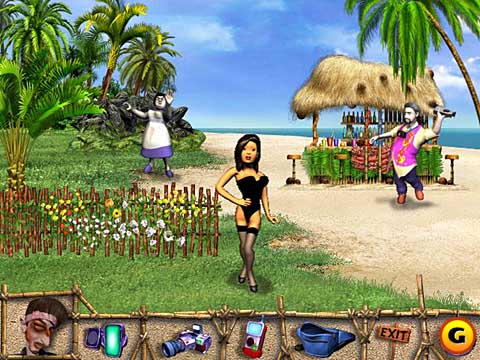
In this puzzle adventure game, which is a cheesy, campy, soft-core sci-fi wonder you might find similarly themed on late-night cable, you play as a guy named Nelson, who is enlisted by "Nasty Teenage Aliens" who need new photos of lingerie models because they exhausted the one catalog they accidentally received. Nelson's job is to take photos of the supermodels in their bras and panties from an exotic locale known as Model Island (is that near Cancun?). Why? The aliens want the photos (you can take it from here). The skills you develop in this game will serve you later in life if you plan to be the guy who slithers up to women at bars and tries to talk them out of their clothes shortly before getting a drink thrown in his face, depending on the bar.
Nelson also has access to X-ray glasses and items like credit cards and candy, which lure the women to him so he can photograph them and, hence, save Earth from the aliens' destruction.
In April 2000, the advocacy group Dads and Daughters, based in Minnesota, published a press release about Panty Raider. The organization had contacted Simon & Schuster Interactive and asked the company to cease publication of the game, claiming, "From making fun of anorexia to objectifying girls to assuming that boys just want titillation from computer games, Panty Raider is a disgrace."
The release also stated that members of the group found the game's message concerning the "stereotype that girls are obsessed with shopping and appearance" offensive. The group's executive director, Joe Kelly, said that game is also offensive to fathers of sons: "We don't see the humor or fun in glorifying what Panty Raider calls 'hormone driven anger' in boys, especially after tragedies like the Columbine shootings."
Many feminist and family-oriented Web sites, such as tufffemme.com, protested Panty Raider and created petitions and form letters to be sent to Simon & Schuster. The Web site womengamers.com featured an editorial on the subject, contributing, "There are groups who are calling for the banning and censorship of games that they find offensive to women, games that include elements of sexual assault, with Panty Raider serving as a prime example." The group went on to cite other examples, such as a rape scene between a "giant bug" and a woman, à la Fear Effect II.
Still, Simon & Schuster shipped the game as planned.
SmackDown! Here Comes the Pain
Platform: PS2
Publisher: THQ, 2003
Developer: Yuke's

Wrestling and video games have been cohorts pretty much since the early days of electronic entertainment, and THQ has been a serious part of the action for the last decade. This WWE-licensed game scores high for playability even though it doesn't redefine the genre. In the spirit of a brand of censorship more common in the United States, the blood, "three stages of hell," "elimination chamber," and "hell in a cell" bouts had little to do with the controversy that surfaced from this game in the UK. Critics targeted what is known as the "bra and panties" match, wherein female wrestlers tussle down to the bare necessities.
In March 2003, the Birmingham Evening Mail reported that the Rape and Sexual Violence Project and Caroline Spelman, Tory Member of Parliament (MP) for Meriden, denounced Smackdown! because of the bra and panties mode. Spelman called the game "very lacking in taste." Maggie Williams, project manager for the rape-counseling center, called the game "degrading to women" and noted, "It's giving people, particularly children and teenagers, the message that it's okay to attack women, which is very wrong. ... To me this screams pornography. I think it should be banned and a review carried out on computer game content."
Smackdown! shipped as planned.
For every game so controversial that it's yanked from stores, and for every developer and publisher that ends up in court, there are dozens if not hundreds of other games that fall under the public's radar, never ending up in court and not losing sales--just creating a minor stir, not even a protest, before falling out of the spotlight. Here's a summary of a few such titles.
Smash TV
Platforms: Arcade, NES, SNES
Publisher: ASCII, Acclaim, Flying Edge, 1990
Developer: Williams Entertainment, Flying Edge

This side-scrolling fighter is yet another game that harks back to The Running Man-style media-frenzy violence and competition set in a sci-fi future, 1999, that isn't the future anymore. Two competitors fought an onslaught of enemies to the death. Then the final battle involved the game show's host, again, à la The Running Man. It had a simple premise and a fair amount of gore.
By the time this game hit the home consoles, people were watching and noted the graphic violence. But little was done to keep the game out of US stores.
Microsoft Flight Simulator
Platforms: PC
Publisher: Microsoft, 1996
Developer: Microsoft
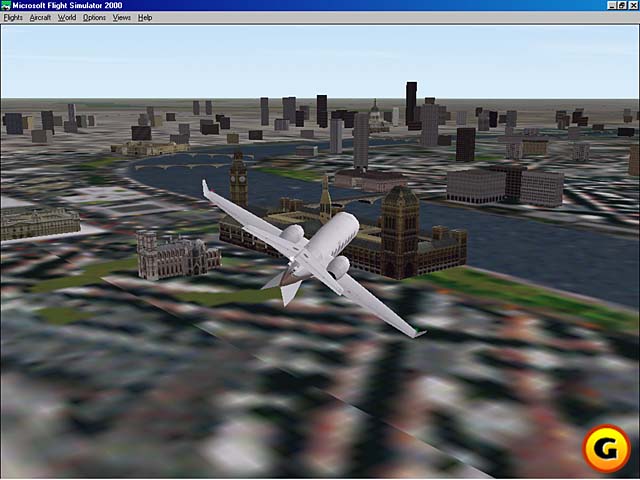
Just three days after September 11, 2001, CNN reported that Microsoft said it would "remove images of the World Trade Center from the upcoming version of its popular PC game, 'Flight Simulator,' following the terrorist attacks Tuesday on that landmark, the Pentagon and another attempt that failed in Pennsylvania, which resulted in thousands of deaths." The game's introduction included a player commenting on the possibility of crashing into the Empire State Building and how "cool" that would be.
The simulation included scenarios where players could fly over New York, Boston, Seattle, and Washington, DC.
Command & Conquer
Platforms: PC, PS, Saturn, N64
Publisher: Electronic Arts/Westwood Studios, 1996
Developer: Westwood Studios

The Command & Conquer strategy series first launched on the PC in 1995, and aside from a couple of forays onto consoles, it has stayed true to the PC ever since. In C&C Red Alert, time travel set up the story: An assassin traveled back in time and killed Hitler before his rise to power, stopping Nazi Germany before it started. But Stalin filled his shoes, putting a Soviet-vs.-Allied-force war into your hands--and you chose which side you played.
Command & Conquer Red Alert 2 shipped in October 2000, but only after September 11, 2001, did the game step into the ranks of the mischievous. On September 14, 2001, EA announced that the C&C Red Alert 2 box art would be changed so that it would no longer reflect scenes of well-known American monuments in the heat of war.
Thrill Kill
Platforms: PS, never released
Publisher: Electronic Arts/Virgin Interactive, ~1998
Developer: Paradox
Thrill Kill just might be the most controversial game you'll never play. Besides its insurmountable level of blood and gore, it was to be the PlayStation's first four-player fighting game back in 1998 when it was in development. Many game writers who had seen and played early builds of the game said that it had potential to show up Mortal Kombat, in terms of brutality. And the idea of having four fighters in the fray, at this time, was impressive and fun, but probably not as good as MK.

GameSpot associate editor Bob Colayco said, "From what I played of Thrill Kill (don't ask me how), I was profoundly unimpressed. It was just another cookie-cutter fighting game, using extreme gore and shock value to differentiate itself, not unlike one of Paradox's later games (Backyard Wrestling). Sure it's amusing for a few minutes to beat someone over the head with a dismembered leg, but the antics get old fast when there aren't any deeper design elements to lean on."
The game used a function called the "kill meter" that served as a gauge for how much damage you inflicted on the other characters in the fight. The kill meter would only fill when you struck another player, begging aggression and penalizing cowardly, flight behavior. The characters included Dr. Faustus, a madman with a bear trap for a mouth and a very sharp scalpel; Imp, a midget who walked on very sharp stilts and knew what other uses sharp sticks could be put to; and Mammoth, a colossal guy who was the "embodiment of primal rage and fury." Belladonna's outfits included a naughty nurse's outfit with stilettos and stockings and a French maid's uniform. Thrill Kill had a decidedly B-movie feel about it. For example, you could hold one opponent so that another could whale on him. It felt like a goofy horror movie come to life.
Electronic Arts acquired Virgin Interactive and absorbed the Thrill Kill project late in its cycle. Apparently the game was complete; however, an EA spokesperson told GameSpot it was "shelved because its content was not appropriate for the market." When the announcement was made, the gaming community petitioned and fought, but their efforts got them nowhere. EA also said it would not sell the title to another publisher.
The Sims
Platforms: PC, Mac, GameCube, Game Boy Advance, Xbox, PlayStation 2
Publisher: Electronic Arts, Maxis 2000
Developer: Maxis

The Sims truly got off the ground in February 2000. While there is certainly nothing outwardly controversial about The Sims--a friendly, amusing, well-made real-life simulation--there is plenty of potential within the game's boundaries, especially online, where the public meets, for debaucherous sim play. The very nature of the game invites trouble: People get to wander around, meeting other people and doing whatever. It's good to make money so you can buy stuff, but all in all, the Sims world is a prime example of people needing jobs to stay off the streets.
In December 2003, Peter Ludlow, a professor of philosophy at the University of Michigan, Sims Online player, and publisher of the Sims Online-based blog site The Alphaville Herald told GameSpot that EA banned him from his Sims Online account because he published an account of Sims Online players engaging in virtual sex in exchange for simoleans, a currency used in the game. When Ludlow allegedly brought this action to EA's attention, the company asked him to remove links from his profile to the blog site. Ludlow claims he did so, but EA claimed he didn't and shut him out of the game permanently.
Fugitive Hunter: War on Terror
Platforms: PlayStation 2
Publisher: Encore Software, 2003
Developer: Black Ops Entertainment
Encore's Fugitive Hunter is a first-person shooter wherein you take the role of former Navy SEAL turned fugitive tracker Jake Seaver. Your job is to track and eliminate fugitives--no negotiation skills required. The top-dog fugitive of this tepid offering is none other than Osama bin Laden.
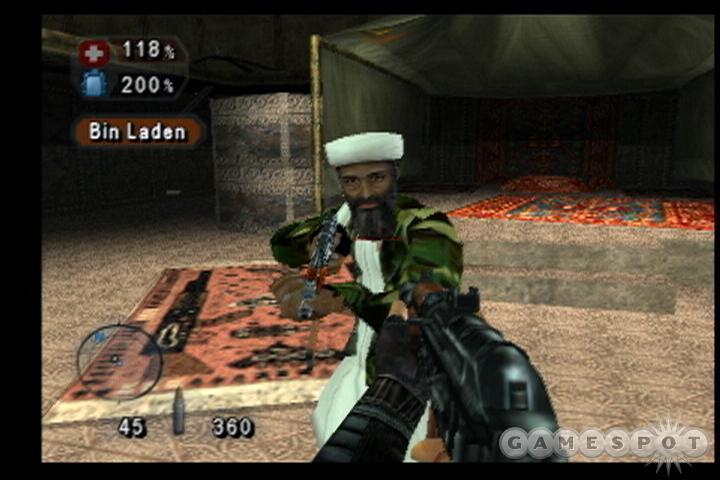
GameSpot associate editor Brad Shoemaker wrote in his review of the game, "There's just not much you can say in Fugitive Hunter's defense. It's a short game with bland mechanics, repetitive levels, and almost zero replay value, and that's not even taking into account the total absurdity of getting into a fistfight with Osama bin Laden. This one might be good for a rental if you want to see what a goofy spectacle it is, but if you're looking for a good first-person shooter on the PlayStation 2, stay far away."
Shoemaker said that as a game, Fugitive Hunter is merely bad, adding, "But as a piece of exploitative shlock, it's downright appalling. How much can you really say about a game that features Osama bin Laden as the last boss? This game fed on a nation's grief and outrage and ultimately proved itself to be no more than jingoistic garbage."
The only thing missing from the title is the "paid for by the U.S. Army" tagline. Or perhaps, "As seen on CNN." Pot shots are easy to take on this game, but the roasting isn't far from the truth. In November 2003, GameSpot reported that a rumor was spreading around the UK that newsman Dan Rather would provide voice talent for the British version of the game called "America's Ten Most Wanted." The rumor was generated from a press release distributed by UK-based System 3 Games.
A CBS News representative's response to the story was succinct: "What are you talking about?" Representatives for developer Black Ops offered the same: "I don't know anything about that...nothing even close."
Perhaps there's little surprise that there are no known stories of the terrorist/fugitive hunting game banned from store shelves in the US.
There are all kinds of controversies in the games industry, and not all of them are about violence or sexuality in games. These come in the form of corporate squabbles, ticked-off designers, and lawsuits not entirely threatening to a game's livelihood, but more so about money, licensing deals gone awry, or sometimes nationwide bans on anything related to video games. We've collected a few of the more recent choice selections and a few earlier ones you won't want to miss.
- Capcom filed suit against Data East Corporation (Data East ISA, Inc.) in 1994, alleging that Data East had knocked off Capcom's Street Fighter characters for its Fighter's History game. In the end, the court dismissed the case.
- In November 1997, Nintendo sued guidebook publisher Prima Guides (Imagine Media) for allegedly lifting maps and tips for GoldenEye 007 out of Nintendo's publication Nintendo Power and then making a profit on the guide. This case was dismissed, and then Prima and Nintendo decided to partner to publish the guides in the future.
- In May 1998, several plaintiffs filed suit against Origin Systems and Electronic Arts alleging that Ultima Online shipped as an "incomplete" product. The case was settled in January 1999, with an agreement that Electronic Arts would donate $15,000 to a San Diego museum.
- Starcraft maker Blizzard Entertainment was sued in May 1998 by a California consumer group, Intervention Inc., which alleged the game invaded people's privacy due to a feature that transmits registry data from the client computer when users are connected to Battle.net.
- In April 1999, a California court denied an injunction Sony Computer Entertainment America (SCEA) sought against software emulator maker Bleem that would keep the company from publishing its PlayStation emulator for the PC. SCEA tried to stop the emulator with legal force a couple more times, losing each battle. Then in May 2001, Bleem sued SCEA for allegedly using its influence to thwart the company's ability to successfully sell its emulator, Bleemcast. Bleemcast was a software program that would allow some PlayStation One games to be played on the Sega Dreamcast console. In November 2001, Bleem folded.
- The Anti-Defamation League (ADL) wrote a public letter in February 2002 to the distributors of Ethnic Cleansing, an online, white-supremacist PC game, asking them to cease publication of the title. Many such primitive concentration-camp-management sims have been made and posted on the Web, but fortunately, organizations such as the ADL keep them from surfacing more often.
- In February 2002, Nike sued Sega claiming that television ads for Sega's NBA 2K2 game were a direct rip-off of Nike's "Frozen Moment" television ad from 1996. Two months later, Sega and Nike settled, under the agreement that Sega would donate $50,000 to charity in Nike's name.
- Greece banned all video games and gaming units nationwide in July 2002, making it illegal to be caught with one in the street. Law number 3037 brings hefty fines (5,000 to 75,000 euros) for even having them in one's home. The worst that can happen? A fine and 12 months in jail. No joke. The law is still in place.
- In February 2003, BMX star Dave Mirra sued Acclaim, seeking $21 million in alleged damages as a result of breach of contract, unfair competition, injury to reputation, false advertising, and invasion of privacy over association with the game BMX XXX. Mirra, who was no longer associated with the game as of August 2002, claimed that he had withdrawn from his role in BMX XXX once he'd heard the game plan had changed.By October 2003, Mirra and Acclaim announced that an agreement had been reached and that neither party had paid monetary damages, adding that the licensing partnership would continue through 2011, as planned. In a statement released to the press, Mirra said, "I'm glad that this issue is behind us. I look forward to working with Acclaim and to continue making the best BMX video games available for fans of the sport."
- In April 2003, Kierin Kirby (Lady Miss Kier to Deee-lite fans) filed suit against Sega of America, alleging the company styled Ulala, Space Channel 5's heroine, after her ultra-diva persona, Lady Miss Kier.
- The First Amendment protected video games in June 2003 when the United States Court of Appeals struck down a St. Louis County law to make selling video games to minors illegal.
- In July 2003, former WCW wrestler Darryl "Maxx Payne" Peterson sued Rockstar for $10 million for what amounts to identity theft, claiming the company hijacked a personality he had created. Rockstar publishes an action franchise called Max Payne for the PC, PlayStation 2, Xbox, and Game Boy Advance.
- In August 2003, graffiti artist Christopher Ellis sued Rockstar Games and Take-Two Interactive, alleging his artwork titled "Daze" was used without permission in Grand Theft Auto III.
- Crime writer Robert Crais sued for an injunction against Activision in November 2003, alleging the company copped his character, Elvis Cole, and re-created him under the name Nick Kang for its upcoming True Crime: Streets of LA game set for the GameCube. Crais later dropped the case.
- Sega of America sought legal action against Electronic Arts, Fox Filmed Entertainment, Vivendi Universal's Fox Interactive, and Radical Games for The Simpsons Road Rage in December 2003. Sega alleged that Road Rage "deliberately imitated" Crazy Taxi.
- In December 2003, Beijing's Chaoyang District People's Court granted an online gamer in China, 24-year-old Li Hongchen, his virtual belongings back when he sued the creators of Red Moon for allegedly allowing a hacker access to the collection of virtual goods he had built up over two years.
- A Scottish computer consultant, Mark Gallagher, who had interviewed at DMA Designs (the Edinburgh-based company that would become Rockstar North), accused the developer in December 2003 of stealing his idea--Crime, Inc.--for Grand Theft Auto. DMA's Brian Baglow told GameSpot in response, "I object to the idea that the GTA team ripped someone off. We worked damn hard on that game for a long time and finally created something I think we are all proud of."
There's no denying the serious issues surrounding video game violence, but there's something to be said for being able to laugh at or parody the depths some game makers and the industry in general sink to. Largely at play here is the mockery of the marketing of such games, as in The Simpsons. Violent or just ridiculously gory games are typically advertised to promote the very thing these games are later targeted for by the media and game watchdogs. Fear Effect II's television ad featured a brief lesbian kiss scene that created a stir and put the game in people's minds. Advertisers seem to figure that kids are impressionable, so they use these tactics often. The following games are humorous takes on this concept.
Bonestorm, Celebrity Autopsy, Larry the Looter, others
Source: The Simpsons

Bart Simpson embodies video game makers' target audience, so naturally games are a big part of The Simpsons--or at least a prop in many episodes. Bonestorm stands out as one of the most exceptional, due to Bart's run-in with the law for acquiring his copy the five-finger-discount way. Bart originally tries to buy a copy of this pseudo Mortal Kombat game at the comic shop by throwing a handful of change on the counter. The comic shop owner wryly tells him he doesn't have enough money, so Bart executes plan B and ends up nabbed by Try-N-Save security. Bonestorm's television ad in the show states, "Buy Bonestorm! Or go to hell!!"
Games such as Eat My Shorts, Escape From Death Row, Celebrity Autopsy, and Larry the Looter all appear at the Kwik-E-Mart, Noiseland, or the Try-N-Save store. Another locale is the Wall E. Weasel's (Chuck E. Cheese's). You can view The Simpsons Archive for a list of all known video games featured on the show.
Game Slave 2
Source: Invader Zim (formerly on Nickelodeon)
The now-canceled, cultishly popular Invader Zim animated series on Nickelodeon tapped into youth culture as The Simpsons did, so naturally games made an appearance. In the episode "Game Slave 2," the character Gaz hears that the Game Slave 2, a portable game system like the Game Boy Advance, goes on sale at midnight. By the time she gets there, the line is out the door, and so she waits. Amusing gamer stereotypes surround her, including a kid who believes he will get a GS2 before her because he is, among other things, "a superior gamer." Gaz gets to the front of the line, and the store is sold out but for one preorder who hasn't shown up.
The entire episode was about Gaz's struggle to score the Game Slave 2 and was strangely apropos--clearly written by someone who has waited in line for a game system and not just viewed the phenomenon from the outside.
The archival Web site TVTome.com reported that Game Slave 2 was originally going to be called "Game Slave Advance"; however, an "unnamed" game company would not let that happen.
First Person Shooter
Source: The X-Files (Season 7, Episode 13)
In one episode of the X-Files, Fox Mulder and Dana Scully are called upon to investigate mysterious deaths caused by a virtual reality game called, simply, "First Person Shooter." The VR game puts the player in the shoes of a warrior who must shoot his way through various scenarios. Two deaths occur from strange circumstances within the VR game--one apparently caused by a 17th-century flintlock pistol and the other a gruesome mutilation/decapitation by broadsword. From observing the game sessions, the murders appear to have been perpetrated by a renegade female AI character, who, in tune with the paranormal theme of the show, has no corporeal counterpart in the "real" world.
One of the running themes in the episode is corporate indifference to the effects of video games. The developers of "FPS" are portrayed as greed-mongers, eager to bring their nearly completed game to market as soon as possible, even in the face of twin tragedies caused directly by their game. One of the developers in particular is a caricature of a game programmer--lacking in empathy, unremorseful for the deaths of two men, and with a single-minded interest in seeing his project reach the market.
While pondering the specifics of the case, the two FBI agents engage in a trite, shallow discussion about the value of violent games. The flippant nature of this scene and the episode as a whole is all the more disappointing given that the famed William Gibson (author of Johnny Mnemonic and Neuromancer) is credited as a cowriter to the episode.
SCULLY: Dressing up like high-tech warriors to play a futuristic version of Cowboys and Indians? What kind of moron gets his ya-yas out like that?
(MULDER grins and points proudly at himself.)
SCULLY: Mulder, what--what purpose does this game serve except to add to a culture of violence in a country that's already out of control?
MULDER: Who says it adds to it?
SCULLY: You think that taking up weapons and creating gratuitous virtual mayhem has any redeeming value whatsoever? I mean, that the testosterone frenzy that it creates stops when the game does?
MULDER: Well, that's rather sexist, isn't it?
(SCULLY gives him a look. She is smiling, though.)
MULDER: I mean, maybe the game provides an outlet for certain impulses, that it fills a void in our genetic makeup that the more civilizing effects of society failed to provide for.
SCULLY: Well, that must be why men feel the great need to blast the crap out of stuff.
The ESRB publishes a list of all the video game offenses determined by its board and identified on game sleeves. The list, as published by the ESRB, is as follows:
Alcohol Reference- Reference to and/or images of alcoholic beverages
Animated Blood- Cartoon or pixilated depictions of blood
Blood- Depictions of blood
Blood and Gore- Depictions of blood or the mutilation of body parts
Cartoon Violence- Violent actions involving cartoon-like characters. May include violence where a character is unharmed after the action has been inflicted
Comic Mischief- Scenes depicting slapstick or gross vulgar humor
Crude Humor- Moderately vulgar antics, including bathroom humor
Drug Reference- Reference to and/or images of illegal drugs
Edutainment- Content of product provides user with specific skills development or reinforcement learning within an entertainment setting. Skill development is an integral part of product
Fantasy Violence- Violent actions of a fantasy nature, involving human or non-human characters in situations easily distinguishable from real life
Gambling- Betting like behavior
Informational- Overall content of product contains data, facts, resource information, reference materials or instructional text
Intense Violence- Graphic and realistic-looking depictions of physical conflict. May involve extreme and/or realistic blood, gore, weapons, and depictions of human injury and death
Mature Humor- Vulgar and/or crude jokes and antics including "bathroom" humor
Mature Sexual Themes- Provocative material, possibly including partial nudity
Mild Language- Mild references to profanity, sexuality, violence, alcohol, or drug use
Mild Lyrics- Mild references to profanity, sexuality, violence, alcohol, or drug use in music
Mild Violence- Mild scenes depicting characters in unsafe and/or violent situations
Nudity- Graphic or prolonged depictions of nudity
Partial Nudity- Brief and mild depictions of nudity
Sexual Violence- Depictions of rape or other sexual acts
Some Adult Assistance May Be Needed- Early Childhood Descriptor only
Strong Language- Profanity and explicit references to sexuality, violence, alcohol, or drug use
Strong Lyrics- Profanity and explicit references to sex, violence, alcohol, or drug use in music
Strong Sexual Content- Graphic depiction of sexual behavior, possibly including nudity
Suggestive Themes- Mild provocative references or materials
Tobacco Reference- Reference to and/or images of tobacco products
Use of Drugs- The consumption or use of illegal drugs
Use of Alcohol- The consumption of alcoholic beverages
Use of Tobacco- The consumption of tobacco products
Violence- Scenes involving aggressive conflict
Additionally, online games that include user-generated content (e.g., chat, maps, skins) carry the notice "Game Experience May Change During Online Play" to warn consumers that content created by players of the game has not been rated by the ESRB.
IDSA
The Interactive Digital Software Association
ESA
The Electronic Software Association
ESRB
The Entertainment Software Ratings Board
IEMA
Interactive Entertainment Merchants Association
Senator Joe Lieberman
Official home page for the Connecticut senator
Senator Herb Kohl
Official home page for the Wisconsin senator
Congressman Joe Baca
A fact sheet on the Protect Children from Video Game Sex and Violence Act of 2003
OFLC
Australia's Office of Film and Literature Classification
ELSPA
Entertainment and Leisure Software Publishers Association
MediaFamily.org
The National Institute on Media and the Family
NPD Group
A leading organization of video and PC game market reporting
Got a news tip or want to contact us directly? Email news@gamespot.com
Join the conversation