Civilization IV Updated Impressions
Producer Jesse Smith explains how many of the new features in Civilization IV, such as religion and the updated combat system, will work.
With Civilization IV due out by the end of the year, Firaxis and publisher 2K Games are stepping up the publicity efforts for the game, which is the latest chapter in the landmark PC strategy game series. We got our first good look at Civ IV last month at the Electronic Entertainment Expo, but we saw the latest developments this week at a press event in San Francisco. On hand was Firaxis producer Jesse Smith to answer our questions, and we had plenty of them to ask.
Much has happened in the past month. Smith told us that the last major piece of the game was being put in place this week. After that, all the features will be in place, and Firaxis will spend the next three or four months on balancing, testing, and polishing. This includes finalizing the interface, which is still something of a work in progress, and so keep in mind that what you see in the screenshots isn't final. And pretty much all the details that were discussed are also subject to change.

We started the demo by looking upon a randomly generated world. Part of the series' deep replayability comes from the fact that you can never play the same game twice, and this is partly thanks to the random map generator. Smith said that they've been focusing their efforts to make sure that the generated worlds make sense. Once again, you'll have the ability to select certain parameters, and the random map generator algorithm will turn out an appropriate map. For example, he showed a huge landmass with small bodies of water in it. On the flip side, you can then generate an archipelago map, where the landmasses are a string of large islands. You'll probably be glad to know that the game will better balance resources, which was one of the frustrations with Civ III. All civilizations will start with strategic resources close by, so it sounds like the Civ III dilemma where one faction gets few resources while another faction gets a whole ton of them is now history.
Everything you need to know in the game is pretty much presented on the world map, and you could almost play most of the game without leaving this view. In fact, Firaxis had originally removed the city management screen that's been a part of Civ from the beginning. However, the testers complained so much that it was brought back. Still, you'll be able to manage your empire quite a bit just from the regular world map. For instance, you can shift-click on one of your cities, and that will let you manage its production and build queue, modify the behavior of the city governors, and more. You can even shift-click on multiple cities, letting you manage them all at once. This is especially useful if you need to churn out military units. In that case, you can even designate a common rally point, and all the units produced by those cities will converge there automatically.
Once again, your nation will have borders, which are basically colored areas on the map that represent your influence and power. These borders are relative, so the more culturally powerful your civilization is, the further the borders extend from your cities. And if your empire abuts that of a rival, the borders will shift to represent which faction has the dominant culture. The welcome news in Civ IV is that borders are actually useful for keeping other civilizations out of your territory. If you're a Civ fan, then you know from earlier games that rival nations trespassed all over your territory left and right, forcing you to threaten them with violence. In Civ IV, borders can be closed, which means that foreign units cannot enter your territory unless a state of war exists between your two factions. Closed borders will also be an excellent way to keep foreign missionaries out of your territory. However, you will eventually need to open your territory with friendly nations in order to trade and generate wealth.
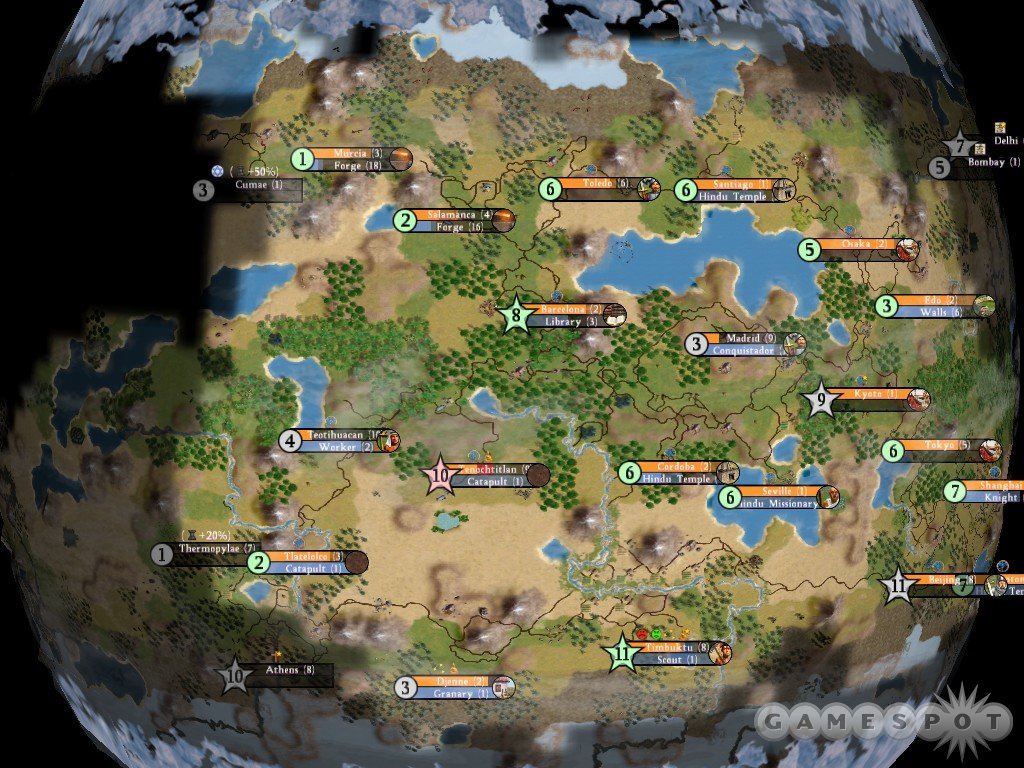
And yes, culture is back, though it has been refined from how it worked in Civilization III. Culture basically modifies your borders in relation to the culture of your neighbors, so you can overwhelm your neighbors with a superior culture. If you can isolate or surround a foreign city, it basically becomes a bubble in your territory. The leader of that faction may feel pressure to trade the city to you. If not, the city has a good chance of rioting because it wants to join your faction. You can amp up the pressure by using great artists, which are part of the new "great people" system in the game. If you're familiar with earlier Civ games, great people are sort of like the great leaders from Civ III. If you have a great artist, you can use the artist to provide onetime bonuses (like the discovery of a culture-related technology), kick-start a golden age, and more. This also includes giving a onetime culture boost to a city of 1,000 points, which is a significant number. This translates into a military application for great artists, because in previous Civ games, when you conquered a city with a culture that was hostile to yours, you had to spend a lot of time and effort building pacifying structures, such as temples. Now, simply drop a great artist in a city, and you can change the mood in a city instantly.
Losing My Religion
The religious system is also undergoing a lot of tweaking. Religion is a new feature in Civ IV, and it will play a significant role in the game, as you can use religion to try to pacify your neighbors and enemies. However, Firaxis' gameplay testing indicated that players found religion to be too vague a concept, so the designers have been tweaking it recently. He showed us an example of religion in action by zooming in on a city so we could see a tiny Christian monastery. 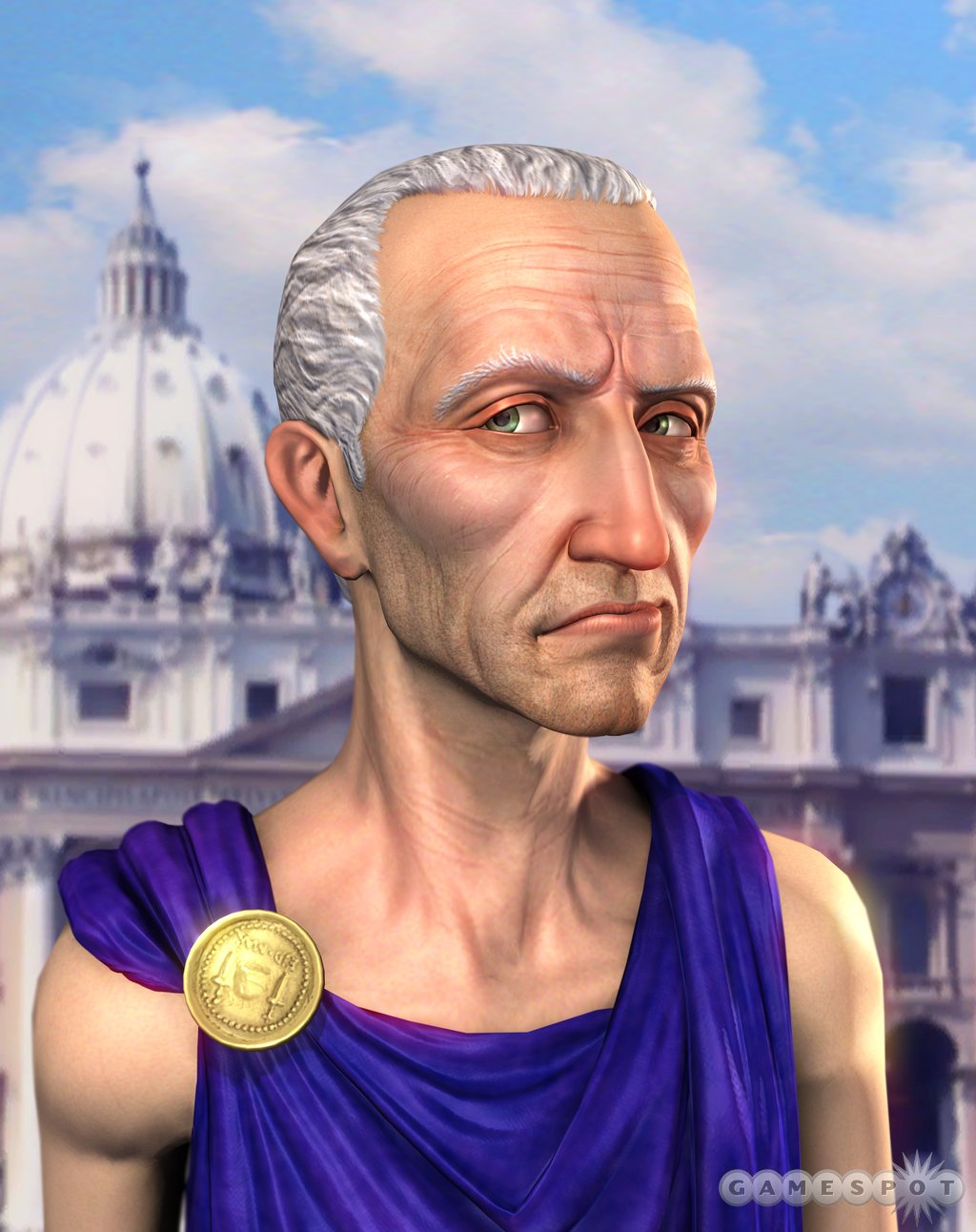
Smith said you could build the monastery after you research the theology advancement. With a monastery, you can churn out missionary units that can proselytize in other civilizations. However, before you can do that, you must have an open-borders agreement with the civilization in question. One change that we noticed had to do with what happens if you convert a rival city to your religion. At E3, we were told if you convert a city to your religion through the use of a missionary, you gain line-of-sight advantages in that city, letting you see what's going on in and around the city. However, that has been removed in the latest version of the game, as it was apparently too much of an advantage, although Smith said it could come back, depending on what further testing determines.
One of the thrills of Civ is when you get to move your giant stack of units (what Smith calls the "stack of doom") into an enemy's territory. That's pretty much been a staple of Civ games from the beginning, but Firaxis is looking to bring that tactic to an end. The problem with the stack of doom is that it can be overwhelmingly difficult to bring to a halt, which doesn't make it much fun if you're on the receiving end of it. So when an enemy stack enters your territory, you will be able to see how many units are in it by the number of medallions indicated on its flag. Then, if you have siege weapons, you can heap some devastating damage on it. As an example, Smith used catapults to attack a large stack headed toward one of his cities. The catapult not only damaged the target unit, but did collateral damage to other units in the stack. The number of units that can be damaged in total depends on the weapon, but this is certainly going to force players and AI factions to spread their units out more, which is the idea in Civ IV.
Finally, Civ IV aims to be the first Civ game to feature a viable multiplayer mode. Civ has always been a far better single-player game than a multiplayer game, simply due to the huge amount of time required to play a single match. Civ IV will introduce new gameplay modes that try to eliminate the waiting game inherent in multiplayer Civ. This includes the pit boss, which is a persistent server game that allows players to play as long as everyone is online. When people leave, the game continues by saving the state of the world. You can then log in, download the state of the world, make your turn, and then upload it for the next player. This will continue indefinitely or until all the players can return to play online at the same time again. Smith said that they have had up to 18 players in play-by-email and pit boss games for a while now, though they may whittle the number of players down by the time the game ships. Still, he says that they've been testing and playing the multiplayer modes for over a year now and have recently increased the size of the testing pool to focus on online gameplay.

Everything looks like it's on track for Civilization IV, so at this point the hardest part is going to be waiting until the game ships. As PC veterans know, the Civ series is one of the oldest and most popular in strategy gaming, and four years have passed since the last installment in the franchise, leaving most of us hungry for more. Like you, we're curious to see how all these changes bode for the series. The game is scheduled to ship this winter, so make sure to check back, and we'll keep you up to date on the latest developments until then.
Got a news tip or want to contact us directly? Email news@gamespot.com
Join the conversation