Axis & Allies Hands-On Impressions
Though it's based on the popular board game of the same name, Axis & Allies promises a whole new direction for World War II-based real-time strategy.
World War II tends to be a fertile setting for real-time strategy games due to the epic scale of the conflict, where a major battle could easily feature tens of thousands of troops and thousands of tanks. And, let's face it, World War II remains a hot item in popular culture. So we were intrigued when Atari announced it was working on a real-time strategy version of Axis & Allies, the popular World War II game franchise. We had the opportunity recently to play an early version of Axis & Allies and quickly discovered what Atari and developer TimeGate Studios have in mind.
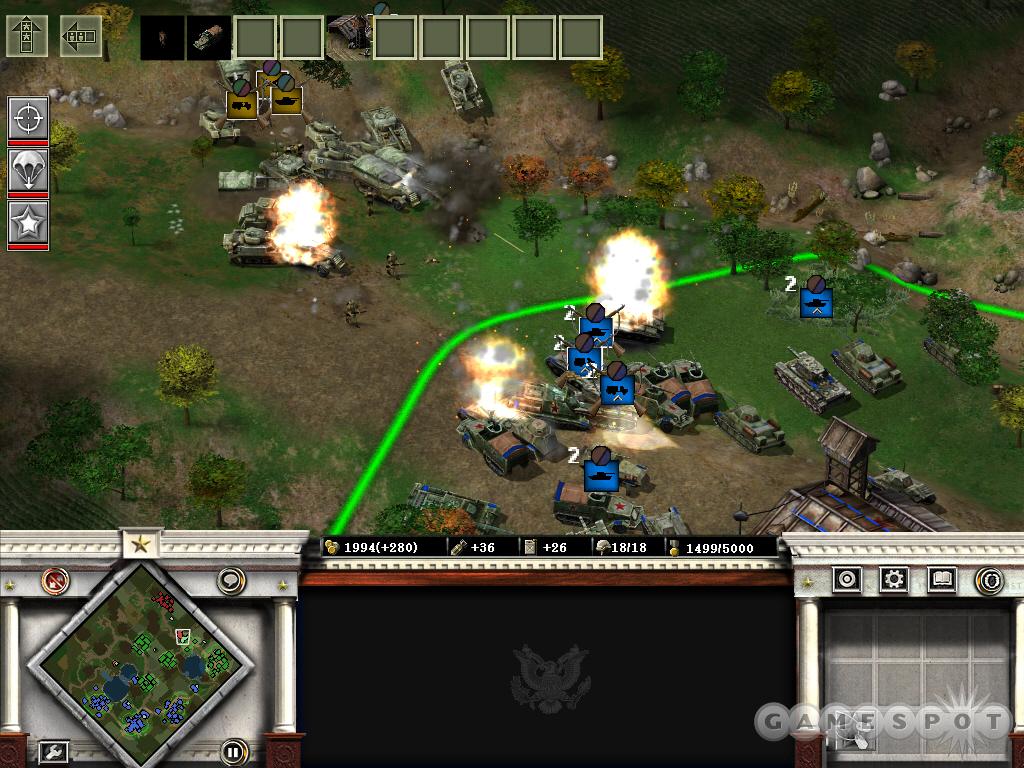
In Axis & Allies, you'll play as one of the major combatants of the war, ranging from the United States, the United Kingdom, the Soviet Union, Japan, and Germany. Furthermore, you'll have a general to lead your armies, including such real-life figures as Patton, Zhukov, and Rommel. There are actually several different games in Axis & Allies. At the highest level, there's the metastrategy game. In this turn-based mode, you're presented with a map of the world. You can play Axis & Allies entirely from this mode by simply moving your units around the map and auto-generating the results of battles. As such, this mode closely resembles the popular Axis & Allies board game, though it's not a straight translation by any means.
At the heart of Axis & Allies, though, is the real-time strategy game that kicks in whenever opposing units meet on the map. Instead of auto-generating results, you can drop down into the real-time strategy portion of the game to directly take command of your units on the battlefield. However, while this may sound like the Total War games, you won't take direct tactical command of forces on the battlefield, because the real-time strategy portion of Axis & Allies will still require you to manage resources and build a base.
The real-time strategy in Axis & Allies is built around the idea of headquarters and regiments. Instead of building hundreds of individual units like you would in a traditional real-time strategy game, you instead build regiments, each of which can be composed of between four to seven battalions. When you start the game, you begin with just a corps headquarters, and one of the first things that you can build is an infantry division HQ. As soon as you get that up and running, you can begin to churn out infantry regiments. An infantry regiment is typically composed of about six or seven battalions of foot soldiers, each of which is represented in the game by a single man (appropriately, a vehicle battalion is usually represented by a solitary half-track or tank). This infantry regiment is treated as a single unit, so you don't have to click on each battalion to give it orders. The regiment's battalions will go into combat together, and even if individual battalions are wiped out, the regiment survives if a single battalion escapes destruction. If you can get the survivors back into the line of supply, the regiment will reconstitute back to full strength.
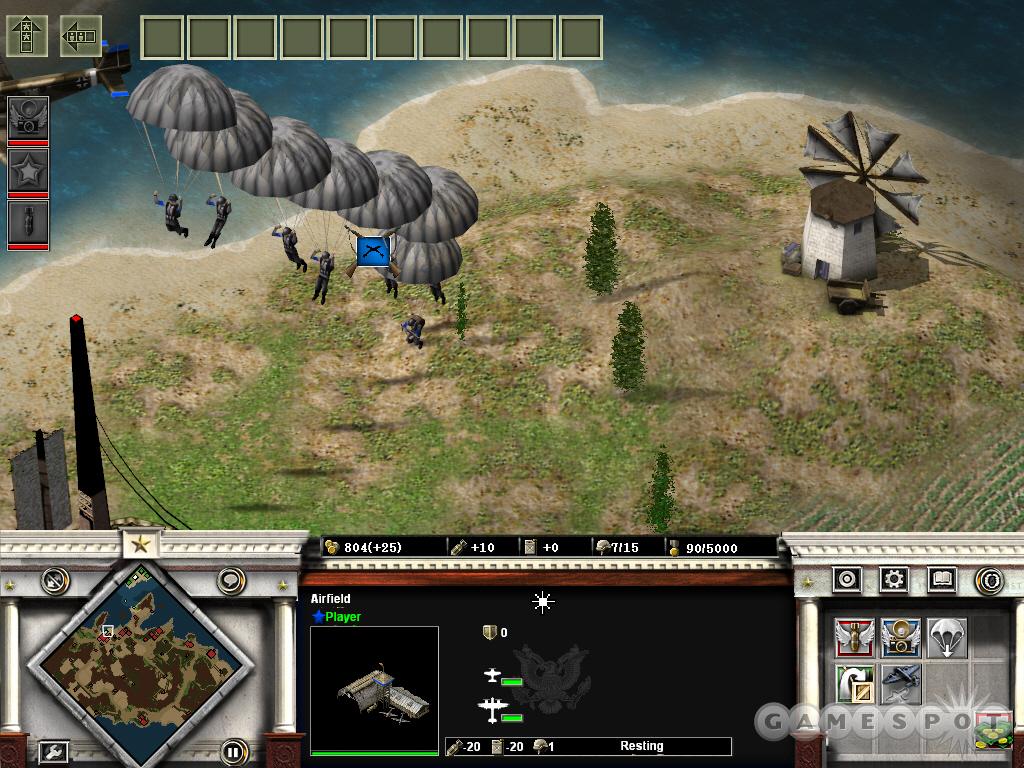
At this point, Axis & Allies' gameplay may remind you of that found in the acclaimed Kohan real-time strategy games, and there's a good reason for this. TimeGate was responsible for Kohan and its upcoming sequel, Kohan II: Kings of War. And for Axis & Allies, TimeGate's Ian Klimon told us that the developer wanted to use the Kohan-style gameplay to capture the ebb and flow of World War II warfare. This is captured by the mobile nature of virtually every structure in the game. Everything from headquarters to supply depots can "pack up" and relocate, meaning that you can fall back to avoid total annihilation. You can also send a supply convoy after several regiments and have it establish a forward supply depot so regiments don't have to fall all the way back to your main base to heal. During the multiplayer game that we played, we experienced a tug-of-war struggle as assaults would run out of momentum at critical moments, and the enemy would consequently exploit these moments to push us back, and vice versa.
Guns and Gas
An important concept in the game is that regiments can gain experience, which can be pivotal. Newly recruited units start out as green cannon fodder, but if you can keep them alive, they'll accrue experience. As regiments gain ranks, they'll become hardier and much more effective, and they won't break under combat stress as easily. As a result, a handful of veteran and elite regiments are preferable to a whole lot of green ones. You'll also be able to build more-advanced units once you establish the necessary support structure at your base, which includes heavy tank regiments, mechanized antitank troops, and combat engineers (who can repair buildings).
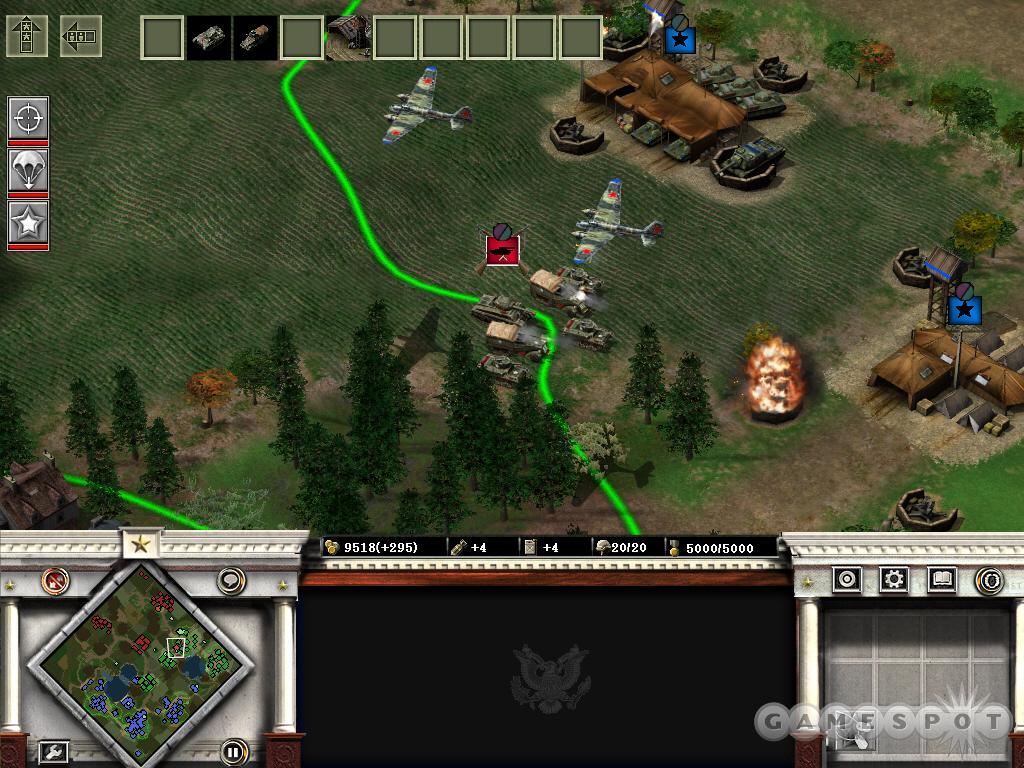
There are only three resources in the game, and you won't have to dedicate any units toward gathering them. The most critical resource is money, which is used to research new technologies, purchase new units and air strikes, and fund everything else in the game. Money is automatically accrued by building supply depots and, more importantly, by seizing control of cities. This makes it critical to build fast recon units early in the game and then dispatch them to nearby cities, because cities generate the most cash for you. The other two resources are ammunition and oil, which are both required to build and maintain regiments. Obviously, the heavier and more powerful a regiment, the more ammo and oil it requires. You can address your supply issues in these areas by turning generic supply depots into ammunition dumps and oil depots. It's also possible to run a deficit in these resources, though. You'll still be OK as long as you have a positive cash flow, because your forces will simply "purchase" the ammunition and oil they require, though each unit of ammo and oil will cost several units of money.
Your commanding general will have unique abilities that can also be brought into play when you garner enough "general experience" in battle. For example, the propaganda ability will allow a bomber to fly over enemy troops and then drop leaflets urging the enemy troops to surrender, which will lower their morale, thus making it easier for them to break. And one of the most devastating abilities is that of the atom bomb--and you can probably imagine what that's capable of. Once you use an ability, you'll have to "re-earn" enough points to use it again.
Axis & Allies will use a 3D engine that's similar to the one that will power Kohan II. Though it's built from the Gamebryo engine, TimeGate is putting in a lot of its own touches, including some in-game physics to ensure that vehicles blow up spectacularly. We even saw a downed bomber careen into a regiment of infantry and wipe them out. The game will support up to eight players in multiplay, and even if you don't have enough human players, the artificial intelligence can fill in. Klimon is particularly proud of the game's AI, which doesn't cheat. During our multiplayer session, several human players who left early were replaced by the AI seamlessly, and none of us realized that the computer had actually replaced them. There will also be a rather advanced random-map generator that will be capable of generating maps appropriate to the region of the world you're playing in. For instance, if you want to battle it out in Alaska, then the generator will make sure that it uses the appropriate terrain and foliage for the area.
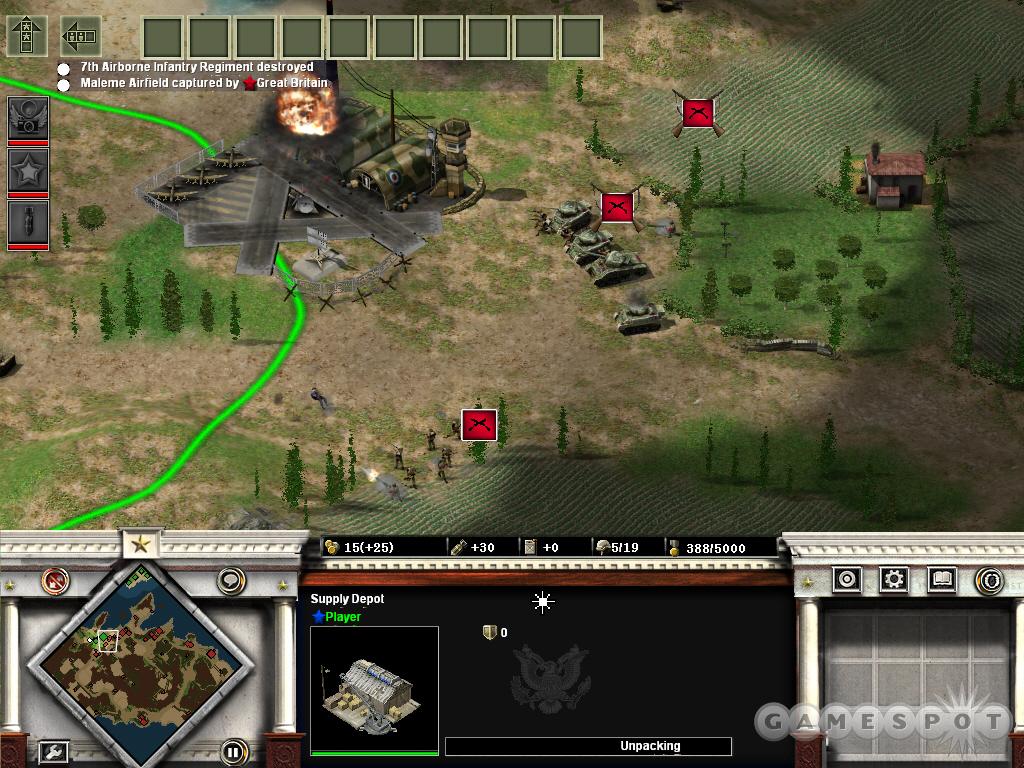
At this point, Axis & Allies is shaping up to be one of the major real-time strategy games of the year. It presents an addictive blend of gameplay in to the rich World War II setting. Plus, TimeGate is a studio that knows how to make innovative real-time strategy games, and Axis & Allies looks to continue the company's trend. The game will soon enter alpha stage, which means it will be "feature complete." As a result, TimeGate will spend the next few months polishing and balancing the game. Axis & Allies is expected to ship later this year.
Got a news tip or want to contact us directly? Email news@gamespot.com
Join the conversation