Star Wars Knights of the Old Republic II: The Sith Lords Designer Diary #2
Lead designer Chris Avellone discusses how the story for the upcoming Xbox and PC RPG has taken shape.
Knights of the Old Republic needs no introduction. Last year's best-selling Xbox and PC RPG set new standards for role-playing--and for Star Wars games--and the upcoming sequel from Obsidian Entertainment will build on the gameplay and storyline established in BioWare's trendsetting original. Lead designer Chris Avellone tells us about the complex and involving process of plotting the new game in our latest designer diary.
Crafting a Story
by Chris AvelloneLead Designer, Obsidian Entertainment
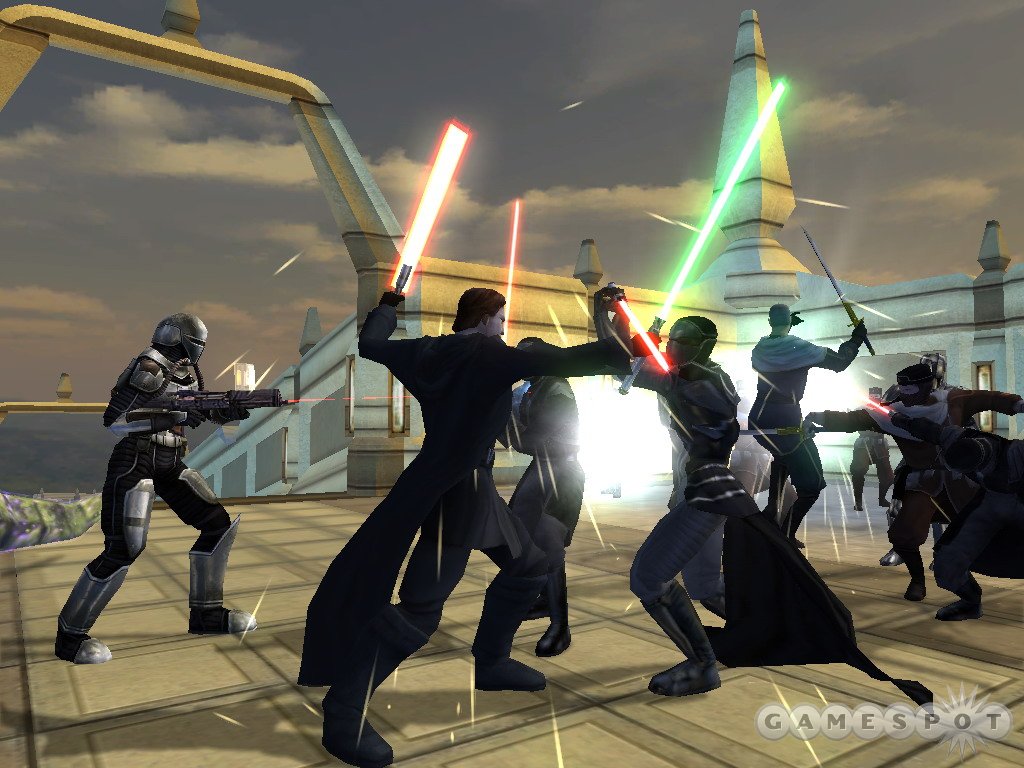
Crafting a story for a game like Star Wars Knights of the Old Republic II: The Sith Lords generally involves a lot of caffeine and stress--and details. But in the end, it's not much different from how we went about constructing stories at Black Isle Studios or how we currently construct them here at Obsidian. Doing a sequel to the amazing story BioWare developed for the original Star Wars: Knights of the Old Republic is a challenging task, and it certainly creates its share of pressures. But in the end, the process for creating the story remains the same. What's listed below isn't everything, but it's a general outline of the process we use when doing stories at Obsidian Entertainment.
Step Zero: Bookends
Every project has limitations, either as a result of the platform, the technology, the schedule, or the resources. Heck! Maybe you have a grim-faced, bald lead programmer with the power to wilt plants with his gaze, or maybe you have an angry producer who spits at you like a hissing snake--or whatever. These are all limitations, and you need to know where they live so that you can hunt them down with a high-powered sniper rifle.
Anyway, it's tough. But you need to approach your game story with some realities. If you have a 20-person team and 14 months, don't write a story that requires the player to jump across 30 different planets, each with five levels that are a hundred miles wide that crash the Xbox and cause the artist's hands to turn bloody while he's trying to finish up the required artwork. Make a note of your resources, schedule, and platform--but recognize the limitations--and then proceed on the story, once you have your bookends.
In The Sith Lords, we had to recognize that we had both a tight schedule and existing technology. We also had to take into account the Xbox's limitations when developing the game. Fortunately, we had the BioWare engine as a foundation, so the process of creating content was able to proceed almost immediately.
Step 51: Figure Out What's Fun
It's always best to identify what the main gameplay elements for your game are and how the story can complement those elements. If stronghold-building is a big part of the game mechanics, figure out how to work it into the story. If you have the ability to control or influence your PCs in unique ways, make sure the story is crafted to showcase these elements at critical points. If you don't want the player to have to reload the game, write a story where the main character doesn't die, and have the story complement the game mechanics. Basically, identify what's fun about the game, and use those elements as part of the building blocks for the game's story.
Step 51 B: Do Your Research

Before sitting down with your story, do some research. For example, with The Sith Lords, I sat down and watched each of the Star Wars movies again, read every single Star Wars novel and comic book, and even shackled myself to a chair and endured the "Star Wars Christmas Special." (I incurred minimal drain bamage but did experience mildly impaired arithmetic skills that prevented me from counting or scripting anything properly.)
Anyway, the reason for this is simple: If you are working in someone else's universe, know it inside and out. Know what's been done in it, know what adventure seeds or game ideas have been done to death (or not done enough), know what bad ideas to stay away from, and know the parameters of the universe. If you're using someone else's genre, it usually comes with its own set of story-based bookends and parameters you need to consider when writing a story.
When not using someone else's universe (which is a lucky thing in today's role-playing-game market), there's still research to be done. Know what other games have done the genre you're working in, and know what's going to make your game stand out when compared to the others.
Step 30: Start With the Big Picture
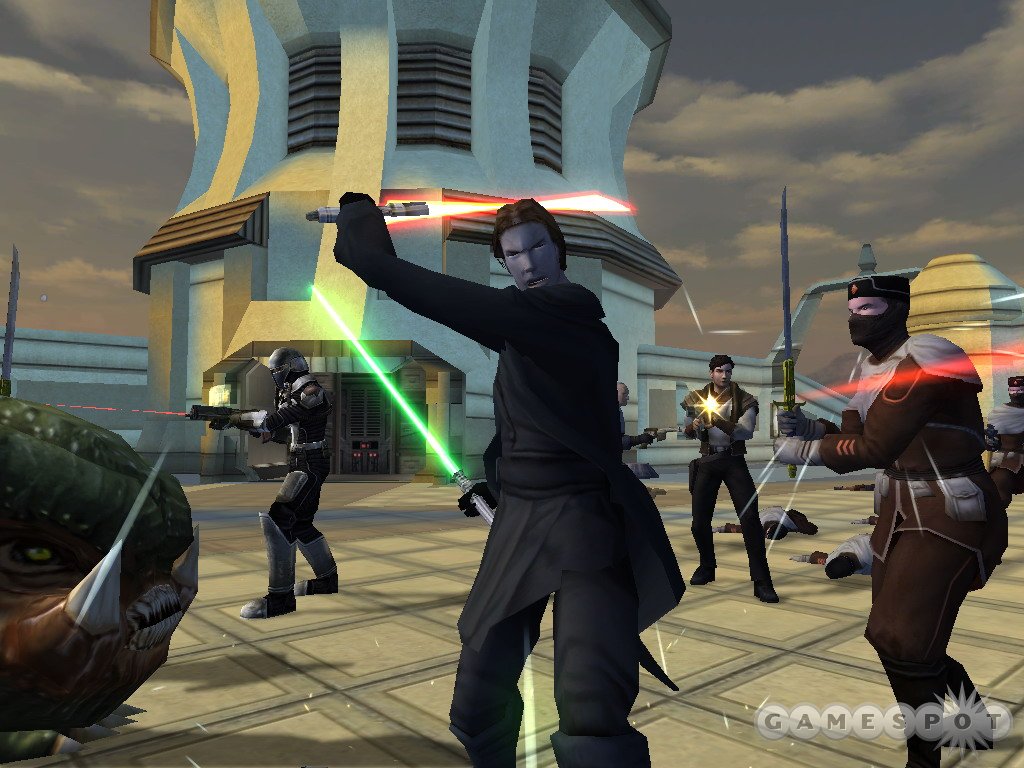
Now that you know what your technical realities are and what's fun about your game, you can sit down and start setting up the overall story. For right now, you won't get too specific about what's happening in each location; you just want to get the overall flow of the game. During this phase, you want to consider the following:
-Character motivation. It's different from player motivation (see below) in that you're introducing what the hero's motivation is. Why is the player's progress through the game important? Why are players special? What makes them pivotal in the events to come?
In The Sith Lords, we have set up a simple introduction to the character's motivation. A disgraced veteran of the Mandalorian Wars, the player finds himself in the unenviable position of being the last known Jedi in the galaxy...and the target for dark side assassins who are determined to wipe out all Jedi, everywhere. Early on, we make sure the player knows exactly what threatens him and why it's important that he put a stop to what's threatening him, one way or another.
To make matters worse, the player is a Jedi who has lost his connection with the Force, which is something that no character (or player) is going to want to endure for long. The game involves the player reawakening to the Force and discovering what it means to be a Jedi (or a Sith). The events in the game are structured so the character gains in power over time, slowly regaining his connection and learning more about what threatens him...and the galaxy.
-Player motivation. This isn't the same thing as character motivation (see above). What you want here is to be able to provide the player with enough teasers to keep him going throughout the game, either by revealing critical information, introducing cool, new companions, acquiring new special abilities, and so on. Basically, each stage of the game should ask the question, "Why should the player care?", and each stage of the game should answer it. It is difficult to make the player care about saving some generic fantasy realm if the designers haven't constructed a way to make the player care about its inhabitants, the political situation, or the events that are playing out there?
In The Sith Lords, one of the methods we used to keep the player going is a relatively simple Force-based carrot system. Because the player has lost his connection to the Force, only through interactions with others in the game and by meeting challenges can he gain back his Force Points, as well as other special Force techniques. These carrots are designed to help pull the player along and encourage him to explore the story and locations thoroughly to see if there is some new lesson or technique that can be gained to become more powerful.
We also have "bonus" missions that appear throughout the game, which are much like the RPG equivalents of finding secret areas in a first-person shooter. Only by thoroughly exploring an area, effectively using specific skills, or perhaps paying attention at the right time can the player find that he can gain bonus missions for his characters to undertake. These bonus missions lead to more knowledge about self and the world, and, if nothing else, they can lead to more experience points.
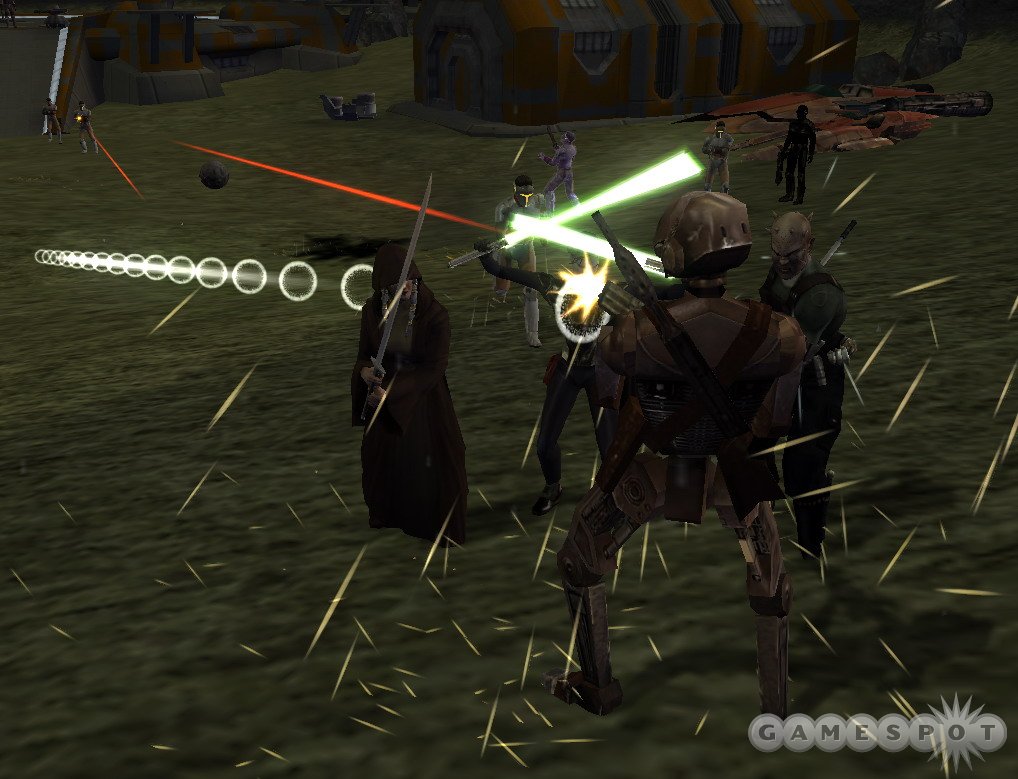
-Critical story points. When writing a story, sometimes I know what certain scenes I want to play out that I think would be cool for the player to experience. And, often, once I have enough of these scenes, it's just a matter of building the story backwards so that everything that comes after and before these scenes complements those critical story points. In any event, it's always good to lay out the points in the story where you really want to throw the player for a loop--but make sure you introduce enough foreshadowing up to those moments to really drive them home.
-The areas the player will travel through. The story should be divided up into easily digestible chunks, both for the players and for the development team. Make a note of the terrain, special art features, and so on that will occur in each area. Often, this list will be brutally shortened by other members of the team--and rightfully so.
Step 21: Chop Up the Big Picture Into Small, Disposable Chunks.
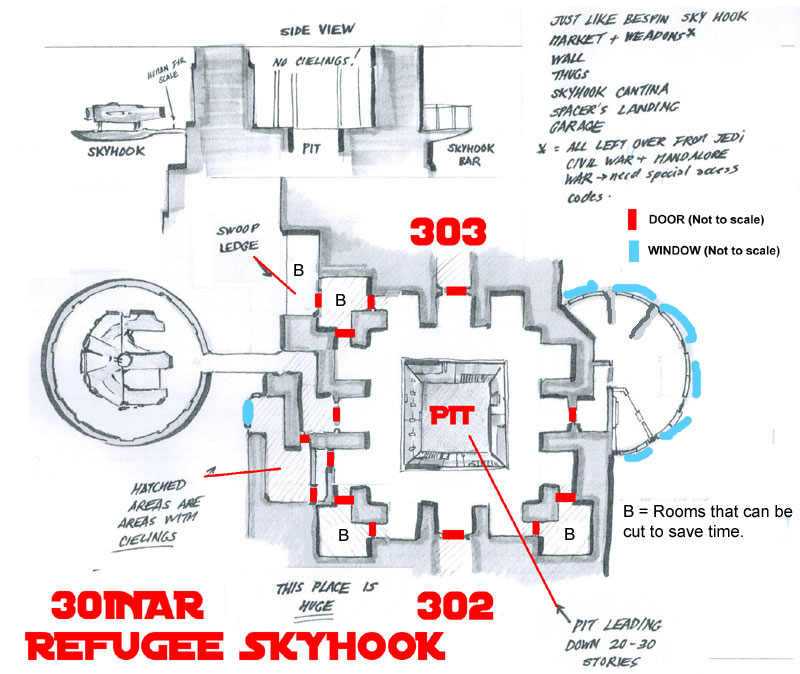
Once you have the big picture, and everyone has weighed in with their opinions and feedback, it's time to chop it up into smaller chunks and pass them out. These chunks become "area design documents" that artists and gameplay programmers use to understand the art assets and coding assets required for each area. We did this in just about every Black Isle role-playing game ever made, and we continued with that method here at Obsidian.
On The Sith Lords, we have a number of designers that each get a section of the story--Michael Chu (Telos), Kevin Saunders (planet to be named, also has his hands full with game balance and item design), John Morgan (planet to be named), Tony Evans (Dxun, Onderon, and others), and Ferret Baudoin (Dxun/Onderon, now promoted to lead on Neverwinter Nights 2). Each of these designers takes a planet (or a section of a planet) and fleshes it out with all the details required for the story. In doing this, each makes resource lists of everything that needs to be put in the location, either from a programming or an art standpoint.
Working with the designers are three gameplay programmers who are responsible for coding cutscenes and other special features into the game to enhance its story. Adam Brennecke (straight out of Digipen in Seattle and into the gaming world), Anthony Davis (who developed the Aldon's Crossing RPG and who used to drive tanks across Germany), and Ben Ma (an intern from UCI who didn't know what he was getting into) are these programmers. Specifically, they take certain sections of the story--usually cinematic sequences--and bring them to life, usually in a manner that's much faster and better than the one that would be employed by a designer.
Step 27: Edit
Once areas start to be fleshed-out, then the most important part of the story comes into play: revision. Sometimes, what may seem like a cool element in an area doc just doesn't come across when you actually put it in the game, so it usually requires revision, revision, tweaking, and more revision until it finally feels right to you and quality assurance.
Final Step: Have an Ending.
There's more to developing stories for RPGs (as well as plenty of war stories), but my fingers are bleeding, and The Sith Lords is calling to be finished. We hope you will enjoy playing it as much as we enjoyed making it with LucasArts.
Got a news tip or want to contact us directly? Email news@gamespot.com
Join the conversation