S.T.A.L.K.E.R.: Shadow of Chernobyl Designer Diary #7
GSC Game World's Anton Bolshakov tells us more about S.T.A.L.K.E.R.'s advanced graphics engine and multiplayer gameplay in the latest edition of our designer diaries.
S.T.A.L.K.E.R.: Shadow of Chernobyl is one of the most visually dazzling games on the horizon, not to mention one of the most ambitious. Ukrainian developer GSC Game World hopes to deliver the world's first-person action survival game where you play as a scavenger in the exclusion zone surrounding the Chernobyl nuclear reactor, the same one that exploded in 1986. However, S.T.A.L.K.E.R. is set after a second fictitious explosion at the reactor; and the resulting radiation from two meltdowns has had a dramatic effect on the animals and the environment surrounding Chernobyl. Strange, mutant creatures, both animal and humanoid, inhabit the zone, and the game features a realistic ecosystem where they all live. Then there are the rival scavengers also hunting for valuable objects, and they may not take kindly to your presence. Finally, there are anomalies to worry about--places where the fabric of reality is tearing apart and very strange things can happen if you stumble into them. In the latest edition of our designer diaries, project leader Anton Bolshakov shares some more information with us about the game's cutting-edge graphics engine, and the new types of multiplayer gameplay that is in store.
Deathmatch for the Next Generation
By Anton BolshakovProject Leader, GSC Game World
Much about the experience of S.T.A.L.K.E.R. is concerned with perfecting reality. In giving the player a believable environment to begin with and then improving that reality to enhance the experience, we have been forced to examine every aspect of our approach. So not only will you find graphical detail and high levels of artificial intelligence, but you will also be subjected to a game that feels and plays "just right." In this diary we will be looking at how the use of technology kick-starts an approach to gameplay.
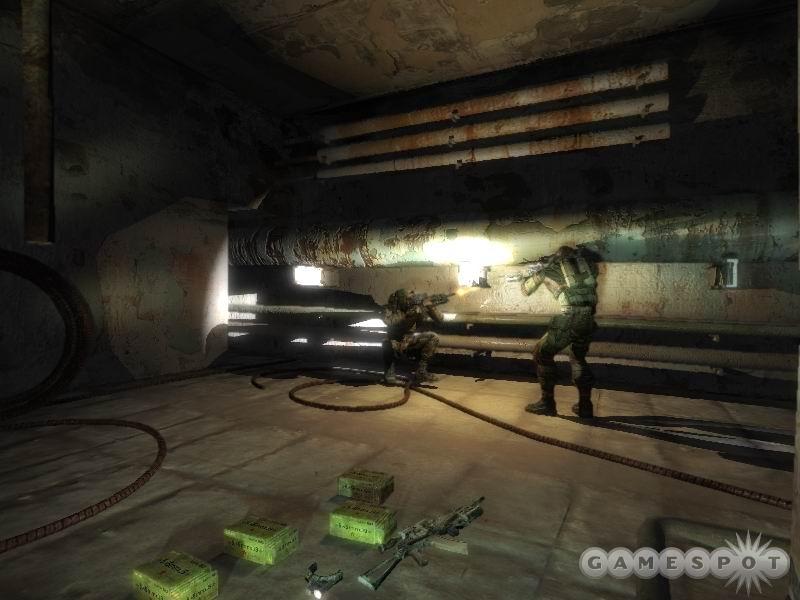
Let's lay the foundations for this. DirectX 9 is the latest, most powerful graphics technology and it offers an amazing array of visual opportunities to the programmer. Keep in mind that we want S.T.A.L.K.E.R to utilize that technology and take it a little bit further. The X-Ray engine utilized in S.T.A.L.K.E.R. combines indoor and outdoor capabilities that are realized in up to 3 million polygons per frame. DirectX 9 is harnessed to such an extent that it will be well into next year before you start seeing other games reproducing these effects. In addition, we have developed a separate renderer that is capable of showing off fully dynamic lighting and truly soft shadows. Effects such as grain filters, color saturation, and image distortion will make for a truly tactile game--especially when we show off the abilities of DirectX 9 bump-mapping.
These effects will greatly enhance the atmospherics and thereby the gameplay of S.T.A.L.K.E.R. Imagine a scenario in which an underground area, poorly lit by a single torch and a handful of stray light beams, is home to a dangerous monster. Feel the pinpricks of fear travel down your spine as a shadow looms above you. It changes the way you play and it affects your senses.
Here is a summary of S.T.A.L.K.E.R.'s DirectX 9 capabilities:
- S.T.A.L.K.E.R. is capable of more than 2 million fully bump-mapped polygons per frame as well as true per-pixel complex light-material interaction.
- By targeting the latest hardware we have been able to base the engine fully on HDR (High Dynamic Range) lighting to increase the quality by addressing unnatural over- or under-exposed visuals found in traditional renderers.
- Natural render of complex materials with proper light interaction, such as rusted metal, natural flora, glass, skin, and so on. In addition, every pixel (not texel) can have its own material with several coefficients.
- The custom-built dedicated renderer is capable of real-time dynamic lighting, soft (physically correct) shadows cast from every object onto every other object, true per-pixel lighting, physical umbra/penumbra computations, and hundreds of lights per frame--all in real-time.
- Frame buffer postprocessing and Photoshop-like effects.
Not Just Capture the Flag
As many of you will know, we have expended a huge amount of energy in building S.T.A.L.K.E.R.'s systems. They make for a great gameplay environment, yet so far we have spoken little about what form that gameplay will take. Where, in other words, is the life of the game? 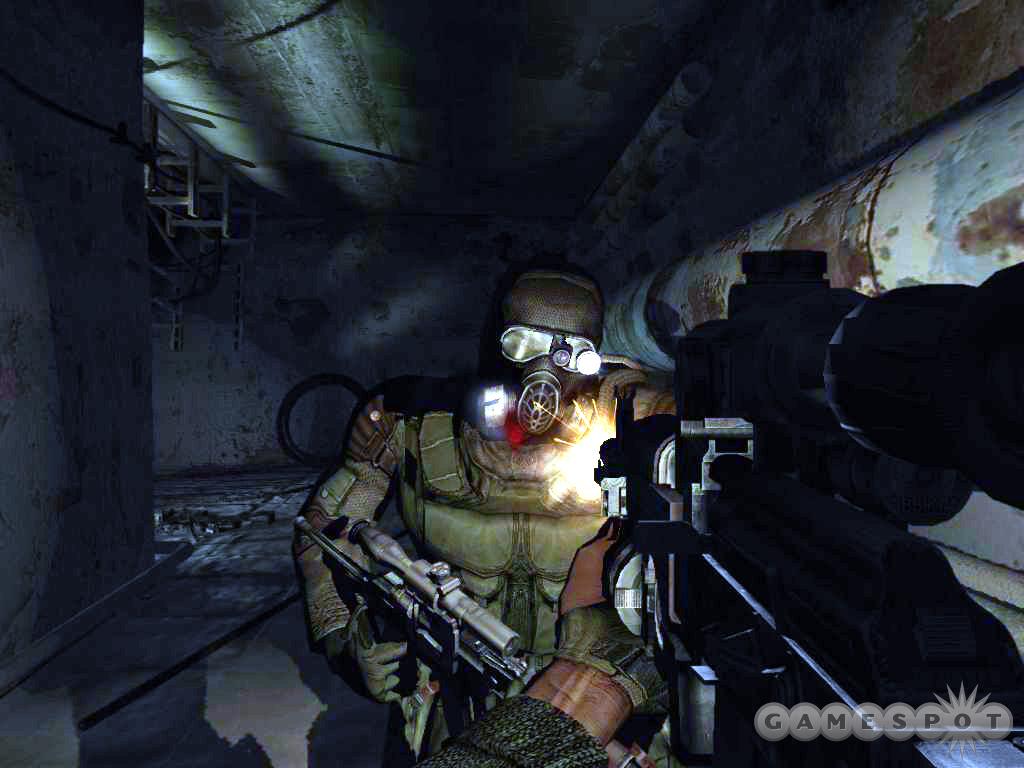
Many people believe that the life of an action shooter is found in its multiplayer capabilities. In our opinion, that's not the complete story--but it does hold a huge amount of importance and so requires an equal amount of attention. Producing an environment conducive to multiplay is an art form in itself and many otherwise fine games have been ruined by its mishandling. Map design must be done in such a way that experienced players can perform skilful moves without detracting from the pleasure of the professional blunderer who loves to rush through a level just for the thrill of it. It must have enough features to stimulate the most jaded among us, and it must be dynamic enough so that we want more and more and more and more.
With this in mind, there are two primary gameplay options to be found in multiplay. These are classic deathmatch and capture the artifact which, before anyone shouts foul, is not merely a rebranding of capture the flag.
In our kill-or-be-killed deathmatch game, the player has the advantage (or disadvantage) of the S.T.A.L.K.E.R. physics system. All the details found in the single-player version are here to be exploited--either by you or your enemy--in order to achieve that one simple goal: kill. We have taken special care in creating specific deathmatch maps that make the most of the high-level environments, and we have also balanced the weapon power so that survival becomes the key aspect. We hope everyone sees this as "deathmatch for the next generation."
In capture the artifact the player will be faced with a multiplayer experience quite different from the one he or she may have been expecting. This form of multiplayer rewards the cautious, more strategic player. Rather than seeing everyone opt for the blind-rush tactics aggressive players use in conventional capture the flag games, we have chosen to implement some of the structures and objectives of the single-player game. Nothing in this world is free, and so to accomplish your goals you must plan properly and stock up on the right equipment. Another tip will be to watch out for the anomalies we have discussed in previous diaries. Just because it is multiplay doesn't mean we are making this any easier.

As mentioned above, the maps have been designed for the specific game types. The maps have been created, not just by GSC, but also by champion map builders Proteam, renowned for its exemplary work with Counter-Strike. Together we have designed, tested, and balanced every inch of the maps to optimize the playing experience.
It is a long and detailed process that will soon be tested to the extreme by a hardcore group of beta testers. With their combined knowledge of multiplayer systems, our game will be put under enough pressure to make all the cracks appear well before release so that you get to play in a perfect reality.
Got a news tip or want to contact us directly? Email news@gamespot.com
Join the conversation