Sound Byte: Meet the Composer Behind BioShock - Garry Schyman
Find out where you can hear Garry Schyman's works performed live and how he got into the video game music business.
 Like many other composers in the video game industry, Garry Schyman has an impressive background in television and film, but he had been working in the video game industry long before projects like BioShock and Dante's Inferno came along. Find out more in the interview below, and sample some of the tracks from the BioShock soundtrack for yourself! If you're in the Los Angeles area next Monday, May 9, there will be a concert performed at California State University Northridge that will feature Garry's works from BioShock, BioShock 2, and Dante's Inferno. Tickets are free, but they will run out quickly! For one lucky Sound Byte reader, we are reserving a couple of tickets for you, so follow gs_soundbyte for the full details.
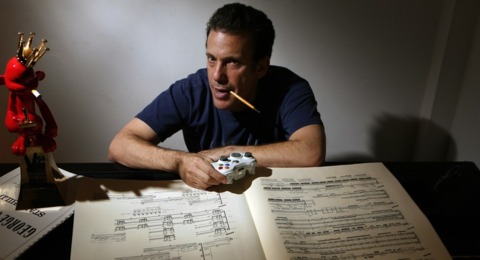
GameSpot: Could you start off with telling us a bit about yourself and your musical background?
Garry Schyman: Born in Chicago, I grew up in Southern California. I graduated from University of Southern California with a degree in music composition. After graduating, I immediately sought work scoring films and television. One of my first assignments was scoring a religious television series for Lutheran TV. It was a half-hour melodrama and was a blast for me because I got to hire a live band (with the budget usually not more than 15 players) and hear my music performed. But truly I was thrilled to get paid to write music and receive royalties.
GS: What was the first instrument you picked up?
Garry Schyman: I started playing the drums when I was in elementary school but eventually lost interest when my mom rented a piano for my brother and I took it over. I loved the instrument, demanded lessons, and began practicing three hours a day!
GS: Is there an instrument you wish you knew how to play?
Garry Schyman: Well I love the string instruments, and I wish I could coax some beauty out of a violin or cello. But at least I get to write for great players and hear them perform my music. I am working with an amazing violist now--Andrew Duckles--who is working on my viola concerto "Zingaro." I love meeting with him and listening to him play the music while discussing my intentions.
GS: What is your fondest memory when it comes to music?
Garry Schyman: Well, it has happened many times, and it's that moment when I come up with something that I really love musically. So it's the part of my compositional process when the idea emerges and I really love what I have discovered. That is a very heady and exciting moment for me. Sometimes I have to get up out of my chair and dance a jig.
GS: How did you get into making music for video games?
Garry Schyman: Funny thing is, I was not seeking it. The opportunities just sort of presented themselves. The first opportunity was in the mid 1990s when a friend of mine was an exec at Philips Interactive. I ended up scoring a few games for him. Because they used their proprietary CDI technology (now defunct), it permitted me to deliver stereo files; therefore I produced one of the first orchestral scores ever for a video game--"Voyeur" in 1994.
Once Philips Interactive went out of business, I left the industry for a number of years as I was busy scoring films and television (a lot of movies for television in that period). Then in 2004 my agent at the time faxed my resume to THQ, and an executive there just happened to see it sitting on the fax machine--she was my girlfriend's roommate in college. It was a lucky fluke that ended up with me scoring Destroy All Humans, which led to all of my current work.
GS: How is it different than composing for film or TV? What do you like/dislike about composing for video games?
Garry Schyman: There are similarities and differences. The most important thing that they share is that music has an emotional impact upon the viewer. Some mystical magical thing happens when you combine visual images and music, and it has a powerful effect on people--essentially that's why composers like me are hired, to bring emotion and mood and magic to their production.
They differ in several respects--implementation being the most obvious. Basically, implementation of music with film was set about 80 years ago and has essentially not changed. The music is composed to locked picture (well not always locked, unfortunately) and is then mixed with the other sound elements and is never changed after that, whereas music for games has many implementation strategies, and new ones are constantly being invented. New technology is permitting the music to become more and more interactive. This affects, to some extent anyways, how the music is composed. Because the player's actions will differ from person to person, we try to make the music as interactive as possible to have the best effect on the player.
With film and television, you compose to picture, and this is quite challenging in its own way. But it also makes it easy on the composer as you have constant feedback as to whether your music is working or not. You also have the form for the music given to you by the action onscreen. With games, you do have in-game films to score, but 90 percent of your work is not done to locked picture of any kind. So depending on how far the developer has gotten on the project, you may or may not have much to go by when you compose other than a verbal or written description of what is happening when the music is playing. Also, you may be asked to write in layers so that different layers can be brought in when something the player does triggers a change in the game (perhaps combat has started etc.). In the best case, the developer will capture gameplay and send you a movie of the gameplay that is occurring when the particular cue you are writing is playing. But this is only a guide, as you are not catching anything with the music because the gameplay will rarely be precisely the same for any two players.
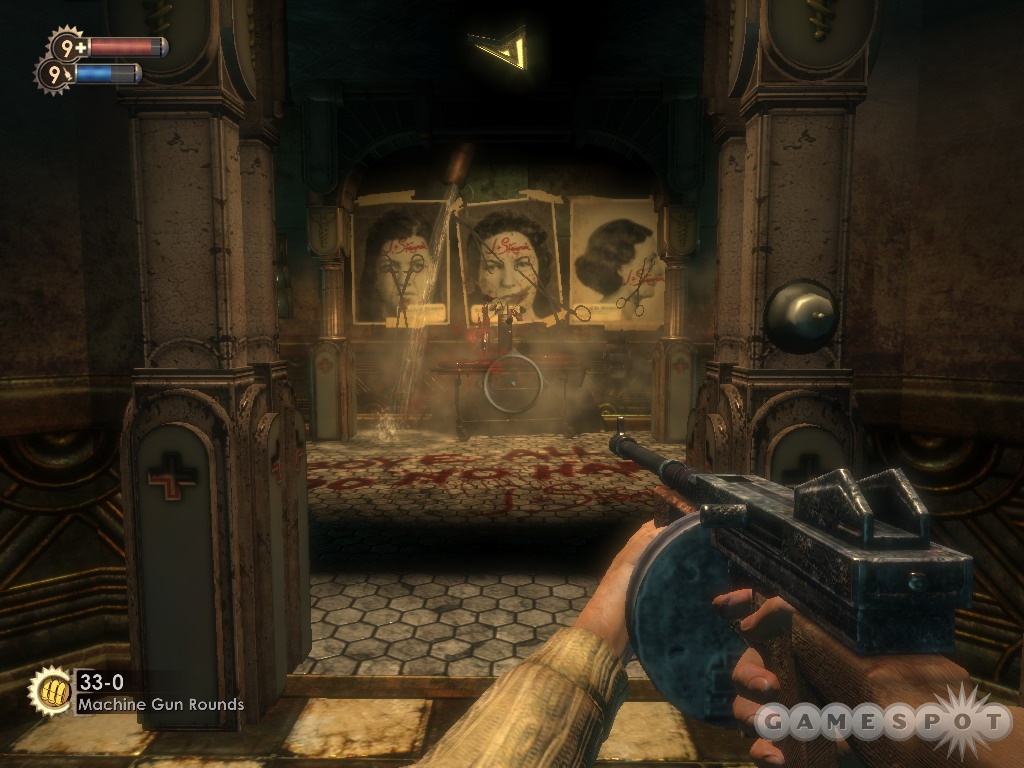
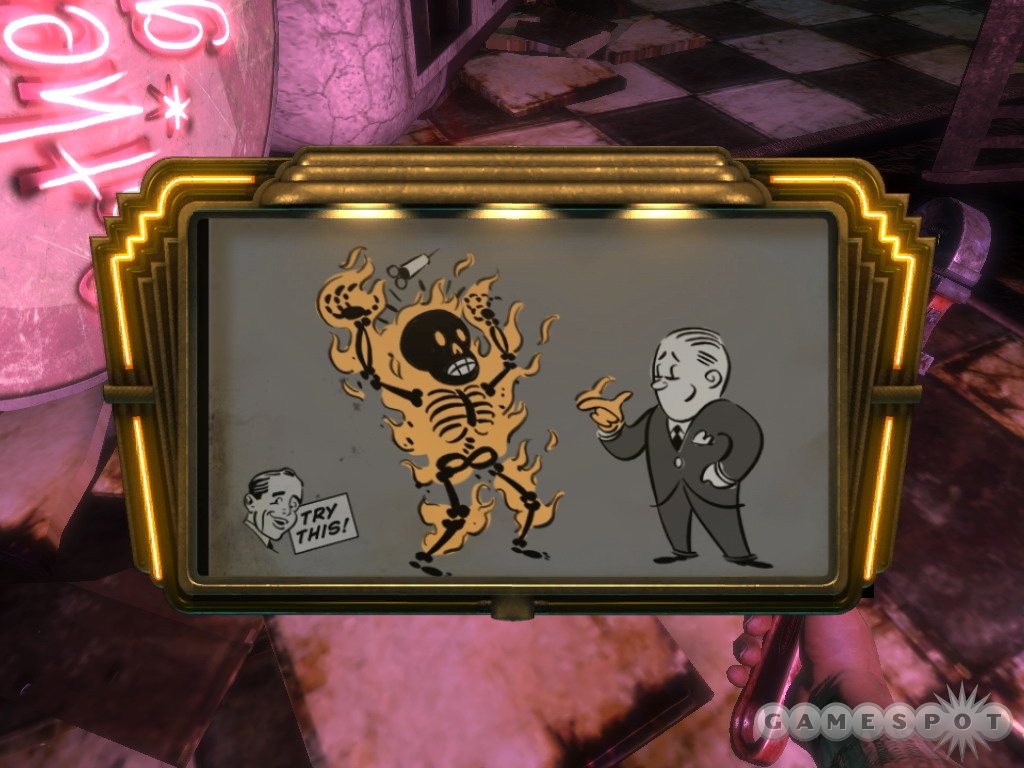
GS: Atmosphere was critical in the success of BioShock, and that was established by the visuals as well as the music, original and licensed. What was it like working on that soundtrack?
Garry Schyman: It really was one of my favorite projects to work on. I was asked to try something really different than people normally expected in a video game score, and I got to experiment and use some really interesting music techniques that I never guessed would find their way into a VG score. So to answer, it was fantastic. Ken Levine really wanted something different and permitted me to do it.
GS: What techniques did you use? How did you integrate them with the gameplay?
Garry Schyman: Well this is a fairly technical question, but to answer, I used four composing techniques. First, the style of the avant-garde music in the early 20th century (a la Bartok, Prokofiev, Alban Berg, etc.). With that I combined the mid and late 20th-century technique called aleatoric, which creates very interesting eerie moods by asking the orchestra to improvise within a narrow set of parameters. In addition, I used a technique called musique concrete, which is a mid 20th-century style which makes use of real-world sounds. Finally, I wrote some fairly sad and poignant music which helped create the sense of tragedy and failure that Rapture represented.
Though all of the techniques existed before I used them, what makes the score unique, in my opinion, is how I combine these styles, which created a very interesting texture for the score.
As far as integrating music into the game, I did not do that. The audio director Emily Ridgway implemented all of the sound and music and it turn out terrifically well.
GS: What were your biggest challenges on that score? Was BioShock 2 much different? Was it easier?
Garry Schyman: Finding a new musical vocabulary is a big challenge. I was given the task of doing something very different, and it took a bit of time and a lot of experimenting to find it. Once I found the style, writing in it was a delight, and most of my cues were accepted on first pass. BioShock 2 was easier in the sense that the style had been established and I didn't have to reinvent the wheel. So it was just delightful work creating that score. Which in some respects surpasses my original in my opinion.
GS: How do you approach individual tracks for a particular game?
Garry Schyman: Well each piece of music is specifically tailored for a part of the game that the audio director has requested. So once I have developed a theme and style for the score, I work off of the direction that the audio director gives me because he or she is working at the developers' studio and they know what is required to help the project.
GS: Where do you see video game music heading into the future?
Garry Schyman: You know I wish I had a crystal ball. I am fairly certain whatever I predict will likely fall short of reality. The future always surprises us. At the moment, the rise of casual games is huge and may impact how many AAA games are made. They tend to have lower budgets and less cinematic-style scores. That said, the rise of these games could really turn into an interesting opportunity for composers. We'll see. If the budgets to produce them stay low, they will not attract the best talent to score them.
I do continue to see major AAA games being produced requiring big scores of all styles.
GS: There's not a lot of recognition for video game music in the mainstream, but that is slowly changing. Why do you think that is?
Garry Schyman: The media people who write the articles have not tended to be gamers. So they are really not tuned into how big they have become. However, there has been a slow but steady recognition of the importance of the genre. For instance, VGs are now eligible for Grammys--that's new and a big step in the right direction.
GS: What other artists in the game music industry do you admire and why?
Garry Schyman: Greg Edmonson is writing terrific stuff for Uncharted. My friend Jason Graves is always writing really interesting music. Laura Karpman is a friend and a wonderful composer.
GS: What kind of music do you listen to now?
Garry Schyman: I am a Mahler geek. I love his music and listen to it a lot. I am really immersed in his 6th symphony at the moment. Gorgeous music. But I also listen to 20th-century composers (Bartok, Stravinsky, Prokofiev, etc.) and of course my fellow contemporary film and game composers' scores.
GS: What are your biggest influences?
Garry Schyman: Mahler, Bartok, Prokofiev, John Williams, Bernard Herrmann, Jerry Goldsmith, Witold Lutoslawski, Dimitri Shostakovich, and on and on. Really, we all stand on the backs of giants who came before us and created wonderful music. Even ethnic music and rock--I would say the only music that doesn't really speak to me is hip-hop and rap.
GS: What projects are you currently working on?
Garry Schyman: Sorry, but I am not at liberty to say. You know how supersecret this industry is!
GS: Any advice for aspiring musicians?
Garry Schyman: You know I teach "Scoring for Video Games" one day a week at USC these days in a program called Scoring for Motion Pictures and Television, and I work with aspiring students all the time. I tell everyone the truth as best as I understand it.
It's really an insane business for someone to choose. Your chances of succeeding are slim. But if you do succeed, it's enormously rewarding--just a fantastic way to make a living. If this is something you have to do and are willing to sacrifice nearly everything, then go for it. But it is a heartbreaker of a career. Sorry, that's the truth. You've got to want it more than anything.
GS: Thank you for your time!
Sound Byte is GameSpot's game music blog, which covers every aspect of music in games, including interviews with top game music composers and discussions of new or classic game soundtracks. Have a question or suggestion? Leave us a comment below or e-mail us at soundbyte@gamespot.com. For a list of previous Sound Byte features, click here. Follow us on Twitter! @gs_soundbyte
Got a news tip or want to contact us directly? Email news@gamespot.com
Join the conversation