Flashback NES
The Nintendo Entertainment System made a huge impact on the video game industry for over a decade. Reminisce with us in our 20 year anniversary flashback feature.

Twenty years ago, when the video game industry was still reeling from what has been commonly referred to as "The Video Game Crash of 1983", a small console called the Nintendo Entertainment System made a big splash.
It was October 18th, 1985, to be precise, when the NES first came to the United States. After successful trial launches in test markets in late 1985, the NES was available nationwide the following year. The system was an undeniable success, and the lack of direct competition helped to propel it and the video game market back into the limelight in both the Eastern and Western regions.
There was no denying that the NES was a phenomenon. By the 1990's one in every three American homes had an NES and video games had become a billion-dollar industry. Nintendo had taken over Saturday morning cartoons, cereal boxes, and the surface of commercial merchandise the world over. Through several different iterations, from the Japanese-exclusive Famicom Disk System to the 90's released top-loading NES, the NES dominated video game sales for nearly a decade.
Though the NES was eventually discontinued, the system lives on in the hearts and homes of many. Children of the 80's almost universally reference the console fondly, and younger video game players are reliving NES games in re-releases on the GBA, mini-games in Animal Crossing, and eventually emulation on the Nintendo Revolution.
Over the next few pages, we relive the heyday of the Nintendo Entertainment System, speak to representatives from Nintendo, list the Top Ten games, and then the Editors' favorites, as well as give you an opportunity to vote on your own. Enjoy and remember, now you're playing with power!
Andy Hartpence
Q. What were the requirements of your job as a gameplay counselor?
I was hired as a gameplay counselor for Nintendo in November of 1997, so actually it's hard to remember! I have a BA in English, but I think the job only required a high school diploma. Believe it or not, hardcore gaming skills were not a prerequisite. All applicants had to show the basic ability to play video games (my group was tested on Super Mario Bros. 3), but it was more important to be able to quickly look up the proper information about a game than it was to actually play the game.
The position required basic computer skills, but I think the most important skill was the ability to speak clearly and to quickly determine what the caller needed. Callers were paying for the service, so I remember feeling the need to answer their questions as quickly as possible.
Q. How did you feel about your job at the time? How do you feel about it now?
When I landed the job, I felt like I had won the lottery. I remember being shocked that, as part of our training program, we were required to play The Legend of Zelda: A Link to the Past. That blew my mind. I remember being very proud of my job, and I was always happy to have a chance to tell someone what I did for a living. I was new to Seattle at the time, and Nintendo's Call Center was a great place to meet some new friends.
Looking back, my job as a gameplay counselor was an excellent way to get my foot in the door at Nintendo. I think I only served as a gameplay counselor for about eight months or so before I took another position within the company. I would have never had a shot at the job if I weren't already working in the Call Center.
Q. Were you tasked with knowing specific games or all of them? What happened if you were unable to help?
As a full-time gameplay counselor, I was required to take calls on every game ever made for all Nintendo systems (at the time, Nintendo 64 was the latest console). That sounds like an impossible task, but Nintendo had an ace up its sleeve. All gameplay counselors at Nintendo had access to an incredible database that contained complete walk-throughs for almost every game.
Whether the caller was playing Eye of the Beholder for the NES or War Gods for the N64, I was one quick search away from all the answers I needed. All I had to do was ask a few questions to quickly narrow down exactly what information the caller was looking for.
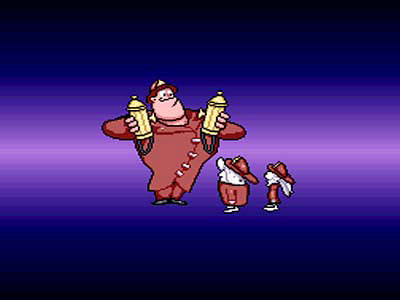
If the caller had a particularly difficult question, or one that was not covered in the database, we would arrange to have a gameplay counselor call them back for free. For example, let's say that I took a call on Ren & Stimpy Show Part II: Fire Dogs for the Super NES. If the caller stumped me, I'd enter their name into the database to arrange for a callback. If there happened to be a Fire Dogs expert on hand at the time, he or she would call the person back with the answer. If not, then anyone with free time would borrow that game from our library and figure out the answer by playing the game.
When new games came out, you could sign up to be an expert for those games. It would then be your job to handle these callbacks. I remember that the first game I was an expert on was GoldenEye 007. I remember being stoked about getting to play that game before it came out.
Q. Where did you work from? What tools were at your disposal?
All gameplay counselors at Nintendo work in the Call Center, located at Nintendo of America headquarters in Redmond, Washington. We were strapped with the awesome database I mentioned earlier, a phone, a headset, and a library of Nintendo Power Magazines.
Q. What kind of calls did you get?
The vast majority of the calls I received were requests for codes. I was working when Diddy Kong Racing was released, and it seemed like I was handing out DKR codes for weeks. There were also a lot of requests for special moves in fighting games, so I gave out plenty of fatality combos.
The other calls came from people stuck in adventure or RPG games. The most common questions were based on The Legend of Zelda: A Link to the Past, which is probably why they made us play the game in training.
Q. Can you tell the story of one (or a few) particularly memorable phone calls you received and how you responded?
The tricky thing about being a gameplay counselor was that frequently the callers didn't know what they needed. For example, I took a ton of calls from people playing A Link to the Past who thought they needed to find the hammer. They saw a few posts that needed pounding, and assumed that they needed something with which to start poundin'. In fact, they usually needed to find the moon pearl. It was sometimes tough convincing callers that they were barking up the wrong tree.

My most memorable calls were those based on either Adventures of Lolo or Adventures of Lolo 2 for the NES. When I asked "What game are you playing?" and the answer included "Lolo," I began to sweat and I knew that I was in for a 20-minute call. Our database contained information on how to solve every level in these action/puzzle games, but the solutions were so complex that we had to cross-reference hand-drawn maps housed in massive three-ring binders. I don't know who made those maps, but it must have been a massive task.
Q. Did you ever want to go on to do anything else?
Once I was in at Nintendo, I knew I wanted to stay here. Despite the vicious commute from Seattle to Redmond, I still look forward to coming to work every day.
Q. What did you do after gameplay counseling?
I spent some time in a group known as "Mario Club," where my job was to evaluate upcoming games. That really was a dream job for a gamer--I just played games and let people know what I thought about them. Eventually, I decided to make a move to the online department, where I started out as an online writer for Nintendo.com.
Currently, I'm the supervisor of web content for Nintendo.com. I helped to coordinate the recent redesign of Nintendo.com, and I work with the staff here to create the editorial plan for the site. I also manage the Nintendo NSider Forums, where I'm known as NOA_Andy. I'm on the forums just about every day, reading what Nintendo fans are talking about and posting news about recent site updates.
I still write game reviews from time to time, and every Friday I publish an editorial on the home page of Nintendo.com. My 10-year anniversary at Nintendo is coming up before too long, and I have to say that it's been a great decade playing games.
Q. What was your favorite original NES game?
Super Mario Bros., no question. I can't resist listing some runners-up: The Legend of Zelda, Ghosts 'N Goblins, Super Mario Bros. 2 and 3, Contra, Metroid, Rush 'N Attack, Ice Hockey, Castlevania, Mike Tyson's Punch Out, R.C. Pro-Am Racing, Dr. Mario, Double Dragon.
Beth Llewelyn
Q. How did the idea for the NES come about? What was the ideology behind it?
The NES was, of course, the US version of the Japanese Famicom system. In Japan, the idea was to capitalize on Nintendo's success with its Game & Watch games and to mass-produce an affordable entertainment machine with new and interesting types of games. In the United States, the goal was to capture the entire consciousness of players and immerse them in the games by bringing arcade-quality games into the home.
Q. What gave you the impression that the NES was (or wasn't) going to catch on in the United States?
We knew that the system was terrific, but convincing retailers and the public was another story. At the time, the once-booming video game business had collapsed. The Famicom did extremely well in Japan. Great games are great games, no matter who is playing them.

Q. What was the target audience for the NES?
The actual target was the whole family. If you look at the first commercial featuring R.O.B. the Robot and the Zapper, it had a mom, dad, and kids.
Q. How did the NES meet or exceed your expectations?
We had a tough but successful launch in New York City, then moved to Los Angeles and really kept pushing. It wasn't until our national launch in the fall of 1986 with Super Mario Bros. as the bundled lead title that things really took off. Once the NES got a foothold and people got drawn into the experience of the games, it became a phenomenon.
Q. Who were the early enthusiasts of the NES (in or outside of the company), and can you tell us any anecdotes?
It was our warehouse workers who had the privilege of playing through the entire library of Famicom games to determine which ones would be appropriate for the US market. Incidentally, one of those guys was Don James, who is now an executive vice president with Nintendo of America.
Q. How quickly did the system catch on?
On an individual basis, we could see that people made a connection with the NES as soon as they got their hands on it. On the large scale, the NES caught on slowly but steadily. We had to prove that a video game system could be a viable product in a tough market. We sold about 50,000 systems for Christmas 1985 in New York as a test market, and then expanded to other major cities before taking the NES national. After a year, we had sold 1 million. After two years, we had sold 3 million. By 1990, one-third of all US homes had an NES system.

Q. Did you have an idea back then about how console games would fare in the future as a result of the NES?
Nintendo demonstrated that if a company could make a compelling game with characters with real personalities, it could buck the industry trend and be successful.
Q. What was your favorite original NES game?
I'd have to go with Duck Hunt and Super Mario Bros.--they are true classics.
Q. What games did you work on for the NES?
To the Earth, Tetris, Star Tropics, Punch Out.
Q. Which were your favorite or least favorite games to work on?
Favorite: Racing games Least favorite: Puzzle games

Q. Do you have any stories of particularly memorable bugs that were left in or taken out of a game?
Back in the day, we sometimes tested on the Famicom. It was the Japanese version of the NES that had a built-in microphone. If you spoke into the microphone, it would play your voice through the TV audio. We always ran a VCR to record the bugs at all times. One day I played a joke on everyone by having the character of a game jump up and down 10 times. I then spoke into the controller and stopped the tape. I told everyone that there was a secret move you could do in the game and the character would speak. I had everyone fooled. We all had a good laugh in the end.
Q. What did you think about your job at the time? How easy or difficult was it?
Back then we did not have as many revisions of hardware. We got to spend a lot more time playing through the games rather than compatibility testing.
Q. What did you think of the NES?
It was awesome for its time.
Q. How long was a game usually in testing?
They could be in testing for as little as one day or as long as one month.
Q. What was a typical bug, and what was the attitude toward bugs at the time?
Doing things out of order and the game locks up. Driving backward on a race track and the game locks up.
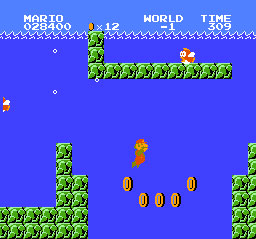
Q. Do you have any stories about people you worked with or interacted with who have gone on to do other things in the game industry?
One person went on to compose music for use in video games, another went on to become a plumber, and another tried to start a rock band.
Q. What was your favorite original NES game (that you didn't work on)?
Mach Rider
Q. What are you doing now?
Working as a technician in product testing.
Robert Crombie
Q. What games did you work on for the NES?
During those years (the same is true even today), the LotCheck Department was responsible for final testing of all games released on a Nintendo platform. That includes Nintendo titles as well as licensee titles. Since there were only 10 of us, everyone had to chip in to finish the job on time.
Q. Which were your favorite or least favorite games to work on?
There were so many. Super Mario Bros. 3 and NES Play Action Football were two of my personal favorites. On the flip side, there were a lot of poorly made games during the NES times. Funny, it always seems easier to remember those games than the fun ones. I think that's because as a tester, you had to work a lot longer and harder on those games. Let's just say playing Where's Waldo and Thomas the Tank Engine for the fiftieth time can be difficult.

Q. Do you have any stories of particularly memorable bugs that were left in or taken out of a game?
Honestly, we were very strict during those days. If we found a problem that would affect the consumers, we failed the game. Games would fail five or six times before being approved. The record was 26. That game was never released as a licensed title. It did come to the market, but never got the Nintendo Quality Seal. The best stories were pranks that went too far. We actually failed a game because the controls were working backward. Like, press up and the player went down, etc. Only later was it discovered that one of the testers took apart the Advantage controller and reversed the joystick of a coworker. We got in trouble, but it was pretty funny.
Q. What did you think about your job at the time? How easy or difficult was it?
I was 20 years old and playing video games for a living. I remember playing a multiplayer game with one of my coworkers, Caesar, and saying, "They are paying us for this!" He just smiled. It wasn't always fun, and the work was often tedious. I think most of us had a pretty good appreciation of just how lucky we were. The hours were long, but the work wasn't overly difficult. Product testing today is much more complicated and technical than it was then.
Q. What did you think of the NES?
I loved the NES. I still do. My first job at Nintendo was repairing consumers' NES decks. I saw how much abuse that machine could take. Everything about the NES was quality--from the processing power it had for its day to how indestructible it was. Anyone who is working in the game industry today owes a lot to that machine and the people who built it. I still have one at home, and I bet a lot of you do, too.
Q. How long was a game usually in testing?
Anywhere from one day to a couple of months. During development, programmers and game designers would play the game along the way or with a small team of testers. Many companies didn't employ testers at all. This was a time when a few programmers could still make a game out of their garage.
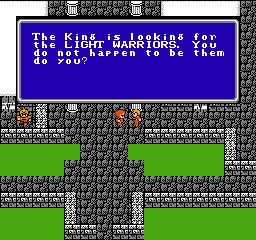
Q. What was a typical bug, and what was the attitude toward bugs at the time?
The most common bug was a lockup. We would receive a game that was supposed to be ready for production and it would lock up halfway through the game. There were also a lot of graphical bugs. We were pretty strict on these types of bugs. We were a lot more lenient on text. I'm sure everybody remembers the poorly localized games from Japan. "Janglish" became an accepted language for some games.
Q. Do you have any stories about people you worked with or interacted with who have gone on to do other things in the game industry?
Members of that group have been pretty successful. One makes make music for video games. Several others have gone on to develop games for companies like EA, Midway, THQ, Acclaim, Microsoft, RedStorm, and Nintendo, of course. One is even president of a large game development company. Three of us still call Nintendo home.
Q. What was your favorite original NES game (that you didn't work on)?
Zelda.
Q. What are you doing now?
I am senior manager of Nintendo's Product Testing Department.
Battletoads

Rash, you have no idea what's in store for you.
Blaster Master
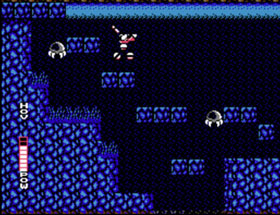
Whoever thought it would be so difficult for a tank to jump in water?
Castlevania
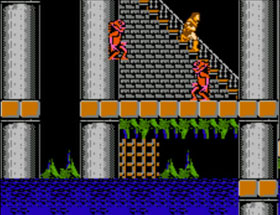
Simon Belmont can destroy both Death and Dracula, but is unable to jump off stairs.
Ghosts 'n Goblins

Ghosts 'n Goblins teaches the meaning of humiliation. If you get hit, you're getting stripped.
Ninja Gaiden
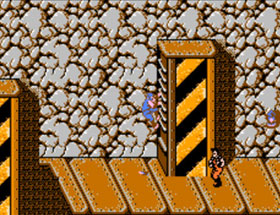
The difficulty of Ninja Gaiden Black could have only been inspired by this too difficult game.
 River City Ransom
Developer: Technos
Publisher: Technos
Release Date: 1990
River City Ransom is one of the finest games ever produced by Technos, the Japanese developer also known for Double Dragon and Super Dodge Ball. Although often imitated, this classic beat-'em-up really stands on its own, at least in terms of gameplay.
The plotline should be fairly familiar, following the trite beat-'em-up staple of the girlfriend that has been kidnapped by gang leaders, and so on. What's more innovative is the speed of the game. Instead of the stately gait of a Haggar or a Jimmy Lee, River City Ransom's Ryan and Alex were capable of outright sprinting, and they could even injure themselves if they banged into a wall too quickly. The fighting engine was similarly nimble, and it allowed you to perform some pretty insane stunts and moves, especially when you upgraded your character. Our favorite? "Javelin Man," which let you pick up your defeated opponents and use their bodies as javelins to throw at any remaining foes!

Although the game was fairly brief, it did incorporate an interesting stat-upgrade system, wherein you could take cash from fallen foes to buy new items and equipment, including books that would teach you new moves, or the incredible Texas Boots, which supercharged your kicking moves. Even better was the bizarre sense of humor embedded in the game. (The whole thing can, in fact, be read as something of a parody of Double Dragon, if you squint at it from just the right angle.) For example, we're pretty sure River City Ransom is the only game that has ever had an enemy respond with a yell of "BARF!" when you hit him in the chest. That alone probably warrants including it on this list.
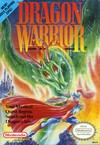 Dragon Warrior
Developer: Enix Corporation
Publisher: Enix Corporation
Release Date: 1989
Fortune smiled upon nerds everywhere in 1989 when they found Enix's Dragon Warrior, also known in Japan as 1986's Dragon Quest. You could argue that this, the first true role-playing game for the NES, cribbed much of its gameplay and many of its concepts from Western role-playing games (as well as from the popular Western tabletop game Dungeons & Dragons). You would probably win that argument. And by today's standards, Dragon Warrior's gameplay is slow, clunky, and unsophisticated, and its graphics are feeble. But for its time, Dragon Warrior offered an epic role-playing adventure like nothing ever seen on a video game console. The game presented all the classic role-playing elements, such as exploring a huge overland world (and numerous dark, underground dungeons), fighting monsters to gain experience levels, and hoarding gold to upgrade your weapons and armor in a single package that was engrossing, addictive, and compelling (at least, at the time).
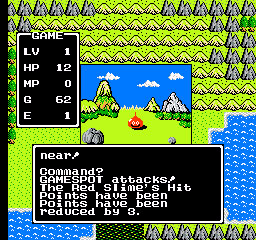
In addition, Dragon Warrior basically pioneered console RPGs as we know them, from healing items, to staying at an inn overnight to heal yourself, to fighting random monster encounters, to the same "first you, then me" turn-based combat system that we still see in console RPGs today. It clearly paved the way for Square's Final Fantasy (which debuted in Japan in 1987, and in the US in 1990), a game that arguably popularized party-based console RPGs. But it was Dragon Warrior that engrossed so many players first, and it was Dragon Warrior that blazed the trail that so many console RPGs would follow in the years to come.
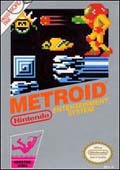 Metroid
Developer: Nintendo
Publisher: Nintendo
Release Date: 1986
Samus Aran first set foot on the desolate planet Zebes back in 1986 on the Nintendo Entertainment System. Even though it was relatively early in the life cycle of the system, the game immediately changed the way we think about, and play, video games.
The first Metroid game is notable for several reasons: it's one of the first games to utilize a password-save system; it's one of the first games to feature both horizontal and vertical scrolling; it's one of the first exploration-based action games; and it has multiple endings, nonlinear gameplay, and a strong female lead character. Chances are you never thought about any of those things when you were first playing the game, though. And that's because Metroid did a fantastic job of developing the bleak, lonely, and confined atmosphere of Zebes, creating one of the more-immersive experiences on the NES.
The game had an unusually somber and mature narrative for a first-party Nintendo product. Prior to Metroid, Nintendo released mostly generic sports games and simple arcade-style action games. Metroid proved that video games could demand more from players than simple memorization and quick reflexes. The game was ahead of its time back in 1986, and now, 20 years later, the Metroid franchise remains on the forefront of innovation in the video game industry.
 Mega Man 2
Developer: Capcom
Publisher: Capcom
Release Date: 1989
It isn't often that a sequel is remembered for being far superior to its predecessor, but that's certainly true of Mega Man 2. Though the original Mega Man defined the formula that developer Capcom has been revisiting for about 20 years, it wasn't until Mega Man 2 that this formula was perfected--with amazing visuals, finely-tuned challenge, and a password save system for good measure, so you didn't have to play it all in one sitting. Many of us who played Mega Man 2 in its heyday would argue that it was the high point both for the Nintendo Entertainment System and for the Mega Man series.
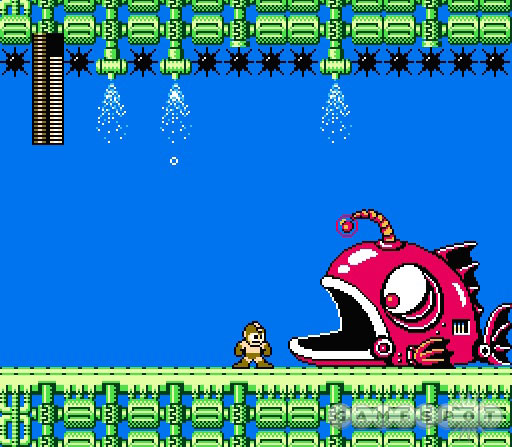
The colorful visual style of Mega Man 2 was certainly one of its main attractions, and the game had an exceptionally good soundtrack as well. If you played the game, then chances are you still vividly remember the intro sequence, in which Mega Man is standing atop a tall skyscraper, uncharacteristically without his helmet. This was an epic opening to an incredible game, filled with vibrantly detailed and creatively imagined stages, tough boss opponents, and lot of clever twists. You could choose to play any of the main stages in any order, but since certain robot bosses were vulnerable to particular weapons, it was really fun to try to discover the best path through the game. Then, once you finally managed to fight all the way to the end, the action was so good that it tempted you to keep coming back.
From a gameplay standpoint, Mega Man 2 didn't necessarily do anything wildly different from the original. However, the game was just a class act from top to bottom--resounding proof that games don't need to be innovative to be amazing, they just need to be really, really well-put-together. Part of what makes the game so memorable is just how much attention to detail must have gone into it. Every stage offered its own unique opponents and challenges, and certain enemies would only appear maybe once or twice in the entire game. As well, the collection of weapons and special abilities you gradually earned transformed Mega Man from the basic run-jump-and-shoot video game hero into a versatile powerhouse. You can tell Mega Man 2 is a true classic simply because you can go back and play it right now, and it's still fun and impressive even after all this time.
 Tecmo Bowl
Developer: Tecmo
Publisher: Tecmo
Release Date: 1990
The beauty of Tecmo Bowl for the NES was its simplicity. While today's NFL and college football games require enough tactical knowledge to make Gen. George S. Patton throw his hands up in resignation, Tecmo Bowl was all about execution. Forget the 3-4 zone blitzes and the double reverse wide-receiver pass; Tecmo Bowl had only four plays on either side of the ball to choose from. This kept the action moving and the onus on the player to find the open receiver or bust through the hole in the offensive line (or stop the other team from doing so, as the case may be).
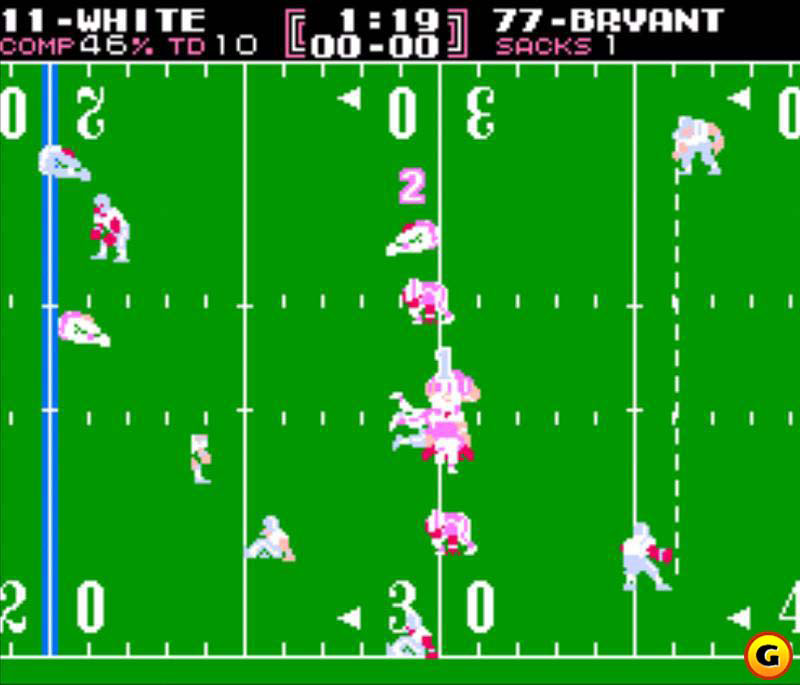
That said, play-calling was important. If you managed to make the perfect defensive call against your opponent, for example, your players would swarm all over the offensive line and blow up the play before it even had a chance to begin. For many folks, it was just the right mixture of football strategy and hard-nosed gridiron action.
Like any sports game, Tecmo Bowl had its flaws. Incomplete passes were hard to come by, as almost any pass you tossed was either caught by your wideout or intercepted by the other team. In addition, stopping field goals and extra points was a relative breeze (at least if you played as the NY Giants). But neither of these flaws took away from the game's exciting, high-scoring thrills.
Tecmo Bowl had another important ace in its pocket--the NFL Players Association license, which allowed Tecmo the use of NFL player names and numbers. Even if the players all looked exactly alike, controlling a legend like Walter Payton or Dexter Manley was undeniably cool and an important predecessor to today's marketing-driven sports gaming industry.
Tecmo Bowl's success on the NES spawned its sequel, the equally classic Super Tecmo Bowl, along with several more games in the Tecmo series. For more on Tecmo Bowl, check out our History of Football feature.
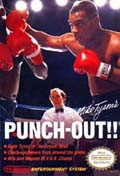 Mike Tyson's Punch-Out
Developer: Nintendo
Publisher: Nintendo
Release Date: 1987
In a time when Mike Tyson hadn't yet marred his name, Nintendo had employed the infamous figure as the lead in one of the most beloved boxing games of all time, Mike Tyson's Punch-Out.
Mike Tyson's Punch-Out was a simple game that put you in the shoes of an up-and-coming boxer by the name of Little Mac. In the one and only game mode available, you simply faced one pugilist after another until you eventually reached the champ, Mike Tyson. What made this game different from previous boxing games outside of the Punch-Out series was its gameplay style, great presentation, and the unique characters.
The gameplay in Mike Tyson's Punch-Out was simple, but yet totally engaging thanks to the different patterns and special techniques each opponent came equipped with. You could throw a total of five punches, including lefts and rights to the head and body, plus a superpunch that you could use after catching your opponent unawares just as he was about to land one of his own. You couldn't really even move around the ring. Instead you simply blocked or slid out of the way of an incoming punch just before it was thrown.
Despite the limited movement and punching options, the game's design made the most of the D pad and buttons of the 8-bit NES thanks to simple-but-different opponents you faced. Each opponent along the way became increasingly more difficult to beat, until you eventually reached Mike Tyson, who could send you to the canvas in one punch.
In the end, with its near-perfect presentation and addictive gameplay, Mike Tyson's Punch-Out proved to be one of the very best NES games.
 Contra
Developer: Konami
Publisher: Konami
Release Date: 1988
Contra, a side-scrolling, two-player shoot-'em-up, defined an entire era of games. Granted, the Nintendo Entertainment System version was arguably just a pale imitation of the arcade classic it was based on, but it nailed the gameplay, even though it didn't look as good. In the game, you (and a friend) played as a commando on a mission to blow the hell out of an alien invasion force. The game's awesome selection of weapons, inventive and exciting levels, and hard-hitting presentation collectively raised the bar for what could be expected of action games. In fact, it wasn't until Contra's release sometime after the Nintendo Entertainment System first debuted that some of us at GameSpot finally took the plunge on the now-legendary console. Who needs Mario and Link when you've got Bill and Lance?

There was just something so viscerally satisfying about that game. One brush with an enemy or a single hit from a bullet meant certain death, and everything just looked like it really hurt. Enemies would pop up from all over, but you could shoot in any direction, so you had much more freedom to maneuver than most other games like it. And the action included both side-scrolling levels as well as these weird behind-the-back stages that forced you to push your way into enemy strongholds. Among other things, Contra packed in a ton of variety. It was a short but deeply challenging game, and long after we managed to fight our way to Red Falcon and crush his alien face, we kept on coming back for more.
Contra is one of the best-known Konami arcade classics, and it's probably the game that popularized what's now often simply called "the code," which was the trick you'd use in those tough Konami games to give yourself 30 lives and thereby make it reasonably possible to beat every level. But, yeah, the code maybe enabled some of the less stalwart among us to brave Red Falcon's forces without breaking a sweat, but the underlying game itself is what was so great. Contra easily stands out as one of the best games among the Nintendo Entertainment System's lineup, and it went on to spawn a few amazing sequels that in turn helped Nintendo's next system to succeed.
 Super Mario Bros. 3
Developer: Nintendo
Publisher: Nintendo
Release Date: 1990
It's hard to imagine a sequel with more hype, anticipation, and expectations than Super Mario Bros. 3. After all, can you think of another game that warranted an entire feature-length movie just to advertise its coming arrival? After the wacky Dallas-esque dream sequence departure of Super Mario 2, fans eagerly anticipated the return to the classic brand of Super Mario gameplay, and few, if any, were disappointed with the end result. Super Mario 3 holds the distinction of not only being one of the most-hyped sequels of all time, but also being one of the rare few that actually met its demand head-on and surpassed even the most ridiculous of expectations.
In Super Mario Bros. 3, everything was like a bigger, better, more challenging version of the original Super Mario Bros. Princess Toadstool has once again been kidnapped by the vile Bowser, and along with that, the seven kings of the Mushroom Kingdom have been transformed into various creatures, and their magical wands have been stolen by Bowser's children. The Bowser kids made their evil debuts in Super Mario 3, and they made up the bosses for each world.
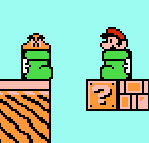
Fundamentally, Super Mario 3 played very much like the first game in the series, but with a host of new power-ups and abilities. Apart from the usual mushrooms and star men, the third one introduced the superleaf, a power-up that would give Mario raccoon ears and a tail, and allow him to fly for decent distances, which in turn let him find secret areas. There were also the frog and tanooki suits (which would let him swim better and turn into an enemy-crushing statue, respectively), and the single greatest power-up in the history of anything ever, kuribo's shoe. Literally a shoe that Mario could fit into, this item was only available in one level, and it would let you traverse any surface and destroy any enemy with a single stomp. So good, yet so fleeting.
Super Mario 3 simply did exactly what it needed to do as a Mario sequel. Nearly every level presented a flawless degree of challenge, the adventure itself was long and varied, the presentation was unmatched for its time, there were tons of hidden secrets to be found, and above all else, it was just an amazing ride from beginning to end. It's hard to imagine where the NES, Mario, or Nintendo's legacy would be without Super Mario 3.
 The Legend of Zelda
Developer: Nintendo
Publisher: Nintendo
Release Date: 1987
The Legend of Zelda has become so synonymous with video games that it's impossible to talk about it seriously without acknowledging that fact. All of the foundations of modern action adventure games and role-playing games owe some tribute to The Legend of Zelda. As the first game to be released in North America with a built-in saving function, Zelda was responsible not only for technical achievements, but also for half of the modern gaming conventions as well. Selectable inventory items, a nonlinear structure, and secrets were all things that Zelda, if it didn't innovate, certainly popularized.
You controlled a young elfin boy named Link with nothing to his name but a shield. Of course eventually you'd collect a sword a boomerang, bombs, a candle, and a number of different objects to help you battle through a number of different environments and a slew of memorable enemies. From the dodongos and like likes until eventually facing the most nefarious of them all, Ganon, you were armed with little more than some basic weaponry, a knowledge of puzzles, hopefully a whole bunch of rupees, and your wits.
From its notorious quotes "It's a secret to everybody" to its memorable music and sound effects (who doesn't remember the sound of Link finding an object and holding it over his head?), The Legend of Zelda has imprinted itself upon at least one whole generation of game players, and likely many more. And its elements, even though recycled in further games in the series, are as widely recognized today as they have ever been. Link, Zelda, the life bar, the triforce...these are all names and icons that have stayed with us since the original game's release, and they will stay with us for a long time to come.
 Super Mario Bros.
Developer: Nintendo
Publisher: Nintendo
Release Date: 1985
Super Mario Bros. can be heralded as the singular game that got the whole ball rolling for the Nintendo Entertainment System, as well as for the platformer genre at large. Plus, it brought us the biggest gaming mascot of all time, Mario. It wasn't Mario's first appearance in a Nintendo-created product--he had appeared in a couple of Donkey Kong games, as well as in the original Mario Bros. for arcades. But in Super Mario Bros., the pint-sized plumber came into his own in his first full-fledged adventure. The premise was simple: Princess Toadstool of the Mushroom Kingdom has been kidnapped by Bowser--a big nasty turtle/dinosaur-looking thing that spits fire--and his many minions. You, as the mustachioed Mario, must hop, skip, and jump your way past Bowser's army, Bowser himself, and rescue the princess fair. It's pretty standard stuff on paper, but once you got into the gameplay, you were as good as hooked.
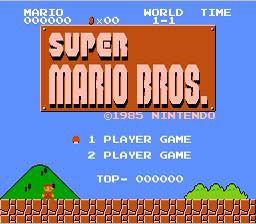
Super Mario Bros. was pretty much the first side-scrolling platformer of any substance or real popularity. Mario's simple abilities to jump around, get bigger by eating mushroom power-ups, throw fire by collecting fire flowers, and go invincible by grabbing star men, were more than enough to traverse the many puzzles of the Mushroom Kingdom. And this most definitely was a puzzling game. Though not terribly difficult, Super Mario Bros. struck a wonderful level of challenge with its various enemies, pitfalls, and occasional secrets (such as the variety of warp pipes scattered about the game). Coupled with its then-impressive graphics and catchy tunes, Super Mario Bros. was just impossible to ignore.
Of course, part of the game's classic status is owed to Nintendo's marketing efforts. As a pack-in game for the vast majority of NES systems sold, it was kind of hard to escape the game, even if you wanted to. Still, people will certainly ignore a pack-in if it's no good (Duck Hunt, anyone?), and in the case of Super Mario Bros., no one ignored it. As one of the first, biggest, and most-groundbreaking NES games of all time, by default, Super Mario Bros. must be considered one of the best.
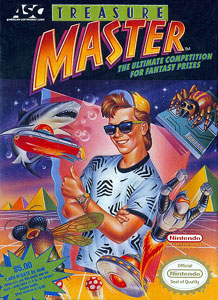
Does it get any more 1980s than this? That kid is wearing a swatch, a biker hat with the bill flipped up, Ray-Ban knockoffs with neon-colored arms, and some kind of art-deco zebra print t-shirt. I bet that kid is a certified Nash board thrasher.
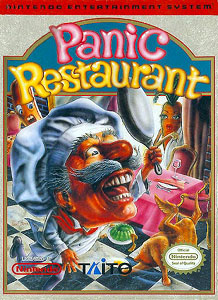
Yeah, I'd probably be panicking a little too if giant, sexy carrots were hiding in the drapes and a chicken which I had already cooked was running around the restaurant. Thankfully, I can just stare at the chef's huge, overly-detailed facial hair and everything is a-ok.

It's obvious but damn if that's not some terrible box art. The series doesn't get much better either. I could totally see the "Horrible progression of Mega Man US box art" being its own feature.

I'm not sure what's worse here: the fact that Fabio is on the cover or the fact that the Acclaim logo is. Hopefully the clouds parting up at the top are making room for God or aliens or whatever to smite this failed romance novel cover off the face of the planet.

With awesome box art like this on its side, it's little surprise that the Mega Man series became so popular. Look out, sissy boomerang guy! That fey motorcycle rider has a laser blaster! I swear, if the real game was like this, phrases like "state-of-the-art" and "high resolution" wouldn't be able to contain its utter radness.

She's gonna take her hair extensions and her green leotards and her sweatband and she's gonna summon a lion from beyond the f****** grave if that's all well and good by you.
-- Brought to you by Ryan Davis and Jeff Gerstmann
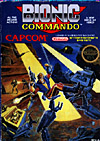 Bionic Commando
Developer: Capcom
Publisher: Capcom
Release Date: 1988
Bionic Commando is one of several games for the Nintendo Entertainment System that was inspired by a popular arcade hit, but it somehow turned out to be even greater than the original--even though the NES couldn't pull off the arcade version's fancy graphics. What this game offered was totally unique physics-based gameplay in addition to a completely wild and futuristic storyline.
Though you moved between missions on sort of a tactical map, the main action resembled a side-scrolling shooter/platformer, like Mega Man or Rush 'n Attack. However, Bionic Commando played completely differently from similar-looking games, as the main character couldn't jump. But he could swing, thanks to his grappling arm, which enabled a lot of tense and exciting sequences where one slightly mistimed grab could spell certain doom...in a fun way.
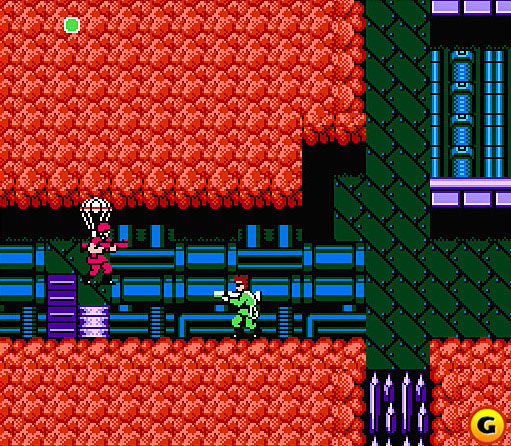
Of course, the real kicker came at the end of the story, when you finally faced off against the generalissimo of the enemy army that you were fighting a one-man battle against. Turns out this guy looked an awful lot like a certain Adolph Hitler, which was shocking enough, but then he proceeded to call you a "damn fool," which--if you're like 9 or 10 years old--is completely crazy. So what do you do? You swing from the rafters, fire a bazooka straight into the cockpit of his helicopter on the way down, and watch as his face explodes into a gory mess. It's a spectacular, unforgettable conclusion to a really cool game. Bionic Commando was actually pretty short, but we're better off having played it. -- Greg Kasavin
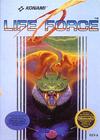 Life Force
Developer: Konami
Publisher: Konami
Release Date: 1987
Perhaps one of the best examples of classic gaming is the scrolling shooter. Some of the earliest entries in this genre established conventions and values that have carried forward to this day: they should be really good-looking games; they should have great music; they should have memorable stages; and they should be really, really hard. Lifeforce did all of these to a very high degree. While it wasn't the start of the Gradius series of games on the Nintendo Entertainment System, it proved to be the most memorable, and the most exemplary.
It just looked fantastic. While so many games at the time had you jumping on the heads of turtles, Lifeforce was busy poking your ship, the Vic Viper, with bloody claws erupting from cell membranes, or burning you to a crisp with tendrils of flames while you dodged phoenixes. Even when you had your ship powered up and armed to the teeth, it wasn't a time to relax--the game was still tough. But the whole time, whether it was the thrill of blasting through a level made completely of fire, dodging a hail of fire from the Moai heads, or just tapping your foot to the hum-worthy soundtrack, Life Force was just really good fun. -- Tyler Winegarner
 Duck Tales
Developer: Capcom
Publisher: Nintendo
Release Date: 1990
For as many completely excellent platformers as the NES had during its many years, few were as surprising as Duck Tales. During the peak of the Disney cartoon series' popularity in 1990, Capcom released Duck Tales, a platformer starring the show's crotchety old tycoon duck, Scrooge McDuck. In the game, Scrooge, like always, is on a quest to become the richest duck in the world. To do that, he had to go treasure hunting through several exotic worlds, like the Amazon, Transylvania, and the moon, as well as best a number of beasts and bad guys in the process.
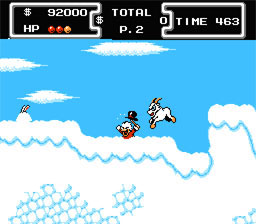
It's a pretty standard setup for a game of this type, but Duck Tales was one of those games that was just plain fun, even if it wasn't the most inspired thing in the world. One thing that was pretty inspired, however, was Scrooge's cane mechanic. Scrooge's only real weapon was his cane, and he could use it in some pretty kooky ways. For one, he could use it like a pogo stick, causing him to bounce all over the level, leaping over pitfalls and stomping on hapless enemies. He could also swing it like a golf club, sending objects and bad guys flying. Being able to hop around the various colorful levels with that cane was quite a lot of fun, even if it did make the game kind of easy.
The NES, like any system, got its fair share of terrible licensed games. But, also like any other system, once in a while a gem like Duck Tales would come along and give you hope that there might be some talented developers behind these games. Duck Tales was as good as any of Capcom's other side-scrollers from that era, and it was a real treat for kids like me who liked to spend their afternoons in Duckburg with the whole McDuck clan. -- Alex Navarro
 Final Fantasy
Developer: Square
Publisher: Nintendo
Release Date: 1990
The sweeping Final Fantasy series took its first steps into stardom with the original game on the NES. While simple by today's standards, the scope of the storytelling was impressive at the time--just imagine a game in which saving the princess is only the first step! Heresy! But Final Fantasy offered a suitably epic heroic tale in a wide world filled with a variety of thematic dungeons, a bunch of non-player characters to talk to, and a whole lot of monsters to sharpen your sword on. The character class system was a great feature, allowing what was an otherwise basic, bland party of four characters to be greatly customizable. Sure, it makes sense to have a balanced party--including a strong fighter, offensive magic, and healing magic--but if you wanted to make a party entirely of squishy white mages, a gaggle of thieves, or a set of four Chuck Norris-esque monks, you could do that as well. That you could then rank up those classes later in the game to even more-powerful forms helped inject further excitement into the mix as matters drew to their conclusion, punctuated by some gnarly boss fights.
Saving the world may be a bit clichéd nowadays, but after winning your way through Final Fantasy, you were proud of your accomplishment. As one of the first role-playing games on the system, Final Fantasy laid the groundwork for many a modern-day RPG fan, and it was definitely one of the best experiences you could have on an NES. -- Bethany Massimilla
 Baseball Stars
Developer: SNK
Publisher: SNK
Release Date: 1989
Baseball Stars may not have had an MLB license, but that didn't change the fact that it was the best baseball game and one of the best sports games to ever come out on the NES. It featured some of the most fun and flexible arcade hardball action of the time. You controlled pitching and hitting in a 2D plane, and all base runners were visible in windows so that you could easily see when you or your opponent was going for a steal. The fielding was crisp and well presented, and the computer knew exactly which fielder to give you control of. Plus, the camera never obscured the path of the ball. You could make diving catches and even climb the outfield wall to rob sluggers of home runs.
What really set the game apart, though, was its depth of customization. Its team- and player-creation features made Baseball Stars a pioneer in the sports genre. You could even rename them to your liking. Today, create-a-team and create-a-player features are considered must-haves for any sports game, but Baseball Stars was the first to do it and get it right. You could build up your own team from scratch and sign promising free agents while you earned money in league games against marquee teams such as the Lovely Ladies and the American Dreams. You could use this money to upgrade your own players' skills until you had an unbeatable lineup.
The only downside is that the battery included in the cartridge for saves was notorious for failing quickly. Mine died about a year after I got the game, which was heartbreaking after all the work I put into re-creating the Oakland A's and their "Bash Brothers." But Baseball Stars was so compelling that I went and bought a second copy. -- Bob Colayco
 Castlevania
Developer: Konami
Publisher: Konami
Release Date: 1987
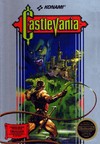
Castlevania didn't make the top 10 NES games, but it was a memorable title for many reasons. But it wasn't necessarily memorable for the story, because it didn't really have one, especially if you didn't bother to read the manual. But who has time for reading when there are things to kill?
The game starts with Simon Belmont entering Dracula's castle armed with a whip. Yes, a whip--apparently Simon's whip is the bane of all evil. And evil you will face by the droves. Simon will fight everything from dogs to Death itself in his quest to defeat Dracula. The game is perfect for fans of the horror genre, with all the zombies, skeletons, bats, ravens, Frankenstein's monster, mummies, and ghosts. And who could forget the pesky medusa heads that moved up and down and always managed to get in your way just as you were jumping over a gap.
Dodging medusa heads was only a part of Castlevania's challenge. The game was just plain hard. It took lots of practice to figure out how the levels, and which secondary weapons, were appropriate for each scenario. The latter half of the game was filled with enemies that moved in eclectic patterns, such as the fleamen and bone dragons. You had to be patient and wait for the right time to move and attack or else you would take hits. By the time you reached the Grim Reaper's level, each hit would take away a quarter of your health, so you would die quickly if you were careless. If you got to Dracula and defeated him, you felt a real sense of accomplishment.
At least you had good music to listen to when you died over and over. Arguably the most memorable aspect of Castlevania was its music. With tunes like "Vampire Killer" and "Heart of Fire", you didn't mind going through the levels time and time again. Hearing remixed music from the first few Castlevania games in today's titles evokes nostalgic feelings. So in a sense, the original Castlevania keeps reviving itself, like Dracula himself. -- Craig Beers
 Battletoads
Developer: Rare
Publisher: Tradewest
Release Date: 1991
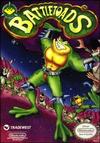
Sure, it's a blatant rip-off of Teenage Mutant Ninja Turtles, but at least it's a really good one. Battletoads was just one of several top-notch NES games from developer Rare. The game came out in 1991, which was fairly late in the life of the NES console. It took full advantage of the NES hardware though, with some of the most detailed stages, fluid animations, and varied level design of any NES game.
Battletoads is a basic beat-'em-up at heart, but there's much more to it than that. You played the game as either Zitz or Rash, who are full-time heroes and part-time brawlers, speeder bike pilots, and even wrecking balls. The hilariously exaggerated animations and crass character design gave all the action a great sense of style and humor on par with the best Saturday morning cartoons.
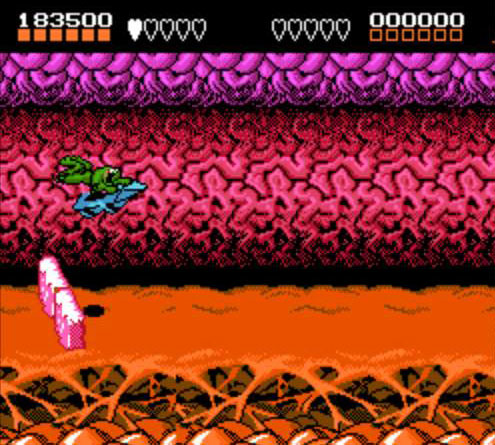
But, as enjoyable and charming as it was, the game was also maddeningly difficult. When you got to the third level and hopped on the speeder bike, your first reaction was "Cool, I get to race speeder bikes!" After your 10th attempt to pass that part of the level, your reaction was more along the lines of, "OK, I'll just get a little help from the old Game Genie." After your 30th attempt, your reaction was something a bit more like, "*%$@!" Come your 50th try, the game had you in tears, which is of course the mark of a truly great video game.
Despite the extreme difficulty, Battletoads is still a great game on so many levels. It manages to do a lot of different things, and it does them right. The series carried on for a few years after its debut, making appearances on the Genesis, SNES, Game Boy, and even the Game Gear. Unfortunately, the franchise seems to have died with the 16-bit era, but the original Battletoads game will always be remembered as one of the best NES games ever made. -- Greg Mueller


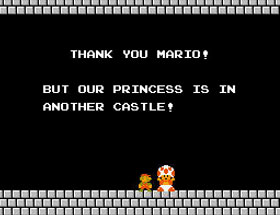

 Faxanadu
Developer: Falcom
Publisher: Hudson
Release Date: 1988
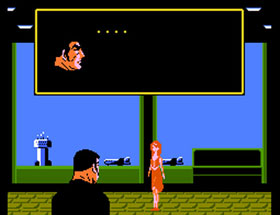
In Faxanadu did Hudson Soft a stately action RPG decree. And so it was! Faxanadu was released in 1988, around the time of the release of Zelda II: The Adventure of Link. Like Adventure of Link (certainly the most unique entry in the Zelda series), Faxanadu was a side-scrolling action RPG, which cast you in the role of a nameless hero who had to travel from his hometown to discover why the wells nearby were drying up. After penetrating the World Tree, you had to fight against ferocious monsters to save the elves from the dwarves, ultimately requiring you to defeat the Evil One, who resided in--what else?--the Evil Fortress. Tolkien this ain't.
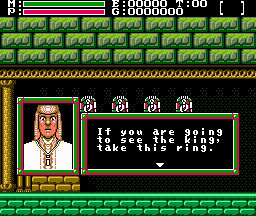
Obviously enough, these were simpler times, and Faxanadu is indeed lovably simplistic compared to the RPGs of today. But it still had plenty of interesting features that propelled you through your adventure in the World Tree, including some crazily animated enemies (the end boss is basically a fleshy skull with two huge legs, for instance), the ability to fly for short distance thanks to the Wing Boots, and a rudimentary leveling system that would gauge your progress and classify you as everything from a novice to a lord. And really, how many games give you the chance to be a Paladin? The answer: one. Faxanadu is the only game, ever, that let you be a Paladin: this is a scientific fact. So if you want to get Paladinny, then you better find a copy of Faxanadu.
So when you kids today go gonzo over your Gods of War, your Fables, and their Lost Chapters, you just remember that once upon a time, we old folks had to play games that only had four weapons and five magic spells, and we liked it that way! -- Matthew Rorie
 Super Mario Bros. 2
Developer: Nintendo
Publisher: Nintendo
Release Date: 1988
As the follow-up to the best-selling, genre-defining Super Mario Bros., Super Mario Bros. 2's expectations were nothing short of astronomical. Rather than try to re-create the magic of the original Super Mario Bros., Nintendo simply sidestepped the issue with Super Mario Bros. 2 by radically departing from the established formula. The results were still incredibly bizarre and supremely entertaining.
Gone were the cozy confines of the Mushroom Kingdom and the oppressive forces of King Koopa. This time around, Mario found himself in the dreamworld of Subcon, which was ruled by a big, nasty toad named Wart. Princess Peach dropped the whole damsel-in-distress shtick for SMB2--in fact, you had the choice to play as Princess Peach, as well as Mario, Luigi, and Toad, each of which handled uniquely.
And so, the quartet ran and jumped their way through Subcon, pulling vegetables and magic potion bottles out of the ground, tossing around strange little men in masks, and fighting flightless, gender-confused birds, giant sunglass-wearing mice, and other oddities. Everyone celebrated once Wart was defeated, until the camera pulled out and revealed one of the best surprise endings in a video game.
The story behind Super Mario Bros. 2 is possibly even stranger than the game itself. Super Mario Bros. 2 started its life in Japan as Doki Doki Panic, an Arabian-themed platformer for the Famicom Disk System. When it was deemed that the Japanese version of Super Mario Bros. 2 (which would later be released on the SNES as Super Mario Bros.: The Lost Levels) was too similar to the original Super Mario Bros., as well as too difficult for American audiences, Nintendo shanghaied Doki Doki Panic, swapping out the four main character sprites and making other additional tweaks. What US players know as Super Mario Bros. 2 would later be released in Japan as Super Mario USA. What's most interesting about the SMB2-DDP connection is that much of the music and characters that originally appeared in Doki Doki Panic have gone on to become canon within the Mushroom Kingdom universe. -- Ryan Davis
 Excitebike
Developer: Nintendo
Publisher: Nintendo
Release Date: 1985
Forget Jeremy McGrath and Ricky Carmichael. For our motocross money, we'll take the little dude in red, white, and black from Excitebike for the NES.
Excitebike's premise was pure and simple--race your red and white motocross bike along five obstacle-laden courses and try to finish as quickly as possible. While there were other competitors on the track with you--the purple guy, the blue guy, and so on--your only real enemy was the clock. Excitebike also had the distinction of being one of the first--if not the first--racing game to include a track creator.

The game's controls were as straightforward as could be. The A and B buttons were used for acceleration, and the A button also gave you a turbo boost for quicker acceleration, at the cost of some engine overheating, however. Spend too long in the red zone and your engine would overheat, so you'd have to take a short breather while it cooled down. The trick then was to modulate the regular acceleration with just enough turbo to keep you going quickly, without killing the engine in the process. Keeping an eye on engine temperature was only a part of turning quick laps in Excitebike. There were also the many jumps on the course to contend with, and Excitebike did a great job of forcing you to stay focused and plan ahead for the upcoming jump. Because you could tilt your bike backward and forward while in midair, it wasn't long before you learned to angle your bike downward when landing on the backside of a hill to maintain your momentum.
Excitebike's track editor was easy to use--you simply picked a track and lined it with whatever kind of obstacles or jumps you wished. You couldn't save your creations, unfortunately, but the track editor definitely gave the game plenty of long-term value. This motocross classic recently found its way to the GBA and even spawned an excellent sequel for the Nintendo 64 in 2000. -- Brian Ekberg
 Stinger
Developer: Konami
Publisher: Konami
Release Date: 1991
Most of the games in Konami's classic Twinbee series were released exclusively on the Famicom Disk System, which unfortunately never made its way to the US. Thankfully, one of those games came out in cartridge form over here, and that game was Stinger. In Stinger, you could only play as two characters cooperatively (instead of three in the Japanese version Moero! Twinbee), but US gamers who didn't have the pleasure of importing had no way to know that. The only thing we knew was that this game rocked.
Combining both side-scrolling and top-down shooting levels, you made your way through countless levels and bosses in an effort to rescue Dr. Cinnamon, your kidnapped creator. Both ships worked together to shoot as many strings of enemies as possible, and then grabbed bonus items off the ground from out of houses or clam shells or other items sure to be storing pick-ups. Of course the pick-ups usually consisted of money or severed bird heads or something that looked like Lucy from Peanuts, but even if we didn't know what they did, they were cool regardless.
But even cooler was that every cloud in the sky stored little magical balls. Shooting the cloud would make one pop out, and then you'd have to sit and juggle the ball while shooting at everything else. The key to juggling was to hit it long enough to get the balls to change color and get yourself some kind of tasty weapon power up in the process. And unlike some other games at the time, additional weapon power ups would stack instead of replace each other. The result of all this action was a purely addictive and complex shooter that relied as much on quick reflexes as any shooter today. -- Carrie Gouskos
 Ninja Gaiden
Developer: Tecmo
Publisher: Tecmo
Release Date: 1989
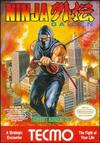
Before Ninja Gaiden, the extent of most games' storylines was as follows: Powerful dude hacks/shoots/whips his way through level after level of thugs/monsters/terrorists in order to save the girl/city/world. If you were lucky, you got to see Simon Belmont walking across a black background while a marker on the map indicated you were making progress. But real exposition? Plot twists? Character development? Please.
Ninja Gaiden was a landmark in left-to-right action games because it had a story, and one that wasn't set in stone at the beginning of the game. Between each level you got to see, in what were for the time, graphically astounding animated cinematic scenes, the exploits of skilled ninja Ryu Hayabusa as he tracked his father's killers, played tag with a fetching secret agent named Irene, and became embroiled in some bizarre cult's quest for world domination through the use of ancient demonic artifacts. See? Way more interesting than "Kill Dracula."
Oh, and Ninja Gaiden was hard with a capital H (also A, R, and D, if this site's editorial standards would allow it). Those who've actually finished the game can count themselves among an elite few. But even if it was damn near impossible in the later levels, it was still tons of fun thanks to all the special abilities Ryu had at his disposal. From typical ninja goodies like throwing stars to more esoteric tricks like the fire wheel and even the ability to cling to most walls, Ninja Gaiden was one of the best-playing action games on the NES. Most gamers these days will first call to mind Itagaki's Xbox masterpiece of the same name, but it would do a great disservice to Tecmo to overlook the original 8-bit game that was well ahead of its time. -- Brad Shoemaker
 Pro Wrestling
Developer: Nintendo
Publisher: Nintendo
Release Date: 1987
Pro Wrestling seems like the perfect game for old nerds to get nostalgic about. It was highly popular at the time (especially considering how, back in 1987, the selection of available NES games was extremely limited), it was relatively easy to play, and it was great for two players...but looking back, it wasn't the amazing game we all thought it was. Or was it? Pro Wrestling had a pretty inconsistent presentation. Some of the wrestling animations looked great for their time, yet pretty much all matches took place in the same ring, and all wrestlers were palette-swaps of each other.
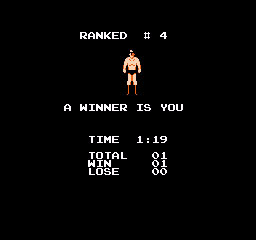
However, the actual in-ring action could be described as that magical childhood NES combination of frantic, brutal, and hilarious. Every wrestler had mostly similar wrestling holds, including the devastating brain-buster grapple, yet they also all had maneuvers that looked ridiculous. The game's rudimentary stamina system modeled how worn out each wrestler was by using two different audio cues that would let you know when you could start pulling out your most powerful maneuvers. It also probably led to many slugfests between players who continued to repeatedly pummel each other long after each was worn down enough to be pinned for the three-count.
What's even more remarkable about the game was just how much personality it had, both intentionally (through having wild, over-the-top characters) and unintentionally (through its infamously broken English). After all, Pro Wrestling has the dubious distinction of being one of the first sports (or "sports entertainment," if you prefer) games ever to include characters based on real-world athletes and to change their appearances and names to avoid lawsuits and licensing fees. As a result, the game featured one of the most memorable character rosters of the early NES days, like the wrestler Star Man (who hailed from "Mexico?") and the mysterious Great Puma, the game's "boss-wrestler" who could use all of the wrestlers' techniques against them. And as a result, Pro Wrestling is a game that most NES fans remember fondly to this day. -- Andrew Park
 Duck Hunt
Developer: Nintendo
Publisher: Nintendo
Release Date: 1986
Yeah, I'll get hazed a bit for this choice, but it's hard to think about the NES without thinking about Duck Hunt, which was pretty much the only notable game that used the nifty light gun accessory for the NES. Sure there was Hogan's Alley and that Gumshoe game, but Duck Hunt was the one that really made sense. Plus, the pack-in deal was pretty sweet.
To a young lad in the mid 80's, light gun technology was nothing less than magic. You shot this plastic gun at the screen, and the shots registered! Amazing! And since many NESs only came with Mario Bros. and Duck Hunt, (and NES games were expensive), young players had a lot of spare time to spend hours sniping away happily. You could set up a table and get in a prone sniper position. You could try shooting left-handed. You could waste thousands of virtual bullets taking down ducks left and right. (You could never take out that dog, though... *sigh*.) It's strange to think about it, but it'd probably be pretty tough to make a Duck Hunt today. Giving a kid a light gun, even a plastic light gun, would probably bring the wrath of some group down on the game maker. Even in the late years of the NES, the guns were made orange, so that nobody would confuse them for a real weapon. Then there's the animal welfare crowd worried about teaching kids to hunt. But for that short magic window in the 1980s, Duck Hunt was the bomb. -- Jason Ocampo
 Rygar
Rygar
Developer: Tecmo
Publisher: Tecmo
Release Date: 1987
Along with Tecmo Bowl and Ninja Gaiden, Rygar is another NES game from Tecmo that is based on an arcade game, but is actually an entirely different game. And unlike the tragedy that was Double Dragon, Rygar is actually better than the arcade game bearing the same name.
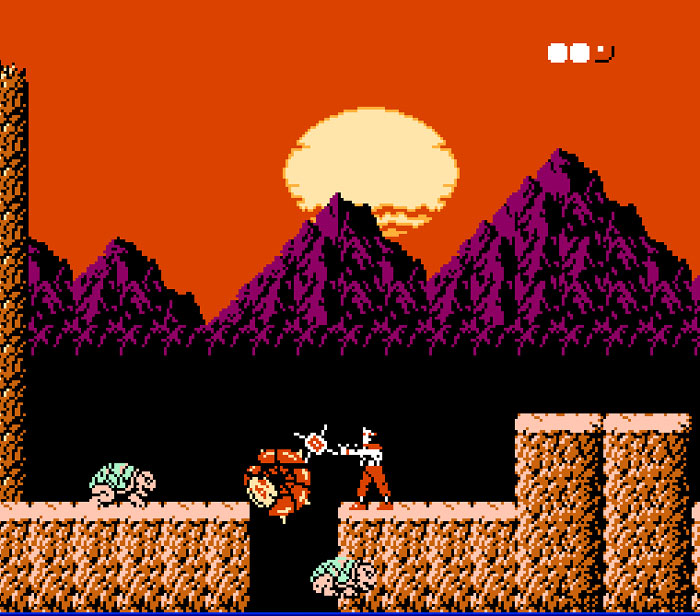
Instead of being a dull side-scroller, Rygar was a full-blown adventure game with both a top-down and a side-scrolling perspective. The game put you in the shoes of the oversized yo-yo-wielding Rygar as he rose from his grave to defeat the evil Ligar and his animal minions in order to... Well, OK, like many games of the era, the story is never really fully explained. Let's just say that you had to save the world and we'll leave it at that. But the action and adventure of Rygar were well mixed, and it made for an exciting game overall.
Despite Rygar being a lengthy adventure for its time, the game didn't have any sort of password or battery-backup system. Yep, you needed to play it from start to finish in one sitting. Thankfully, death wasn't so harsh, as restarts dropped you back into the same area you were in before you died. Much like Metroid, Rygar took place in an open world, though the game locked away areas by requiring you to constantly fetch items, like a grappling hook or a crossbow, in order to proceed past different obstacles. It was deeper than most games of the era, it looked great, and it had a pretty catchy soundtrack. That's really what makes Rygar stand out after all this time. -- Jeff Gerstmann
Now that you've read what we believe are the top 10 NES games of all time, it's your turn to tell us what you think. There have been hundreds of NES games, and so many of them have made their mark on the industry. But we want you to pick the game that you think is most deserving of recognition.
Find your game in the pull-down menu below. If it's not there, use the allotted space to write-in the title of your favorite NES game. Write a good, succinct (100 words or less) summary of why you think your game deserves to be recognized, and maybe we'll publish your entry in the upcoming Readers' Choice edition of Top Ten NES Games of All Time.
Got a news tip or want to contact us directly? Email news@gamespot.com
Join the conversation