Heartbreakers
We asked some of the editors to recall what games they were looking forward to that will never see the light of day, and to share the heartbreaking moment when they discovered that their precious project had been demolished.
Inevitably, the cancellation of a game is bad for someone, whether it's the involved developer or the gamers who'll never get the chance to play the potential masterpiece. Over the years, many games have been turned into vaporware, for reasons ranging from the studio's demise to nefarious legalese to disinterest in the license. Not everything qualifies as a heartbreaker, however. Some games fade off into oblivion and we never hear a peep about them, such as Team Fortress 2. Others are "vaporware"--games that everyone talks about, but never seem to actually get made, like Duke Nukem Forever. It takes a special kind of game to be shelved completely, whether it's almost done or barely conceptualized.
Because there are hundreds of games that have been canceled in the industry's history, this is by no means a definitive list. We asked some of the editors to recall what games they were looking forward to that will never see the light of day, and to share the heartbreaking moment when they discovered that their precious project had been demolished. For some there's still hope, while others redefine "dead in the water." But all of these games in one way or another have been real heartbreakers.
Black Isle's Torn
By Andrew Park
When I was discussing the idea of a feature about heartbreaking game cancellations with Carrie, Black Isle's Torn was the first game I thought of, and maybe not even so much for the game itself (I'll explain why in a bit). Torn was supposed to have been an "alternate-medieval" fantasy game that used the "SPECIAL" character development system that the studio first used in its classic 1997 role-playing game, Fallout. You would have gone on an adventure through a fantastic world populated by the elves and dwarves you might expect from this kind of game, but these characters would have had different motivations and roles; in fact, an entire alternate creation theory had been devised for the world.
Black Isle had already made a name for itself with Fallout and Planescape: Torment, two games I consider to be among the greatest RPGs of all time (and among the greatest games of any kind, for that matter). So, I was looking forward to another great, and somewhat offbeat, role-playing game that tweaked the traditional fantasy role-playing offered by the likes of (also great) games such as Baldur's Gate II and Might and Magic VII. Also, Torn would have been the first 3D polygonal graphics game that Black Isle had ever created. The studio licensed new technology to make it happen.
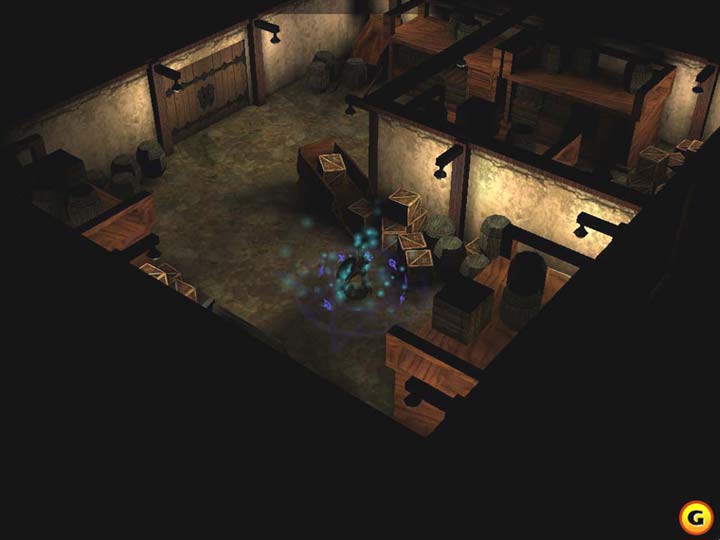
But it didn't happen. In fact, trying to use the new engine was just one of the problems in the game's troubled development history. GameSpot contributor Desslock helped chronicle the gory details in our previous Gaming Graveyard feature. But then sometime later, Black Isle worked with developer Reflexive Entertainment to produce another role-playing game called Lionheart: Legacy of the Crusader, which also took place in an alternate-fantasy universe (this one was a revised version of Renaissance Europe where sorcery actually existed), which also used the SPECIAL system. Problem solved, right? As it turns out, that game didn't quite live up to its legacy. But more importantly, the cancellation of Torn was really the first open, public sign of the trouble that had been brewing at Black Isle for some time--trouble that would lead to the studio's eventual closure, which was the real heartbreaker for RPG fans.
Like I mentioned, Black Isle was part of parent company Interplay, a publisher that had some very serious problems around that time, including takeover bids from now-bankrupt French publisher Titus, a lawsuit with longtime collaborator BioWare, and later, problems with its more-recent publishing partner, VU Games. As it turns out, the developer's devoted fans kept close watch over Black Isle and Interplay's day-to-day goings-on and speculated daily on both companies' well-being and future on the developer's now-defunct message boards. I was one of them (and if this actually means anything, those were the first, and only, message boards on the Web, other than GameSpot's official forums, on which I've posted regularly as an actual GameSpot editor).
Yes, I was there with the fans, so I watched Interplay tumble into oblivion (or at least, become the shambling zombie that barely continues to exist today, at least in name) and drag Black Isle down with it. And I watched this happen from both the perspective of a member of the fan community, and also as a writer in the game industry who covered major news developments, something I'm not sure many others did. I watched as the development team gave sporadic and weary status reports on the forums about the studio's last game, Icewind Dale II, while news reports identified the continuing departures of the company's key talent. (To be fair, three of the key creative forces behind Fallout and Fallout 2 had already left the studio years before its worst troubles and went on to found Troika Games, another sadly deceased developer.) Finally, everyone was gone and had jumped ship to create a new studio, Obsidian Entertainment.

They say every cloud has a silver lining, and Obsidian's was its first project: the fairly successful RPG sequel Star Wars: Knights of the Old Republic II--an intriguing game with some issues. Though to be fair, most of those issues seemed technical in nature and suggested that not enough time had been allotted for the project. The studio is also working on the sequel to Neverwinter Nights, and hopefully this one will work out better than the last. Thankfully, it seems like neither of the studio's projects will be another harbinger of doom like Torn. The team is now free from the shadow of Interplay and is working on a game with familiar technology, as well as with the Dungeons & Dragons universe, which the developers know like the backs of their hands by now. All it took was a few years, a lot of pain and suffering on the part of the developers, and more than a few canceled projects...one of which you'll read about elsewhere in this feature, if you haven't already.
Grand Prix 4 (Xbox)
By Brian Ekberg
Throughout the mid- to late-1990s, the name "Geoff Crammond" gave the hardcore PC racing set chills. It was Crammond and his singular line of Grand Prix racing games that, in many ways, set the standard for an entire generation of virtual gearheads. Grand Prix II, released in 1996, is still regarded as one of the finest Formula One games of all time, with outstanding feel and realistic physics matched only by Papyrus' Grand Prix Legends, released two years after GP2. The next two Crammond-helmed racing games that followed, Grand Prix 3 and Geoff Crammond's Grand Prix 4, continued the series' solid tradition, even if each game successively bent under the weight of fan expectations and Crammond's own high standards.

Infogrames' 2002 announcement of a North American version of Grand Prix 4 was great news. The notice of a concurrently developed Xbox version was even better. By releasing the long-standing PC game on the fledgling Xbox console, it seemed like the ideal opportunity for console racing buffs to finally get their hands on what had been, at least in America, an underground hit. Grand Prix 4 for the Xbox was set to be a precise re-creation of the 2001 Formula One season, including accurate models of all 17 tracks that included motion-capture animations, five gameplay modes, and, of course, the same Crammond-helmed focus on realism and artificial intelligence. It was a bit too early for Xbox Live play, unfortunately, as the Xbox version was only set to allow a two-player split-screen multiplayer mode, while PC players could enjoy racing against up to seven other racers on a LAN.
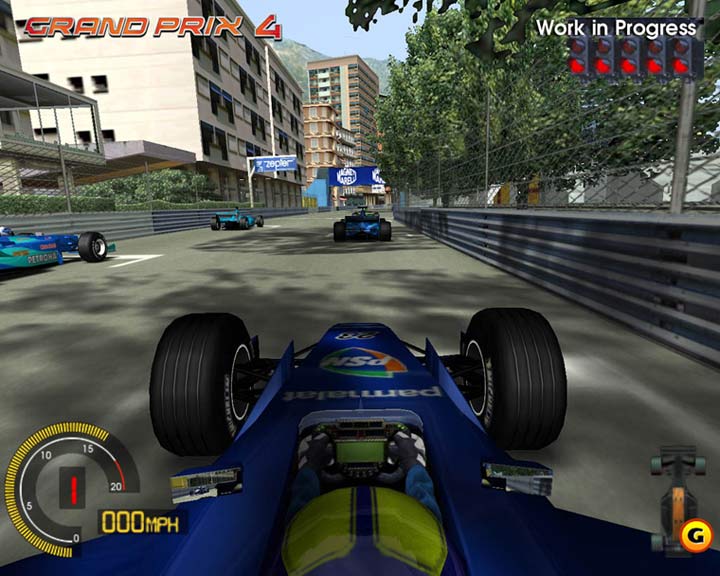
As money is the ultimate decision-maker in the video game business, however, the Xbox version of Grand Prix 4 was not to be. Just four months after its announcement, MicroProse, the UK-based development studio responsible for both games, was shuttered by Infogrames. Just a few days later, when word of the official cancellation of Grand Prix 4 for the Xbox came, few were surprised. But for the handful of folks in America that care about Formula One and its games, it was sad news indeed.
The Bright SideThe Formula One scene on the Xbox has been virtually nonexistent since GP4's cancellation, but fortunately for fans of Bill Gates' console, it was just a small bump in the road. Since 2002, the Xbox has become arguably the best racing platform in gaming today. The TOCA and Colin McRae series have been going strong over a couple of iterations; THQ's MotoGP franchise continues to astound; EA's Burnout series is bolstered by blistering Xbox Live play; and Microsoft's own Forza Motosport should be a major player for the best driving game of 2005. With the next version of Project Gotham Racing set to debut on the Xbox 360, the future is bright indeed for console speed freaks.
Dreamland Chronicles: Freedom Ridge
When you look back on the history of Mythos Games, the number of titles that it has published isn't particularly impressive--only four or five games ever came out under its byline. However, two of these titles are especially notable, as they are from the X-Com family of isometric, turn-based strategy games. X-Com: UFO Defense caused many computer gamers, including me, to pull more than one all-nighter in front of a monitor as we attempted to blast alien ships from the skies and prevent the martians from taking over our cities. X-Com: Apocalypse was a somewhat less-successful venture, but it managed to update the feel of the X-Com universe by adapting a retro, sci-fi '50s look while leaving most of the addictive gameplay intact.
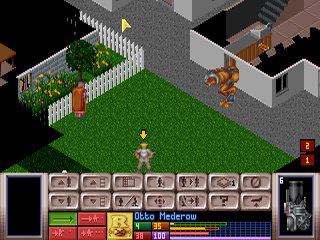
All of the X-Com strategy games were pretty addictive, in fact, leaving aside the progressively more embarrassing attempts by Microprose and Atari to cash in on the franchise with such ill-advised titles as X-Com: Interceptor, X-Com: Enforcer, and X-Com: First Alien Invasion. After cutting its ties with its former publishers, however, Mythos decided to follow up its classic games with a spiritual successor to X-Com, in the form of Dreamland Chronicles: Freedom Ridge.
Like the X-Com games, Dreamland Chronicles was set to be a turn-based strategy game, but one that would appear on both the PC and PS2. Set after a 70-day war with alien invaders, humans would find themselves on the brink of extinction, having to change their tactics to guerilla warfare in an attempt to survive, let alone repel the aliens. The early screenshots looked very nice, although in retrospect they were likely artist's conceptions and renders rather than representations of how the game would have actually wound up looking. Unfortunately, after being announced in 2000 for a holiday 2000 release date, then slipping to February 2001, the game was canceled by Mythos Games themselves.
Admittedly, the disappointment this cancellation engendered was, at least to me, a result mostly of Mythos' track record. The prospect of a new turn-based strategy game from the designers of X-Com was enough to get any PC gamer's blood flowing. The story got worse, though, as the Dreamland Chronicles assets were purchased by another publisher, and were eventually reworked by Altar Interactive into the decidedly mediocre UFO: Aftermath, which wasn't even turn-based, although it did have a really pretty 3D model of the earth.
The Bright SideWhether or not Dreamland Chronicles would've been a good game or not is up in the air, but based on their track record, and the long-standing drought of decent turn-based strategy titles, I was hoping for something special from Mythos. Regardless, the turn-based strategy genre isn't completely dead, and people who played X-Com back in the day do have some games to check out or look forward to. First up, you may want to check out Laser Squad Nemesis from Codo Games, which was cofounded by Julian Gollop, one of the original creators of X-Com. While it has a bit more of a cartoonish look than X-Com did, it still retains the spirit of the original game and is a worthy substitute, even if it doesn't pack the graphical punch of many current PC games (because it's exclusively 2D in nature).
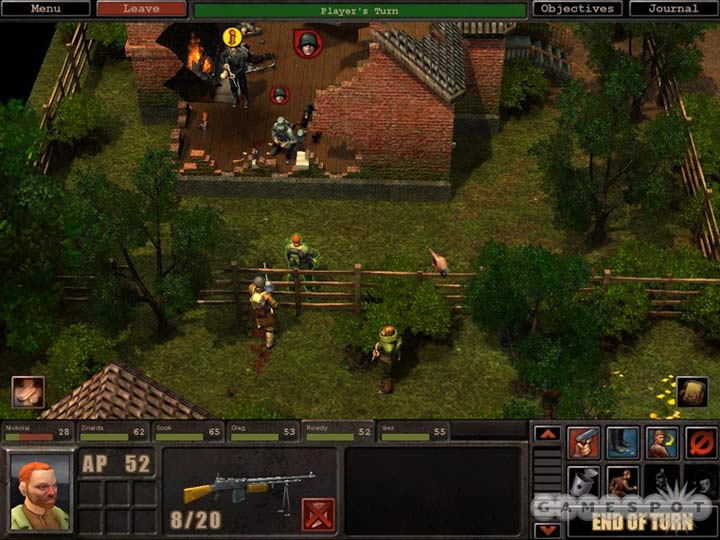
If you're looking for something that'll stress your new gaming rig, though, then we heartily recommend that you track down a copy of Silent Storm, an alternate historical look at WWII. With a superb graphical engine that includes fully destructible buildings, Silent Storm and its expansion pack, Sentinels, should let you relive some of the tense, "do-I-have-enough-action-points?" moments that came from the original X-Com. What's more, Hammer and Sickle, an RPG-based mod for Silent Storm that has been adapted into a retail product, looks like it may be another successful entry into the turn-based strategy genre.
If you happen to have a GBA, then you might also want to check out Rebelstar: Tactical Command, which is also by Codo Games. This simplified strategy game definitely relies heavily on the familiar X-Com mechanics, although the gray alien enemies are rather more cute than menacing. Still, it looks like it'll be a great way to get your tactical combat kicks when you're on the road. It hits store shelves in early September.
The Lost
One of the things I love most in the world is Dante's The Divine Comedy (particularly The Inferno) and all things pertaining to the sins of the flesh that we mortals are destined to commit. I'm not morbid; I swear it. When I first heard news of Irrational Games' The Lost, my immediate thought was that they had stolen my idea. My second thought was that this game was going to be damn good.
The story is of Amanda, a single working mother whose waitress outfit makes her appear a little bit like Alice in Wonderland, but whose rabbit hole leads to the nine circles of hell and not a tea party. She's seeking to find the soul of her recently deceased 4-year-old daughter that got lost en route to heaven and ended up in hell. Like Dante before her, she is guided by the poet Virgil, although he plays a much more sinister role in this telling of the story. Being merely mortal, Amanda is no serious threat to the monsters of hell, but she is capable of harnessing different personalities in the form of the female warrior, Instinct, the hooded thief, Shadow, and the magician, Corruption. With these characters in tow, Amanda can solve the puzzles (of course there would be lock/key quests in hell), defeat demons of all sorts, and ultimately find her daughter.
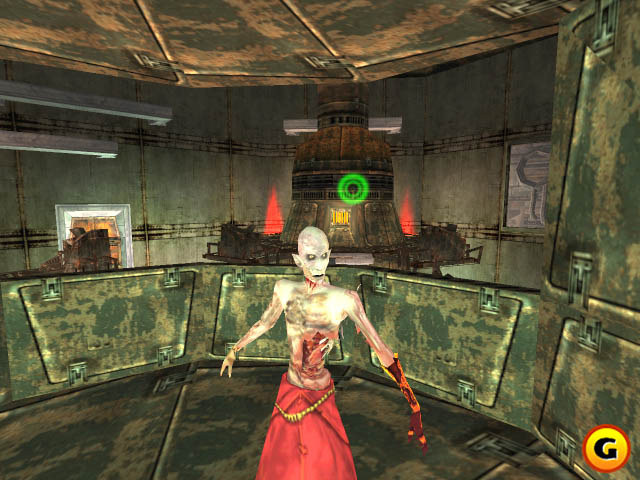
Only there was no rescue for her daughter, Beatrice, because the game was canceled quietly a few years ago. Oh what a demise! Beatrice owes her fate to a string of bad luck. When the original graphics engine was scrapped in favor of a new one, The Lost was delayed but still on track for an eventual release. Then Crave picked up publishing rights, decided to shift its focus to releasing budget titles, and The Lost was never heard from again. Rumors surrounding the game ranged from it being almost done to it being an impossible task. However, with very little publicity surrounding the game, we may never know.
The Bright SideAlthough there's little to be said for whether or not The Lost can be found, there's no shortage of video games containing morbid material. Just ask Hillary Clinton. Honestly, the bright side to this one is not so bright, because there simply aren't enough games coming out based on Dante's Inferno, or any of the Commedia for that matter. We'd even settle for a game based on a book that was influenced by The Inferno, you know something by Joyce or Beckett. Come on guys, give us a bone here! Movies steal from books all the time, so haven't you learned where to get some of the greatest source material?
Ultima X: Odyssey
By Greg Kasavin
When I was growing up I played all the games I could get my hands on. There were games, and then there was Ultima. I played through Ultima II at the tender age of 8, but it wasn't until a year or two later when I was playing Ultima IV and Ultima V that I realized how absolutely, astonishingly incredible this series was. Having to interact with the games' believable characters, explore its incredibly huge worlds, and brave its morally complex decisions was like no other gaming experience I've ever had. So I give the Ultima games the utmost credit for pushing my love of games deeply into creepy stalker-infatuation territory.
My devotion to Ultima continued all the way up until the infamous Ultima IX: Ascension. I had a brief stint with Ultima Online, but since it deemphasized the storytelling and morality aspects of the series, I never really got into it. But when Electronic Arts announced Ultima X: Odyssey in the summer of 2003, I was really excited. At last, Ultima was making a comeback! Granted, that comeback was hot on the heels of the cancellation of Ultima Worlds Online: Origin, a massively multiplayer "steampunk" take on the Ultima universe that never saw the light of day. But it was great to see EA give the Ultima series another shot.
Needless to say I wasn't the only Ultima fan excited by the announcement, though many of us were concerned by the game's comical-looking art style--a definite departure from the serious tone the series is known for. Nevertheless, Ultima X: Odyssey seemed like it had a lot of good ideas going for it, including a virtue system inspired by its classic predecessors, as well as lots of interface and gameplay tweaks designed to streamline the experience.
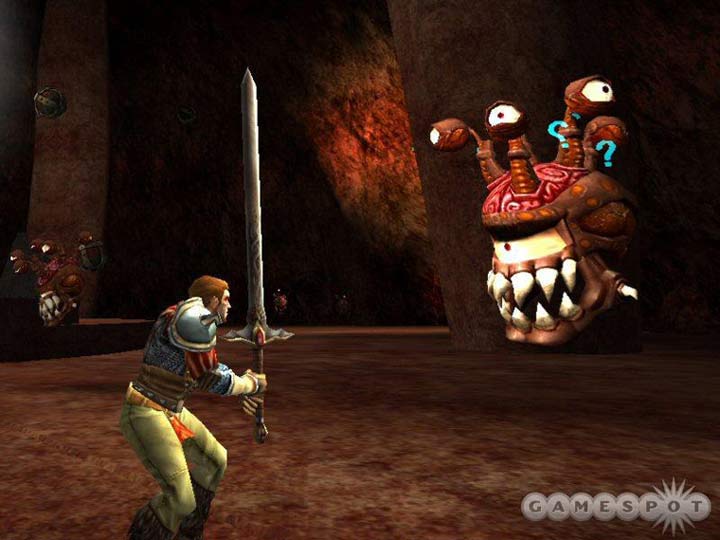
Alas, it was not meant to be. Development on Ultima X: Odyssey went radio-silent one day, so the writing on the wall became fairly apparent by the time the game was officially canceled a few months later.
The Bright SideIt's barely even possible for an Ultima game to live up to my expectations at this point. But, much like the Guardian (the villain of the later Ultima games), I'll patiently bide my time for as long as I have to in order for that slim possibility to occur. Despite the disappointing setback that was UXO, I still have faith that Ultima is far from finished.
The Red Star
By Greg Mueller
Video games based on comic books tend to be hit or miss. Over the years, Acclaim released a number of misses based on popular comics, including The Crow, Iron Man, and the Fantastic Four . In fact, Acclaim Entertainment went so far as to establish its own comic book division in the mid-'90s, although it died pretty quickly. If there's one thing to be said for the company that published a dozen versions of the same NBA Jam and Turok games, it's that it's persistent. So, when Acclaim started showing off yet another game based on a comic license in 2004, we were pleasantly surprised to see that the game actually looked good.
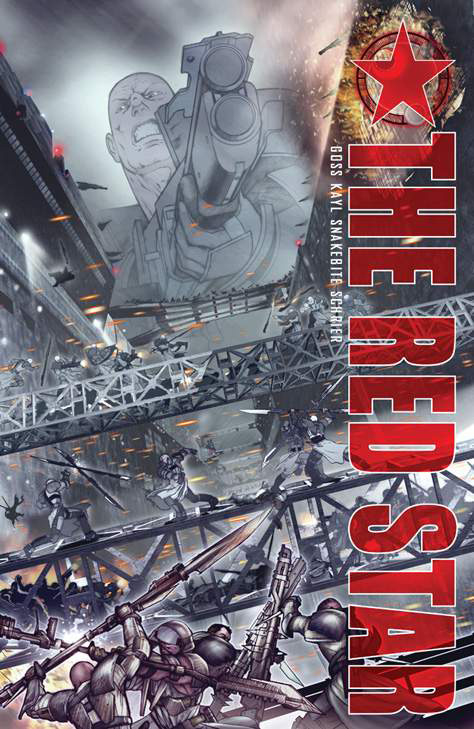
The Red Star was a beat-'em-up/shooter hybrid based on the comic from Archangel Studios. The comic is set in an alternate future in Russia, where a powerful army exerts its dominance over the world with a potent mix of magic and machinery. The gameplay in The Red Star game was heavily influenced by the frenetic shooting of games like Contra and Ikaruga, as well as the melee combat of games like Final Fight. The game was a three-dimensional side-scroller, but the perspective occasionally switched to an over-the-head, Smash TV-style view. There were three main characters to choose from: the tanklike male fighter, a quicker but slightly weaker female fighter, and a powerful female sorcerer. All of the characters had a basic melee attack, a ranged attack, and special moves called protocols, which could be enhanced and combined in co-op when played with another character. The action was frenetic and exciting, with bullets, lasers, and enemies swarming from all directions in calculated and challenging patterns.
At a time when games were getting more and more complicated and homogeneous, The Red Star was poised to give Xbox and PlayStation 2 owners a bit of that good old-fashioned white-knuckle gameplay. Unfortunately, everything collapsed in August 2004 when Acclaim filed for bankruptcy. The Red Star was promptly canceled, and we haven't heard word of it since. Street racing games and alternative sports franchises are safer bets from a publisher's perspective, so those games were picked out of Acclaim's scrap heap while a potential gem was left to gather dust.
The Bright SideNot all is lost for The Red Star, though. You can play the game for yourself--or at least a short demo of it. The September 2004 issues of Official Xbox Magazine and Official PlayStation Magazine each came with a demo of The Red Star. We're still hoping a publisher will see the potential of this game. After all, The Red Star was canceled only a few months shy of its scheduled release, so it was just about finished. However, with the impending arrival of the next-gen systems, time is quickly running out for The Red Star.
True Fantasy Live Online
You'd be hard pressed to find a game whose cancellation caused Xbox owners to shout "D'oh!" louder than True Fantasy Live Online. The ambitious game was slated to be the system's first MMO and it was being crafted by seasoned Japanese developer Level 5, whose resume includes such gems as Dark Cloud 2 and Dragon Quest VIII. The game had all the signs of being one of those special landmark titles for a platform--more than just a seminal moment in the console's software library. The game's ambitious use of Xbox Live, which would have been the most extensive use of the service in a game ever, was more in line with the level of sophistication seen in a PC game. Unfortunately, it appears that Level 5's ambition was what led to TFLO being shelved. The game's scope and rich experience presented a sizable challenge for both the developer and Microsoft within the given time frame.
Besides the expected features, such as the ability to party with friends, you were going to be able to create a character that evolved as you played. An intricate trade-skill system was slated to let you create unique wares personalized with your own "signature." In addition, you could own a home that you could fully customize. Furthermore, your character's evolution made use of an ambitious system that tracked how you played the game and built up your character accordingly. So if your character constantly exerted himself physically--by fighting or blacksmithing--he would become large and muscular, but slightly slower on his feet. On the other hand, if you didn't eat much, your character would grow thin and frail. For an idea of how this would work in game, you can see a very embryonic version of this character-evolution system in the excellent Dark Cloud 2.
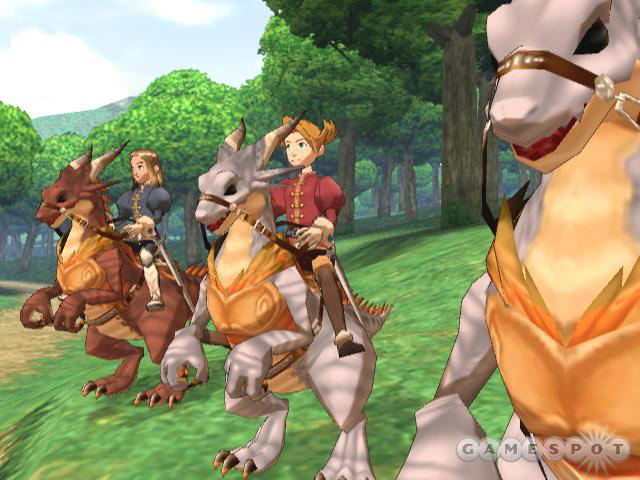
As if all that weren't enough to get people excited, the game also featured the ability to travel to different locations in the world by a variety of means, such as by horseback, carriage, ship, camels, magic broomsticks, or even dragons. Best of all, the game offered the promise of a constantly changing world, thanks to plans to make more regions downloadable following the game's release. Unfortunately, getting all of this into the game was too tall of an order, even backed by the considerable power of the Xbox. As development moved along at a snail's pace, the decision was made to cancel the game. Level 5's president Akihiro Hino summed up his feelings on the cancellation in the press release that announced its demise: "True Fantasy Live Online was being developed as the ultimate MMORPG on the Xbox Live, but we couldn't foresee the game to offer innovative new experiences to our users. With extreme regret, we have decided to cancel its development."
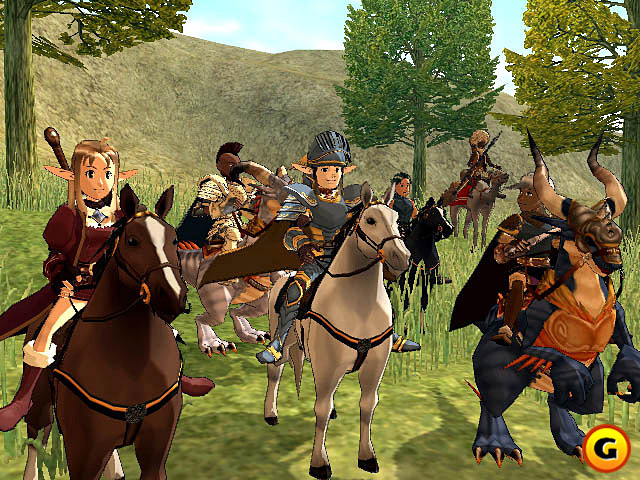
Now, while we'd love to bust out with a Rocky-style happy ending and tell you that the game is back in development for the Xbox or slated to be a title for the Xbox 360, we can't. As of this writing, TFLO is still, officially, very much dead in the water. However, rumors continue to make the rounds that, in light of the Xbox 360's power and, more importantly, its expanded Xbox Live features, TFLO may well live again. Microsoft is all too aware of how much this game's cancellation stung fans. More significantly, if such an experience can be pulled off well on the Xbox 360, the game could easily become one of the killer apps that offer players the kind of groundbreaking experience MS is aiming to provide. If we were the betting kind, we'd say that it would be smart to assume that TFLO, or a game like it, is in the cards for the 360.
Interplay's Fallout 3/"Van Buren"
By Steve Palley
Interplay's Fallout and Fallout 2, which came out in the late 1990s for the PC, are widely considered to be two of the best role-playing games of all time. The original Fallout was a revelation--from the sweet, maudlin strains of the game's introductory music, echoing around the carcass of a nuked city, all the way to your eventual discovery of the Master's plot to replace humanity with mutant slaves. As soon as your sheltered Vault-dweller stepped out into the irradiated desert that was once California, all bets were off. The game's "city of tomorrow" futurism, characterized by the Vault's fatuously optimistic 1950s-style technical diagrams, struck the perfect blend with the outside world's post-World War III gallows humor. Fallout's incredibly deep RPG gameplay, tons of dialogue, and multiplicity of storylines and subplots probably didn't hurt its case, either. The sequel was simply more of the same, only across an area about four times larger than the original Fallout. Simply put, if you didn't sink 150 hours into Fallout 2, you hadn't played it right.
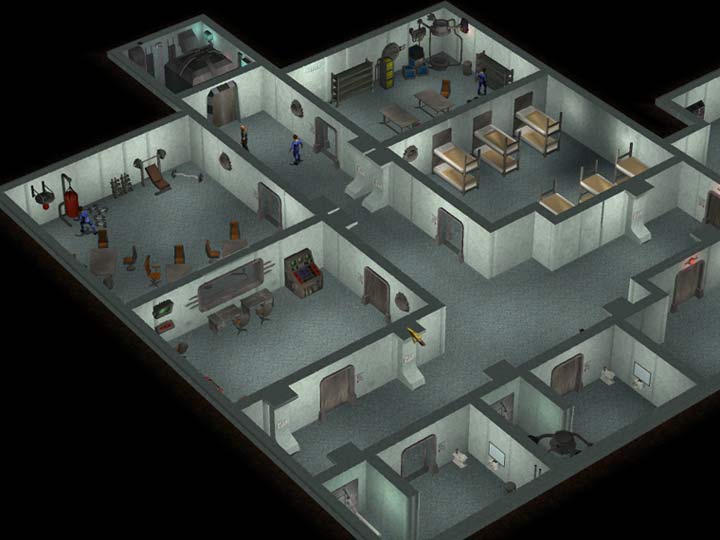
What more could a Fallout fan possibly want? Fallout 3, of course! This game, code-named Van Buren by Interplay's internal Black Isle Studios was supposed to be the series' magnum opus. While the first two games had been set in California, the next chapter was going to take place in the Rocky Mountains, in and around the settlement of Denver. According to excited developer commentary and leaked screenshots, Black Isle Studios had developed a brand-new 3D engine for the game (Fallout 1 and 2 were both sprite-based and isometric), and they were planning to introduce a range of revolutionary new features to the Fallout universe--perhaps including online multiplayer and cooperative play.
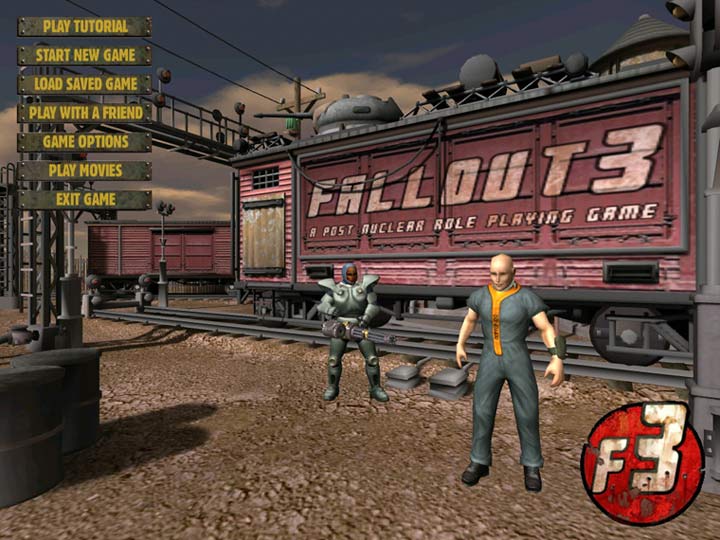
Alas, you already know that Van Buren's story doesn't end well, because everything went sideways for Interplay and Black Isle starting in 2003. After a spate of commercial failures, including the less-successful Fallout: Brotherhood of Steel, Interplay experienced mounting financial difficulties, culminating in layoffs and a temporary shutdown in the summer of 2004. Fallout 3 had already fallen by the wayside by then, due to a lack of resources. Apparently, the engine was nearly complete and about half of the dialogue had been written when work ground to a halt near the end of 2003. Black Isle Studios chief Feargus Urquhart, who had already departed to found Obsidian Entertainment, spoke for all of Fallout fandom when he told GameSpot that "...Leaving Fallout 3 at Black Isle was one of the hardest things for me to do...while I'll probably never get to make another Fallout, I'd love to play one."
The Bright SideBlack Isle was never able to finish its seminal game, and so Fallout fans were left feeling like they had gotten a 10 million Rad dose...for a period of about seven months, anyway. In July 2004, Interplay announced that it had auctioned off the Fallout license to Bethesda Entertainment for a little more than a million dollars, as part of its effort to regain solvency. Bethesda, the studio behind the hit Elder Scrolls series of first-person RPGs, has had the Fallout 3 project under its wing for a little more than a year now, and there have been very few details on the game's progress to this point. In a GameSpot interview, executive producer Todd Howard confirmed that Bethesda intends to keep the flavor and humor of the series as intact as possible, even though the new team has discarded Van Buren and started over from scratch.
Harpoon 4
By Jason Ocampo
It's sort of fitting that Larry Bond's Harpoon 4 was a game about modern naval warfare, because it went through the kind of torturous development cycle that multibillion dollar military boondoggles go through before they're finally put out of their misery. This is a game that was canceled, resurrected, and then transferred to a new developer, only to be canceled again, despite the best efforts of two different publishers. Along the way, the emotions of the Harpoon community seesawed back and forth between hope and despair. Needless to say, it wasn't supposed to be like this.
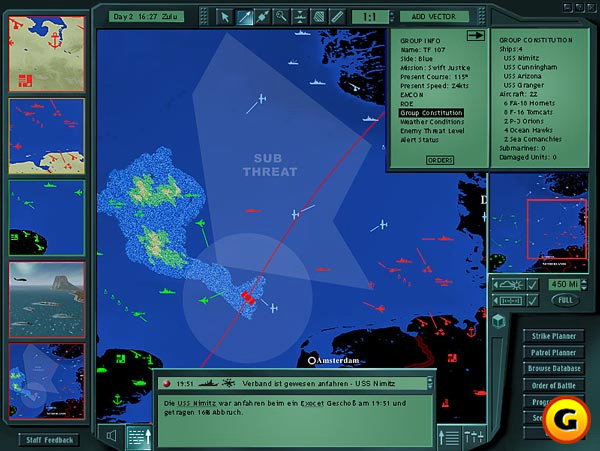
Harpoon 4 was the version of Harpoon that fans had been waiting for. Finally, the excellent gameplay mechanics of the Harpoon system that let you simulate virtually any kind of modern-day naval battle would be mated with 3D graphics. Harpoon originally started out as a miniatures game in 1979, and it was so good that it not only garnered numerous awards, but it was also used as a training aid at both the US Naval Academy and on ships at sea. Tom Clancy even used Harpoon to test the naval strategies that appeared in his popular World War III novel, Red Storm Rising. The series made the digital leap in 1989, and the original PC version of Harpoon was a huge hit in those early days when PC gaming was still mainly the domain of war gamers and strategy fans. A sequel followed in the form of Harpoon II, but, if anything, the series became more focused to those hardcore players, with its realistic, Navy-style graphics.
Fast forward to 1997. Longtime war-game maker SSI announced that work on Harpoon 4 was under way. (The name Harpoon 3 was skipped over, since 4 would correspond with the newly released fourth-edition rules for the miniature game.) The first screenshots of Harpoon 4 were gorgeous to look at. While eye-candy features such as fully 3D aircraft carriers were certainly nice, what really drew attention to it were the battle maps, where the game is mainly played from. The maps were a huge improvement over previous versions, and they promised to present the complex action of Harpoon in a pretty and user-friendly way.

And then development hell happened. SSI's parent company, The Learning Company, was acquired by Mattel in 1999, and all of a sudden, hardcore naval war games didn't seem to fit in well with the maker of Barbie dolls. Meanwhile, the merger went so badly that Mattel's CEO was ousted by the shareholders and Mattel sold off its interactive arm to a private group. During that time, Harpoon 4 was dead in the water. However, Ubisoft eventually acquired the rights to the game and resurrected it in 2003. Things were looking up, until the studio developing it went under. Ubisoft then transferred the game to its Romanian studio. Unfortunately by then it was too late. Asking one studio to step in and make sense of another studio's code is a Herculean task, at best. So, in late 2003, Ubisoft finally axed the project, six years after work initially began. Harpoon creator and author Larry Bond reportedly acquired the remains to the project, but its status remains unknown to this day.
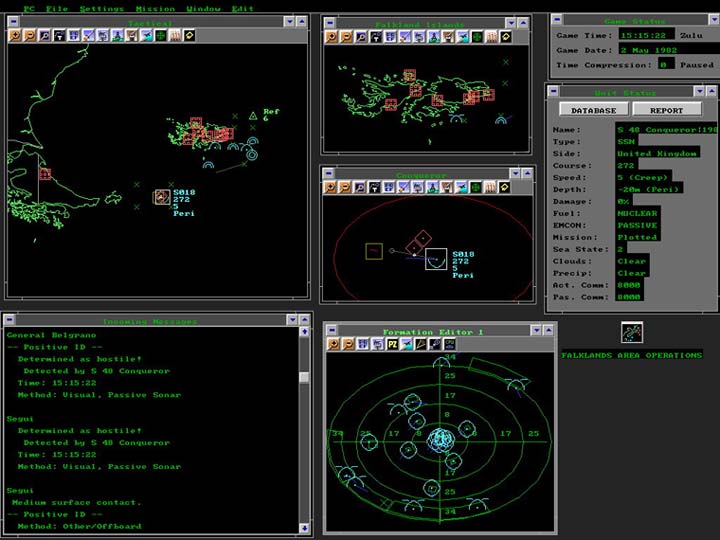
The good news is that Harpoon lives on, thanks to the dedication of its fan base. Advanced Gaming Systems owns the rights to the previous Harpoon computer games, and it has updated both the original PC version of Harpoon (known as Harpoon Classic) and Harpoon II (now named Harpoon 3) to run on Windows XP machines (and in the case of Harpoon 3, Macs as well). Furthermore, both versions feature improved gameplay mechanics and countless bug fixes. The tense gameplay still holds up remarkably well a decade later, and we recently had a chance to play our favorite scenario, which depicts a second US civil war. We love this scenario, mainly because its one of the rare times when you can pit a modern-day US carrier battle group, which is virtually invincible, against another US carrier battle group. Meanwhile, both version of Harpoon are ideal games for military buffs, particularly if you have older systems that aren't capable of the latest 3D eye candy. And while we hope that one day Harpoon 4 makes it into port, we still have plenty of options at our disposal.
Shenmue III
By Avery Score
[Editor's note: Okay, okay, we know Shenmue III hasn't officially been canceled, because it was never actually a game. But when we started talking about games that never came out, Avery's eyes rolled back in his head and he started shouting about how Shenmue is the greatest series ever made. We don't really buy the whole 'Shenmue as a way of life' thing, but hey, here's what he had to say.]
If Shenmue II had been shown in movie theaters, its ending would have elicited loud cursing from audiences worldwide. The game ends exactly as protagonist Ryo Hazuki unites two magical mirrors and is about to realize his potential as a martial artist. Unfortunately, after the game's lengthy denouement in rural China, you don't get to see him go Super-Saiyan, or whatever was supposed to happen. As a gamer, you've just been teased with no payoff. This is an infuriating way for one of gaming's most influential and underappreciated franchises to end. Even if Shenmue III was never officially announced, my heart was still broken. I feel cheated, and with good reason.
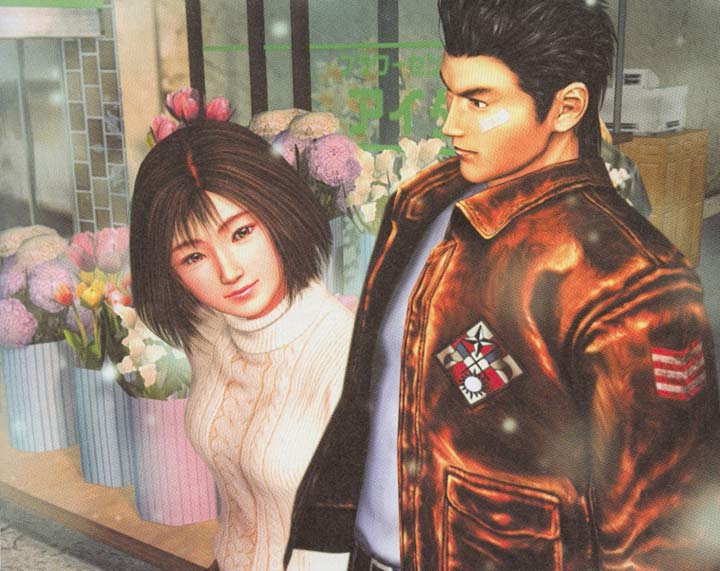
Every guy has that one girl for which he still holds a torch. Even if you're married, you probably still wonder about that one girl who got away. Sure, your buddies may sneer at what might be a fish story, and mockingly tell you that she "gets bigger every year," but they still understand where you're coming from. For me, the little number is Nozomi Harasaki.
Nozomi was a peach. She was so darned patient with my romantic fumblings. She didn't even skip a beat when I asked her during one of her heartfelt good-byes where I could find some sailors. Although she was holed up in Canada during the events of Shenmue II, her memory haunted me from the docks of Aberdeen to the soaring mountains near Bailu Village.
Now, I reluctantly accepted Nozomi's absence under the assumption that we would resume our awkward affair in Shenmue III, which was to contain the final or near-final few chapters of what was originally to be Yu Suzuki's 16-part chef d'oeuvre. I figured we'd go out, drink some sake bombs, and I'd tell her about how I reconnected the Phoenix and Dragon mirrors. Then I'd show her my "mistral flash" and "darkside hazuki" techniques. Alas, this was not to be; low sales figures made me unlucky in love. I still experience pangs of anguish from time to time.
Had Shenmue and its sequel been given a fair shake and failed, I might be able to accept it. However, the circumstances surrounding these spectacular failures were far from auspicious.

The first Shenmue was released amid a level of hype that would make Peter Molyneux blush. The game was being developed for some untold millions of dollars, and was widely predicted to be the "killer app" the Dreamcast desperately needed. Whenever people start talking about killer apps, you should be worried. No single game is likely going to justify the purchase of a console these days, period.
Shenmue combined Virtua Fighter's elegant combat system with unprecedented exploration and emergent gameplay--all before academia started praising these qualities in games like Grand Theft Auto III. Oh, and last January's Resident Evil 4 reintroduced "quick timer" events, but didn't give them a name or hype them for months in advance. That was probably a smart move, as people ate the feature up, asserting that it made the cutscenes more intense, which it did.
Shenmue was also one of the first games to feature hours and hours of spoken dialogue, which made its storytelling all the more compelling. Those who oohed and aahed over Knights of the Old Republic's extensive use of voice acting probably didn't play Shenmue. Man, I am so bitter.
When people went to play Shenmue for the first time, they seemed to forget that they were about to enjoy a video game in the year 2000, not a computer-animated film in the year 2019 with replicants operating the projection booth. People expected Shenmue, with so much money behind it, to be a quantum leap over what they were used to seeing. As it turned out, it was just an atomic leap.
Apparently, Shenmue sales did not recoup the $50 million AM2 spent on the game's development--not even close. The game sold so poorly in the US that its sequel wasn't even released here (until the Xbox). This is too bad, because Shenmue II greatly refined the gameplay of its predecessor.
The erm... Bright SideSuzuki was quoted in Electronic Gaming Monthly as saying, "The story is completed. The problem is we have not decided whether or not to move forward with designing the game yet. If there's a demand for it, we'd love to make it." Don't get coy with us!
Even if Shenmue III never gets made, South Korean and Chinese gamers will at least glean insight into the plot points that could have been with the upcoming Shenmue Online MMORPG, right? Actually, it looks like that game's been canned as well. Apparently, Korea's JC Entertainment halted development on the project last May. After what seemed to be a successful closed beta last year, one can only wonder what the heck happened.
Here's the only reasonable conclusion: If you're a Shenmue fan, it looks like your lot in life is suffering. Don't let the quarterly Internet rumor flare-ups fool you. You'll never get cozy with Nozomi; you'll never defeat Lan Di; and you'll definitely never find out what in the hell all those ancient mirrors were for. However since fans love the game so much and since no information has been made official about its existence or not, go ahead and hold on to a little hope.
Have a heartbreaking moment in video gaming? Come share yours with us in the forums.
Special thanks to Feargus Urquhart and Chris Avellone of Obsidian Entertainment.
Got a news tip or want to contact us directly? Email news@gamespot.com
Join the conversation