The History of SNK
From Ozma Wars to The King of Fighters 2003, we take a comprehensive look at the rich and storied history of SNK.

When you speak of companies such as Nintendo, Sega, Sony, Microsoft, SquareSoft, Capcom, and Konami, chances are good that the average game player can tell you what games the company makes and what that company's significant contributions are to the world of video games in general. Seriously, who doesn't know the names of the companies responsible for Mario, Sonic, PlayStation, and the biggest monopoly this side of board games?
Now consider SNK. In the span of 25 years, the company has produced games such as Ikari Warriors, Fatal Fury, and King of Fighters, as well as a modular arcade hardware setup called the NeoGeo MVS. These games and their sequels, along with the NeoGeo, have made SNK an innovator in the world of video games and have pushed those other companies--primarily Capcom and Nintendo--to improve and develop their products at a much faster pace and at a much higher level of quality than they would without SNK in the picture.
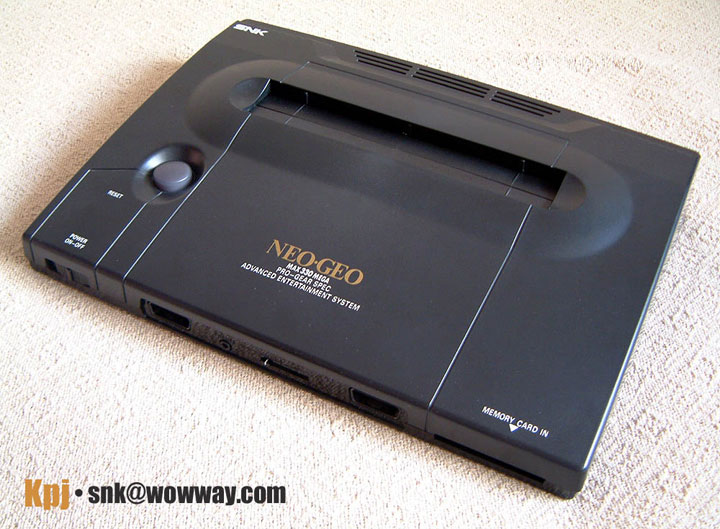
Despite SNK's contributions to our beloved hobby, the company doesn't have the same brand or franchise recognition that these other companies do. The average game player might recognize King of Fighters or Metal Slug or have a vague recollection of the big-budget NeoGeo console, but he or she probably doesn't associate them with SNK. Some people aren't aware that SNK actually went out of business in 2001 or that the company is back today as SNK Playmore.
This History of SNK is an attempt to change all of that. The following sections document the entire 25-year history of the company--from it's founding in 1978, to the golden era of the early 1990s, through the unfortunate bankruptcy in 2001, and up to the present day.
The author would like to give credit to Andrew Alfonso, Chad Okada, Ben Herman, Shawn McCleskey, Kenny Perry Jr., Stuart Reynolds, Michael Shaver, and SnairDogg for their help with and input in this article, as well as to the fans of SNK and the NeoGeo all over the world who continue to show their undying love for the company's systems and games. Without these fine people, the story of SNK could not have been told.
The Beginning (1978-1989)
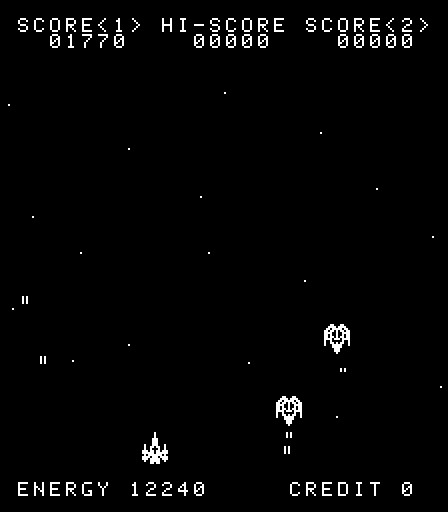
Before all of the name changes, before the NeoGeo, and long before the company became known for its King of Fighters and Metal Slug games, SNK was just another startup trying to gain a foothold in the burgeoning video game craze of the early 1980s.
SNK (short for Shin Nihon Kikaku, or "New Japanese Project") Electronics Corp., the brainchild of Eikichi Kawasaki, set up shop in Osaka, Japan, in July 1978. Initially, the company's purpose was to design and produce software and hardware components for a variety of business clients. Shortly thereafter, noticing the rapid growth that was occurring in the coin-operated video game sector, Kawasaki expanded the company's endeavors to include the development and marketing of stand-alone coin-operated games. The first two titles out of SNK's coin-op division were Ozma Wars (1979), a vertically scrolling space shoot-'em-up, and Safari Rally (1980), a maze game with little noteworthy value save for the fact that "Shin Nihon Kikaku" was spelled out on the copyright notice. Things took a turn for the better with 1981's Vanguard, a side-scrolling space shoot-'em-up that many people consider the precursor to modern genre staples such as Konami's Gradius and Irem's R-Type. SNK licensed the game to Centuri for distribution in North America but ultimately started manufacturing and distributing the game itself when profits exceeded expectations.
On October 20, 1981, SNK Corporation of America was born. The company established itself in a tiny office in Sunnyvale, California (near San Jose), with the intent of delivering its own unique brand of coin-operated games to arcades all across North America. The man chosen to run SNK's American operation was none other than John Rowe, eventual founder of Tradewest and current president and CEO of Sammy Studios.

Riding high on the success of Vanguard, SNK shifted its focus solely toward the development and licensing of video games. Between 1979 and 1986, SNK produced a grand total of 23 stand-alone arcade games. Highlights during this period include Mad Crash (1984), an isometric shoot-'em-up similar in style to Sega's Zaxxon; Alpha Mission (1985), a wildly popular vertically scrolling shooter; and Athena (1986), a side-scrolling platform game that would ultimately gain a large following when it was ported to the NES in 1987.
Far and away, the company's most successful game during this time frame was Ikari Warriors. The game was released in 1986, and arcade-goers flocked to this relatively new style of shoot-'em-up, which took you out of the worn-out and hackneyed spaceship motif and put you in control of mercenaries battling it out against enemy soldiers in a jungle setting. Movies like Rambo: First Blood Part II were all the rage at the box office, and players were eager to spend their quarters to mow down soldiers, toss grenades, and seek cover in foxholes just like John Rambo was doing on the silver screen. Ikari Warriors was so popular that it was eventually licensed and ported to the Atari 2600, Atari 7800, Commodore 64, Commodore Amiga, and NES video game consoles. SNK followed up Ikari Warriors with two sequels, Victory Road (also in 1986) and Ikari III: The Rescue in 1989.
Although SNK is best known today for its arcade beat-'em-ups--most notably the King of Fighters series--many people first fell in love with the company back in the mid to late 1980s, when its games began to appear on the Nintendo Entertainment System. Even though SNK had a decent arcade business going all throughout the early and mid 1980s, executives at the company were interested in the profits that could be made through the development and licensing of games for home video game consoles.

Unfortunately, the home market was still reeling from the fallout caused by the legendary video game crash of 1983, and major players, such as Atari and Mattel, were more occupied with lawsuits than with the marketing and production needs of their flailing consoles. Nevertheless, one console manufacturer in particular seemed to weather the crash fairly unscathed: Nintendo. SNK signed up to become a third-party licensee for Nintendo's Family Computer (Famicom) system in 1985 and opened a second branch in the United States--this time in Torrance, California (near Los Angeles)--shortly after the Nintendo Entertainment System was introduced. This new branch was called SNK Home Entertainment and would handle the distribution and marketing of the company's products for home consoles, such as the NES. By this time, John Rowe had left the coin-op branch to form his own company--Tradewest, which would later market SNK's Ikari Warriors series in North America. Subsequently, both halves of the company were now being presided over by Paul Jacobs, who is notable primarily for having helped launch the company's innovative NeoGeo hardware in North America during the early 1990s.
SNK flourished as the 1980s drew to a close. The company continued to develop successful arcade games (many of which made it to North America, thanks to Takahito Yasuki's distribution company, Romstar), which it would later port to and publish for the Nintendo Entertainment System. Alpha Mission, Athena, and Ikari Warriors were released for the NES in 1987; Ikari Warriors II: Victory Road and P.O.W. followed in 1988; and Ikari Warriors III wasn't far behind, hitting store shelves in 1989.
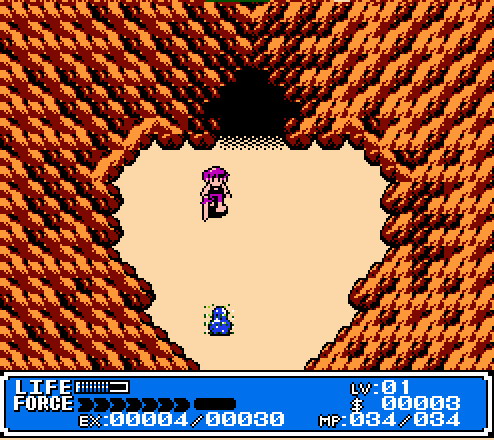
Owing to the breakout sales of the company's NES ports, and perhaps as a response to waning arcade receipts, SNK began to dabble in the development of original software designed specifically for the NES console. Two games came out of this effort: 1989's Baseball Stars and 1990's Crystalis (known as God Slayer in Japan). Baseball Stars captivated players with its franchise-style hiring and trade features, which weren't yet common to sports games at that point in time, while Crystalis was the company's answer to Nintendo's Legend of Zelda. It was an adventure-based RPG with a large overworld, tough bosses, and gorgeous cinematic cutscenes.
1989 also marked the release of two new home video game consoles in North America: the 16-bit Sega Genesis and NEC's joint project with Hudson, the TurboGrafx-16. Nintendo followed suit with a new system of its own, the Super NES, in 1991. Rather than choose sides and become embroiled in the so-called system wars, SNK chose once again to refocus its efforts on the arcade market, leaving other third parties, such as Romstar and Takara, to license and port SNK's future properties to the various home consoles of the time. The engineers at SNK had an idea on their hands that would revolutionize the arcade industry and could potentially mean millions upon millions of dollars in revenue for the company. That idea, stated simply, was the NeoGeo.
NeoGeo in Arcades, NeoGeo in Homes (1989-1994)
Sometime in 1988 SNK began toying with the idea of a modular video game cabinet for use in an arcade setting. Up to that point, stand-up arcade cabinets typically contained only a single game. When an arcade operator wanted to switch or replace that game, he'd have to completely rip the guts out of the existing cabinet or exchange the entire setup, display and all, for another. SNK's solution to the problem was an arcade machine that could pack multiple games into a single cabinet, using a cartridge-based storage mechanism similar to that employed by cheap consumer consoles.

The NeoGeo MVS (short for Multi-Video System) made its debut in 1989 and allowed arcade operators to display one, two, four, or six separate games in a single cabinet. In order to swap in a new game, all the operator had to do was remove one cartridge and exchange it for another. Changing the title cards and cabinet artwork for a new game took minutes, thanks to the custom cabinet designed by Neal Zook, an experienced industrial designer who also served a brief stint as SNK Corp. of America's operations director during the late 1980s.

The MVS was an immediate success. Arcade operators loved it because the setup time required for each game was nearly nonexistent, the floor space required was minimal, and the cost outlay for new cartridges was barely $500--less than half of what a traditional arcade unit cost at the time. Arcade-goers fell in love with the MVS as well. The first four games--NAM-1975, Baseball Stars Professional, Top Player's Golf, and Magician Lord--took familiar genres and reinvigorated them with the kind of colorful 16-bit graphics and huge character sprites that players had been wanting to see in arcade games for some time. NAM-1975 spoke to the shoot-'em-up crowd, Baseball Stars and Top Player's Golf attracted sports fans, and Magician Lord is widely regarded as one of the defining side-scrolling adventure games of the 1980s.
Consumers had always dreamed of bringing the arcade experience home. That's why the Sega Genesis and Nintendo Super NES consoles were so successful--they allowed gamers to get a taste of those large sprites and colorful backdrops in their own living rooms. SNK wanted to take advantage of people's desire to play arcade games at home, but without making the same compromises on CPU and memory horsepower that typical home consoles were forced to make. In 1991, the company released a home version of the MVS, a single cartridge unit called the NeoGeo Advanced Entertainment System (AES for short). Initially, the AES was only available for rent or for use in hotel settings, but SNK quickly began selling the system over the counter when customer feedback suggested that there was an untapped market out there composed of grown-up gamers willing to bring the real arcade experience home no matter what the cost.
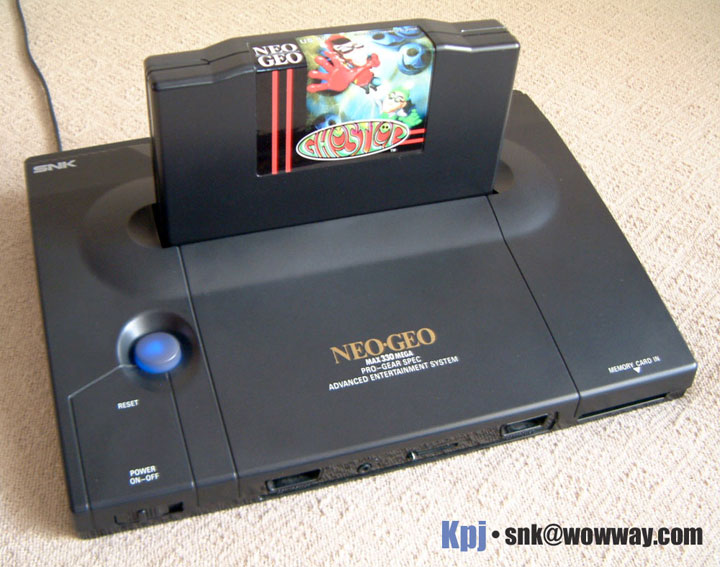
Compared to the other home consoles of the time, the NeoGeo AES was a beast. Under the hood, the AES featured two CPUs: a 16-bit Motorola 68000 main processor running at 12MHz and a Zilog Z-80A backup processor running at 4MHz. Even though the system's main CPU was "just" 50 percent faster than the 68000 processor found in Sega's Genesis console, the NeoGeo AES also had the benefit of specialized audio and video chipsets. A custom video chipset allowed the system to display 4,096 colors and 380 individual sprites onscreen simultaneously--compared to 64 simultaneous colors and 80 individual sprites for the Genesis --while the onboard Yamaha 2610 sound chip gave the system 15 channels of CD-quality sound. Seven of those channels were reserved specifically for digital sound effects.
Comparison Chart: NeoGeo vs. Other Consoles
| NeoGeo MVS/AES | Sega Genesis | Super NES | Sony PlayStation | |
| CPU | Motorola 16-bit 68000, 12MHz | Motorola 16-bit 68000, 7.67MHz | WDC 16-bit 65c816, 3.58MHz | LSI 32-bit R3000A, 33.8MHz |
| Memory | 64KB Work RAM, 68KB Video RAM | 64KB Work RAM, 64KB Video RAM | 128KB Work RAM, 64KB Video RAM | 2MB Work RAM, 1MB Video RAM |
| Video Resolution | 320x224 | 320x224 | 256x224, 512x440 possible | 256x224, 740x480 possible |
| Colors | 65,536 possible, 4,096 simultaneous | 512 possible, 64 simultaneous | 32,768 possible, 256 simultaneous | 16.7 million possible |
| Simultaneous Sprites | 380 Sprites, 3 Background Planes | 80 Sprites, 3 Background Planes | 128 Sprites, 4 Background Planes | 4000 sprites / Programmable, 3D capabilities |
| Minimum / Maximum Sprite Size | Programmable, 1x2 pixels up to 16x512 pixels, and any in between | 32x32 pixels | 8x8 pixels / 64x64 pixels | Programmable, 8x8 pixels up to 256x256 pixels |
| Sound | Yamaha 2610, 15 Channels | Yamaha YM2612, 6 Channels | Sony SPC700, 8 Channels | Custom, 24 Channels, CD audio |
| Largest Cartridge | Multiple Games, 708mb (88.5MB) | Multiple Games, 32mb (4MB) | Tengai Makyou (Japan), 72mb (9MB) | 650MB CD storage |
Bold = best in 16-bit era. Sony PlayStation included in comparisons merely for curiosity's sake.
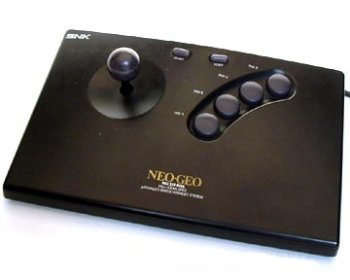
This type of arcade-at-home power carried a lofty price tag. Early adopters shelled out $599 for the console, two joystick controllers, and a pack-in game (either Baseball Stars or NAM-1975). Thankfully, within a few months of the system's introduction in North America, SNK lowered the cost of this package to $399 and added Magician Lord to the list of pack-in options. Additional games cost $200 and up, each. The NeoGeo certainly wasn't a cheap hobby.
For anyone who could afford it, though, this was the Cadillac of video game systems. Each joystick controller was a full 2 1/2 inches tall, measured 11 inches long by 8 inches across, and contained the same four-button layout as the arcade MVS cabinet. When you held one of these monsters in your hand, you knew you were playing with quality.

AES game cartridges were the size of VHS tapes and proudly proclaimed their ROM size right on the label. While the Super NES and Genesis were just reaching 16 megabits with some games, the NeoGeo already had a line of games topping 100 megabits--affectionately known as the 100 Mega Shock.
ROM size was a major selling point for the NeoGeo AES. Not only did each game have its ROM size printed on the packaging, but the console itself had MAX 330 MEGA PRO-GEAR SPEC painted onto the plastic. The same message appeared every time you powered up the system.
Ironically, 330 megabits was just a theoretical maximum, because King of Fighters '96 broke that barrier in 1996, clocking in at 362 megabits. Today, games like King of Fighters 2003 and SVC Chaos are tipping the scales at over 700 megabits.
Believe it or not, the NeoGeo AES also happened to be the first home console to implement memory card save technology. The prevailing justification for the concept was that players would become familiar with a new game on the MVS and subsequently want to continue their progress when the AES version came out. The memory card slot on the AES console was identical to the slot located on the front of every MVS cabinet. For $40, you could purchase a PCMCIA-style card that could store game saves and high scores for approximately 20 games. Unfortunately, the NeoGeo memory card never really caught on. Each card could only store roughly 2 kilobytes of data, which is pathetic even compared to the now-meager 128 kilobytes contained on a PSOne memory card, and relatively few games actually took advantage of the feature.

Soon after the NeoGeo AES was introduced, SNK launched an aggressive marketing campaign to promote the system. If you visited a video arcade or purchased an enthusiast gaming magazine back in the early 1990s, you couldn't help but notice the company's "weenie" ads, which asked prospective purchasers if they were happy playing on a plain weenie system, such as the Sega Genesis or NEC TurboGrafx, or whether they'd rather play on a full-blown hot dog with all of the trimmings, namely SNK's NeoGeo.
SNK soon followed up that campaign with its "Bigger, Badder, Better" ad blitz, which featured a menacing pitbull as its mascot. The dog, along with the words "Bigger, Badder, Better," appeared on the first page of a series of advertisements in a number of magazines. Once again, the goal of these advertisements was to convince wealthy game players that the Super NES and Genesis just weren't going to cut it anymore. Instead of comparing the competing consoles using a food analogy, as was done in the previous ad campaign, the pit bull ads simply laid out the hardware capabilities of each system in an easy-to-understand chart. The NeoGeo came out ahead in all categories.
The pit bull inserts also transformed one of SNK's game counselors into a cult celebrity. Inside the multi-page advertisements, the Game Lord (known to his friends as Chad Okada), would offer previews of upcoming games and provide tips about the games that were popular at the time. Okada soon became the company's unofficial "mascot," answering letters sent in by fans and appearing at industry trade shows such as the Consumer Electronics Show and the Electronic Entertainment Expo.
The pit bull campaign proved so popular that SNK ultimately decided to include the mascot on the quality-assurance seal that was printed on the outside of AES cartridge boxes. The company wasn't consistent in its implementation of the pit bull seal, however, and many games were released in variations with or without this "dog tag" embellishment. To compound matters, SNK dropped the pit bull altogether when the company switched to an outside PR firm with the release of Samurai Shodown II (around 1994). Today, collectors place a premium on packages that include the "dog tag" seal.
The Original Capcom vs. SNK
As popular as the NeoGeo MVS was in arcades, and as innovative as the AES was to home hobbyists, the biggest thing to happen to SNK in 1991 was Capcom's arcade release of Street Fighter II. Street Fighter II ignited the fighting game craze and once again gave people a compelling reason to shut off their home consoles and start spending their quarters at the arcade. Street Fighter II made its debut in April 1991.
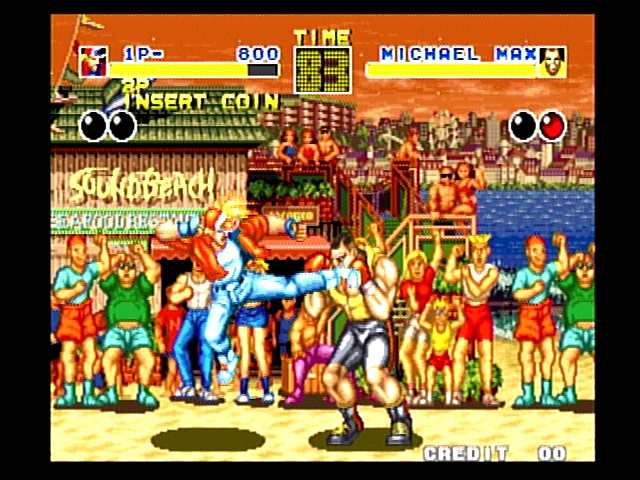
SNK followed suit with a one-on-one fighting game of its own seven months later: Fatal Fury (known as Garou Densetsu in Japan) for the arcade MVS. The characters in Fatal Fury were comparable to those in Street Fighter II, as were the large sprite-based graphics. Fatal Fury even had something Capcom's game didn't: twin background planes that allowed you to take the fight into the background for dodge maneuvers and cross-screen attacks. Fatal Fury gave the NeoGeo AES console the "killer app" it needed, because while players would have to wait more than a year to play a watered-down version of Capcom's Street Fighter II on the Super NES console, they would only have to wait until December 1991 to bring home the arcade-identical AES version of Fatal Fury. Assuming that the whopper price of $250 wasn't an issue, of course.
Incidentally, many people have heard of SNK because of the popularity of the company's King of Fighters franchise, which didn't come along until 1994. What you may not realize, however, is that King of Fighters '94 technically isn't the first King of Fighters game. When Capcom introduced Street Fighter II in 1991, it was subtitled "The World Warrior." Not to be outdone, SNK gave Fatal Fury a subtitle too: "King of Fighters." SNK of Japan really loved the phrase and couldn't wait to title a game with it.
Competition
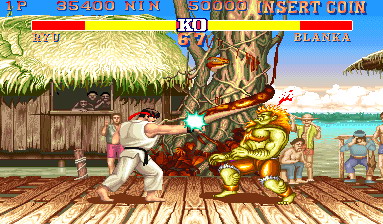
Throughout the 1990s, SNK's main competition came from Capcom, specifically the ever-growing list of sequels to Street Fighter II.
Capcom debuted Street Fighter II in 1991 and followed that up with SFII: Champion Edition in 1992. SFII: Turbo Hyper Fighting came out later in 1992. Super Street Fighter II and Super Street Fighter II Turbo followed in 1993 and 1994.
Three installments in the Street Fighter Alpha series were released between 1995 and 1998. And let's not forget Street Fighter III and its two sequels, which landed between 1997 and 1999. When you factor in all of the Marvel Comics games and the recent SNK vs. Capcom games, Capcom has produced more than 20 separate fighting games during the past 15 years.
Capcom followed up in 1992 with Street Fighter II: Champion Edition, a sped-up version of Street Fighter II that also allowed you the luxury of controlling the game's four boss characters. SNK responded with Art of Fighting, which didn't knock people off their feet with its highly derivative gameplay and joke characters, but it did manage to impress all the same, thanks to its use of scaling characters and backgrounds--a technique that would later be put to use in the madly successful Samurai Shodown series.

Throughout the 1990s, Capcom and SNK continually responded tit for tat with newer and better fighting games. Capcom would ultimately release 10 sequels to Street Fighter II, along with various Marvel Comics-themed fighting games, while SNK would go on to release six Fatal Fury sequels, four Samurai Shodown games, and 10 installments in the King of Fighters franchise. And that's not even counting SNK's stable of offbeat fighting games, such as Last Blade, Kizuna Encounter, or Matrimelee.
On a humorous side note, the main figure responsible for many of the later Fatal Fury, Samurai Shodown, and King of Fighters sequels in SNK's lineup was Takashi Nishiyama, who had initially worked on Street Fighter II for Capcom! It's no wonder that arcade-goers in the 1990s would get into heated arguments about which company's characters would win fights against the other company's characters. The same people were making these games! It only makes sense that the two companies would ultimately join forces to make the Capcom vs. SNK fighting games that we enjoy in the arcades and at home on multiple consoles today.
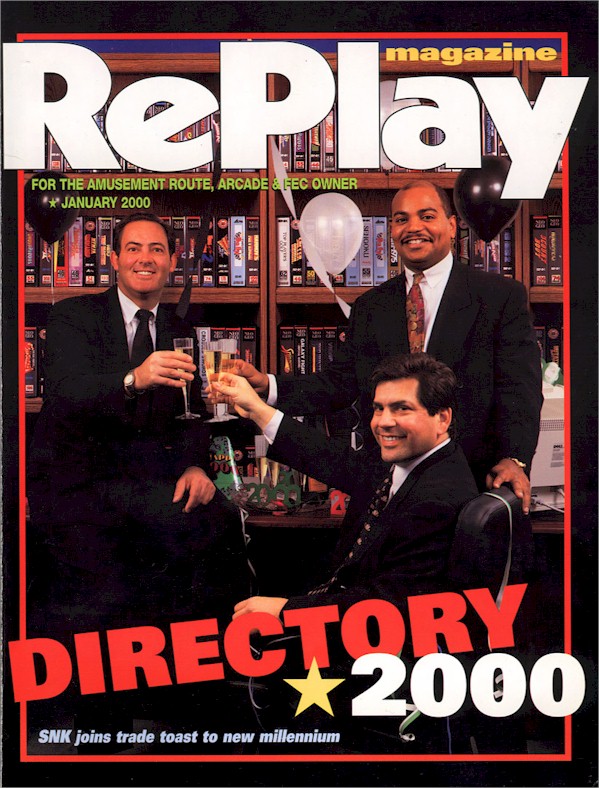
Thanks to companies like Capcom and SNK, arcades were making a strong comeback in the early '90s. SNK Corporation of America was netting huge profits from sales of MVS hardware and games, while SNK Home Entertainment continued to get by on tepid sales of its big-budget AES console. By 1991, SNK Corp. of America had outgrown its space in San Jose, and the decision was made to relocate the company to join its other half in Torrance. The following year, SNK merged both halves of the company into a single entity: SNK of America. By now, former president Paul Jacobs had left the company. In his place were Marty Kitazawa, who would reign as acting president of SNK of America through 1996, and John Barone, former VP of sales, who was promoted to vice president of the coin-op division. Kitazawa stayed out of the limelight, focusing primarily on liaison duties between the US office and Japan. Barone served as the public spokesperson for the company and its NeoGeo line, at least up until mid-1993, when he was let go for undisclosed reasons.
Fret not for Barone, however, at least not yet. He would return to run SNK in the late 1990s and take on the responsibility of pushing the company's Hyper NeoGeo 64, Neo Print, and NeoGeo Pocket Color product line-ups--which all ultimately ended in failure. Barone would also earn the ire of fans for failing to promote SNK's products in the wake of the Sony PlayStation and Sega Dreamcast consoles. Both of these stories are told later on in our timeline, and we still have plenty to cover first.
Chad Okada: The Game Lord Speaks
If you ever happened upon one of SNK's multipage advertisements during the early 1990s, and especially if you actually owned a NeoGeo AES console, chances are, you know of the Game Lord. He was the guy in the ads who told you what games were hot for the NeoGeo, gave you tips on how to beat many of those tough bosses, and generally put a down-to-earth spin on the "Bigger, Badder, Better" message that SNK of America was trying to get across. In reality, the Game Lord was an actual person, just like you or me. His name was Chad Okada.
Okada started out as a game counselor for SNK Home Entertainment in 1991 and was elevated to the role of PR spokesperson later that year when the "Bigger, Badder, Better" ad blitz was launched. His tenure at SNK lasted until March 1996, when the company scaled back its consumer division and no longer needed the services of a resident Game Lord. Subsequent to his employment at SNK, Okada went on to work at Sony and then Electronic Arts as a producer responsible for much of the behind-the-scenes work that's involved in bringing video games into your living room.
Today, Chad Okada continues to work in the game industry and to carry on his moniker as the Game Lord. He also runs a Web site, called Gamelord.org, that strives to cover the industry from an insider's perspective.
GameSpot caught up with the Game Lord for a series of conversations during February 2004. Here's a transcript of what transpired:
GameSpot (GS): Thank you for taking the time to do this interview. Let's start from the beginning. When did you first begin working for SNK, and how did that come about?
Chad Okada (CO): I was hired by SNK by pure luck. SNK Home Entertainment Inc. opened up their consumer headquarters for the NeoGeo home system in Torrance, California. Kent Russell went to Apple One, the local temp agency, and expressed the need to hire a game counselor. At the time, there weren't many people qualified for that type of job in Southern California, especially not in Torrance. The temp agency decided to hit up the local arcade, which was a bowling alley only a block away from their office. They went into the South Bay Bowl and asked the kids who hung out there who was the best player, and their answer was "Chad." You have to remember that in 1991 the arcades were not at their peak. Street Fighter II wasn't out yet. The top arcade game at the bowling alley was Cyberball 2072. I was especially good at Cyberball and was considered the best in the area. Had it been Street Fighter, I probably wouldn't have gotten the job. Before that, I had a job at a Captron - World of Nintendo store.
GS: At what point did your duties transition from game counselor to public relations? It's a pretty big jump to go from answering the phones to receiving the title of Game Lord.

CO: It's really hard to give you an exact answer to this. SNK Home Entertainment was a small company, and everyone pitched in where they could. I was hired by Kent Russell and was always part of the marketing department. Not long after I was hired, I wound up writing the box cover text for our English games and composing most of what ended up in the famous 16-page EGM inserts. The most significant time I can think of was during the Heh-Kyu Lee Sincock days. She had taken over the marketing responsibilities for SNK and hired a PR group to lead the charge after Samurai Shodown became a hit. But it wasn't long before our budget ran out and we decided to do our own PR in-house. I then wrote all the press releases and performed any other PR duties that came my way.
GS: You say that everyone helped out where they could. Who came up with those memorable ad campaigns, such as the weenie ads and the "Bigger, Badder, Better" blitz? Sometime in the mid-'90s, I remember seeing the phrase "The Future is Now" appearing with the SNK logo. How did that come about?
CO: Kent Russell was the first VP of marketing for SNK's home system, and he led the charge to fully market the NeoGeo in all its glory. He put together a huge marketing campaign, which included ads in many magazines and television commercials on target networks. This campaign used the slogan, "Bigger, Badder, Better," and many controversial ads came out of this. Kent wanted all of the marketing, packaging, and PR to have a unified message. So the game packaging was changed from the Japanese packaging to the US packaging.
GS: The dog tags?
CO: Yeah. After the SNK merge was announced internally, Kent Russell knew that the marketing strategy would change and that he would not be able to control the fate of the NeoGeo home system. He packed up and left for Sega. Once Kent left, SNK stopped changing the packaging and brochures for the US releases. Basically, "The Future is Now" was a slogan from SNK Japan's marketing division and was used even before it showed up on the US NeoGeo products.
GS: How did you feel about taking such a visible role in the company's marketing of the NeoGeo? Did you ever make public appearances as the Game Lord?
CO: Kent Russell wanted me to have a bigger, badder, better name than just Game Counselor. He told me to come up with some names, and because of Magician Lord being the top-selling home title at the time (an arcade flop, by the way), I came up with several names, including the Game Lord. That became my official title at SNK. To be honest, I always thought it was a dumb name. I made several appearances as the Game Lord, but mostly in the CES or E3 stage. I did some store demos as the Game Lord in some of the Software Etcs, Babbages, Electronic Boutiques, and etc. around the US. Being the visible mascot was one of the greatest things to happen to me at SNK. I have many friends because of this, and I appreciate every one of them.
GS: You went from game counselor to Game Lord. Any downside to having such a visible title?
CO: Although it was great to be the mascot, one of the problems I faced was that some people hated me because the name made me sound like I was obnoxious. I mean, who would ever call themselves a Lord? Some people really hated me and would post on [bulletin board systems] how much they disliked me and wanted to hurt me in real life. One guy was even a relative of an SNK employee!

GS: Let's digress for a moment here. Around 1993, John Barone, who was then basically running things at SNK of America, left to work in the gambling industry. Who ran SNK of America after that, and how did things change with Barone out of the picture?
CO: It's kind of complicated, but Marty Kitazawa ran things when John Barone left. Marty was president throughout the '90s, mainly as a liaison between the Japanese and US arms of the company, but took a more active role when John left. Tracy Tate and Heh-Kyu Lee Sincock were also responsible for a fair number of daily operational tasks and made significant contributions to the company in terms of effort. They basically filled in for John Barone and Susan Jarocki (she married Barone around that time) after they left.
GS: Today, the NeoGeo certainly has a devoted fan base. People are willing to pay more than $500 for the console and around $350 per game just to keep up with the latest software. A decade ago, the NeoGeo was just as expensive a hobby as it is now, except that game releases were three times more frequent. What was the general feeling about the system inside the offices of SNK Home Entertainment back then? Did you all really believe the system had a fighting chance against the cheaper Super NES and Genesis? Did moods change when Sony introduced the PlayStation in 1995?
CO: I hope I phrase this right. Don't get me in trouble here...
GS: Editing saves the day.
CO: The merger of SNK Corporation and SNK Home Entertainment Inc. was really the point at which SNK Japan had decided that the consumer product would not be as successful as it hoped. They shifted the business model at that point, and the new strategy was to market the arcade versions primarily. The home version was really more as extra income and less as SNK's featured product. Sony's PlayStation was clearly a mood changer for the release of the NeoGeo CD. Although SNK later spent money to market the NeoGeo CD, there was definitely a different mood around the office with this new product and lowered expectation due to Sony's machine.
GS: You experienced your share of ups and downs during your time at SNK. Among them, the censored release of the home AES version of Samurai Shodown and the poorly managed US release of the NeoGeo CD unit. Can you provide some background as to why Samurai Shodown was censored in the US and what reactions were inside the company toward selling the edited game?
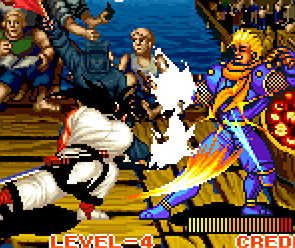
CO:To be honest, we didn't know that Samurai Shodown was edited until it was too late to do anything about it. SNK Japan had started to release home versions of English games to Europe before sending them to the US and didn't give us any input into how a particular game would be localized for the North American market. By the time that Samurai Shodown had reached our warehouse, gray-market versions from Europe had already penetrated the US region, so the company was already in a hurry to just release the game already. Personally, I loved this game from the start. When I received Samurai Shodown and found out it had been censored, I was disappointed. I remember approaching Marty Kitazawa, the president of SNK America, about this fiasco to try to find out what happened and what they were thinking. The only thing he told me was, "Yes, the home version is censored." I later learned that SNK decided to play it safe because of all the lawsuits and negative publicity surrounding a number of other violent video games of the time.
GS: Mortal Kombat?
CO: Yeah. Nintendo opted to censor Mortal Kombat on the SNES, and SNK followed suit. In the grand picture, it didn't seem to hurt us overall, as worldwide sales for the home version didn't add up to huge profits. What's interesting about this censored game is that it sparked a new mod chip for the NeoGeo. Rumor has it that someone in Mexico got a copy of the master chip and copied it. He burned a bunch of copies of this chip to produce "modded" home versions that would allow people to play the arcade version of the game on the home system, thus giving players red blood.
GS: That chip is still a very popular "mod" these days too. It seems like everyone has a debug BIOS in their NeoGeo AES nowadays. On eBay and places like the NeoStore, you can buy a NeoGeo modified to include S-video output, stereo sound, and a debug BIOS chip. What about the NeoGeo CD? Why didn't it catch on?
CO:For lack of a better term, it was just too little too late. The Neo CD was released nearly five years after the home system came out but offered the same old NeoGeo games that players had been playing for years. The Sony PlayStation, the new kid on the block at the time, was already on the market, offering new games with 3D capabilities. The other major problem was that SNK Japan had already announced a new double-speed NeoGeo CD in Japan even before the US launch of the single-speed system. In those days, the speed difference was tremendous.
GS: The censorship of Samurai Shodown reminds me of another question that has been nagging me, and likely many other people, for nearly a decade. Let me recite a phrase to you--one that you're no doubt familiar with: "Long, long ago, there were a man who try to make his skill ultimate. Because of his bloody life, it's no accident that he became involved in the troubles." That's from the opening of Samurai Shodown II. What are your feelings about that phrase, and can you explain why SNK of America couldn't or wouldn't rewrite such an obvious mangling of the English language, at least for the $300 home cartridge?
CO: Oh man! The US office always fought to have the text changed, not just in Sam Sho 2, but in other games as well. However, the time and money it took to fix these text problems were too much compared to the number of actual sales the game would produce. Later on, when I was working at Sony, I was assigned to produce the SNK NeoGeo ports for the Sony PlayStation. I had leverage at Sony to make SNK change the text for the PlayStation versions.

GS: We've already discussed that SNK consolidated its operations during the mid-1990s. Not to beat a dead horse, but can you put a personal spin on why that occurred and how it affected you? Feel free to avoid burning bridges.
CO: From a financial standpoint, it was more efficient to consolidate the two offices and cut marketing dollars for the home version. I got into the game industry and starting working for SNK because I always wanted a hand in developing games. When SNK scaled back their development house and refocused on the arcade sector, I realized I wasn't going to be able to make games if I stayed at SNK.
GS: After SNK, you ended up at Sony. What was that like, and what games were you involved with?
CO: Sony was absolutely the best. I learned a lot from being there and will always consider that to be the greatest movement in my career. Cardinal Syn was the game I produced for the PSX from start to finish. I was also involved in the development of Twisted Metal 4. And, of course, I localized all of the SNK games for PSX. I worked on several SNK games for the PlayStation. King of Fighters '95 was the first. My job was to improve its marketability to the US market. There were several options I added to the game that the Japanese version didn't have, such as level select--and, of course, better grammar and spelling. Real Bout Fatal Fury and Samurai Shodown III: Blades of Blood also had the same changes. However, Samurai Shodown III: Blades of Blood was difficult. As many people know, the PSX versions of the NeoGeo games didn't have the same quality. All three games had areas of slowdown, lower-quality graphics, and missing frames of animation. Samurai Shodown III was excruciatingly slow, and I had asked SNK Japan to speed the game up for the US market. When I was at SNK, SNK Japan wouldn't have done anything or cared, but as a Sony representative, they had to try hard to grant the wishes of the publisher. SNK was reluctant to make the changes but showed that they would do what it took to make the better game. I had a hand in other products such as Jet Moto PC, but not enough to really mention here.

GS: And then you changed jobs to go to work for Electronic Arts. You're no longer at EA, but you've expressed the desire to go back. What did you do during your time at EA, and why do you have such a strong desire to rejoin the company?
CO: I was hired to produce online games. I produced a couple of games and was the integration producer for Earth & Beyond Online. EA has always been a company that I liked since I was a little kid playing games on my Atari 400 computer. Games like Archon, Mule, and Pinball Construction Set were the greatest games around compared to their competitors. It was always a dream of mine to work there.
GS: Recently, SNK NEOGEO USA CONSUMER CORPORATION (that's one mouthful of a name, and the company insists it be spelled out in all caps) has had problems with Sony's concept approval department in getting Metal Slug 3 for the PlayStation 2 released in North America. You worked at Sony. Can you give me an idea of how the concept approval process works and why, in your personal educated opinion, you think Sony has issues with Metal Slug 3?
CO: No one really wants to deny any game from coming to the PS2, but there are only so many games that can come out in a single year, and they (Sony) prefer to approve those games they feel will be successful--so as not to waste the time of the publisher or Sony. Although the hardcore, otaku, old-school fans have a valid argument that Metal Slug 3 should be released to the PS2, the fact is, with the number of games that come out now, it would be extremely difficult for Metal Slug 3 to compete against the new 3D games. You can also tie in the fact that most hardcore gamers would buy it on one of the NeoGeo systems because it would be a better game on the NeoGeo system than on PS2.
GS: What is the Game Lord up to these days?
CO: Lately, I've been shedding the name of the Game Lord, but if more people like you show up, you bet I'll be reclaiming the fame of the Game Lord.
GS: How big is your personal NeoGeo collection? Do you own a NeoGeo Pocket Color? And if so, what are your feelings about that little handheld?
CO: My NeoGeo collection has all but been depleted. I do have a few games left, but too few to mention. The NeoGeo Color was a great handheld, and I consider it to be the best handheld to not succeed. I think it failed because the handheld market is a tough nut to crack, and if you don't have a mass-market game like Tetris, you will find yourself going the way most handhelds do.
GS: So your NeoGeo collection isn't what it used to be, eh? What games do you still have, and what do you consider your favorites? Do you have a favorite genre of games? What about fighting games? My friend Andrew thinks he's hot stuff at Soul Calibur II. Could you take him? Maybe I could throw salt in his eyes.
CO: I have all of the Samurai Shodown and World Heroes games. Also, I have Windjammers and League Bowling. I'm sure there are others, but I would need to dig them up. My favorite game on the NeoGeo was Samurai Shodown II. I consider it the best game for the system. Fighting games and sports games are definitely my favorite, although I've been playing a lot of reality-based FPSes lately. Andrew, you've got no chance. I'll take him at Soul Calibur II and any other fighting game.
GS: There's a big NeoGeo emulation scene these days. People dump new arcade games into ROM files just days after they're released, and thousands more people download them for free and play them illegally on their PCs. What are your thoughts on this phenomenon?
CO: It's an interesting dilemma. No one really wants to be the bad guy or spend a lot of money to stop this from happening. However, it is clear that software companies lose a lot of money this way and that many projects don't get funded because of this.
GS: Do you have any advice or suggestions for people who want to break into the game industry?
CO: I think it's a lot different now to break in compared to when I started. There are now a lot of schools carrying subjects such as game design and project management. Also, art schools and technical schools focus more on software development than they did when I grew up. So I guess what I'm saying is, stay in school.
GS: That should do it. Thanks so much for your time.
CO: You're welcome.
Raking It in With Fighting Games
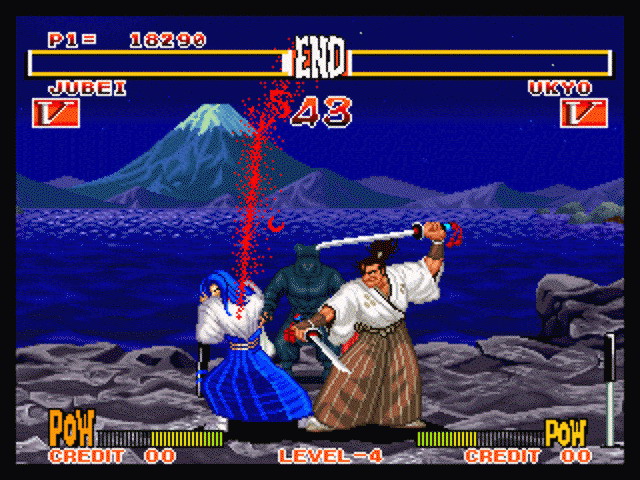
While Fatal Fury and Art of Fighting helped establish the NeoGeo as a viable alternative to traditional stand-up arcade units, it was a game called Samurai Shodown that absolutely cemented SNK's reputation as "that company that makes fighting games."
Samurai Shodown, called Samurai Spirits in Japan, was released in 1993. The game used an upgraded version of the scaling graphics engine that was originally featured in Art of Fighting, but the play mechanics, character designs, and quality of animation were far more diverse and interesting than anything SNK had produced in the past. The characters looked as though they were ripped right out of a samurai-themed Japanese animation film, and their attacks hit with all the meaty subtlety of a freight train. Every slash and thrust was followed by a spurt of blood and a spine-chilling scream, and woe to the players who lost a match, because there was a good chance that the winner's final blow would end up cutting them in two or severing their jugular vein--unleashing a fountain of blood five feet into the air. If you've never seen or played Samurai Shodown, the mention of blood and gore might lead you to compare it to Midway's Mortal Kombat, a game that was infamous at the time for its photo-realistic portrayals of death and dismemberment. Truthfully, the two games couldn't have been any more different from one another. Samurai Shodown had three times as many attacks and combinations, giving you a richer gameplay experience, and the anime-style graphics made the blood sprays and killing blows seem almost tasteful.
Nonetheless, thanks to the brouhaha over Mortal Kombat, SNK of Japan got cold feet when it came time to release the AES version of Samurai Shodown in North America. Fans of the arcade MVS game would be sorely disappointed to learn that all of the dismemberments had been removed and that the red blood splatters had been transformed into white sprays of sweat. For the first time, paying the $250 required to bring the AES cartridge home didn't mean that you were bringing home the complete arcade experience.
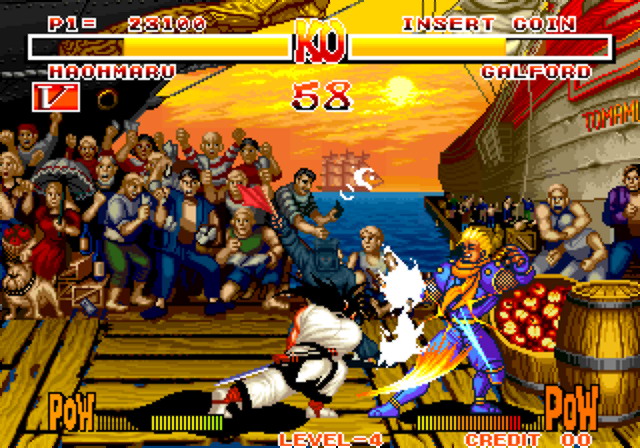
The censoring of Samurai Shodown garnered significant attention in the enthusiast magazines of the day, such as Die Hard Game Fan and Electronic Gaming Monthly, and led some NeoGeo AES owners to have debug BIOS chips installed in their consoles that would allow them to trick the game into displaying the blood and gore that was supposed to be there. Despite the controversy, however, Samurai Shodown's popularity in the arcade remained strong; so strong, in fact, that the follow-up, Samurai Shodown II (1994), developed an even greater following. Many fans consider Samurai Shodown II to be the high point in the Samurai Shodown franchise, of which there are now seven installments. Two of these are rather terrible 3D games produced for the Hyper NeoGeo 64 arcade setup, though, so most fans only include the five standard NeoGeo releases in their counting.
Samurai Shodown II also hinted at the company's desire to churn out fighting games as quickly as arcades could absorb them. While this business plan didn't seem to affect the quality of graphics or the playability of subsequent releases, the rush did cause SNK to skimp when it came to English-language localization. After dropping a quarter into Samurai Shodown II and selecting a character, you were presented with this brief background story: "Long, long ago, there were a man who try to make his skill ultimate. Because of his bloody life, it's no accident that he was involved in the troubles." Everything else about the game was fine--perfect even--but those 30 words would cause a new phrase to be coined to refer to the kind of broken English that SNK's localization team would become known for throughout the years. That phrase was "SNKgrish," a play on the more commonly used "Engrish," which is a popular--albeit somewhat derisive--term for English phrases conjured up by nonnative speakers, typically from Asian countries.
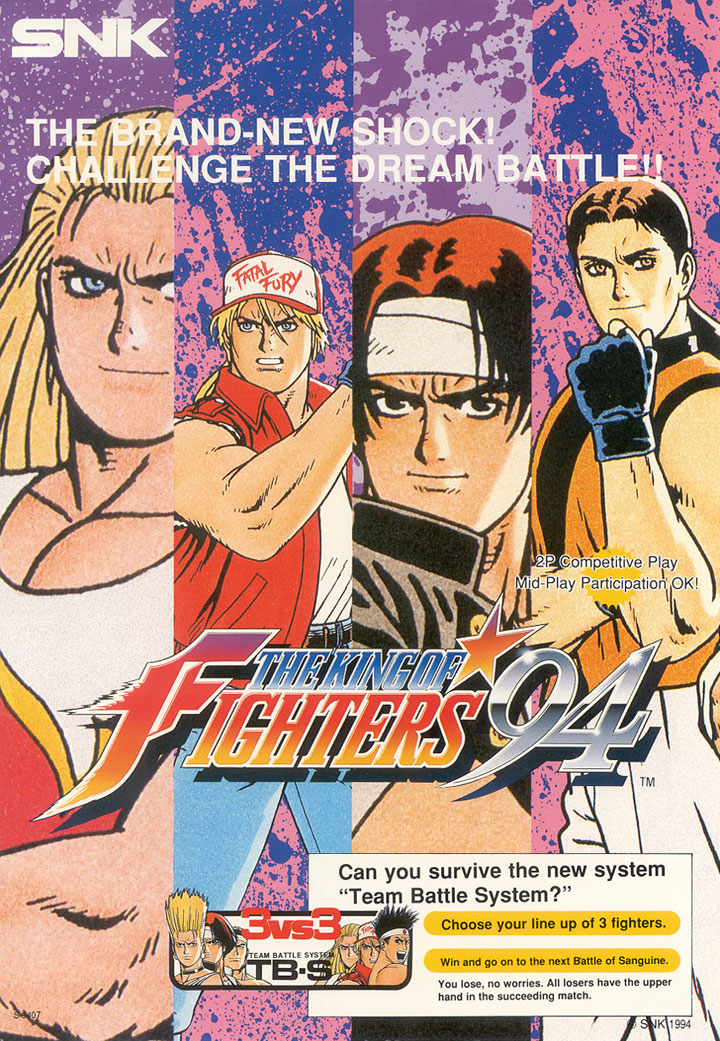
Along with Samurai Shodown II in 1994, SNK released the first game in what would become the company's longest-running and most successful franchise: King of Fighters. King of Fighters '94 brought the various characters and storylines from the Fatal Fury and Art of Fighting games together into a new style of team fighting game.
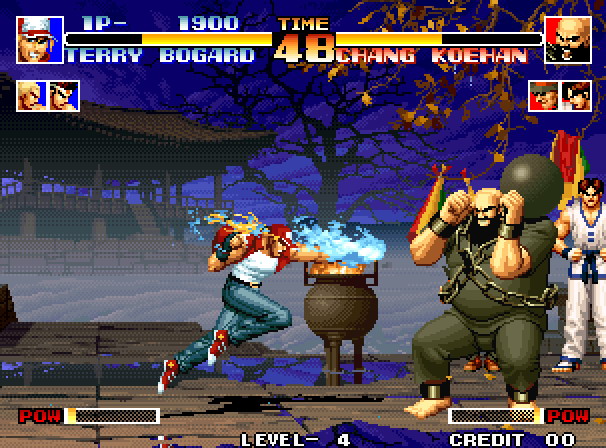
The basic play mechanics in KOF '94 were the same as in any other 2D fighting game, only now you could choose a team of three characters as opposed to a single individual fighter. When one of your fighters was knocked out, the next in line would take his or her place. To win, you had to knock out all three fighters on the other team. It sure sounds like a simple twist on a trite formula, but the teamplay aspect had players flocking to King of Fighters '94 in droves. Year after year, SNK would continue to release new installments in the King of Fighters series like clockwork. The significance of King of Fighters '94 to the company's eventual bottom line and reputation is immeasurable.
It didn't take long for Capcom to take notice of the teamplay mechanic pioneered in King of Fighters '94. By 1996, the rival company had paired up its X-Men license with the Street Fighter franchise to make X-Men vs. Street Fighter. Marvel vs. Capcom and Marvel vs. Capcom 2 followed a few years later. Eventually, SNK and Capcom would put aside their differences and join forces to create another team fighting franchise: Capcom vs. SNK.
During the early '90s, SNK wasn't the only company producing games for the NeoGeo. Sammy unleashed a Zaxxon-inspired isometric space shooter called Viewpoint in 1992 (which admittedly was ported just fine to the Sega Genesis in 1994). 1994 saw a trio of third-party hits for the MVS/AES tandem: Fighters History Dynamite and Windjammers by Data East and the first installment in Taito's groundbreaking puzzle series, Bust-A-Move. Other now-familiar franchises, such as Bomberman, Double Dragon, and Magical Drop, would soon follow. Throughout the NeoGeo's life span, SNK also funded the day-to-day operations of a second-party publisher responsible for a number of marginally successful MVS/AES games. That publisher was Alpha-Denshi, better known to fans as ADK. While ADK wasn't exactly the RareWare of the day, the company did make a name for itself, thanks to games like Magician Lord, Ninja Combat, and the World Heroes fighting game series.
In hindsight, one could argue that SNK's unwavering focus on the NeoGeo MVS/AES tandem was a situation of putting too many eggs in one basket. Like it or not, games for the Super NES and Sega Genesis were getting better all the time, and people were beginning to pour their hard-earned dollars back into new games to play at home instead of into the coin slots down at the local arcade. Hard times were on the horizon, but to the company's credit, SNK didn't completely ignore the 16-bit console market.

Realizing that many game players couldn't afford the pricey NeoGeo AES and would happily "settle" for weaker versions of the system's games on the Super NES or Sega Genesis, SNK of Japan penned a licensing deal with Takara. To those of us in the English-speaking world, Takara is best known as the toy manufacturer responsible for the production of Hasbro's massively successful Transformers line. But it also develops and publishes video game software. Takara eventually developed and released 16-bit versions of a number of SNK's biggest titles, including Fatal Fury, Fatal Fury 2, King of the Monsters, and Samurai Shodown.
Unfortunately for SNK, the company didn't invest the resources it should have into the development and publishing of its own games for Nintendo's and Sega's popular 16-bit consoles. Takara's conversions were weak sauce compared to their AES/MVS counterparts and were only mildly received. Capcom, on the other hand, took the initiative to internally develop and publish versions of its Street Fighter II games for the Super NES and Genesis consoles. The end result was that people could play Street Fighter II at home, albeit in a letterboxed format, instead of needing to visit the arcade to do so. Millions of copies of Street Fighter II for the Super NES and Street Fighter II: Special Champion Edition for the Genesis were sold, compared to the roughly 50,000 copies of Fatal Fury and Samurai Shodown that trickled off store shelves. Capcom ate SNK's lunch, and with companies like Electronic Arts, Konami, Nintendo, and SquareSoft giving gamers plenty of other reasons to stay home, the arcade market was beginning to shrink. That spelled bad news for SNK.
The Fall of SNK (1994-2001)
NeoGeo CD

Even though SNK had a hit on its hands with the arcade MVS hardware, especially with the constant influx of new fighting game titles, the AES console became increasingly more difficult to market as the caliber and number of games that were available for 16-bit consoles grew. Devoted fighting game enthusiasts might be willing to shell out $300 for an AES and another $200 per game, but that didn't translate into the kind of massive profits that SNK was looking for as a company. The general public was happy to get by with the huge selection of RPGs, fighting games, and action games available for the Super NES or Genesis, the majority of which were selling for $60 or less. Around this time frame (1992 into 1993), the Sega CD and TurboDuo systems burst onto the scene. Neither system would prove successful in the long run, but the buzz generated by the introduction of the CD-based storage format suggested that the future of home video game systems would rest with cheaply manufactured high-capacity discs and not the expensive low-capacity cartridges that had long been the norm.
The AES console's greatest disadvantage was the high cost of its games, which sold for roughly $200 a pop. In addition to the development costs associated with a full-featured game, the memory chips and circuit boards in a NeoGeo cartridge were extremely expensive. One of the advantages of CD-based consoles is that game discs literally cost nothing to manufacture. If SNK could cut its expensive cartridge format out of the equation, the company would be able to sell its games for between $40 and $60, a price level that would help the NeoGeo compete against the otherwise lesser-powered Super NES and Genesis. That's what SNK execs hoped, anyway, when they released the NeoGeo CD in 1994.

September 9, 1994. On a single day in Japan, SNK sold through the entire first run of 25,000 NeoGeo CD consoles. Internally, the NeoGeo CD was nothing more than a NeoGeo AES with a CD drive and 56 megabits (7 megabytes) of internal memory. SNK also stopped producing its huge arcade-style joysticks in favor of a gamepad that was cheaper to manufacture and more in line with the existing game controllers of the time. The system itself still cost $300, but games for the NeoGeo CD were priced at a mere $40. From that point on, new games would come out for the CD unit just a couple of months after the corresponding MVS/AES versions. The only difference in the software was the loading times that came along as a result of the slower CD-based medium, a shortcoming that soon became the common complaint among many NeoGeo CD owners.
The benefit of the cartridge medium is that data can be moved from ROM chip to system memory in just milliseconds, which means that the transition from one scene to the next appears instantaneous to the player. The loading time in between stages in a typical NeoGeo CD game, such as King of Fighters '94, was 20 to 30 seconds--a nearly unbearable amount of time to wait between matches in a fighting game. It didn't help that the "Now Loading" message that popped up during these transitions came in the form of a goofy-looking monkey banging on a pair of conga drums. Ask any NeoGeo CD owner, and they'll tell you they absolutely hate that monkey.
To solve the problem of lengthy load times, SNK released a version of the NeoGeo CD in early 1995 that used faster cache RAM. The new system, called the NeoGeo CDZ, ran all of the same software as the NeoGeo CD, but did so with half the load time.
In Japan, SNK marketed the NeoGeo CD aggressively. Along with the introduction of a double-speed unit, the NeoGeo CD saw a number of exclusive releases that the AES did not. One of these was Samurai Spirits RPG, a role-playing-game version of Samurai Shodown that unfortunately never saw the light of day outside of Japan. Perhaps the most popular of the NeoGeo CD's exclusives was Taito's hot puzzle game, Bust-A-Move, which SNK published for the arcade MVS and home CD system, but not for the AES.
By contrast, the company's introduction of the NeoGeo CD in America would prove less than stellar--a disaster by most measures. By the time the system went on sale in the United States, in September of 1995, Sega's Saturn console had already been released, and the Sony PlayStation was just days away. Both of these consoles had 10 times the horsepower of SNK's NeoGeo. Gamers were hardly itching to bust out CD versions of SNK's popular 2D fighting games; they were champing at the bit to try out home versions of Namco's 3D Tekken and Ridge Racer games on the snazzy new PlayStation. To compound matters, SNK of Japan didn't send SNK of America the newer double-speed CDZ unit to sell in North America. Instead, the US branch was saddled with the unenviable task of trying to market the older single-speed model.

SNK of Japan didn't fund a major ad campaign for the NeoGeo CD in North America like it had done in Japan. Few stores would carry the NeoGeo CD, since the shelves were already packed with games and accessories for no fewer than four mass-market game products: the Super NES, Sega Genesis, Sega Saturn, and Sony PlayStation. In the end, rather than push the underpowered single-speed NeoGeo CD, SNK of America consolidated its operations and shifted its focus back toward the part of the company that was still making money, the arcade division. Chad Okada and many of the familiar faces of the "Bigger, Badder, Better" era left the company.
As a result of the consolidation, SNK of America put the lion's share of its resources into the sale and distribution of MVS hardware and games. The distribution of AES software in retail stores stopped, direct orders for AES cartridges now took weeks to fill, and the previously accessible customer support line quickly devolved into long hold times and voicemail boxes. It didn't take long for the other shoe to drop--SNK of Japan downsized the US branch even further and moved its operations back to San Jose, California. By the end of 1996, SNK of Japan was running the day-to-day operations of its American counterpart.
The Lost Years
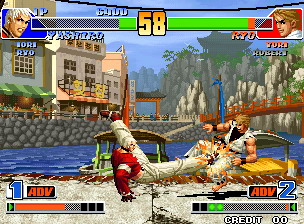
For the most part, SNK spent the years between 1994 and 1998 trying to find itself as a company. On the arcade side, the King of Fighters and Metal Slug series were driving MVS distribution. At home, the company was still selling AES and NeoGeo CD games directly through mail order and was also reaching out to the mass-market console audience with versions of its favorite fighting games for the Sony PlayStation and Sega Saturn.
Up until 1998, SNK's main source of income came from the King of Fighters franchise. Each year, a new installment was produced, which would debut in the arcade and subsequently make its way onto the popular home consoles of the time. King of Fighters '95, '96, '97, and '98 were published for the Sony PlayStation in Japan by SNK, and King of Fighters '95 and '96 were published for the Sega Saturn. The two Saturn games are best remembered for the add-on RAM cartridges they supported, which significantly trimmed CD access time when used. Sony Computer Entertainment America published King of Fighters '95 and '96 in North America. King of Fighters '98 was brought stateside by SNK itself.
Beware of Bootlegs
Some NeoGeo AES games are rare and fetch upward of $1,000. As a result, unscrupulous individuals often take the MVS versions of these games and create counterfeit bootlegs that are playable in home consoles. Suffice it to say, the sale of these bootlegs is illegal and intended solely to defraud SNK's loyal fans.

How do you spot a bootleg? Often, the insert artwork or label is different from that in the official SNK release. Usually, though, the only way to check is to look inside the cartridge. The picture above is a legitimate SNK circuit board.
If the game was converted from an MVS game using a sacrificial AES cartridge, you'll often find ugly solder points and wires going from chip to chip. Check the circuit board to see if the game title imprinted isn't what appears onscreen.
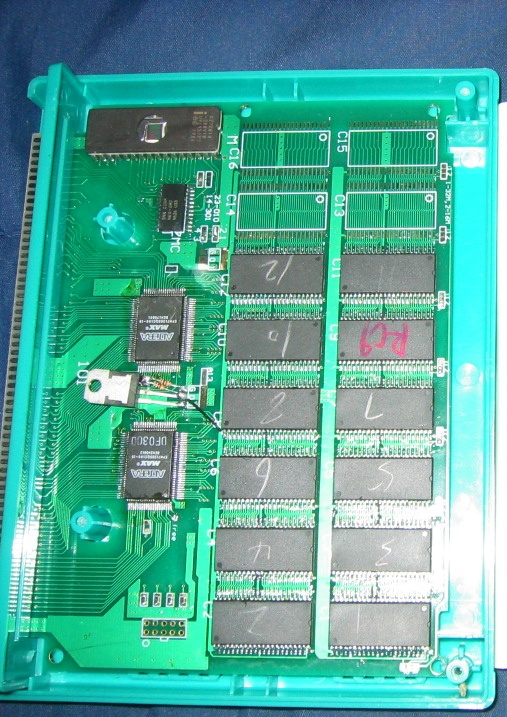
Many times, the entire circuit board is manufactured from scratch--a counterfeit all the way. If you don't see the SNK logo on the board or SNK logos on the chips, it's probably a counterfeit. Take a look at the ROM chips used. SNK used large ROM chips that fit into an entire chip slot. Most bootlegs use tiny ROM chips that occupy only the middle of the slot. Above all, if the cartridge looks like a mess inside, it's likely a bootleg.

In terms of the number of good games published in a single year, 1996 was the year of record for SNK. King of Fighters '96, Real Bout Fatal Fury, and Samurai Shodown IV were sucking down quarters in the arcades, which in turn sparked a modest resurgence in the sales of AES consoles and cartridges. 1996 is also the same year that Metal Slug came to the NeoGeo. Unlike the fighting games that were so typical of the MVS/AES, Metal Slug was a side-scrolling platform game with a military theme and a hilarious cartoon style that proved popular to a decidedly wide audience.
After purchasing Nazca, the game's original developer, SNK would go on to publish four more Metal Slug sequels. (All but one Metal Slug game was published by SNK. Metal Slug 4 was developed and published by Mega Enterprises in 2002 during SNK's "dark period," which will be covered later on in this feature). Today, you can purchase and play near-perfect versions of these Metal Slug games for the PlayStation, PlayStation 2, and Saturn consoles.

An AES version of Metal Slug was produced in small numbers and sold primarily in Japan during the summer of 1996. The game took a few months to achieve popularity in the United States, and by the time players took notice and were interested in ordering the cartridge directly from SNK, there weren't any left for sale. MVS versions of the game modified to work in AES consoles routinely sell in online auctions for around $200 to $300, but original AES versions--complete with cartridge, clamshell box, liner artwork, and manual--typically fetch upward of $1,000.
Metal Slug wasn't the only game released in limited numbers in 1996. By that time, SNK was manufacturing AES cartridges at a rate that was just 10 percent of the rate the company was producing them at during the early '90s.

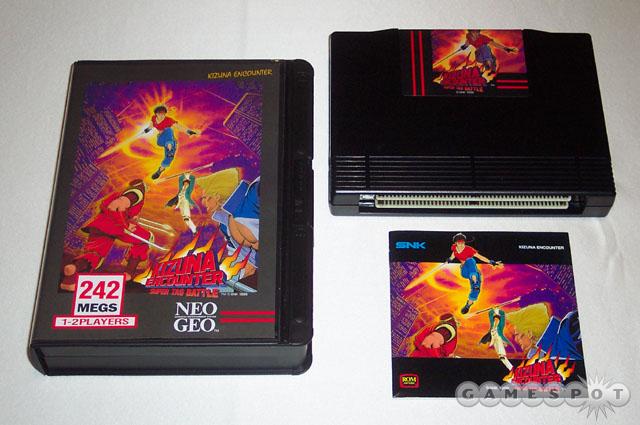
Along with Metal Slug, SNK released two other limited-issue AES games in 1996. The first of these was Kizuna Encounter: Super Tag Battle, a tag-team fighting game that's best described as a cross between Samurai Shodown and Capcom's X-Men vs. Street Fighter. Kizuna is a weapons-based 2D fighting game where you can swap between two characters throughout the course of a match.
Kizuna Encounter isn't the greatest fighting game on the planet, but it is noteworthy for its rarity. SNK sold only a dozen or so copies of the AES version of Kizuna Encounter in Europe and North America before shutting down production. As a result, the game is a sought-after collectible for NeoGeo fans. One copy sold on eBay for a whopping $900 back in 1998, and in 2002, bids for the game on a private message board escalated to more than $5,000.
Joining Metal Slug and Kizuna Encounter in limited release during 1996 was the final installment of SNK's popular soccer series, Super Sidekicks 4: Ultimate 11. There are no official numbers to verify the total production run for Ultimate 11, but anecdotal evidence suggests that there may be even fewer copies of it floating around than there are of Kizuna Encounter.
In addition to SNK's ultra-rarities, many third-party releases, such as ADK's Twinkle Star Sprites and Sunsoft's Waku Waku 7, became impossible to find barely days after they were released and tend to incur significant bids on Internet auction sites.
For 1997 and beyond, SNK embarked on two new ventures, achieving mixed success in the process. The first of these was the Neo Print photo sticker machine, which you can still find in a number of malls and arcades to this day. If you've ever seen a photo booth that purports to let you take your picture with a variety of colorful frames and cheerful backgrounds, chances are it's a Neo Print machine.
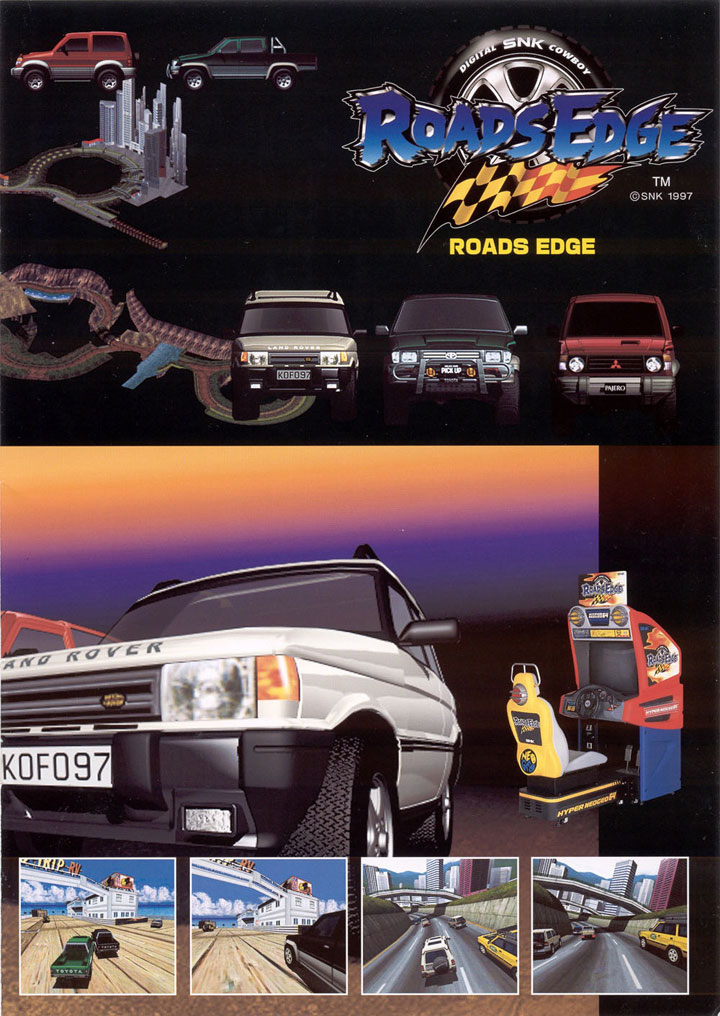
Less successful was the company's Hyper NeoGeo 64 hardware. Hoping to catch up with the 3D movement, SNK came up with a new 64-bit motherboard that included both 2D and 3D capabilities. The system used custom cabinets depending on the type of game--a stand-up cabinet for action and fighting, a cabinet with a light gun for shooting games, and a sit-down cabinet for racing games--and used a cartridge-based storage medium similar to that in the MVS.

Under the hood, the Hyper Neo carried a custom 64-bit RISC processor, 4 megabytes of program memory, 64 megabytes of 3D and texture memory, and 128 megabytes of memory for 2D characters and backgrounds. Unfortunately, the hardware was weak compared to the powerful arcade cabinets being offered by Namco and Sega, and the games fell far short of expectations. Namco released Tekken 3 in arcades in early 1997, and Sega released Virtua Fighter 3 later that same year. SNK produced Samurai Shodown 64 for the Hyper NeoGeo in December 1997. Its graphics weren't nearly as smooth or cutting edge as the games Sega and Namco had put out earlier in the year, and, in fact, the game barely held up to scrutiny when compared to the PlayStation versions of Tekken 2 and Soul Blade that were available at the time. Not surprisingly, a PlayStation version of the sequel to Samurai Shodown 64, Samurai Shodown: Warrior's Rage, was later produced for the PlayStation by SNK. All told, seven games were produced for the Hyper NeoGeo 64 during its brief two-year life span.
Around the time that SNK was introducing the Hyper NeoGeo 64 to arcade distributors, the company decided to once again expand its operations in North America. Generally speaking, Japanese business people prefer to deal with people they know and trust. In the fall of 1997, John Barone was asked to come back and manage the newly formed SNK USA. Barone's new title was executive vice president. Right off, he installed his wife, Susan Barone, as vice president of SNK USA's consumer division. This wasn't an instance of nepotism though. During the early 1990s and before their marriage, Susan (then Jarocki) was SNK of America's operations manager. Just as he had done in the past, John Barone concerned himself mainly with the production and sales of coin-op hardware and games, while his wife handled the marketing and sales of the company's PlayStation and Dreamcast software, as well as the sales of NeoGeo AES cartridges to the niche of people still clamoring to purchase new games for the unit. Thanks to the expansion of SNK USA, gamers in North America were able to purchase versions of King of Fighters '96, King of Fighters '98, Fatal Fury: Wild Ambition, Samurai Shodown: Warrior's Rage, and Metal Slug for the PlayStation, along with King of Fighters '99 for the Dreamcast, without having to resort to expensive import copies and black-market mod chips.
Despite the fact that things were looking up for SNK during the waning days of the last millennium, the company really wasn't flourishing. Arcade attendance was way down, because of the success of Sony's and Nintendo's home consoles, and the fighting game craze had all but died out. That didn't bode well for a company with a library loaded with fighting games.
In order to boost its revenue, SNK needed to once again go in a new direction. During the mid-'80s, that new direction was publishing games for the NES. In the early 1990s, it was going after the enthusiasts with the NeoGeo MVS and AES. What would SNK's new strategy be in 1999? Going after the handheld market, which at the time was 100 percent dominated by Nintendo's Game Boy Color.
NeoGeo Pocket Color
Show anyone a portable video game system, whether it's a Game Boy Advance, an old-school Sega Game Gear, or the newfangled Nokia N-Gage, and chances are he or she will ask you something along the lines of, "What kind of Game Boy is that?"

Like it or not, the name "Game Boy" is synonymous with handheld game systems. It was like that in 1998 also. Many companies--including Atari, Sega, NEC, and Tiger Electronics--had already tried to break into the lucrative portable video game market with machines that were vastly superior to Nintendo's Game Boy line but had been outgunned where it mattered most: the software. By and large, the audience for handheld video games is younger than the audience for console games. Often, parents are buying games for their kids--and parents tend to buy what they've heard of or what their kids already like. The Atari Lynx had Steel Talons and Ms. Pac-Man. The Sega Game Gear had Sonic the Hedgehog. Take a look at the library for Nintendo's Game Boy though, and you'll run out of breath reading off all the A-list franchise titles: Super Mario Bros., Legend of Zelda, Metroid, Donkey Kong, Tetris, Pokemon...the list goes on and on. It's no wonder that Nintendo's Game Boy had a lock on the traditionally younger audience that was playing portable game systems.
History shows that going up against the Game Boy is a losing proposition. Regardless, there are many teenage and adult game players who would love to own a handheld system geared toward their tastes--something with simulation, sports, and fighting games instead of the kid-friendly Mario and Pokemon games. It was with an eye on this untapped market that SNK dove into the handheld genre with a system of its own, the NeoGeo Pocket, in 1998.
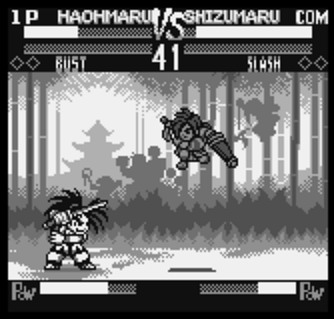
The NeoGeo Pocket went on sale in Japan in the fall of 1998. Like the Game Boy, it was a portable game system with a monochrome screen and two buttons. Unlike the Game Boy, it possessed a 16-bit processor and a selection of games based on SNK's most popular franchises. 10,000 NeoGeo Pocket systems were sold within the first month of release, and customers lined up to get their hands on the initial set of launch games, which included Baseball Stars, King of Fighters R-1, Pocket Tennis, Samurai Shodown, and NeoGeo Cup '98 Soccer. Unfortunately for SNK, Nintendo released the Game Boy Color just two months after the NeoGeo Pocket made its debut. Sales of the NeoGeo Pocket quickly diminished. Rather than give up, however, Kawasaki sent his engineers back to the drawing board.
The new mantra was color. In the spring of 1999, SNK replaced the monochrome NeoGeo Pocket with the NeoGeo Pocket Color. This new unit incorporated a reflective TFT screen into the design. Now, SNK had a portable system that could compete with the Game Boy Color, at least in terms of the hardware under the hood. Compared to Nintendo's GBC, the NGPC could display more graphical sprites onscreen at a time (64 vs. 40) and display more simultaneous colors (146 vs. 56). That meant games for the NGPC would look superior to those on the GBC. At the same time, the 16-bit Toshiba processor inside the NGPC used less power than the 8-bit Z80 processor inside the GBC, giving the system a spectacular 40 hours of run time on a single pair of AA batteries. The Game Boy Color, by contrast, would drain a pair of AAs in 15 hours on average.
Comparison Chart: NeoGeo Pocket Color vs. Game Boy Color
| NeoGeo Pocket Color | Nintendo Game Boy Color | |
| Dimensions (Width x Height x Depth) | 5.1x3.15x1.2 inches (130x80x31mm) | 3.1x5.3x1.1 inches (135x78x24mm) |
| Weight | 6.9 ounces (195 grams) | 5 ounces (140 grams) |
| Operating Time | 40 hours, 2 AA batteries | 15 hours, 2 AA batteries |
| CPU | Toshiba TLCS-900/H 16-bit, 6.144MHz | Z80 8-bit, 8MHz |
| Memory | 12KB Work RAM, 16KB Video RAM | 32KB Work RAM, 16KB Video RAM |
| Screen | 45x48mm, reflective LCD, 160x152 resolution | 43x38mm, reflective LCD, 160x144 resolution |
| Colors | 4,096 possible, 146 simultaneous | 32,000 possible, 56 simultaneous |
| Sprites Per Frame | 64 | 40 |
| Minimum/Max Sprite Size | 8x8 pixels | 8x8 pixels, 8x16 pixels |
| Sound | 6-Channel Stereo, Dedicated Z80 CPU (3MHz) for sound | 4-Channel Stereo |
| Cartridge Size Limit | 32mb (4MB) | 64mb (8MB) |
Bold = better.
SNK never officially put the monochrome NeoGeo Pocket on sale in North America or Europe, but customers in these regions could mail-order the system and its games through the snkusa.com Web site. In total, SNK USA sold two NeoGeo Pocket units between the months of April and August in 1999. Two. Ouch. Even though SNK USA did nothing to market the monochrome system, the primary factor underpinning its weak sales in North America was that most gaming enthusiasts already knew that SNK was planning to release the NeoGeo Pocket Color in the US and in Europe.

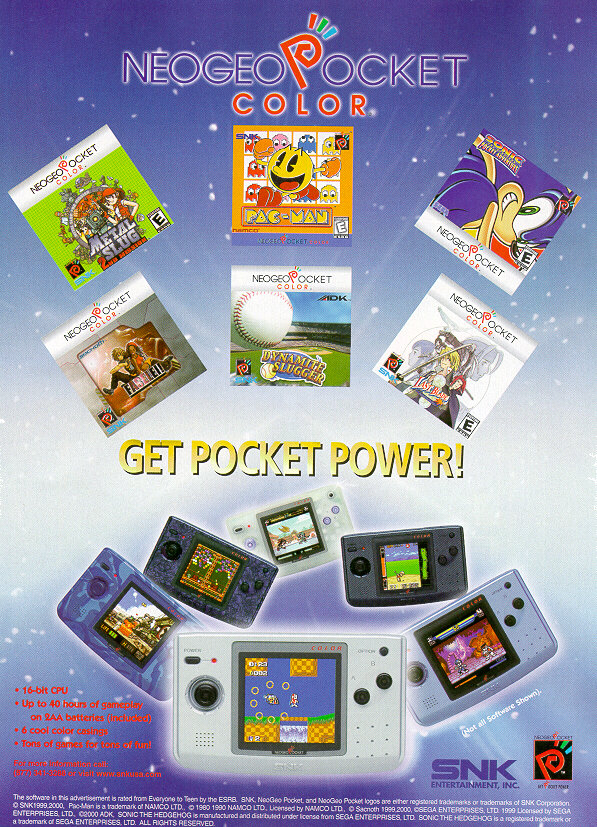
Eventually, SNK did just that. The NeoGeo Pocket Color went on sale in limited fashion in the United States in June of 1999, with a full nationwide rollout in August. Toys "R" Us, Electronics Boutique, Software Etc., Babbages, and a whole host of retailers carried the system. Print ads appeared in major enthusiast publications such as Electronic Gaming Monthly and Pocket Games. Word of mouth was unequivocally positive. All of these factors helped the NGPC sell nearly 25,000 units during the first two months of its US release, and all of the "big five" launch titles sold out their initial 10,000 copy press runs.
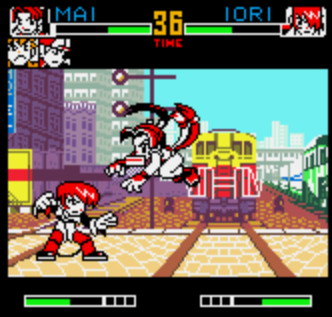
The launch lineup was pretty solid, anchored by Samurai Shodown II, Fatal Fury: First Contact, King of Fighters R-2, Pocket Tennis, and Metal Slug: 1st Mission.
It was during this tumultuous period that SNK USA underwent yet another major personnel change. The executives in Japan weren't happy with how the Barones were marketing the company's products in the United States. John Barone, the executive VP, was having little success increasing the MVS's penetration into the arcade sector, and his ability to market the Hyper NeoGeo 64 and Neo Print photo booth in North America proved to be below the parent company's expectations.
On the consumer side of things, executives in Japan weren't pleased with how poorly the monochrome NeoGeo Pocket had sold just prior to the introduction of the color model in North America, and they were livid with Susan Barone for her decision to use cardboard boxes as opposed to plastic boxes for the system's US release. The Barones were stripped of their control of the US branch in June 1999 and released from their contracts at the end of the year.
Replacing the Barones was Ben Herman, who was just hired on as SNK USA's national director of sales a few months into 1999. Herman's history with the company went back much further, however, to the early '90s, when Paul Jacobs was president and the NeoGeo AES had just been introduced. Back then, Herman's role was primarily as a consultant responsible for getting chain stores like Toys "R" Us to notice and stock the NeoGeo home console. With the departure of the Barones, he was put in charge of SNK's entire US operation.
Under Herman's watch, SNK's US marketing team decided to go all out for the 1999 Christmas shopping season. The company spent $4 million to create television advertisements that aired on MTV, Comedy Central, Cartoon Network, and a variety of other demographically focused channels. In addition, the software lineup for the NeoGeo Pocket Color was bolstered by what would ultimately become the system's three most prominent releases: Sonic the Hedgehog: Pocket Adventure, Match of the Millennium, and SNK vs. Capcom: Card Fighter's Clash. Sonic was a big hit on the system, selling 110,000 copies overall and eventually pairing up with the system as a pack-in in a $99 bundle.

Match of the Millennium and Card Fighter's Clash were both based upon the SNK vs. Capcom cross-license. MOTM was a team-oriented one-on-one fighting game, similar to King of Fighters, while Card Fighter's Clash was a card battle game similar in spirit to Konami's Yu-Gi-Oh!.
After the winter boom, English NeoGeo Pocket Color releases slowed to a crawl. Announcements out of the company pertaining to future titles grew scarce as well. From November 1999 through April 2000, Japanese gamers got Dive Alert, Gals Fighters, Cotton, Faselei!, Last Blade, Memories Off Pure, Cool Boarders, and Metal Slug: 2nd Mission. In the US, only Dive Alert and Gals Fighters were released during that time. SNK of Japan had just been acquired by Aruze, a Pachinko machine maker, and the home office didn't seem too concerned with how its cute little handheld was doing in North America and Europe.

At the May 2000 Electronics Entertainment Expo, however, fortunes appeared to be turning. The newly christened SNK Entertainment Inc., with Ben Herman at the helm, displayed English versions of Metal Slug: 2nd Mission, Cotton, Last Blade, Evolution, and Dynamite Slugger in its booth. The marketing team was jubilant, proudly announcing that the NeoGeo Pocket Color had reached 2 percent market share in the US compared to the Game Boy Color's massive share. That number wasn't enough to send Nintendo running for cover, but it was enough for SNK USA to eke out a profit and enough to convince Toys "R" Us to begin placing demo kiosks in its stores.
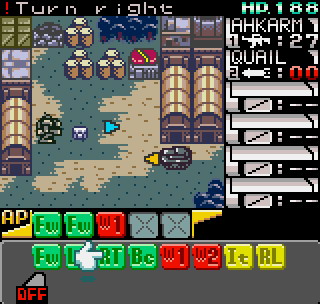
Metal Slug: 2nd Mission came out in late May and sold out its entire initial run of 10,000 copies. Fans were looking forward to Last Blade, Faselei!, and Dynamite Slugger in June and to Evolution and Cotton in July. The most eagerly awaited was Faselei!, which was a mech robot strategy game that completely flexed the graphical and audio capabilities of the tiny NGPC. Digital music is common in handheld games these days, but back then, Faselei!'s MP3-quality intro music was a wake-up call. Sadly, the June honeymoon would not come.
On June 11, 2000, rumors began surfacing on the Internet that SNK would be pulling out of the US and European markets. Admittedly, while the NGPC was beginning to reach a watershed mark in the US, it was failing miserably in Japan. The system's initial popularity there had died out when Bandai introduced its WonderSwan portable game system. The NGPC was selling fewer than 3,000 units per month in Japan. On the console side of things, the Dreamcast releases of King of Fighters 2000 and Fatal Fury: Mark of the Wolves sold below expectations in Japan, while sales in the US of King of Fighters '98 for the PlayStation were equally miniscule. To make matters worse, sales of arcade MVS machines and software were way down in both countries.
Top 10 NGPC Games
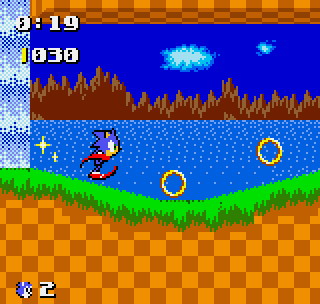
During its brief shelf life, 30 games were released for the NeoGeo Pocket Color in North America. Nonetheless, the level of quality evident in the software was so high that many people are still playing these games to this day.
Just in case you want to start your own NGPC collection, here is a list of the top 10 US games you should get your hands on.
SNK vs. Capcom: Card Fighter's Clash
Match of the Millennium
Metal Slug: 1st Mission
Sonic the Hedgehog: Pocket Adventure
The Last Blade
King of Fighters R-2
Neo Turf Masters
Bio-Motor Unitron
Baseball Stars Color
NeoGeo Cup '98 Plus Soccer
And then, on June 13, 2000, Aruze, now the parent company of SNK, dropped the bomb:
"In a move to regroup and re-evaluate its worldwide marketing strategy, SNK Entertainment, Inc. has decided to cease distribution of NeoGeo Pocket Color hardware and software in the US and Canada, effective immediately. The company also will stop domestic distribution of all Dreamcast and PlayStation titles." --Official SNK Press release.
Outside of Japan, with the exception of third-party license deals, SNK was effectively dead. Cotton, Faselei!, Last Blade, and Evolution were never officially released in North America, though they were issued in the United Kingdom for a short time. Today, complete sets (cartridge, box, manual, registration card) of these rare games fetch upward of $100 each on auction Web sites. Unconfirmed production figures place the number of UK copies of Faselei! in circulation at around 5,000. Evolution is more rare, numbering around 2,000 copies.
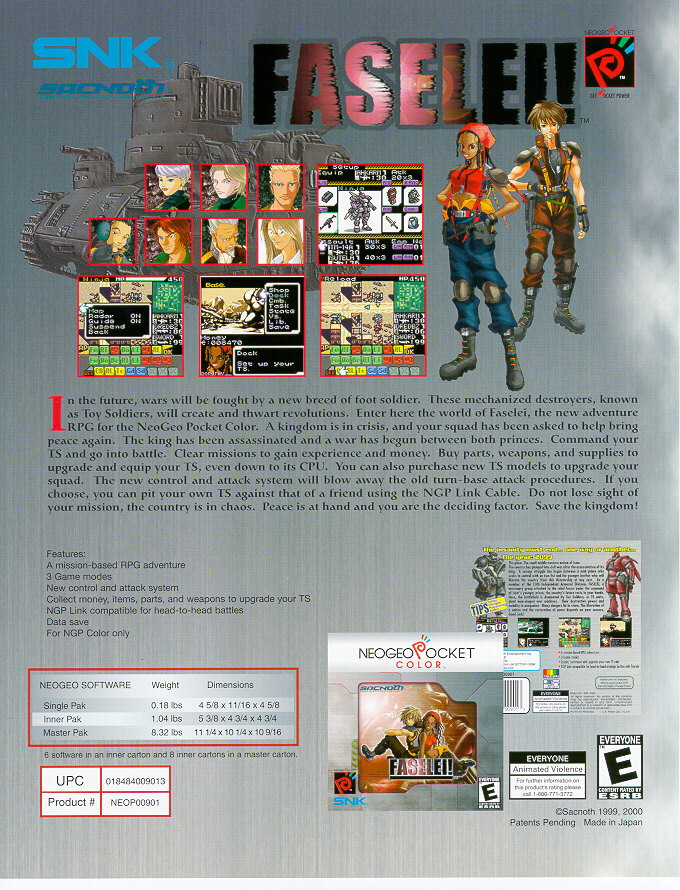
To illustrate just how near Faselei! and Last Blade were to a release in the United States, SNK had the cartridges for both games sitting in a warehouse. All that was left to do was to assemble the cartridges together with the associated boxes and manuals and ship the games to retailers. Instead, the boxes and manuals were recycled, and the cartridges were shipped back to SNK Japan for remanufacture into products for the Japanese market. Later, after SNK itself slipped into bankruptcy, these bare US versions of Faselei! and Last Blade were sold to liquidators, which is why you can now find them regularly for sale at various Web sites and Internet auctions. Generally speaking, collectors don't have much interest in the US versions of these games because they don't include an original box or manual. But for those NGPC fans out there who just desire to play these games in English, the bare US versions are not a bad way to go.
In all, 30 games were published for the NeoGeo Pocket Color in the United States. SNK continued to release games for the NGPC in Japan until 2001, bringing the total number of games available for the system to 85.
After the closure, fans of SNK would be left asking, "Why?"
The answer to that question is interesting for numerous reasons.
The Aruze Fiasco
Despite modest sales of SNK's properties for the PlayStation, Saturn, and Dreamcast consoles, and decent success with the NeoGeo Pocket Color in North America, SNK Corporation was a company running in the red. By the time 1998 had transitioned into 1999, SNK had already shut down its hardware manufacturing facilities and closed down its chain of NeoGeo World amusement centers.

SNK needed a savior. Up to the plate stepped a company called Aruze, which had amassed huge wealth by developing and producing Pachinko machines for use in the various gambling parlors throughout Asia. Pachinko is a game that requires almost no effort to play. Prospective players put a few hundred yen into a machine, which in turn gives them a basket full of ball bearings. Then they walk over to a Pachinko machine and drop the bearings into the holes at various speeds. The balls bounce off posts and ramps inside the machine and, if the player is lucky, land in one of the prize holes at the bottom. There's also a variant of Pachinko called Pachi-Slot, which Aruze is especially known for. In Pachi-Slot, a slot machine kicks in when the bearings land in the prize holes. If the symbols match, the player can win a gaggle of Pachinko balls in return. Aruze wanted SNK's intellectual property so it could develop Pachi-Slot machines based upon popular SNK franchises, so, in January 2000, Aruze acquired SNK Corporation and its related companies.
After the buyout, Aruze did little to support SNK's video game business. The company funneled almost no money into SNK's development studios and put only a haphazard effort into publishing SNK's properties on the successful home video game consoles of the time. King of Fighters '99 Evolution and Fatal Fury: Mark of the Wolves are highly regarded as two of the best fighting games available for the Sega Dreamcast. Unfortunately, by the time they were released, the Dreamcast was fizzling in popularity, and the PlayStation 2 had just launched.
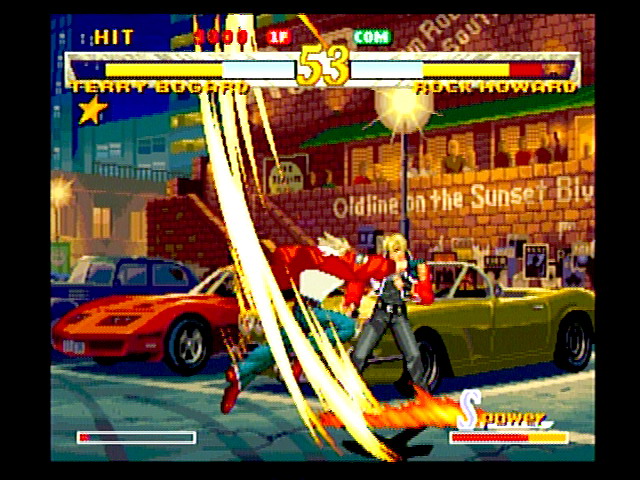
Without question, Capcom vs. SNK was the most notable game to bear the SNK logo during 2000, but it was developed and published by Capcom, not SNK. Before the Aruze deal closed, SNK and Capcom signed an agreement whereby the two companies would produce games featuring both companies' characters. Capcom went on to make Capcom vs. SNK and its sequel, which were playable in the arcade and on the Sega Dreamcast and Sony PlayStation 2 consoles. And it was Capcom that reaped the majority of revenue from those games.
For SNK's part, the company developed and released two SNK vs. Capcom games for the NeoGeo Pocket Color handheld--Match of the Millennium, a fighting game, and Card Fighter's Clash, a card battle game in the spirit of Konami's Yu-Gi-Oh!. Both games sold approximately 50,000 copies, but that didn't add much to SNK's bottom line, nor were their releases the result of any action on Aruze's part.
Aruze did follow through on its desire to use SNK's intellectual property to make Pachinko machines based on the King of Fighters and Metal Slug franchises, however, which irked SNK's founder, Kawasaki, to no end.
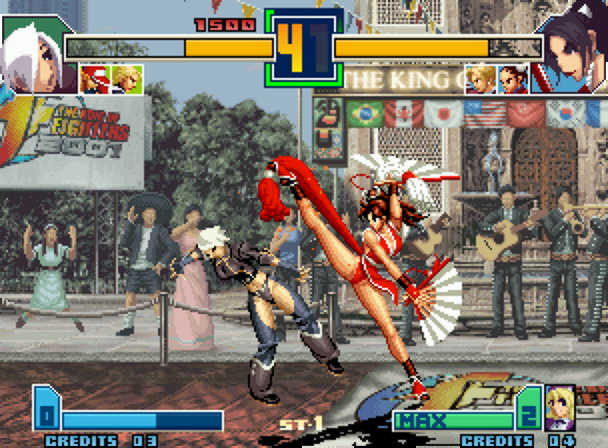
Subsequently, Kawasaki and a handful of SNK executives left the company. Rather than preside over his company's stagnation and downfall, Kawasaki, along with five other former SNK executives, funded the formation of a new entertainment company, called BrezzaSoft. Aruze then decided to shutter all of SNK's operations outside of Japan. SNK USA, then called SNK Entertainment, closed. The North American rights to MVS coin-op distribution were sold to Apple Industries, and the rights to the Neo Print photo system were sold to Apple Photo Systems. Obviously, with no revenue coming in from North America or Europe, SNK's earnings went into an even speedier tailspin.
A group of Aruze's shareholders, primarily those that owned stock in SNK Corporation, filed suit against Aruze in 2000, accusing the company of being directly responsible for SNK's operating losses, which totaled nearly 27 billion yen (roughly $260 million). Between the lawsuit and SNK's growing debts, Aruze decided to put SNK into bankruptcy. Ironically, during the process, Aruze sold the intellectual property rights for King of Fighters and other SNK franchises to BrezzaSoft--the company partially owned by SNK's former founder, Eikichi Kawasaki.
SNK ceased to be on October 22, 2001.
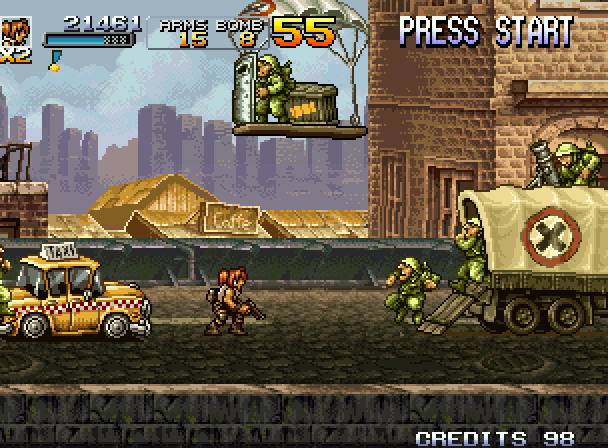
BrezzaSoft would ultimately publish King of Fighters 2001 and 2002, which were developed by South Korean developer Eolith, another company partially funded by Kawasaki. The only other SNK-related franchise to see the light of day after the company's departure was Metal Slug. South Korean publisher and developer Mega Enterprise published Metal Slug 4 in 2002. Sadly, most fans regard Metal Slug 4 as the weakest installment in the series.
Nevertheless, SNK is a company known for its ability to adapt. Past hardships resulted in NES development, the NeoGeo MVS/AES systems, and the NeoGeo Pocket. Not even bankruptcy and closure could kill this tenacious company. SNK would come back to life, eventually.
SNK Reborn as SNK Playmore--2001 and Beyond
Piecing SNK Back Together
This is the story of how SNK came back from the ashes.
In August 2001, not long before SNK officially dissolved into bankruptcy, former founder and CEO Kawasaki started up a new company, called Playmore, and quickly purchased the intellectual property rights to King of Fighters, Metal Slug, and the majority of other former SNK properties from the companies that Aruze had sold them to. Soon after that, Playmore acquired BrezzaSoft. What Kawasaki had done, one step at a time, was to piece the old SNK back together again. All that was missing was the name. Closing out 2001 and throughout 2002, Playmore would produce software for the NeoGeo AES/MVS systems, as well as port many of SNK's popular games to the Sony PlayStation and Sega Dreamcast consoles.
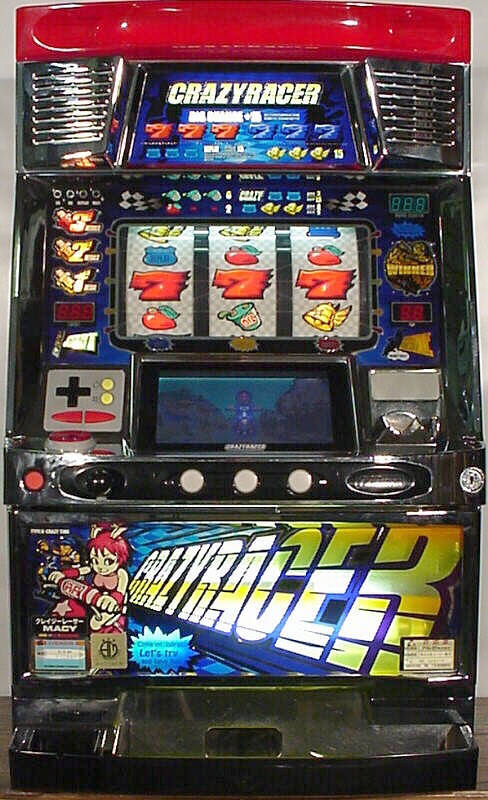
Kawasaki would eventually have his revenge on Aruze, in a manner of speaking. After SNK went bankrupt and Playmore acquired the rights to SNK's intellectual properties, Aruze went on to develop Pachinko games using SNK's trademark characters. Needless to say, the appearances of Terry Bogard, Mai Shiranui, and the Metal Slug tank in games like Bakuchi, Aruze Kingdom 7, and Ire-Gui were completely unauthorized by Playmore. On October 28, 2002, Playmore filed a trademark and copyright action for damages in Osaka District Court alleging that Aruze was infringing upon Playmore's trademarks and copyrights concerning the use of SNK properties in Aruze's Pachinko machines. All told, Playmore claims more than 6.2 billion yen in damages, which amounts to roughly $58.5 million. In January 2004, a preliminary decision was handed down by the Osaka District Court determining that Aruze unlawfully used SNK Playmore-owned trademarks following its sale of those trademarks. A final decision and the awarding of damages are still pending.
Thanks to Playmore, SNK also reopened operations in North America. In December 2002, SNK NeoGeo USA Corporation was formed, with the purpose of marketing the company's arcade games in the US and Canada. Shortly after that, SNK NeoGeo USA Consumer Corporation was set up to handle marketing and distribution of the company's games for home consoles such as the PlayStation 2 and Game Boy Advance. In a fitting twist of fate, Ben Herman, VP of sales for SNK Entertainment Inc. until the June 2000 pullout, was asked to come back and become the president of SNK NeoGeo USA Consumer Corporation. Herman had been working as a regional sales manager for Nintendo but found the opportunity to take the helm at his former employer too tempting to pass up.

The newly formed US-based SNK companies made their first public appearance at the 2003 Electronic Entertainment Expo in Los Angeles. There, SNK NeoGeo USA Corporation announced its intention to restart MVS distribution in the United States. That meant that arcade operators could purchase King of Fighters 2002 as well as the upcoming SVC Chaos: SNK vs. Capcom, Metal Slug 5, and Samurai Shodown 5.
As for SNK NeoGeo USA Consumer Corporation (man, that's a lengthy name)--company president Ben Herman was proud to announce the impending release of the King of Fighters 2000/2001 double pack for the PlayStation 2, as well as the intention to release home versions of Metal Slug 3 and SVC Chaos later on. The King of Fighters 2000/2001 pack is out now, but Metal Slug 3 has met with resistance from Sony Computer Entertainment America's concept approval department. SCEA has a long history of denying licenses on 2D-based games. Goemon, Dodonpachi, and Soul Hackers are but a few of the many games denied a US release by the company's approval department, despite the fact that these and the majority of other rejected titles were released in Japan without incident.

With SNK back on the scene in North America, Playmore's legal counsel also set its sights on counterfeiters. Going back to 1998, a number of companies had been running lucrative businesses selling liner artwork and rare AES games to hungry NeoGeo fans. The problem is, many of these liners were "custom" reproductions, and some of the rare AES games these companies were selling were not actually manufactured or sanctioned by SNK. They were unauthorized conversions of MVS games mechanically modified to work in AES consoles. During the fall and winter of 2003, SNK Playmore obtained an injunction against a group of four different companies, which resulted in the seizure of hundreds of AES cartridges.
In January 2004, SNK reached an agreement with two of these companies, acknowledging their right to sell legitimate AES cartridges and authorized reproductions of liner artwork--while putting an end to their ability to sell modified MVS cartridges for home use. Any legitimate merchandise that was previously seized was returned. Information pertaining to these and other lawsuits can be found on Playmore's press Web page.
Legalities and business moves aside, the most significant announcement out of Playmore in 2003 came on July 7, 2003. On that day, Playmore announced that it was renaming itself to SNK Playmore.
All around the world, the SNK name was back, and fans were ecstatic.
The Present and the Future
So what's to come for SNK Playmore? As of now (February 2004), SNK vs. Capcom: SVC Chaos has been released into arcades and for the NeoGeo AES throughout North America, Europe, and Asia. A PlayStation 2 version of the game recently went on sale in Japan, and the Xbox version is scheduled to go on sale in North America in September 2004.

The latest installments in the King of Fighters and Metal Slug franchises--King of Fighters 2003 and Metal Slug 5--have just been released into arcades as JAMMA-compatible printed circuit boards and as MVS kits. Worldwide AES releases of both games are on schedule for March 2004, and versions for the PS2 and Xbox are in the works.
With the exception of the games mentioned above, however, there are signs that SNK Playmore is in the process of reevaluating its position in the arcade sector and shifting its focus toward the development and sale of games for home gaming consoles.
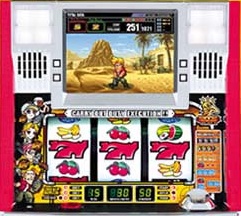
During a press conference in January, Koichi Toyama, president of SNK Playmore, made the statement that the company "is moving its core business focus from games to Pachinko slot machines." Continued Toyama, "We will concentrate our resources on the rapidly growing and highly profitable business of slots." SNK Playmore intends to release upward of five new Pachinko slot machines based upon various SNK properties within the next year.
When asked about the company's role as a game developer/publisher, Toyama stated that it will continue to release titles based upon familiar SNK properties, such as King of Fighters and Samurai Shodown, for mobile phone and home console platforms. "We plan to develop our business in new areas in an attempt to become a general entertainment company."
Sources in the know suggest that SNK Playmore is also currently trying to work out an intellectual property agreement with Sammy whereby Sammy would secure the rights to publish and distribute SNK's properties within the arcade sector.

The relationship between SNK Playmore and Sammy goes back to September 2003, when the two companies signed an agreement to produce a new King of Fighters game for Sammy's Atomiswave arcade platform. The Atomiswave is a modular arcade hardware that uses interchangeable cartridges, similar to the outdated MVS. Since the platform is relatively new, Sammy is actively seeking third parties to produce games for it. Currently, the most noteworthy games playable on the Atomiswave are a cadre of Sammy's fighting games: Guilty Gear X 1.5, a remake of Guilty Gear X; Guilty Gear Isuka, a four-player version of Guilty Gear X; and Rumble Fish, a new fighting game developed by Dimps, a studio that consists of former Capcom and SNK fighting game developers.
King of Fighters for the Atomiswave is still in development.
Even if SNK Playmore plans to withdraw from arcades, the company is still very much committed to developing and marketing software for the lucrative home console market--a market that achieved $16 billion in sales during 2002 alone.
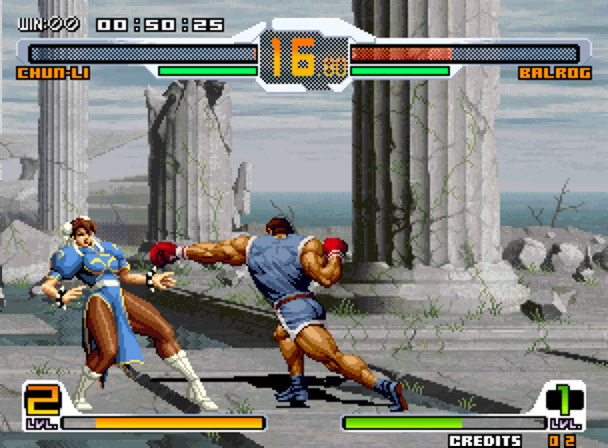
SNK Playmore has produced versions of King of Fighters 2002, Metal Slug 3, and SNK vs. Capcom: SVC Chaos for the PlayStation 2 in Japan. Samurai Spirits Zero (Samurai Shodown 5 to those of us in North America) will make its way to the PS2 also.
It was originally the intention of SNK NeoGeo USA Consumer Corporation--the North American branch of SNK Playmore--to release Metal Slug 3 and SVC Chaos for the PlayStation 2 in the United States, but due to problems getting the games past SCEA's draconian concept-approval department, both games have been put on hold.
Coincidentally, SNK NeoGeo USA Consumer Corporation announced in January 2004 that it had signed on as a third-party developer for Microsoft's Xbox console. The company plans to release SNK vs. Capcom: SVC Chaos Live and Metal Slug 3 for the Xbox in 2004. Metal Slug 3 is on track for release in the spring, and SVC Chaos should be on sale by fall. Of particular interest to fighting game fans, the Xbox version of SNK vs. Capcom: SVC Chaos will have Xbox Live support for one-on-one matches via the Internet.
A Game Boy Advance version of Metal Slug is also in the works and tentatively scheduled for release in Japan in July 2004, with a North American version to follow in August.
Mobile phone gaming is another area that SNK Playmore is trying to capitalize on. Early in 2003, the company signed a deal with PlayPhone, the mobile division of Sammy, to produce games for JAVA-enabled cellular phones. King of Fighters is the first title to come about as a result of this deal, and a mobile version of Samurai Shodown is on the way.
Just as SNK did in the middle 1980s, it looks like SNK Playmore intends to make its mark on the new millennium as a software developer for a variety of home video game platforms--and cellular phones--but will the plan work?
20 Questions With Ben Herman

Pachinko again?

Recently, Koichi Toyama, president of SNK Playmore, announced the company's decision to curtail arcade development in favor of its slot machine business.
Don't fear, SNK fans. At the end of his comments, Toyama reiterated that SNK Playmore plans "to develop our business in an attempt to become a general entertainment company." Home consoles, such as the PlayStation 2 and Xbox, figure prominently in that plan.
Ben Herman, president of the SNK NeoGeo USA Consumer Corporation, was quick to clarify Toyama's comments. "SNK Playmore will continue to develop new games for the PS2 and Xbox," said Herman, who also adds, "As far as going beyond that, I want to do PSP and the next generation of all three systems."
SNK NeoGeo USA Consumer Corporation is the subsidiary of SNK Playmore that's responsible for the marketing and sales of the company's games for home consoles and portable systems in North America. Of the roughly $15 billion in revenues that the video game industry pulls in each year, North America accounts for nearly 60 percent of that total. If the comments from SNK Playmore's president ring true, and the company does indeed shift its focus toward becoming a third-party developer of software for home console systems, then SNK will need to crack the North American market in order to remain a driving force in the video game industry. This means that SNK NeoGeo USA Consumer Corporation holds the key as to whether SNK Playmore will ultimately succeed or fail in its goal to become a general entertainment company. And that puts Ben Herman, president of SNK NeoGeo USA Consumer Corporation, in a unique position to provide insight into the company's future plans.
On February 5, 2004, GameSpot caught up with Ben Herman and played a game of 20 questions:
GameSpot (GS): Your official title is president of SNK NeoGeo USA Consumer Corporation. What role do you play in getting SNK's games into the living rooms of prospective customers?
Ben Herman (BH): My role includes analyzing USA market conditions and to suggest titles and systems to support. Many of our games are arcade favorites that we are bringing to market.
GS: Are you much of a game player yourself? Do you play video games?
BH: I grew up playing games and today will mostly sample gameplay.
GS: One thing I've been wondering for the past year or so, SNK NeoGeo USA Consumer Corporation is a mouthful to say, and you prefer it printed in all-caps no less. Why was that name chosen for the North American home entertainment division?
BH: We reentered the USA market with our arcade division, SNK NeoGeo USA Corporation. From there, we wanted to differentiate the home division so we added "Consumer."
GS: This isn't your first stint with SNK. Back in 2000, you were the national director of sales for SNK Entertainment and responsible for marketing the NGPC in the US. Can you give me an idea of how the NGPC was faring in terms of sales before Aruze pulled the plug?
BH: As VP of sales, we placed Pocket Color in all but one major retailer in 2000. At E3 2000 Pocket Color was 2 percent of the handheld market, and our goal for Christmas 2000 was to reach 10 percent. We were on target.
GS: Related to that, there were a few games scheduled to be released for the Pocket in the US that summer that never made it here. Among them, Evolution and Faselei!. Let's say hypothetically that SNK never pulled out of North America. Were there any other titles in the works for the system that never saw the light of day here that fans might recognize?
BH: Many additional games were planned based on our arcade favorites, but development was not completed.
GS: After SNK went bankrupt, you went to work for Nintendo. When Playmore resurrected the company, they asked you to come back and head the US consumer arm. How did that come about, and what was the process like for you?
BH: I received a phone call from a close friend telling me that SNK wanted to return to America and asking if I would be available to reestablish its presence. The SNK Playmore ownership and management are the original SNK leadership. I went to Japan to discuss and returned with the assignment. It is an honor.
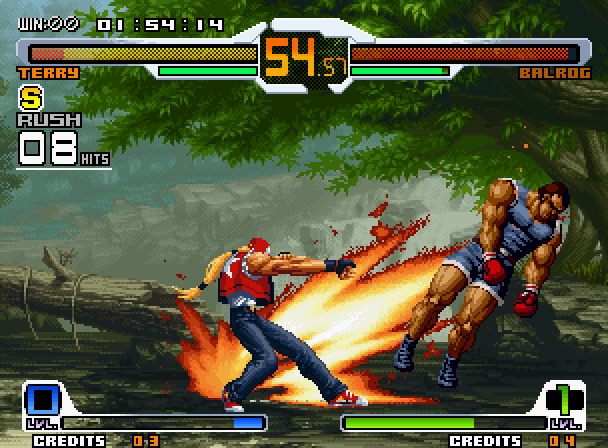
GS: Getting back to the present, you've just announced that SNK has signed on to develop and publish games for Microsoft's Xbox console. What games can we expect out of this, and why did this decision come about?
BH: We always planned to support Xbox. Japan was further along with PS2 development when I joined the company. We feel that the Xbox and PS2 customers are our customers. We will begin with Metal Slug 3 and SNK vs. Capcom: SVC Chaos Live for Xbox and plan to announce additional titles for Xbox in the future. We will continue to bring our most popular arcade favorites to the home experience.
GS: It's been said that these games, SVC Chaos at least, will have Xbox Live support. Is Microsoft handling that primarily, and do you know if the feature will be limited to one-on-one matches or will also include tournaments and ladder rankings?
BH: Details are being worked out, but Metal Slug 3 will use the leaderboard. SVC Chaos Live will include many features. Details are being coordinated with Microsoft.

GS: Did the timing of the Xbox deal have anything to do with the rejection of Metal Slug 3 by Sony's concept approval department? I recently read that you've met with resistance from Sony with regard to a home release of SNK vs. Capcom: SVC Chaos also. Can you speak to that?
BH: The Sony approval process has many steps. It is true that Metal Slug 3 has not been approved by Sony. Development takes many months for any platform. The decision to bring Metal Slug 3 to Xbox is independent of Sony's decision. We originally planned to bring the game to both formats. Metal Slug 3 was already in development for the Xbox before the announcement was made. Japan has been in development on that for months. I believe we're planning to bring it out here in May.
GS: So does that mean Metal Slug 3 is pretty much dead for PS2?
BH: Yes...
[Editor's note: Although Herman wouldn't elaborate further on the Sony approval process, other sources tell GameSpot that SNK vs. Capcom: SVC Chaos likely will not be coming to the PlayStation 2 in North America. Another of SNK Playmore's games, Samurai Shodown 5, is also in doubt for the PS2 stateside, but SNK is tweaking the game and will apparently resubmit it to SCEA for approval.]
GS: What was the reasoning behind the King of Fighters 2000/2001 double pack? You don't often see companies release fighting game compilations here in the US.
BH: Knowing we had so many King of Fighters, it was my suggestion--straight up--to put the two together, to kind of make that a bundle, a gift to our fans who had been waiting for a while.
GS: King of Fighters 2003 is coming out for the NeoGeo home console soon, and Metal Slug 5 isn't that far off. Are there plans to bring either of these games to other consoles besides the NeoGeo? Such as the PS2 or Xbox?
BH: They, as with other franchise SNK games, will be in our plans. First Metal Slug 3 then...
GS: What about Metal Slug Advance? How's that coming along?
BH: We are planning an August release.
GS: Do you have any plans to produce more games in the future for the GBA? I know many of us Pocket fans would love to see an updated Card Fighter's Clash game. There's still a lot of life in the SNK vs. Capcom license.
BH: We will support the GBA. We will announce additional plans and titles at E3.
GS: Switching gears for a minute--SNK is still producing cartridges for the home NeoGeo console. How long does SNK plan to support that system? Do you know if production of new home consoles will ever start back up again?
BH: We will continue to bring NeoGeo arcade releases to the AES. Metal Slug 5 arrives February 19. King of Fighters 2003 will follow in March. As for new home consoles, sorry, there are no plans to build additional AES consoles.
GS: Can you explain SNK's relationship with the NeoStore and how that came about?
BH: We had the desire to give our AES console fans a single place to order products. I know that they also have MVS products as well. The owner of the NeoStore is the exclusive distributor of NeoGeo AES cartridges for the North American market. We started dealing with them in 1999 and felt that their Web site would be the best place to distribute our AES cartridges, and our agreement continues today.
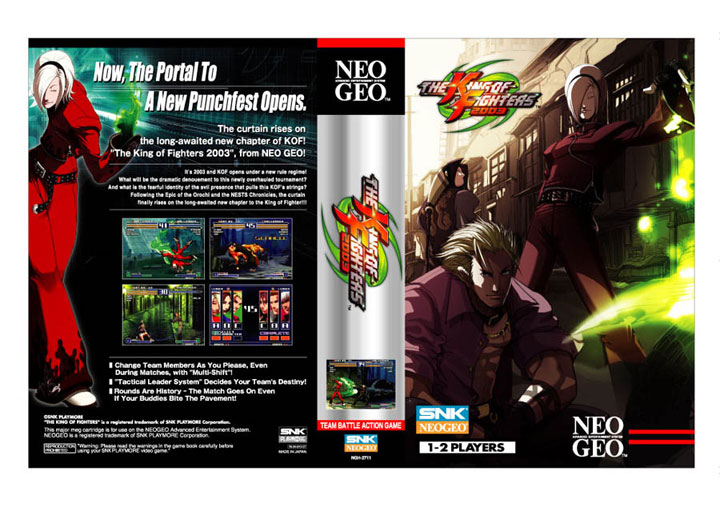
GS: This next one is a touchy subject, but I couldn't think of a better point to ask about it. There are software emulators that allow people to play NeoGeo games on their PCs. Often, new NeoGeo releases are dumped and playable on these emulators just days after they come out in the arcade. On the Internet, you can't read too far on a message board before someone professes that they're playing SNK's latest arcade release on their computer. What is SNK's position on this phenomenon, and is the company doing anything to curb it?
BH: There are too many--we can't go after everyone--but we pursue legal action as best we can. Like the music and movie industries, we disapprove.
GS: Does SNK have a position on the use of ROM files to play older NeoGeo games, such as Magician Lord, Fatal Fury, and other games from the early 1990s?
BH: Again, we disapprove.
GS: Recently, Koichi Toyama, president of SNK Playmore in Japan, said during a press conference that the company "is moving its core business focus from games to Pachinko slot machines." What impact will that have, if any, on your division of the company?
BH: SNK Playmore will mainly support Pachinko slot machines and the home console categories.
GS: So development for PlayStation 2 and Xbox will continue. What are your plans for SNK NeoGeo Consumer going forward?
BH: To bring our franchise games to the home and portable consoles for many years to come. It was always our intention to do PlayStation 2, Xbox--which are both where our customers are--and Game Boy Advance. As far as going beyond that, I want to do PSP and the next generation of all three systems.
GS: Thanks for your time.

NeoGeo Hot-Rodding
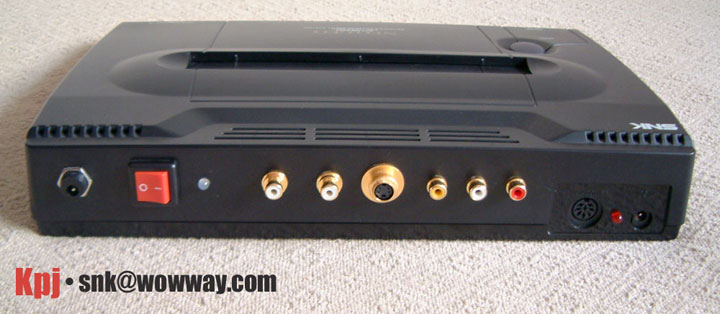
For a modest cost, there are numerous companies and private individuals willing to take apart your NeoGeo AES and modify it to include an S-video output jack, stereo audio jacks, and a debug BIOS chip.
Kenny Perry Jr., a longtime legend in the NeoGeo community, takes modification a step further with what he calls the "Mega-Mod." Says Perry, "The Mega-Mod includes the S-video, stereo, and BIOS mods that are common these days, but adds a touch of style by inserting a beautiful white, blue, red, green, or purple LED into the power button."
These Mega-Mod systems are so popular with NeoGeo fans that they routinely fetch upward of $600 at Internet auction sites. For more information, you can contact Perry at snk@wowway.com.
Remember: Console modifications are not sanctioned by SNK Playmore or its subsidiaries.
As you can see, the history of SNK is a tale full of twists and turns, and it's a tale that's still being written to this day. Like any company, SNK has had its share of success and failure. Producing games for the NES during the mid to late 1980s was an unmitigated boon for the company, as was the introduction of the NeoGeo MVS hardware. The NeoGeo AES, although not a commercial success, still has its share of fans that are willing to shell out $300 or more just to get the latest games. SNK stumbled during the late 1990s with its NeoGeo CD console, and the buyout by Aruze proved to be catastrophic, but that tumultuous period also produced the NeoGeo Pocket Color--a handheld that gave Nintendo a run for its money and only failed because Aruze shut down SNK's operations throughout the world. Moving ahead, the company's plans to develop software for the PlayStation and Xbox consoles seem like a good idea, at least on paper.
Will SNK Playmore succeed in its bid to become a major third-party game developer? Only time will tell. One thing is certain--this is a company known for its ability to adapt and roll with the punches.

Above all, SNK's status as one of the most influential players in the video game industry cannot be overstated. If not for SNK, Capcom may never have tried so hard to come up with newer and better installments in the Street Fighter franchise. If not for SNK, companies like Sega and Sammy might not have been pushed to develop their own modular arcade systems. If not for SNK, Nintendo might have waited an additional year before introducing the Game Boy Advance. SNK keeps other companies on their toes, and that's a good thing.
Until the final chapter in SNK's history is written, fans of SNK's style of games will still be able to purchase them for their favorite home consoles--even if that console happens to be the NeoGeo AES. Far from dead, the NeoGeo AES is going strong after almost 15 years, thanks to the devotion of a loyal and large fan base. If this article whetted your appetite for information pertaining to the home NeoGeo console, you're encouraged to head over to Neo-Geo.com, which bills itself as "the Net's largest NeoGeo base." In addition to the many articles, game lists, and photo galleries, you'll also find a discussion forum packed with thousands of loyal and intelligent NeoGeo fans.
As you can see, no matter what becomes of SNK, the company has left its mark on millions of people throughout the world.
Updated Media
A lot of the GameSpot editors truly love the NeoGeo, and in anticipation of this mammoth feature, we've updated many of the classic NeoGeo games in our database with new box shots, screenshots, and movies. Following is a list of the games we pulled out of our personal archives and played just so you folks could see exactly what makes us so excited when we remember this classic system. It's a tough job, but somebody has to do it.
Related Links
SNK Playmore
The official Web site for SNK Playmore. It's in Japanese, but it has a rather large English-language section.
SNK NeoGeo USA Consumer Corporation
The official Web site for SNK Playmore's North American consumer division. It's responsible for the sale and publishing of games for home consoles such as the PlayStation 2 and Xbox.
GameLord.org
The Web site for Chad Okada, aka the Game Lord. It covers the industry as a whole with a skew toward the business and personnel side of things.
Neo-Geo.com.
Serving the Neo community since '99. This site bills itself as the Net's largest NeoGeo base. You'll find news, reviews, FAQs, picture galleries, and message board forums.
NeoStore
Run by the webmaster of Neo-Geo.com. An online store that sells new and refurbished NeoGeo consoles and games. It's also the official distributor for NeoGeo AES cartridges in North America. They sell arcade MVS cartridges and NeoGeo Pocket gear.
NeoGeoUSA.Com
Online store that specializes in NeoGeo hardware and accessories.
NeoGeo Pocket Color
GameSpot's dossier on the NeoGeo Pocket Color handheld.
VideoGameObsession
Comprehensive site that includes screen shots of every NeoGeo game, as well as a massive archive of scanned advertisements, manuals, and box artwork.
GameSpotting 78
Check out Greg Kasavin's video tribute to the NeoGeo.
Kazuya's NeoGeo Reviews and FAQs
A wonderfully organized fan site devoted to news and reviews pertaining to the NeoGeo and other SNK consoles.
NeoGeoCD.net
A site devoted to the ill-fated NeoGeo CD console. It includes specs, load times, reviews, and cheats.
Miscellaneous Images
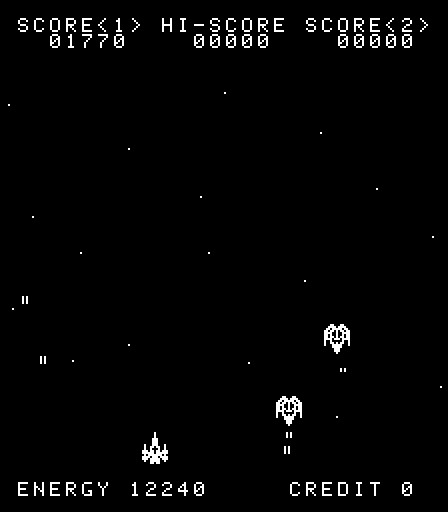 | 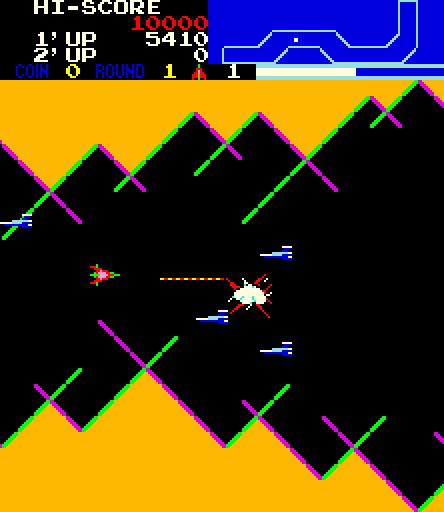 |  | 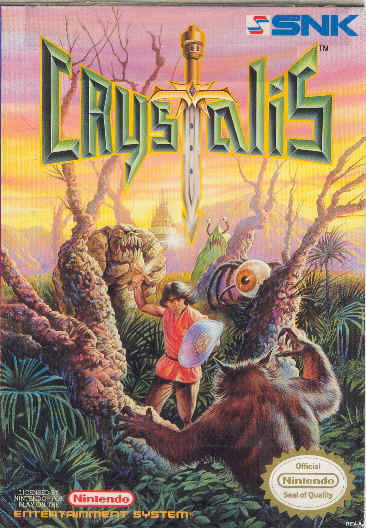 |
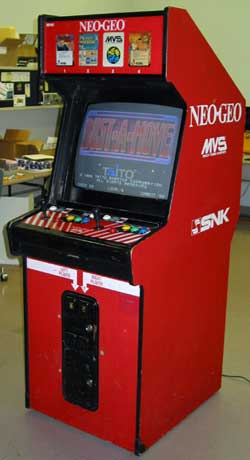 | 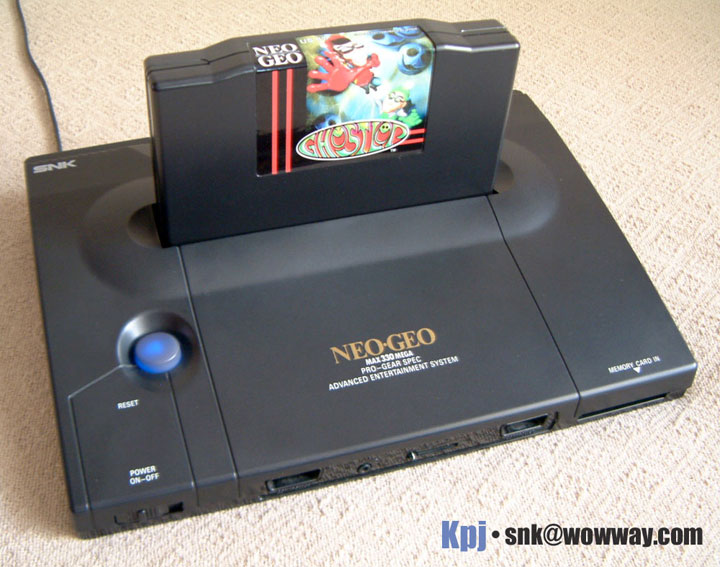 | 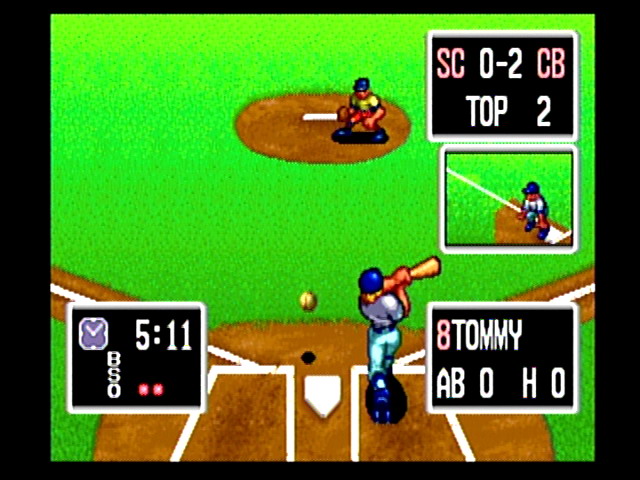 |  |
 | 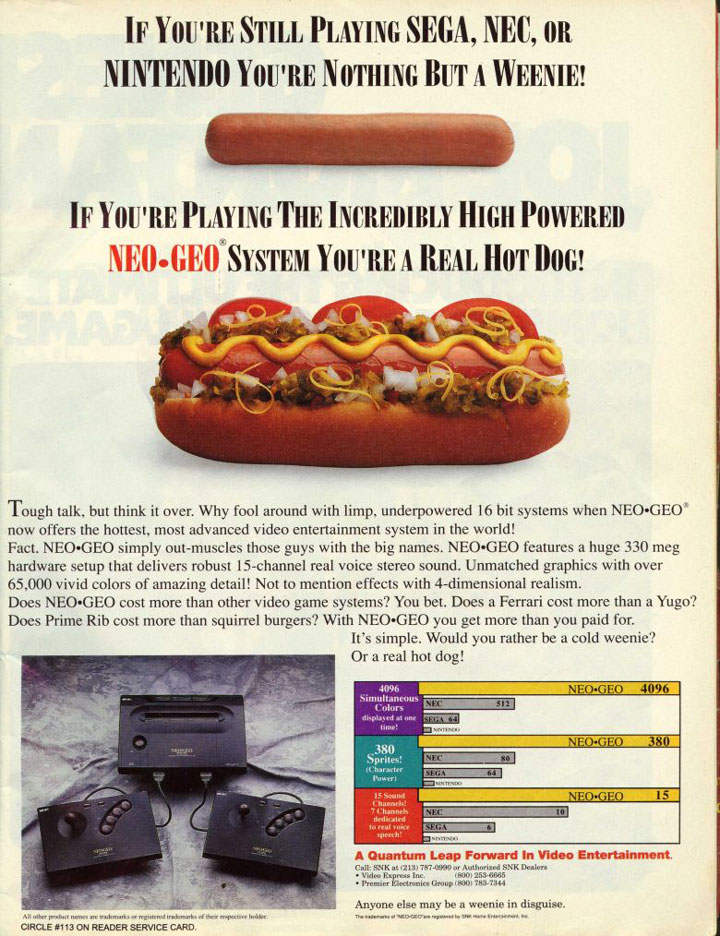 | 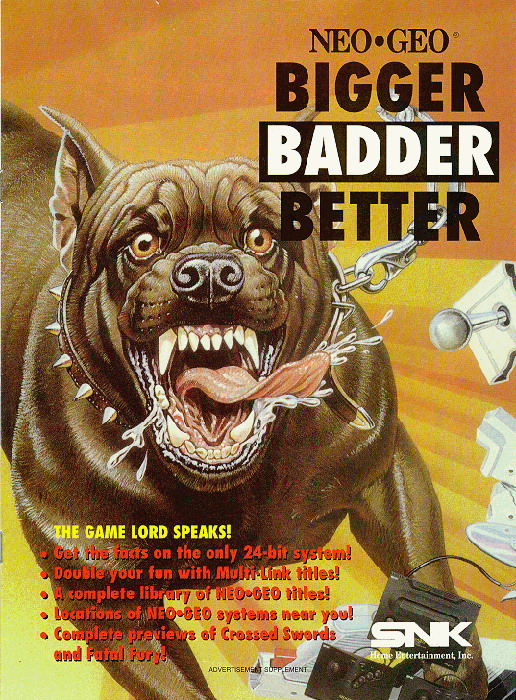 | 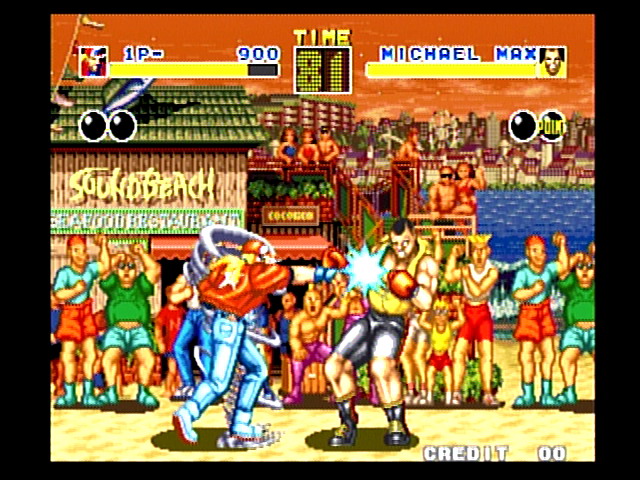 |
 |  |  | 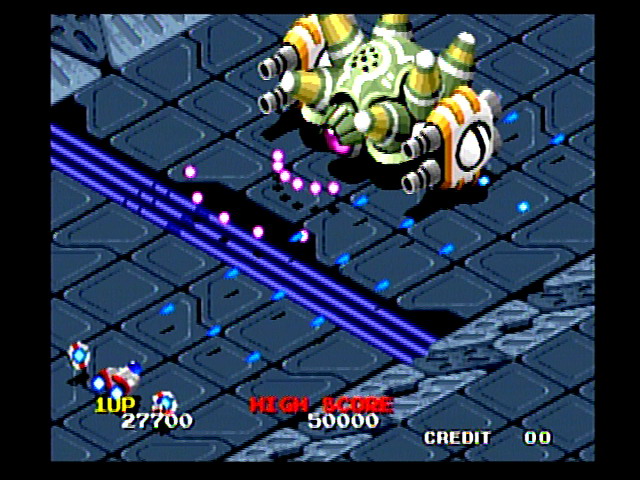 |
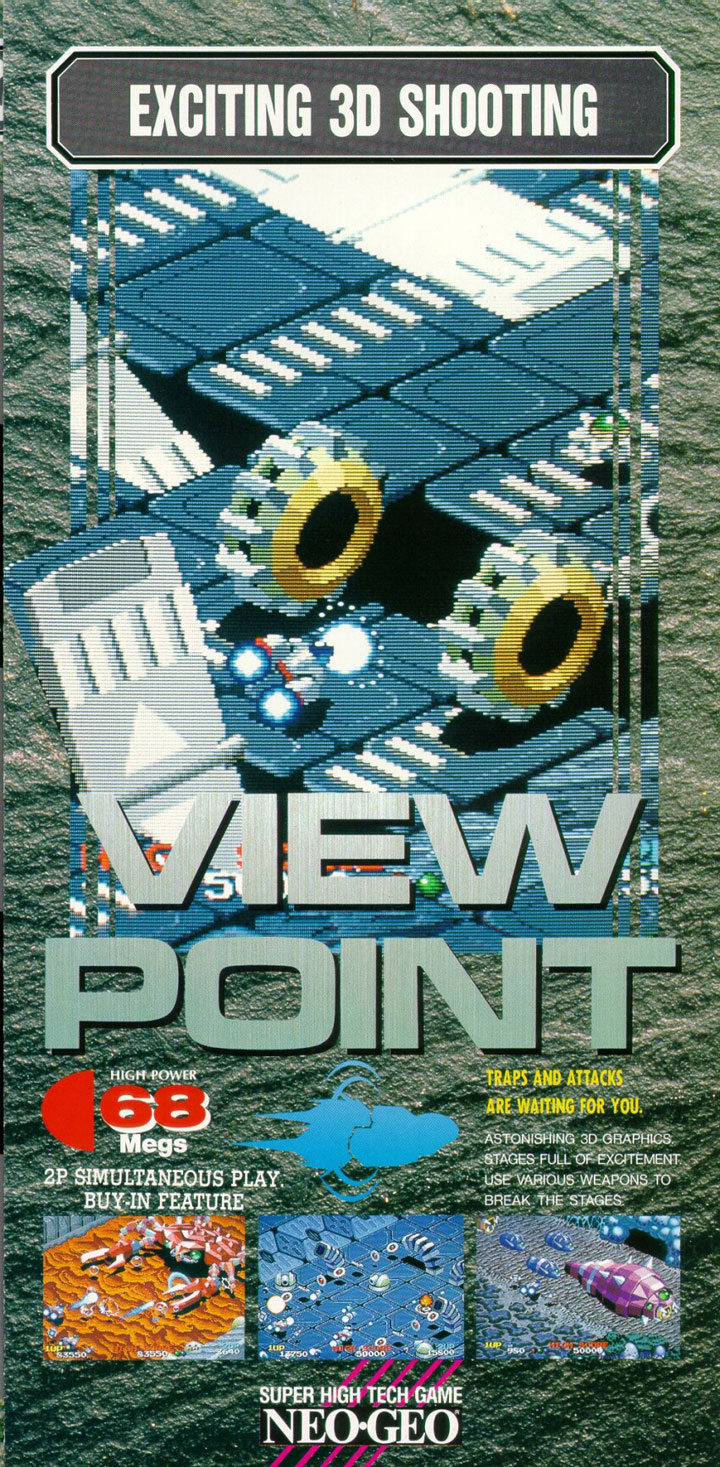 |  |  |  |
 |  |  |  |
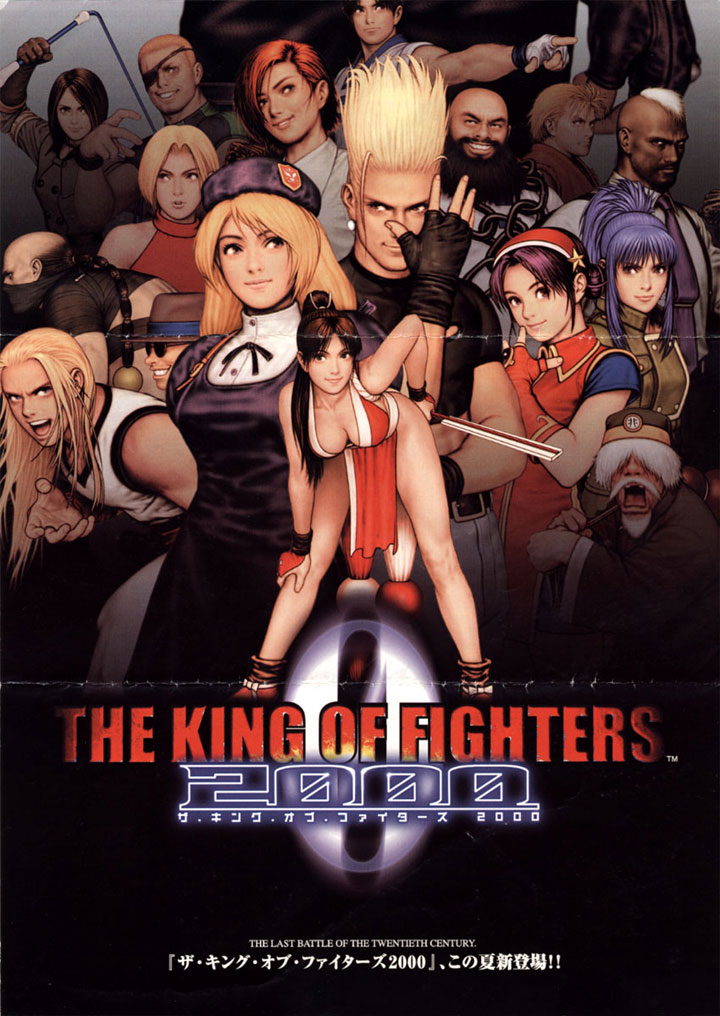 | 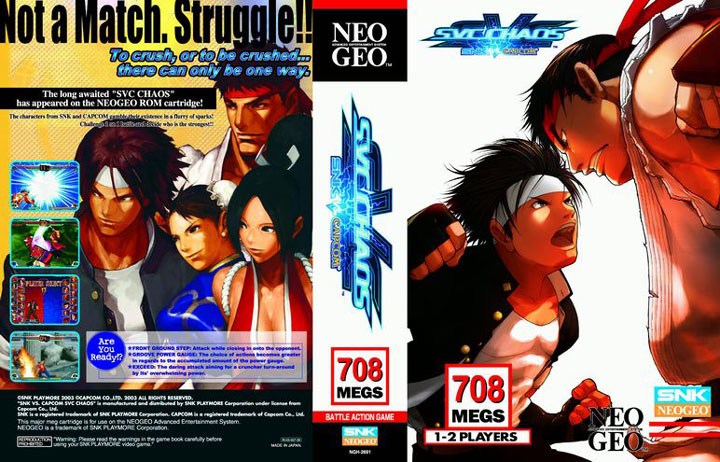 |  |  |
Key Games by SNK
This isn't a complete list of every game that SNK has ever produced; it's merely a list of the games that have played a significant role in the evolution of the company or its software as a whole. With that in mind, there are 60 games on this list, out of more than 300 possible, which just goes to show that SNK is one of the most prolific video game publishers in history, despite not having the same brand recognition as, say, Activision, Konami, or Electronic Arts.
Many thanks to Andrew Alfonso--Toronto's best Soul Calibur II player--for contributing the majority of this list.
Ozma Wars (1979, Arcade)
Ozma Wars is SNK's first game. It's a black-and-white vertically scrolling shoot-'em-up. Imagine a really basic variation of Galaga.
Vanguard (1981, Arcade)
Also appearing on: Atari 2600 (1982), Atari 5200 (1984)
Vanguard is a shoot-'em-up that scrolls both vertically and horizontally. The tunnels you fly through flow left to right, down to up, up to down, and all manner of angles in between. It was a tough shooter, even by old-school standards, but it was made easier by the fact that bullets could cancel out other bullets. This game put SNK on the map in the US.
Athena (1986, Arcade)
Also appearing on: Commodore 64 (1987), Nintendo Entertainment System (1987)
Athena is an adventure game with a little bit of everything: side-scrolling action, platform jumping, and role-playing. You spent much of the time collecting weapons and items to enhance your character attributes. People flocked to Athena because of its gorgeous (at the time) manga-style medieval visuals.
Ikari Warriors (1986, Arcade)
Also appearing on: Amiga, Atari 2600, Atari 7800, Commodore 64, NES (1986)
If Vanguard put SNK on the map, then Ikari Warriors helped the company buy an island of its own. This character-based shoot-'em-up put you in the role of a mercenary fighting in an unnamed South American jungle. The screen scrolled as you moved upward, but the joystick let you backtrack and walk or aim at any angle. People loved this game because it let you climb into and take control of tanks and helicopters, which was a nice change of pace from the standard guns and grenades.
Ikari Warriors 2 (1986, Arcade)
Also appearing on: Nintendo Entertainment System (1988)
This was the sequel to Ikari Warriors. It appeared barely six months after the first game. Instead of being set in the jungle, Ikari Warriors 2 was set in outer space.
Crystalis (1989, Nintendo Entertainment System)
Also appearing on: Game Boy Color (2000)
How do you compete with the Legend of Zelda? You make your own top-down action RPG, set it in the far-flung future, and give the main character amnesia. Unlike Nintendo's Legend of Zelda, a good half of the game was spent exploring the overworld. There were a few dungeons here and there, however, and enough boss battles to keep you on your toes. Like in Zelda, your main goal in the game was to satisfy quests for people as you moved from one location to the next, until you eventually met up with Draygon at the top of a giant floating tower in the sky. People adored this game for its depressing post-nuke story (which was removed from the GBC version) and for the rich cartoon-style graphics, which, in spots, compared favorably to early Super NES games.
Ikari III: The Rescue (1989)
Also appearing on: Commodore 64 (1990), NES (1990)
For the final installment in the Ikari series, SNK disarmed Paul and Vance and transformed the game into a top-view beat-'em-up. Occasionally, you received a machine gun or grenade power-up item. It's generally considered the lamest of the Ikari games.
Baseball Stars Professional (1990, NeoGeo)
Up until the 3D era, if you wanted to play a baseball game with large player sprites and lively backgrounds, your best bet was SNK's Baseball Stars Professional. The game's biggest claim to fame is that it included basic trade and player upgrade features, which weren't common to home sports games until the mid-1990s.
Magician Lord (1990, NeoGeo)
A semi-flop in the arcade, Magician Lord sold very well for the home NeoGeo console. You took the role of Elta, a magician lord in search of the eight books of wisdom. That translated into roughly 16 levels or so of standard adventure game fare. Elta fired magic from his hands and could transform into any of six different elementals depending on the orbs collected. Bosses were huge and disturbing, and gameplay was deepened by the presence of alternate pathways and optional dungeon rooms. Magician Lord compares closest to Sega's Altered Beast, but with better level designs.
Fatal Fury (1991, NeoGeo)
Also appearing on: Super Nintendo (1992), Sega Genesis (1993)
Street Fighter II was the start of something magical they say, but few people realize that the first fighter from SNK was actually released around the same time as Capcom's genre-creating classic, and it offered just as much playability. The roster consisted of 11 characters, although only three characters were actually playable (Joe Higashi, Terry Bogard, and Andy Bogard). The main catch with Fatal Fury was the use of two different playing fields. You could jump between the two planes during the fight to avoid attacks. Every stage had different backgrounds, depending on the round. In one stage you might be duking it out in a rainstorm, but by the second round it will have dissipated, leaving only the wet streets as a reminder. Oddly enough, it was also the first fighting game to actually allow two players to team up on an enemy at the same time. Until Capcom's Street Fighter Alpha 3, it was the only game to have such a feature.
Art of Fighting (1992, NeoGeo)
Also appearing on: Super Nintendo (1993), Genesis (1994)
The Art of Fighting was the second fighting game to be released by SNK, following the release of Fatal Fury in 1991. Like Fatal Fury, AOF had numerous innovations to it that would not be equaled until very recently. Unlike other fighting games, AOF had two meters, one designated for vitality and the other for spirit. The spirit bar was used to gauge how many special moves you could use in a fight. For instance, if you threw a fireball, your spirit bar would decrease. Once you ran out of spirit, you couldn't perform your character's special attacks. It was a nice micromanagement factor that no other series has ever implemented. The AOF games were also the first ever to implement scaling and zooming when in a battle. If you walked away from your opponent, the camera would zoom out, giving you a wider view of the battle. Lastly, one awesome visual touch was the ability to actually bruise your opponent during battle, a feature that was not seen in any other game until Midway's Ready 2 Rumble series. Like in Fatal Fury, you could only pick two characters here, Ryo and Robert.
Fatal Fury 2 (1992, NeoGeo)
Also appearing on: Super Nintendo (1994), Sega Genesis (1994)
Building on the success of the first game, Fatal Fury 2 came out a year later, boasting more characters and better animation. No longer were Joe, Terry, and Andy the only playable characters in the game. Actually, it added some of the most famous SNK characters ever, such as Kim and Mai. Other than the addition of new characters, the actual game didn't change that much.
Art of Fighting 2 (1993, NeoGeo)
Also appearing on: Super Nintendo (1994)
Arcade games are usually designed to be quarter-munchers, and Art of Fighting 2 drove that point home. Simply put, this is probably the hardest fighting game ever created, and it was designed to gobble up a ridiculous amount of money for SNK. Returning to the cast were Ryo and Robert, and 10 other playable characters join them. The game hadn't changed much over the course of one year, and it showed. Aside from a more plentiful cast, absolutely nothing had changed in terms of what you could do in the game.
Fatal Fury Special (1993, NeoGeo)
Also appearing on: Super Nintendo (1993)
Essentially a remix of Fatal Fury 2, Special added a host of new characters that are now commonplace in many SNK games, such as Billy Kane and Art of Fighting's Ryo Sakazaki. It also let you play as the two bosses in the previous Fatal Fury games, Geese and Wolfgang Krauser.
Samurai Shodown (1993, NeoGeo)
Also appearing on: Super Nintendo (1994), Genesis (1994)
Aside from Vega in the Street Fighter series, there were no fighters in any game that bothered to use weapons of any kind. You'd think that in an "anything goes" scenario, more people would be packing some heat, right? Set in the time of feudal Japan, Samurai Shodown was the first weapons-based fighting game to hit the genre, and it was good. Real good. Technically the game was a visual masterpiece. It used the scaling and zooming effects that were first used in Art of Fighting, and you were treated to beautifully created backdrops and huge, well-animated characters such as Haohmaru and Earthquake. The gameplay was also amazing, incorporating several elements that would not be seen in many fighting games for a long time. The ability to clash weapons with opponents and disarm them was one of the many things that made the game so appealing to fighting game fans around the world.
The King of Fighters '94 (1994, NeoGeo)
KOF '94 was the start of something grand and epic for SNK. Because SNK had created about half a dozen fighting game series since 1991, it was pretty obvious the company was beginning to rehash its previous work. The KOF series was the solution to that. Hints of this "tournament" were in the first Fatal Fury game, so it's no surprise that the characters from that game (along with the Art of Fighting cast) would make the transition here. The tournament included eight teams representing countries from Mexico to Japan to Italy, and each team contained three characters, which you had to master if you stood any chance of winning. Old favorites from the Fatal Fury series such as Terry Bogard and Mai Shiranui made the jump, while new poster boys like Kyo Kusanagi were also introduced. As far as gameplay went, there wasn't anything new other than the team format, but it served as a great foundation for future games.
Samurai Shodown II (1994, NeoGeo)
If you've heard any debate about what was the greatest fighting game of all time, odds are you've heard this game mentioned in the same breath as Virtua Fighter, Street Fighter, and Soul Calibur. It's hard not to like the first sequel to Samurai Shodown, even though it doesn't add anything particularly significant to the gameplay. Bigger? Yep. Badder? You bet, but that came at a cost. The game was criticized for being extremely unbalanced, with Ukyo and Charlotte dominating the game. Despite this, Samurai Shodown II is still a fan favorite among SNK hardcore around the world.
Fatal Fury 3 (1995, NeoGeo)
Much like other SNK games around this time, the Fatal Fury series started getting a lot more interesting. It was slowly evolving, both in terms of gameplay and story. Yamazaki was the new boss in the world of Fatal Fury, and he went on to become one of the most popular characters in the SNK universe. Also entering the series was Blue Mary, Terry's future love interest. The new addition to the game was the inclusion of desperation moves (DMs), which were essentially the same super combos that are now a staple of any 2D fighting game.
The King of Fighters '95 (1995, NeoGeo)
Also appearing on: PlayStation (1996), Saturn (1996)
Although it's considered one of the weakest entries in the series, KOF '95 is significant for introducing some new gameplay elements as well as one of the coolest characters in the fighting game genre: Iori Yagami. With his fire-red hair, slick fashion sense (gotta love the belt straps between his legs), and sick demeanor, Iori was automatically put against Kyo Kusanagi as bitter rivals from opposing clans. Also appearing in the '95 edition were Eiji and Billy Kane from the Art of Fighting and Fatal Fury series respectively. The biggest change from KOF '94 to '95 was the ability to edit your teams to your liking. Instead of being stuck with all three members of, say, Team Japan, you could now pick characters from different teams to make your own custom team.
Samurai Shodown III (1995, NeoGeo)
Also appearing on: PlayStation (1996)
Samurai Shodown III represented a turning point in the series and for SNK. The original team that worked on the first two games had been disbanded, and Team Garapogos (a typical SNKgrish translation of Galapagos) was in charge of the series. Considering that the second Shodown game was praised as being one of the best fighting games of all time, there was intense pressure to deliver with the third game in the series. The changes made in the game were quite evident. Gone were some of the more campy characters such as Earthquake and Tam-Tam, and in was a new system called slash/bust (or chivalry/treachery). The slash/bust system was a play on the code of the samurai and allowed you to use slightly different versions of your chosen fighter. Other minor additions to the gameplay included air blocking, sidestepping/dodging, and POW charge. Although the changes in the game were for the better, many people felt that the series had fallen with Shodown III. Perhaps it was the change in theme or the absence of many fan favorites, but many gamers still feel this is one of the weaker installments in the series.
Art of Fighting 3: The Path of a Warrior (1996, NeoGeo)
The final game in the Art of Fighting series had Robert Garcia as the star, shoving aside Ryo and his family problems. On the hunt for a woman named Freia, Robert traveled back to his homeland to answer some unsolved mysteries. It's easy to see why SNK ended the series here; just about all of the innovations that had been made were in the first game, and the last two installments did nothing to further the series. While the difficulty had been toned down significantly, there was nothing here aside from some new faces on the roster, namely Kasumi, Rody, Sinclair, Wang, and Jin.
The King of Fighters '96 (1996, NeoGeo)
Also appearing on: PlayStation (1997), Saturn (1997)
If you ask any hardcore KOF fan which game was the best in the series, he or she will either say the '98 edition or this one. KOF '96 was the point that the series hit its prime. It introduced characters such as Leona and Vice and brought back Geese Howard, and there were nearly 3,000 possible combinations of teams to choose from. The ability to roll through attacks, as well as run continuously, was also added in the '96 edition, making the game even faster than before. While Rugal was the head honcho in KOF '94 and '95, it was time for a new enemy to step forward. Goenitz was introduced to the series, and with his arrival started the Orochi storyline that involved Iori and Kyo.
Kizuna Encounter (1996, NeoGeo)
This was a tag-team-based fighting game with gigantic characters. You picked a team of two characters, and during the match, you could swap between them by tapping the D button while standing in a special tag zone. Otherwise, combat was weapons-based, and the game played like a cross between early Fatal Fury games and the Samurai Shodown series. The biggest claim to fame for Kizuna Encounter is that the English home cartridge version is extremely rare. Whereas a home cartridge of the original Metal Slug goes for roughly $1,000, Kizuna Encounter has sold for upward of $5,000. As a result, there are many counterfeit versions out there. The only good way to check for a counterfeit is to open the cartridge and see if there's a mess of wires inside or if the ROM chips seem two-thirds smaller than the slot they're soldered into. Both conditions suggest an illegitimate conversion from an arcade MVS cartridge.
Metal Slug Super-Vehicle 001 (1996, NeoGeo)
Also appearing on: PlayStation (1997), Saturn (1997)
Obviously parodying the movie and TV smash hits Full Metal Jacket and MASH, Metal Slug came out during SNK's prime. A full-out shoot-'em-up, Metal Slug combined challenging levels and beautiful art direction for a title that many will say was the beginning of the greatest shooter series ever created. What made Metal Slug such an entertaining title was its over-the-top humor, which made every single level a blast to play. You watched in amazement as enemy grunts stopped to laugh at you when you died, only to shriek in horror when you respawned. Of course, the tight control scheme didn't hurt either. So where does the name Metal Slug come from? It's basically the uberpowerful tank that you get during the midpoint of every stage. With a powerful cannon and the ability to jump and duck enemy fire, the Metal Slug tank is the trademark of the series.
Real Bout Fatal Fury (1996, NeoGeo)
Also appearing on: Saturn (1996)
A continuation of the Fatal Fury series, Real Bout uses the name that was originally intended for the series and basically starts off on a clean slate. Super desperation moves (SDMs) complemented the DMs that were introduced in Fatal Fury 3, and you had the ability to attack an opponent who was on one of three playing fields, eliminating all the chasing that occurred in previous games. Other new additions included guard cancels and dodging attacks.
Samurai Shodown IV (1996, NeoGeo)
Also appearing on: PlayStation (1997)
Following up Samurai Shodown III was this sequel, released one year later. Two new characters entered the Shodown world, Kazuki and Sogetsu, who were brothers from a clan of ninjas. Three other characters made their return after taking some time off during Shodown III: Jubei, Charlotte, and Tam-Tam. Much like in the transition from Shodown I to II, there weren't many differences between this game and the previous title. Air blocking was taken out of this game, although fatalities were added, oddly enough. Like with the previous game, many felt that Samurai Shodown IV wasn't as good as Shodown II, although it was better than the third game.
Shinsetsu Samurai Spirits Bushidouretsuden (1996, NeoGeo CD)
Also appearing on: PlayStation (1997), Saturn (1997)
As you can tell from the title, Samurai Shodown RPG appeared only in Japan. Players controlled a party of three familiar Samurai Shodown characters and guided them from town to town on the way to final confrontations with Amakusa and Mizuki--who, as demonic bad people, were trying to conquer the world. You could forge weapons and buy items in towns, which came in handy during the random battles that occurred out on the plains and in the dungeons where most of the action actually took place. Instead of magic, the characters could perform special attacks based on their Samurai Shodown fighting abilities. Ukyo had his apple toss and slice, Charlotte had her power gradation, and so on. The graphics were OK compared to other RPGs of the era, but the big draw was the fight animations, which were inspired by the moves found in the normal Samurai Shodown fighting games.
Real Bout Fatal Fury Special (1997, NeoGeo)
Also appearing on: Saturn (1997)
Yet another remix in the Fatal Fury series, RBFFS added more characters that were left out of the first Real Bout game and balanced the characters a little better.
The King of Fighters '97 (1997, NeoGeo)
Also appearing on: PlayStation (1998), Saturn (1998)
The innovations that started with KOF '96 continued in the '97 edition. To begin with, you had the ability to choose between two modes: advanced and extra mode. While extra mode worked much like previous KOF games in that you built a meter to use one super combo, advanced mode let you collect "stocks" of super combos and gave you the ability to "break" them to unleash new, more devastating combos. Although there weren't nearly as many innovations in KOF '97 as there were in the '96 edition, the Orochi story arc continued, introducing two slightly new characters, Orochi Iori and Leona, as well as killing off Vice and Mature...until the following year.
The Last Blade (1997, NeoGeo)
Also appearing on: PlayStation (1999)
Because of its late debut compared to Samurai Shodown, The Last Blade didn't receive nearly as much praise as it should have. Whereas Shodown was a game with huge characters and bright, vibrant colors, The Last Blade was a game with smaller (but better animated) sprites, a softer palette of colors, and characters that were sharply designed. You're not going to find anyone like Cham Cham in this game. Like Shodown, The Last Blade let you choose from two different modes: speed or power. Where the former let you bust out some truly impressive combos, the latter gave more power per hit. This game's atmosphere will certainly remind gamers of Crouching Tiger, Hidden Dragon. There was a feeling of calmness on the exterior that hid a sea of chaos underneath, which was strengthened by the epic musical score.
Samurai Shodown 64 (1997, Hyper NeoGeo 64)
Shodown 64 was not an N64 game but rather an arcade title based on SNK's Hyper 64 hardware. Along with Buriki One, it was one of just seven games made for the ill-fated arcade board. Other than the graphics, Shodown 64 was pretty similar to the rest of the series. Due to the expensive cost of the Hyper 64 hardware, Shodown 64 didn't get a wide release like the MVS games, although it was a competent fighting game.
The King of Fighters '98: The Slugfest/The Dream Match Never Ends (1998, NeoGeo)
Also appearing on: PlayStation, Dreamcast (1999)
Most fighting game fans agree, KOF '98 is probably the best installment currently available. Bringing back almost every character that has appeared in the series, KOF '98 lives up to its moniker as the dream match. There weren't any additions to the game system that year, but KOF '98 more than made up for that in balance and in remixed art for the backgrounds and the characters themselves, who sported at least one new move each. Oddly enough, when the game was released for the Dreamcast in 1999, it was actually renamed to KOF '99, which caused some problems when the real '99 edition of the series was released a year later. Even more odd was the NeoGeo Pocket link available for the Dreamcast, which let you hook up your NGP system to the Dreamcast in order to unlock gallery pictures and special skills. Ever wonder where Nintendo got that crazy idea for connectivity? Well, there you go.
The Last Blade 2 (1998, NeoGeo)
Also appearing on: Dreamcast (2000)
This sequel came only one year after the original Last Blade and followed the usual sequel mold: add more characters, tweak the character balance, and don't try to fix what isn't broken. Joining the standard speed and power modes was EX mode, which was a hybrid mode that gave players benefits from the other two modes, although with a severe damage handicap. Kagami, the boss from the first game, returned as a playable character, and joining him were newcomers Setsuna, Kojiro, and Hibiki, whose design defied all stereotypes of female characters. Like the first game, Last Blade 2 featured some of the most beautifully animated characters, with gorgeous backdrops and a soundtrack that totally fit the atmosphere of the series. This was also one of three SNK games (the others being King of Fighters '99 and Garou: Mark of the Wolves) that Agetec published in North America for the ailing Dreamcast during its final days.
Metal Slug 2 Super-Vehicle 001/II (1998, NeoGeo)
Continuing the awesome combination that made Metal Slug famous was this sequel, which was released two years after the first game. Unlike the first Metal Slug, which had some traditional locations (jungle, urban battlefield), Metal Slug 2 threw all preconceived notions about how a shooter should function out the window. This became evident in just the second level of the game, where you had to battle the undead. If you came in contact with their poisonous spew, instead of dying you would turn into an undead minion yourself, incapable of using any special weapons. Things definitely took a turn for the weird in Metal Slug 2. Whereas you fought against guerrilla militants in the first game, in this game you eventually had to take on aliens hell bent on invading Earth. It made for one of the funnier levels in the game, not to mention one of the most frustrating ever. Although it was still a two-player affair, you could choose from four different characters.
Real Bout Fatal Fury 2 (1998, NeoGeo)
Oddly enough, this is the only game in the Fatal Fury series that has never come out for any other system. RBFF2 built on the revised Fatal Fury 3 engine that the first RBFF used and added a couple of new characters to the mix: Rick Strowd and Li Xiangfei. Unfortunately there weren't a lot of changes made to the game other than balancing out the characters and simplifying the SDM attacks. However, it's still one of the more enjoyable games in the series.
Fatal Fury: Wild Ambition (1999, Hyper NeoGeo 64)
Also appearing on: PlayStation (1999)
First appearing on SNK's new Hyper 64 hardware, Wild Ambition is the only game in the series to have gone the 3D route. Despite this, it still played very much like a 2D game, only with polygon models instead of sprites. Unfortunately, much like Samurai Shodown Warriors Rage, Wild Ambition didn't find a receptive audience despite the move to next-generation graphics. Blame it on the slow gameplay or unbalanced characters, but fans didn't latch onto this game like they did Mark of the Wolves.
Garou: Mark of the Wolves (1999, NeoGeo)
Also appearing on: Dreamcast (2000)
The final installment in the Fatal Fury series takes place roughly 10 years after the last King of Fighters tournament. Geese has been disposed of, but he has left behind a present for the world in the form of his son, Rock Howard. Terry has taken in Rock and has trained him to be a competent fighter, and the result is a formidable opponent whose abilities are a hybrid of Terry's and Geese's abilities. Aside from Terry, the entire cast is completely new, although there are some very noticeable tie-ins. Kim Jae Hoon and Kim Dong Hwan are two tae kwon do experts trained by their father, the legendary Kim Kap Hwan. Khushnood Butt is a student of Ryo from the Art of Fighting, and Hokutomaru is a student of Terry's brother, Andy. Mark of the Wolves is very significant in the SNK universe because it was designed to be direct competition for Capcom's Street Fighter 3. Instead of using the parries found in Capcom's game, SNK developed a technique called "just defend," where you would tap back in order to parry attacks, which would net you some extra life. Another unique tactic in Mark of the Wolves was breaking, which let you cancel certain special attacks to extend your combo. Above all else, this installment in the series will always be remembered as the game with the best animation on the NeoGeo, hands down. Considering the hardware is nearly 15 years old, it's a testament to SNK's ability that it was able to pull off animation that's comparable to Street Fighter 3, on a vastly inferior piece of hardware.
The King of Fighters '99: Millennium Battle (1999, NeoGeo)
Also appearing on: PlayStation, Dreamcast (2000)
Since KOF '98 was a fantasy battle of sorts, the '99 edition took the events from KOF '97 and continued them. The Orochi story arc that was the center of KOF '96 and '97 was concluded, and with that arrived a new force, called NEST. New characters in the game included Maxima and the newest poster child of the KOF series, K` (pronounced K Dash). Oddly enough, there were two versions of Kyo in this game in order to coincide with the storyline. Other new characters that were introduced were Whip and Jhun Hoon, both of whom possessed very unique fighting styles. Jhun Hoon was a tae kwon do master who paired up with Kim Khapwan, while Whip was the leader of the Ikari Warriors team and had the longest ranged attacks in the game. In order to compete with the newer vs. titles from Capcom, SNK decided to steal a page from its playbook and introduced strikers, which were characters who could be summoned into battle to aid in combos or help defend their teammates. While they were innovative for the KOF series, many players didn't like the new additions, partly because they created some imbalances among characters.
The King of Fighters R-1 (1999, NeoGeo Pocket)
This was a handheld fighting game based on the NeoGeo version of King of Fighters '97. Since the NGP was a monochrome system, R-1 used black-and-white graphics. You picked a team of three fighters and went up against the CPU's teams. Or, you could link two NGPs together for two-player play. The graphics were weak compared to what you could see on the Game Boy Advance, but they stacked up nicely against the graphics capabilities of the Game Boy--which was the popular system at the time. The characters were large, the animation was fairly smooth, and all of the characters' attack moves were present. That meant combinations and desperation attacks worked exactly as they did in the arcade.
The King of Fighters R-2 (1999, NeoGeo Pocket Color)
When SNK added color to King of Fighters for the NeoGeo Pocket Color, it also updated the game to include characters and events from the NeoGeo version of King of Fighters '98. Besides Match of the Millennium, which came out later in 1999, this is the most-sought-after fighting game for the NGPC. The TFT LCD screen removed the blur that was evident in R-1, and the addition of color added depth to the characters and backgrounds. It also featured a Dreamcast link, so you could connect an NGPC to a DC using a special cable and exchange skills with King of Fighters '99.
Metal Slug X (1999, NeoGeo)
Also appearing on: PlayStation (2001)
Metal Slug X is basically a remixed version of Metal Slug 2. It included the frequent slowdown as well as new weapons like the laser beam. In addition to adding new enemies and weapons, it was also significantly harder than Metal Slug 2.
Metal Slug: 1st Mission (1999, NeoGeo Pocket Color)
If you take away the gigantic bosses and insane background animation from Metal Slug, what's left over is a fairly fun side-scrolling action game for the NGPC. There were plenty of enemy soldiers to shoot, and just like in the arcade game, you could hop into the tank and submarine for vehicular battles. Replay value was deepened by the ability to choose different level paths and by the S-continue mode, which allowed you to start a new game with the life bar from the previous game.
Samurai Shodown: Warriors Rage (1999, PlayStation)
Warriors Rage is usually regarded as the worst game that SNK has ever created, bar none. There isn't much to say about this game that would be positive, as the graphics and the controls were very shoddy, even by PlayStation standards. Well, at least the character portraits were nicely drawn.
SNK vs. Capcom: Card Fighter's Clash (1999, NeoGeo Pocket Color)
Before card battle games like Yu-Gi-Oh! became popular, SNK produced a card battle game for the NeoGeo Pocket Color using the combined rosters of SNK and Capcom. The game was sold in two flavors: one with a majority of SNK's cards and the other with a majority of Capcom's cards. The single-player mode was centered around an RPG-style quest that had you trying to gather all 300 individual cards and become the Card Clash World Champ. Using duplicates of the cards you gathered, you could form multiple decks of 50 cards each. During the match, you used the player cards to attack your opponent. The hit points noted on the cards canceled each other out, and the remaining damage was subtracted from the loser's total. Certain characters could back up other characters, giving an increase of 300 attack points to the base card. The game was made interesting by the action cards you could play, which allowed you to heal, retrieve, or attack other cards on the playing surface, and by the team attack element, which let you link cards together to perform high-HP attacks. Visually speaking, CFC was impressive. Character portraits tended to reach outside the border of each card, and flame effects were used copiously during battle animation. All told, it was a solid and intense card battle game that could hold its own to this day against anything available for the Game Boy Advance.
SNK vs. Capcom: Match of the Millennium (1999, NeoGeo Pocket Color)
When SNK and Capcom agreed to produce cross-brand fighting games for several systems, Match of the Millennium is what SNK came up with for the NeoGeo Pocket Color. Featuring a total of 30 characters, MOTM combined SNK's King of Fighters advanced mode with Capcom's A-ism from the Alpha series and tossed in some of the most popular characters from each brand. Capcom was represented by the likes of Guile, Morrigan, Ryu, and Felicia, while SNK brought in Haohmaru, Kyo, Iori, Geese, and Leona, among others. As usual for any of SNK's fighters, the gameplay was terrific, with amazingly responsive controls and easy-to-perform combos. What made the game really stand out were the Olympic games you could participate in to learn new moves or unlock hidden characters. Felicia's Cat Walk, Arthur's (from Ghouls 'N Ghosts fame) Ghost Trick, and Jubei's Blade Arts were some of the more enjoyable games that you could play and only added to the game's longevity.
Faselei! (2000, NeoGeo Pocket Color)
Faselei! was developed by Sacnoth, a team populated by former SquareSoft employees. It's a turn-based strategy game with robotic mechs at the center. Unlike similar games, where you move next to an opponent and make an attack, Faselei! was unique in that the robots on the battlefield only moved once everyone had input their commands. That meant you needed to predict where the opponent was going to go and plan your advance or retreat accordingly. As you proceeded through the game, you earned money to buy new mechs and armor upgrades, as well as chips that added new attacks and moves to your mech. Early on, you could only make a couple of turns and move two or three spaces each phase. By the end of the game, you could input a lengthy ballet of steps, turns, attacks, and defenses. In addition to the deep gameplay, players loved Faselei! for its rich graphics, MP3-clarity music, and involving RPG story. Faselei! was not released in the United States. It was sold for a limited time in Europe, however, and English copies of the game routinely fetch upward of $100 on auction sites. The Japanese version is relatively easy to find.
The King of Fighters 2000 (2000, NeoGeo)
Also appearing on: PlayStation 2 (2003)
Continuing the NEST storyline started in '99, KOF2K also had the same type of system. The biggest change to the series was the introduction of armor and counter modes, which gave you quite a few options in battle. Armor mode allowed you to perform your moves with greater priority, while counter mode gave you the ability to cancel any attack into one of your super combos. Quite a few characters made their premiere in the 2000 edition, including Vanessa, Seth, Lin, and yet another clone character, Kula Diamond. A young girl with ice-blue hair, Kula was the yin to K`'s yang; while K` controlled fire, Kula was a master with ice. The striker system had been revamped for 2000. You had close to 50 different strikers to choose from, including several from other series, such as Kim Donghwan from Garou and Fio from the Metal Slug series. Unfortunately, all of these characters were irrelevant, considering only a few were of any use. Much like KOF '99, 2000 suffered from some serious character imbalances, but that didn't stop the SNK diehard from enjoying it.
Metal Slug 3 (2000, NeoGeo)
Also appearing on: PlayStation 2 (2003, Japan), Xbox (2004)
Bigger, longer, and uncut? That's pretty much how Metal Slug 3 compares to the rest of the series. Considered the pinnacle of the series, Metal Slug 3 continued the tradition of beautiful animation and challenging levels and threw in so many surprises it's a shame that not many people have played the game. Right from the get-go, Metal Slug 3 threw some truly ridiculous and awe-inspiring enemies at you, such as the horde of mutant crabs in the first stage, the killer venom fly traps midway through the game, and even Sasquatches! While there weren't any new weapons to be found in this title, there were quite a few surprises in the game, like a diaper-clad monkey who would help you out of sticky situations. It's planned for the Xbox in 2004, but Sony declined to approve Metal Slug 3 for a US release on the PS2.
Metal Slug: 2nd Mission (2000, NeoGeo Pocket Color)
This is one of the last games that was released in the US for the NGPC. 2nd Mission basically built upon the first game. An armor suit joined the tank and submarine from the previous installment. SNK veered away from the typical Metal Slug design and centered this game on exploration. Each stage had numerous hidden tunnels to explore. Different missions opened up based on your ability to rescue the POWs hidden in earlier levels.
The King of Fighters 2001 (2001, NeoGeo)
Also appearing on: PlayStation 2 (2003)
A couple of years ago when SNK went under, there was concern that there would never be any new installments in the KOF series. Korean developer Eolith took the reins, however, and produced the highly refreshing eighth installment. The change between KOF2K1 and its predecessors is evident right from the start. The completely redone character art as well as the improvements to the in-game animation made KOF2K1 the smoothest-looking game in the series. New characters introduced in this edition included K999 (a homage to the cult anime hit Akira), May Lee, Angel, and Lin. The biggest change that Eolith made with the series was to give you the ability to customize your team even more than before. Before KOF2K1, the team structure was pretty standard. You had three characters and, recently, one extra character acting as a striker. This changed in KOF2K1 with the introduction of the ratio system. You could now have any combination you wanted, be it two strikers and two characters or even one character and three strikers. These combinations also affected how much damage your characters could take or receive. If you stacked your team with four playable fighters, they would take more damage, but if you went with only one, that fighter would become much stronger.
SNK vs. Capcom: Card Fighters 2 Expand Edition (2001, NeoGeo Pocket Color)
This is the follow-up to the first Card Fighter's Clash, but sadly, it only came out in Japan. All of the character cards were redrawn, and more animation was added to give the game a palpable Japanese manga-style look. For the sequel, SNK added 124 additional cards and implemented a reaction card system. When an opponent tried to attack, you could play a reaction card that might let you avoid some of the damage or put additional character cards onto the table.
The King of Fighters 2002 (2002, NeoGeo)
Also appearing on: Dreamcast (2003), PlayStation 2 (2004)
Attempting to instill new life into the KOF series, the 2002 edition was a dream match, much like KOF '98 was. A lot of the characters were back with the exception of a chosen few (King, the Sports team), and just about every character was put back onto the team it debuted on, so you could have the classic '96 team of Iori, Mature, and Vice once again. Also returning was the traditional three-on-three team format that has been a staple of the series since the beginning. There were no strikers, and you couldn't mix up the ratios for your teams. While some may think that taking away the strikers was a hindrance to the evolution of the series, many applauded the move, as the striker system made the game extremely unbalanced.
Metal Slug 4 (2002, NeoGeo)
Metal Slug 4 was developed by South Korean publisher/developer Mega Enterprise. Opinions were mixed--some felt this was an enjoyable follow-up to Metal Slug 3, and some felt that the game was simply an extreme disappointment. Trevor and Nadia were two new characters in the game, accompanying Fio and Marco. In a way, Metal Slug 4 resembled the first game in the series rather than the last two. Gone were the over-the-top enemies such as the Mars people and killer crabs, and in their place were mainly foot soldiers and other militants. Also gone were the cool slugs that you used in Metal Slug 2 and 3. There weren't any camels to ride, nor were there any planes to hop into. The issue most detractors had with MS4 was that it had half as many levels and alternate pathways as Metal Slug 3, although, to be honest, it was just as lengthy as Metal Slug 1 and 2.
Rage of the Dragons (2002, NeoGeo)
The Double Dragon series is an old and revered franchise for old-school gamers. Developer Evoga (with SNK publishing) decided to do a little revival with the series and released Rage of the Dragons in 2002. The catch here was that Atlus owned the rights to the Double Dragon franchise, which Evoga got around by changing character names and giving some characters complete makeovers. Abobo was named Abubo, and Billy and Jimmy Lee looked butched out with their leather and chains. The game had a heavy anime look to it, which was a stark contrast to the grittier-looking games like King of Fighters. At its heart, Rage was a tag-based fighting game, where you and your partner squared off against another team in a duel to the death. Your partner could be called in at any time, but a meter below the characters' life bars made sure that you didn't abuse the ability too heavily. Other than the ability to call in your partner for some heavy double-teaming, there weren't a lot of gimmicks used in the game. The ability to use barriers at the ends of certain stages and special attacks to send enemies flying for air combos were the only new twists to a game that's still a very competent fighter.
Power Instinct Matrimelee (2003, NeoGeo)
Most fighting games usually center around some sort of martial arts tournament, or a criminally insane freak hell bent on destroying the world. Not Matrimelee. In this game, people were fighting for the right to marry a cute (and most likely underage) princess with special powers. Combatants from all over the world gathered to see who would take the fair princess's hand in marriage, and there were also some who were competing in order to stop said marriage. Have you ever wanted to play as an 80-year-old grandma or grandpa? Matrimelee gave you that chance. Aside from the odd premise, there were other things that set Matrimelee apart from the rest of the SNK fighters. While normally you would receive some power for performing moves, that was not the case here. In fact, you only gained power for your super combos by getting attacked. On top of that, it was actually possible to block and counter immediately, but your opponent could just as easily do the same and counter your counter. All of this made Matrimelee one crazy, fast-paced fighting game. To add even more weirdness, Matrimelee is probably the only game ever to feature a remix of the classic "Wedding March" as a final boss theme.
The King of Fighters 2003 (2003, NeoGeo)
This was yet another installment in the fighting franchise that refused to die. This time, there were 10 teams and 36 individual fighters. It was still team based, but the matches consisted of just a single round. When a character was defeated, a replacement instantly came in. A tag system was implemented also, and it let you switch between members of your team during the match.
Metal Slug 5 (2003, NeoGeo)
Metal Slug 5 was more of what people had come to expect from Metal Slug games, only there were more enemies onscreen at once, the animation was better, and the character designs were significantly more "out there." It didn't take long before the sea of soldiers and rocket grenadiers were replaced by dozens of giant robots, all carrying machine guns and grenades. MS5 gave fans a new vehicle to use, the gunner robot, in addition to the tank and submarine that featured prominently throughout the game. The new gimmick for this game was the slide move, which let you duck and slide under bullets. For the most part, the biggest complaint people had with Metal Slug 5 was that it was too brief. There were only five missions in all and just a single branching path per mission.
Samurai Spirits Zero (2003, NeoGeo)
This game was also called Samurai Shodown 5. Samurai Shodown got back to its 2D roots with this prequel, set before the events in the original Samurai Shodown. You could choose from any of 24 different fighters. Taking into account the complaints of fans surrounding the bust and slash modes found in Samurai Shodown 3 and 4, SNK removed these options from Samurai Shodown Zero and combined the different repertoires into a single set of moves for each character. The backdrops were gorgeous and set around the countryside of Japan during the year 1786.
SVC Chaos: SNK vs. Capcom (2003, NeoGeo)
Also Appearing on: PlayStation 2 (2003, Japan), Xbox (2004)
SNK decided to try its hand at producing a cross-franchise fighting game. You can choose from 24 different characters (12 from SNK's stable and 12 from Capcom's). Visually, the art style reflects the more subtle, pastel themes found in SNK's recent fighting games, as opposed to the sharp lines and 3D backdrops of Capcom's two SNK vs. Capcom games. The game itself isn't team based; it's a one-on-one fighting game. The PlayStation 2 and Xbox versions include 12 more characters than the arcade game, as well as survival and art book modes. SNK plans to include Xbox Live online support for the Xbox version of the game, which is due out in the fall of 2004.
Metal Slug: Cyber Mission (2004, Game Boy Advance)
SNK plans to release the GBA version of Metal Slug in August 2004. The features list for the game mentions five main missions with four sub-missions. Like in the NeoGeo Metal Slug games, play will center around running through levels and shooting at enemies. You will be able to pilot the tank, helicopter, and submarine at various points throughout the game. The unique twist for Cyber Mission is the inclusion of a card system. Depending on how you perform in the game, you'll earn cards that can give you new weapons, extend your life, weaken enemies, or unlock new levels. There will be 100 cards to collect in all.
Got a news tip or want to contact us directly? Email news@gamespot.com
Join the conversation